

Más información sobre el libro
Parallel and distributed computing are becoming increasingly important as cost-effective ways to achieve high computational performance. Symbolic computations are notable for their use of irregular data structures and hence parallel symbolic computing has its own distinctive set of technical challenges. The papers in this book are based on presentations made at a workshop at MIT in October 1992. They present results in a wide range of areas including: speculative computation, scheduling techniques, program development tools and environments, programming languages and systems, models of concurrency and distribution, parallel computer architecture, and symbolic applications.
Compra de libros
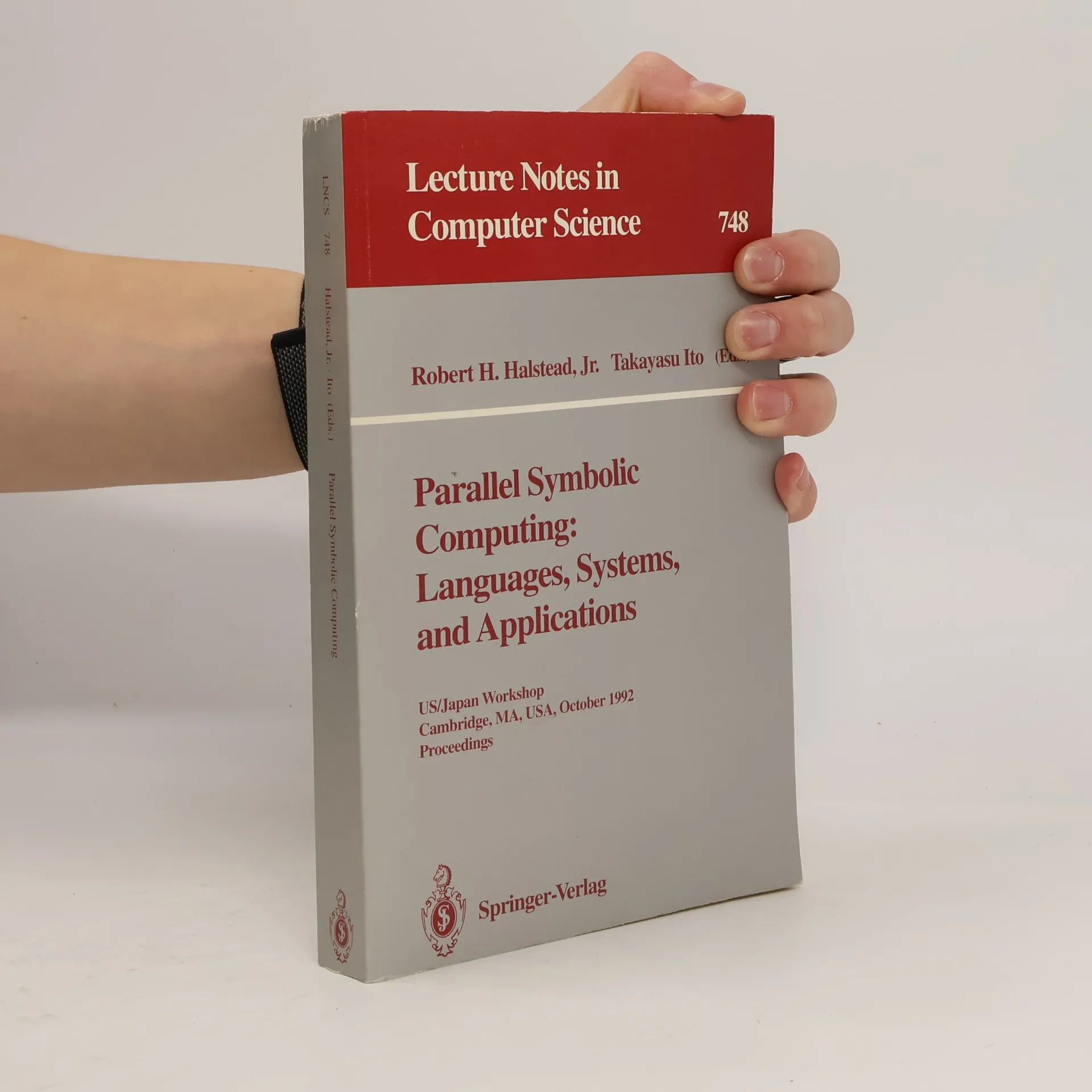
Lecture Notes In Computer Science - 748: Parallel Symbolic Computing, Robert H. Halstead, Jr., Takayasu Ito
- Idioma

- Publicado en
- 1993
- Encuadernación
- (Tapa blanda),
- Estado del libro
- Bueno
- Precio
- 44,99 €
Métodos de pago
Nadie lo ha calificado todavía.
- Título
- Lecture Notes In Computer Science - 748: Parallel Symbolic Computing
- Subtítulo
- Languages, Systems, And Applications: US/Japan Workshop, Cambridge, MA, USA, October 14-17, 1992. Proceedings
- Idioma
- Inglés
- Autores
- Robert H. Halstead, Jr., Takayasu Ito
- Editorial
- Springer
- Publicado en
- 1993
- Formato
- Tapa blanda
- Páginas
- 436
- ISBN10
- 3540573968
- ISBN13
- 9783540573968
- Serie
- Etiquetas
- Hardware
- Descripción
- Parallel and distributed computing are becoming increasingly important as cost-effective ways to achieve high computational performance. Symbolic computations are notable for their use of irregular data structures and hence parallel symbolic computing has its own distinctive set of technical challenges. The papers in this book are based on presentations made at a workshop at MIT in October 1992. They present results in a wide range of areas including: speculative computation, scheduling techniques, program development tools and environments, programming languages and systems, models of concurrency and distribution, parallel computer architecture, and symbolic applications.