



Más información sobre el libro
Regulation of the media has long been justified by the concept of 'the public interest,' yet this term remains ambiguous. As technology evolves and corporate consolidation increases, traditional public service values in British broadcasting are increasingly at odds with market-driven values. Regulators face mounting pressure to justify their actions amidst these changes. The commercialization and privatization of communication industries threaten democratic principles. This book argues that effective regulation can only be achieved if the concept of 'citizenship' is recognized as central to regulatory goals. The second edition has been significantly revised to address contemporary issues, including European Directives, the UK’s Communications Act 2003, the BBC Charter review process, and competition law reforms. Key features include an exploration of the rationales for media regulation and the challenges they face, as well as an analysis of legal mechanisms that can support regulatory institutions. The book is updated to reflect the EU’s 2002 New Regulatory Framework and is designed to be accessible to a broad audience in media studies, journalism, broadcasting, and law. Praise for the first edition highlights its thorough examination of recent media regulation issues in the UK, making it a valuable resource for advanced students and academics seeking clarity on public regulation.
Compra de libros
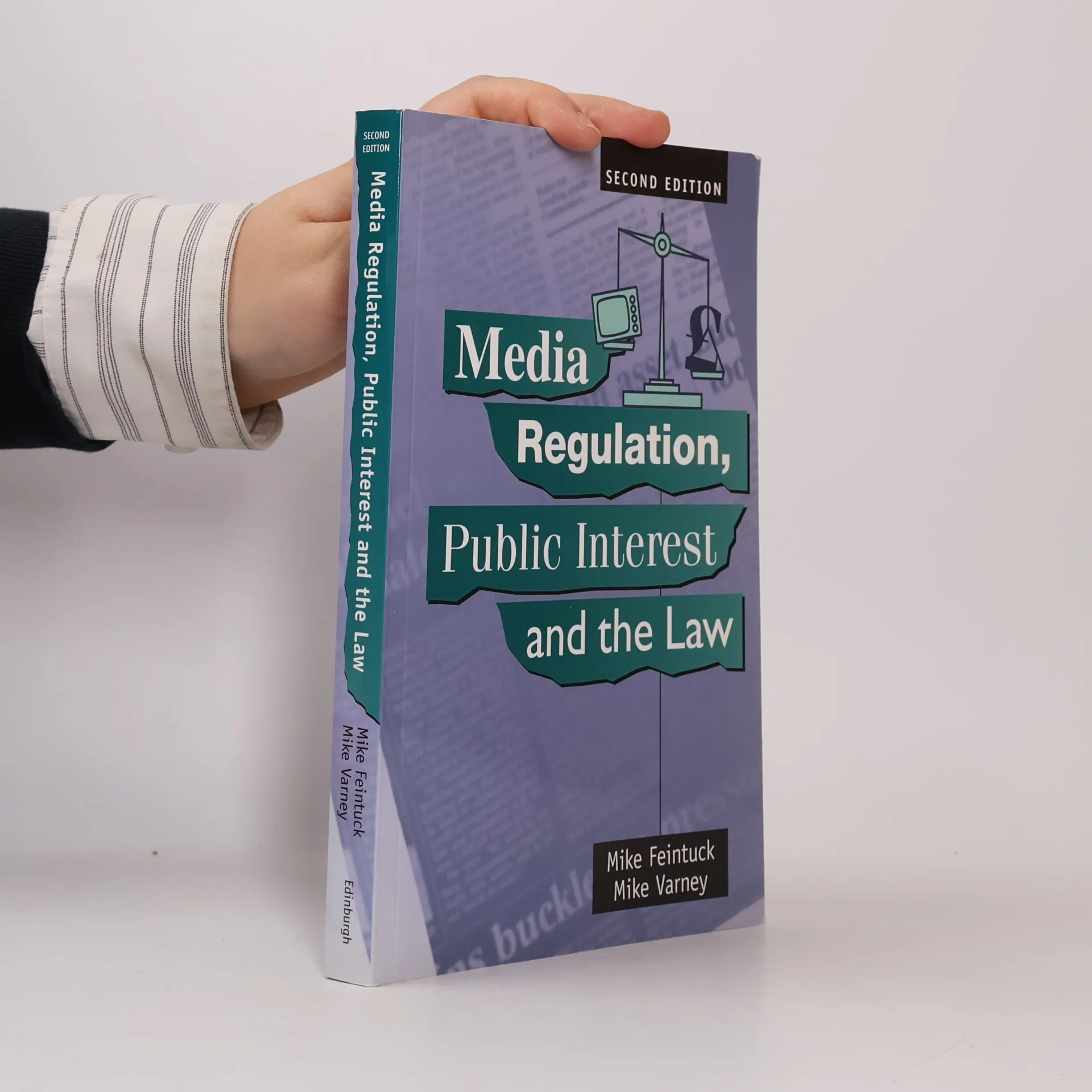
Media Regulation, Public Interest and the Law, Mike Feintuck, Mike Varney
- Idioma

- Publicado en
- 2006
- Encuadernación
- (Tapa blanda),
- Estado del libro
- Bueno
- Precio
- 8,99 €
Métodos de pago
Nadie lo ha calificado todavía.
- Título
- Media Regulation, Public Interest and the Law
- Subtítulo
- Second Edition
- Idioma
- Inglés
- Autores
- Mike Feintuck, Mike Varney
- Editorial
- Edinburgh University Press
- Publicado en
- 2006
- Formato
- Tapa blanda
- Páginas
- 320
- ISBN10
- 0748621660
- ISBN13
- 9780748621668
- Serie
- Categorías
- Etiquetas
- Descripción
- Regulation of the media has long been justified by the concept of 'the public interest,' yet this term remains ambiguous. As technology evolves and corporate consolidation increases, traditional public service values in British broadcasting are increasingly at odds with market-driven values. Regulators face mounting pressure to justify their actions amidst these changes. The commercialization and privatization of communication industries threaten democratic principles. This book argues that effective regulation can only be achieved if the concept of 'citizenship' is recognized as central to regulatory goals. The second edition has been significantly revised to address contemporary issues, including European Directives, the UK’s Communications Act 2003, the BBC Charter review process, and competition law reforms. Key features include an exploration of the rationales for media regulation and the challenges they face, as well as an analysis of legal mechanisms that can support regulatory institutions. The book is updated to reflect the EU’s 2002 New Regulatory Framework and is designed to be accessible to a broad audience in media studies, journalism, broadcasting, and law. Praise for the first edition highlights its thorough examination of recent media regulation issues in the UK, making it a valuable resource for advanced students and academics seeking clarity on public regulation.