

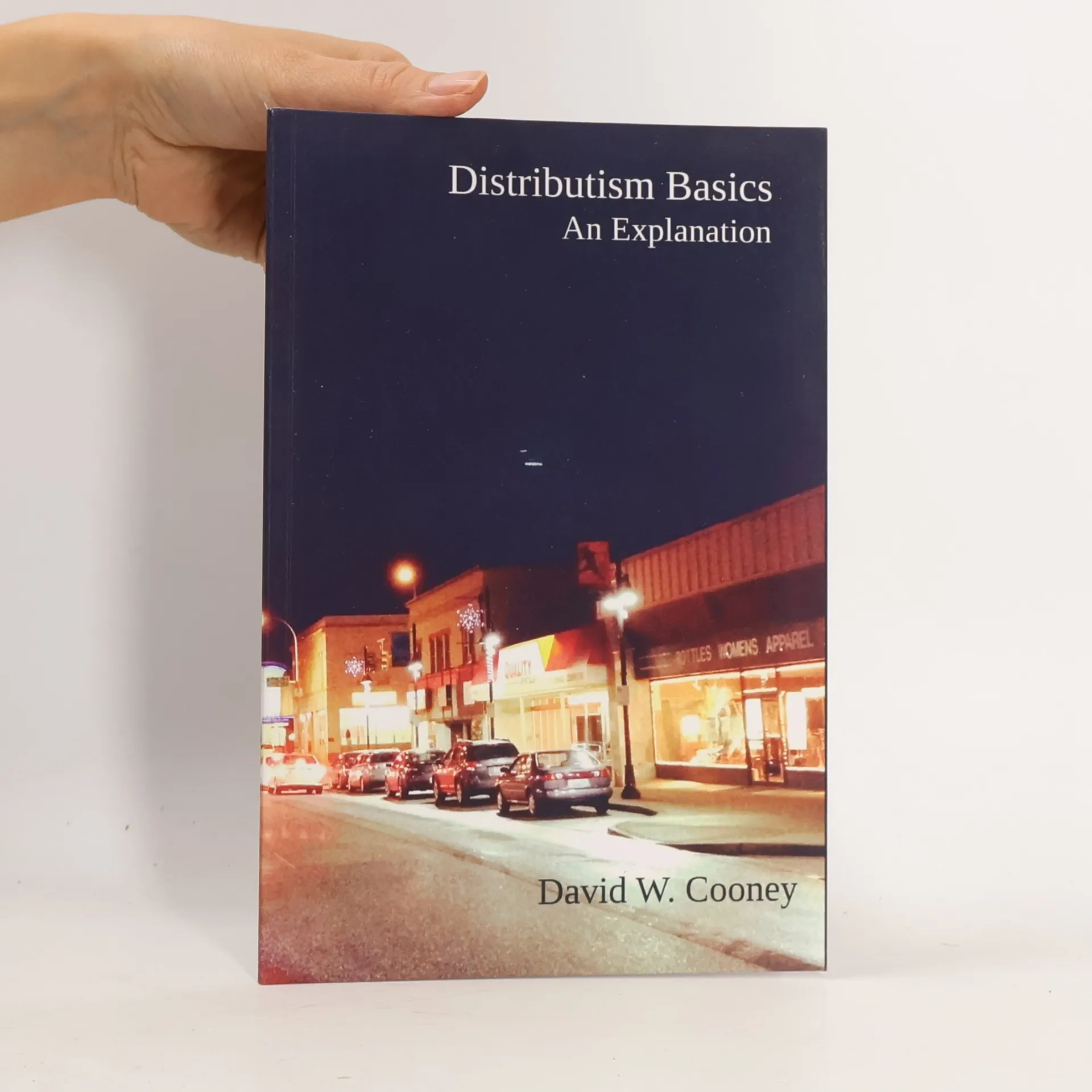


Distributism Basics
An Explanation
Autores
Más información sobre el libro
An introduction to the economic system known as Distributism, comparing it to both socialism and capitalism. Distributism does not advocate government "redistribution" of wealth, which many assume based on the name alone. The name refers to the idea that justice and power in both the economic and political realms should be distributed throughout society. Distributism, also known as Distributivism, has been around as a named and distinct system for over 100 years, but remains relatively unknown because it is ignored by professional and academic economists. The basic premise is that people in society as a whole are better off if the means of production are privately owned by a lot of people rather than having the majority of that ownership in the hands of a small percentage of society. Locally owned small businesses and farms are the bedrock of a strong and stable economy. Distributism also advocates strong local government over the centralization of government authority.
Compra de libros
Distributism Basics, David W. Cooney
- Idioma

- Publicado en
- 2016
- Encuadernación
- (Tapa blanda),
- Estado del libro
- Bueno
- Precio
- 6,99 €
Métodos de pago
Nadie lo ha calificado todavía.
- Título
- Distributism Basics
- Subtítulo
- An Explanation
- Idioma
- Inglés
- Autores
- David W. Cooney
- Publicado en
- 2016
- Formato
- Tapa blanda
- Páginas
- 36
- ISBN10
- 1530671639
- ISBN13
- 9781530671632
- Serie
- Categorías
- Etiquetas
- Comercio
- Descripción
- An introduction to the economic system known as Distributism, comparing it to both socialism and capitalism. Distributism does not advocate government "redistribution" of wealth, which many assume based on the name alone. The name refers to the idea that justice and power in both the economic and political realms should be distributed throughout society. Distributism, also known as Distributivism, has been around as a named and distinct system for over 100 years, but remains relatively unknown because it is ignored by professional and academic economists. The basic premise is that people in society as a whole are better off if the means of production are privately owned by a lot of people rather than having the majority of that ownership in the hands of a small percentage of society. Locally owned small businesses and farms are the bedrock of a strong and stable economy. Distributism also advocates strong local government over the centralization of government authority.