

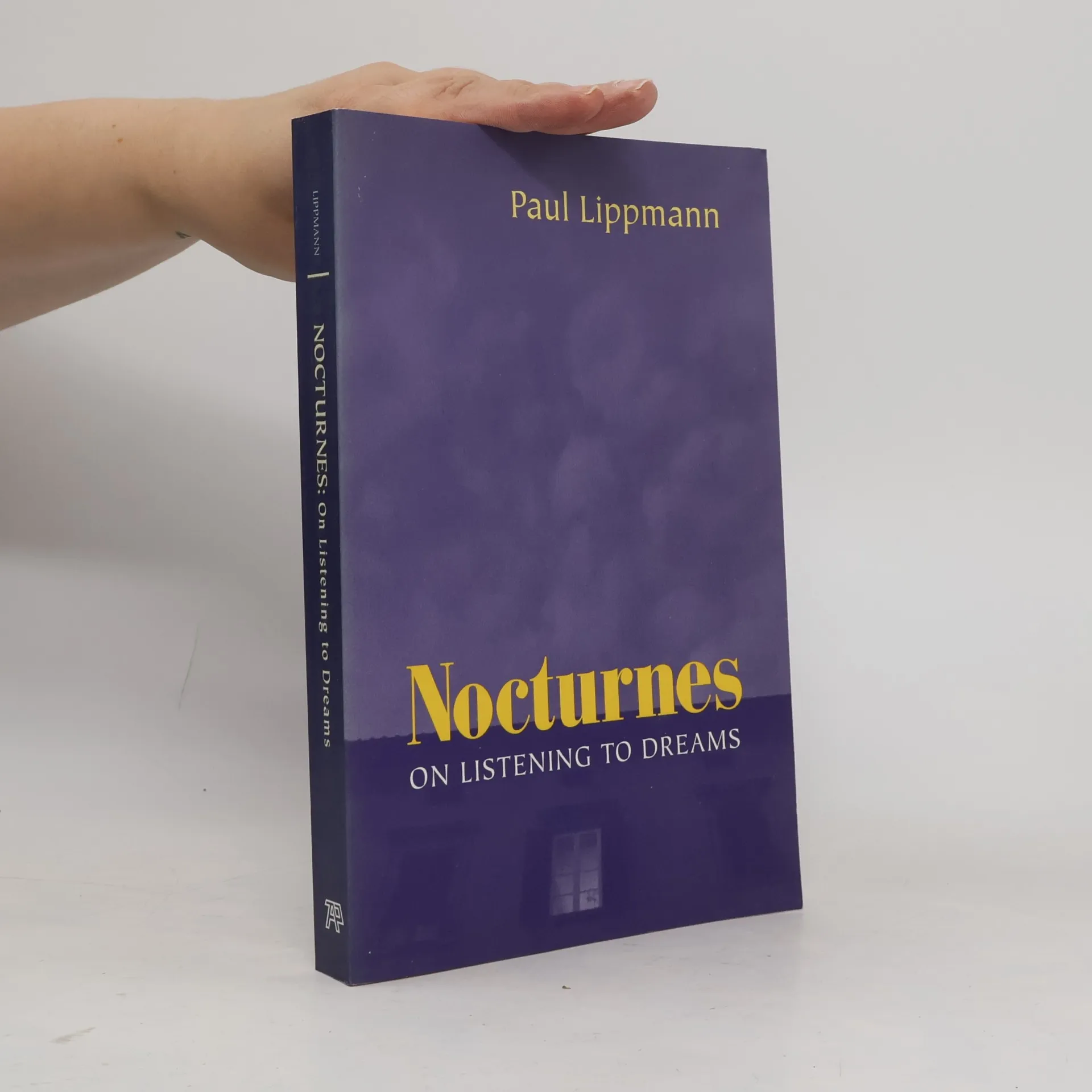
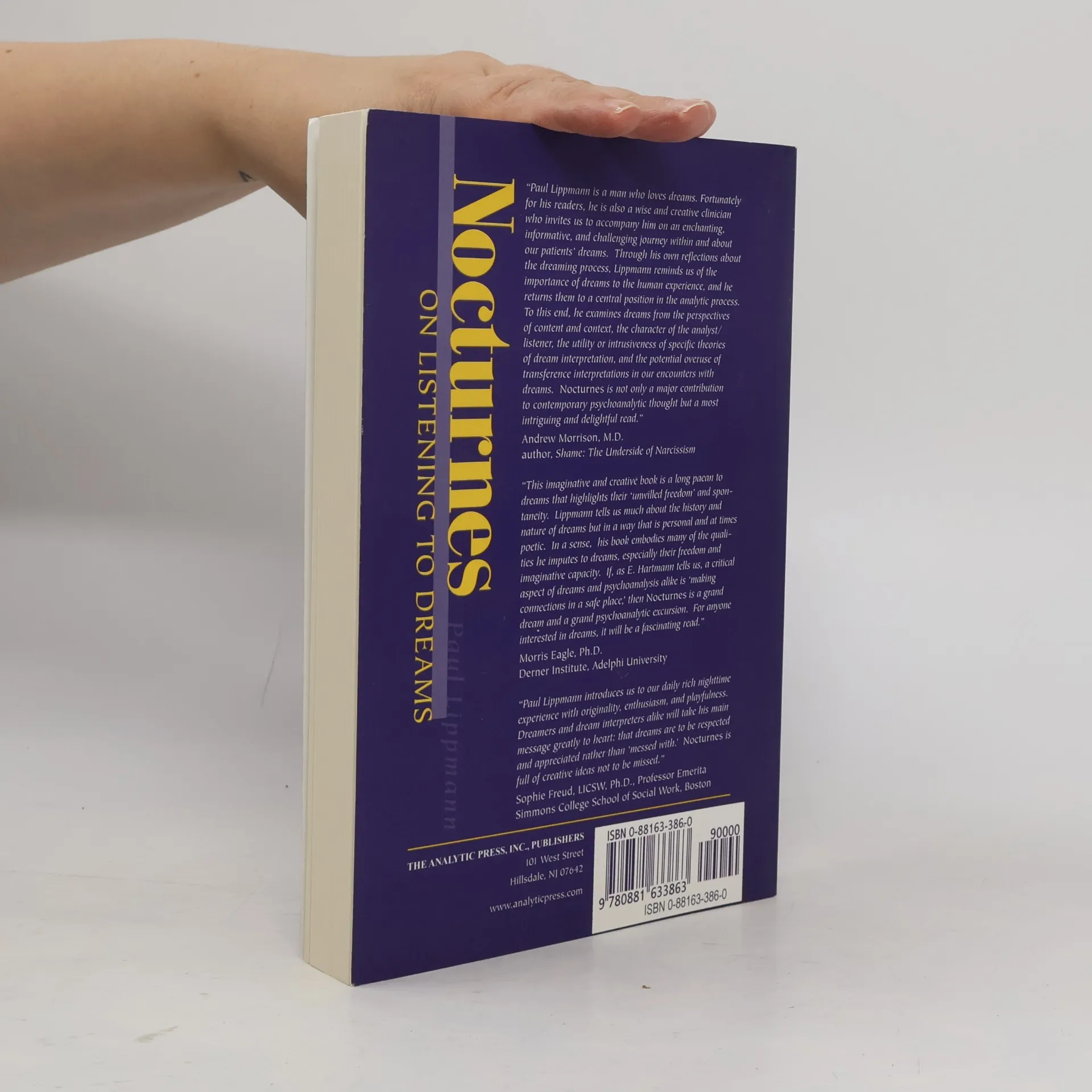

Nocturnes
Autores
Parámetros
- 280 páginas
- 10 horas de lectura
Más información sobre el libro
Nocturnes , literally music for the night, is a delightfully impressionistic investigation into everything that is not known, and perhaps can never be known, about dreams. Rather than espousing yet another strategy of dream interpretation, Lippmann proffers a naturalistic approach appreciative of the playful, complex, even zany creativity embodied in dreams. He urges us, that is, to apprehend dreams on their own terms, in a manner that enables patients actually to experience the unconscious in its radical difference from waking thought. Lippmann delivers on his agenda lightly, with a sense of humor and practicality that will engage lay readers as well as analysts and therapists. He takes up questions of general interest that challenge us to reorient our thinking about How do children learn about dreams and their telling? Why are most dreams forgotten? How may we understand dreams about sleeping and waking, even dreams about dreaming? And he reengages issues of perennial interest to analytic dream disguise, dream forgetting, the "companionship" of dreams, the neurotic dream expert, and the therapist's management of his or her own anxiety when patients report their dreams."Oh, I had a dream last night," the patient remembers. Too often, observes Lippmann, this remark signals the beginning of an unfortunate struggle, as the patient is called on to relate something that changes when it is put into words, the analyst is put on the spot to come up with an interpretation, and both are asked to extract something immediately useful - and lately, cost effective - from something that partakes of magic and mystery. How silly this ritual is, Lippmann argues, and how alien to the nature of the dream itself. After reading Nocturnes , no clinician, from the novice to the most senior, will hear the words "Oh, I had a dream last night" in quite the same way.
Compra de libros
Nocturnes, Paul Lippmann
- Idioma

- Publicado en
- 2002
- Encuadernación
- (Tapa blanda),
- Estado del libro
- Bueno
- Precio
- 18,99 €
Métodos de pago
Nadie lo ha calificado todavía.
- Título
- Nocturnes
- Idioma
- Inglés
- Autores
- Paul Lippmann
- Editorial
- Routledge
- Publicado en
- 2002
- Formato
- Tapa blanda
- Páginas
- 280
- ISBN10
- 0881633860
- ISBN13
- 9780881633863
- Serie
- Etiquetas
- Guías y Manuales, EE.UU., Literatura especializada, Vida, Salud mental, Psicoterapia, Sueños, Psicoanálisis, Psicología Clínica, Hipnosis, Conversación, Pensamiento Lógico
- Descripción
- Nocturnes , literally music for the night, is a delightfully impressionistic investigation into everything that is not known, and perhaps can never be known, about dreams. Rather than espousing yet another strategy of dream interpretation, Lippmann proffers a naturalistic approach appreciative of the playful, complex, even zany creativity embodied in dreams. He urges us, that is, to apprehend dreams on their own terms, in a manner that enables patients actually to experience the unconscious in its radical difference from waking thought. Lippmann delivers on his agenda lightly, with a sense of humor and practicality that will engage lay readers as well as analysts and therapists. He takes up questions of general interest that challenge us to reorient our thinking about How do children learn about dreams and their telling? Why are most dreams forgotten? How may we understand dreams about sleeping and waking, even dreams about dreaming? And he reengages issues of perennial interest to analytic dream disguise, dream forgetting, the "companionship" of dreams, the neurotic dream expert, and the therapist's management of his or her own anxiety when patients report their dreams."Oh, I had a dream last night," the patient remembers. Too often, observes Lippmann, this remark signals the beginning of an unfortunate struggle, as the patient is called on to relate something that changes when it is put into words, the analyst is put on the spot to come up with an interpretation, and both are asked to extract something immediately useful - and lately, cost effective - from something that partakes of magic and mystery. How silly this ritual is, Lippmann argues, and how alien to the nature of the dream itself. After reading Nocturnes , no clinician, from the novice to the most senior, will hear the words "Oh, I had a dream last night" in quite the same way.