

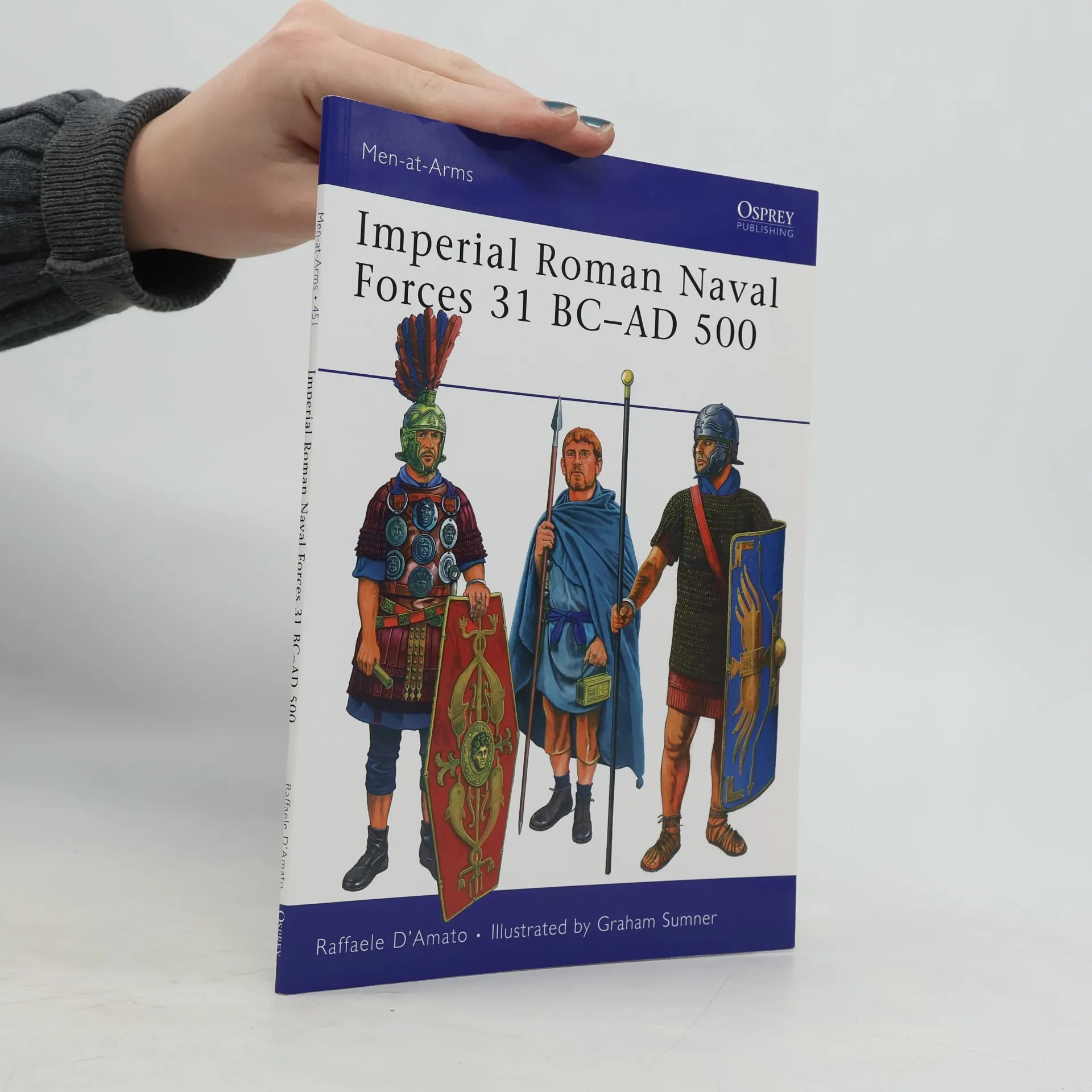


Men-at-Arms - 451: Imperial Roman Naval Forces 31 BC–AD 500
Más información sobre el libro
The Roman navy, although somewhat overshadowed by the Legions, played an important role for the Roman Empire. For the army to conquer and rule its vast territories, control of the sea lanes was essential. The navy fleets needed to be structured and powerful in order to dominate the trade routes, transport Legions and defend and attack against pirates and other enemies. Under Augustus in 31BC, the navy consisted of 800 warships with many being sent to Ravenna and Misenus in Italy, and smaller squadrons to the external coasts (e.g. Gaul, Spain, Britain) and to the major rivers, to support land operations (e.g. Rhine, Danube, Seine and others). When Roman coasts came under attack from Teutonic raiders in the 3rd and 4th centuries, the navy played a key part in the defense of the empire. This book provides a detailed re-evaluation of the vital contribution made by the Roman navy to imperial power, covering the organization of the fleets and the everyday life of the soldiers. Previously unpublished research is complemented by superb color reconstructions of the uniforms and equipment, making this a central resource on a neglected piece of ancient history.
Compra de libros
Men-at-Arms - 451: Imperial Roman Naval Forces 31 BC–AD 500, Graham Sumner, Raffaele D'Amato
- Idioma

- Publicado en
- 2009
- Encuadernación
- (Tapa blanda),
- Estado del libro
- Muy Bueno
- Precio
- 13,89 €
Métodos de pago
Nadie lo ha calificado todavía.
- Título
- Men-at-Arms - 451: Imperial Roman Naval Forces 31 BC–AD 500
- Idioma
- Inglés
- Autores
- Graham Sumner, Raffaele D'Amato
- Editorial
- Osprey Publishing
- Publicado en
- 2009
- Formato
- Tapa blanda
- Páginas
- 48
- ISBN10
- 1846033179
- ISBN13
- 9781846033179
- Serie
- Categorías
- Etiquetas
- Tema histórico, Europa, Antigüedad, Historia de Europa, Roma, Antigua Roma, Armada
- Descripción
- The Roman navy, although somewhat overshadowed by the Legions, played an important role for the Roman Empire. For the army to conquer and rule its vast territories, control of the sea lanes was essential. The navy fleets needed to be structured and powerful in order to dominate the trade routes, transport Legions and defend and attack against pirates and other enemies. Under Augustus in 31BC, the navy consisted of 800 warships with many being sent to Ravenna and Misenus in Italy, and smaller squadrons to the external coasts (e.g. Gaul, Spain, Britain) and to the major rivers, to support land operations (e.g. Rhine, Danube, Seine and others). When Roman coasts came under attack from Teutonic raiders in the 3rd and 4th centuries, the navy played a key part in the defense of the empire. This book provides a detailed re-evaluation of the vital contribution made by the Roman navy to imperial power, covering the organization of the fleets and the everyday life of the soldiers. Previously unpublished research is complemented by superb color reconstructions of the uniforms and equipment, making this a central resource on a neglected piece of ancient history.