

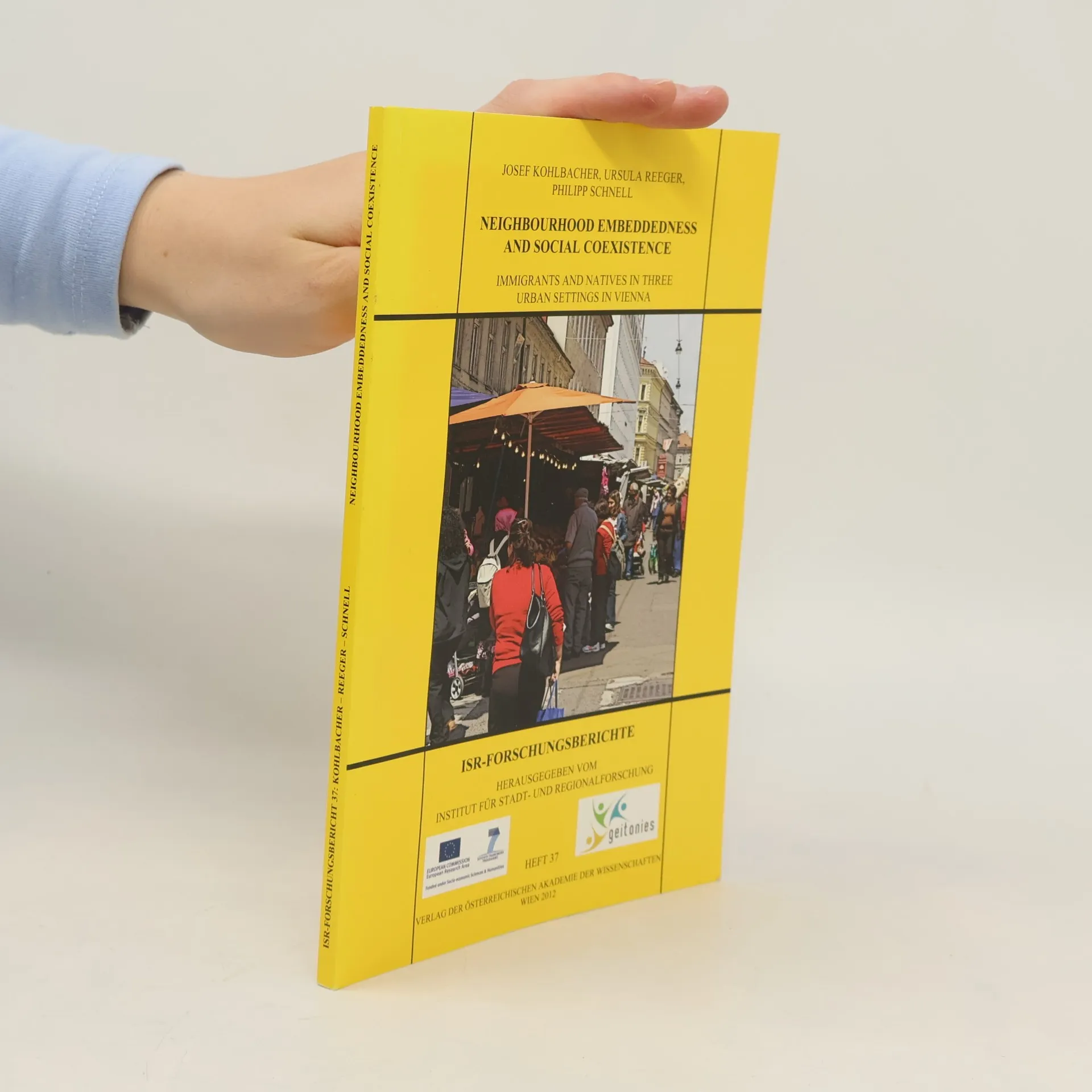

ISR-Forschungsberichte - 37: Neighbourhood Embeddedness And Social Coexistence
Immigrants And Natives In Three Urban Settings In Vienna
Más información sobre el libro
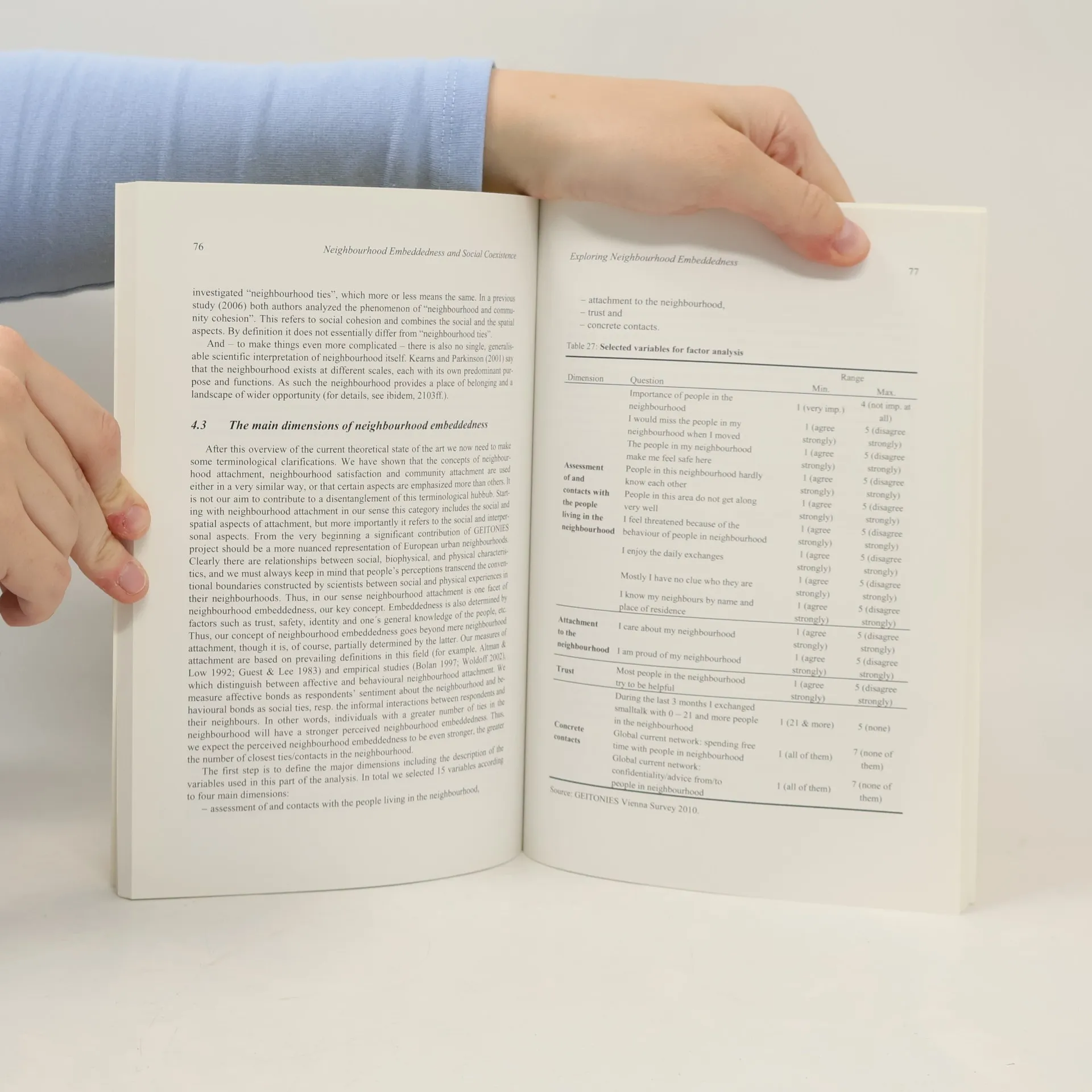
This research report is an outcome of the contribution of the Austrian Academy of Sciences team within the EU-funded project GEITONIES. It is thematically focused on the connections between social contacts and neighbourhood embeddedness in three Viennese neighbourhoods. The research was innovative by focusing not only on the immigrant population but on the whole population. A general result was that the differences between the three research areas are often much more accentuated than the differences between immigrants and natives who inhabit the same neighbourhood. This can be evaluated as an indicator of a specific local atmosphere, which shapes neighbourhood embeddedness. As a conclusion one can say that neighbourhoods are still important places for local residents and that social networks within the neighbourhood are the major explanatory determinant for differences in the levels of embeddedness. Thus, creating opportunities for meeting in public space may be a successful strategy on the way to a more cohesive urban society.
Compra de libros
ISR-Forschungsberichte - 37: Neighbourhood Embeddedness And Social Coexistence, Josef Kohlbacher, Philipp Schnell, Ursula Reeger
- Idioma
- Publicado en
- 2012
- Encuadernación
- (Tapa blanda),
- Estado del libro
- Muy Bueno
- Precio
- 26,39 €
Métodos de pago
Nadie lo ha calificado todavía.
- Título
- ISR-Forschungsberichte - 37: Neighbourhood Embeddedness And Social Coexistence
- Subtítulo
- Immigrants And Natives In Three Urban Settings In Vienna
- Autores
- Josef Kohlbacher, Philipp Schnell, Ursula Reeger
- Editorial
- Austrian Academy of Sciences Press
- Publicado en
- 2012
- Formato
- Tapa blanda
- Páginas
- 106
- ISBN10
- 3700172362
- ISBN13
- 9783700172369
- Serie
- Etiquetas
- Tema histórico, Viajes, Austria, Viena, Inmigrantes, Minorías, Coexistencia, Relaciones étnicas
- Descripción
- This research report is an outcome of the contribution of the Austrian Academy of Sciences team within the EU-funded project GEITONIES. It is thematically focused on the connections between social contacts and neighbourhood embeddedness in three Viennese neighbourhoods. The research was innovative by focusing not only on the immigrant population but on the whole population. A general result was that the differences between the three research areas are often much more accentuated than the differences between immigrants and natives who inhabit the same neighbourhood. This can be evaluated as an indicator of a specific local atmosphere, which shapes neighbourhood embeddedness. As a conclusion one can say that neighbourhoods are still important places for local residents and that social networks within the neighbourhood are the major explanatory determinant for differences in the levels of embeddedness. Thus, creating opportunities for meeting in public space may be a successful strategy on the way to a more cohesive urban society.