

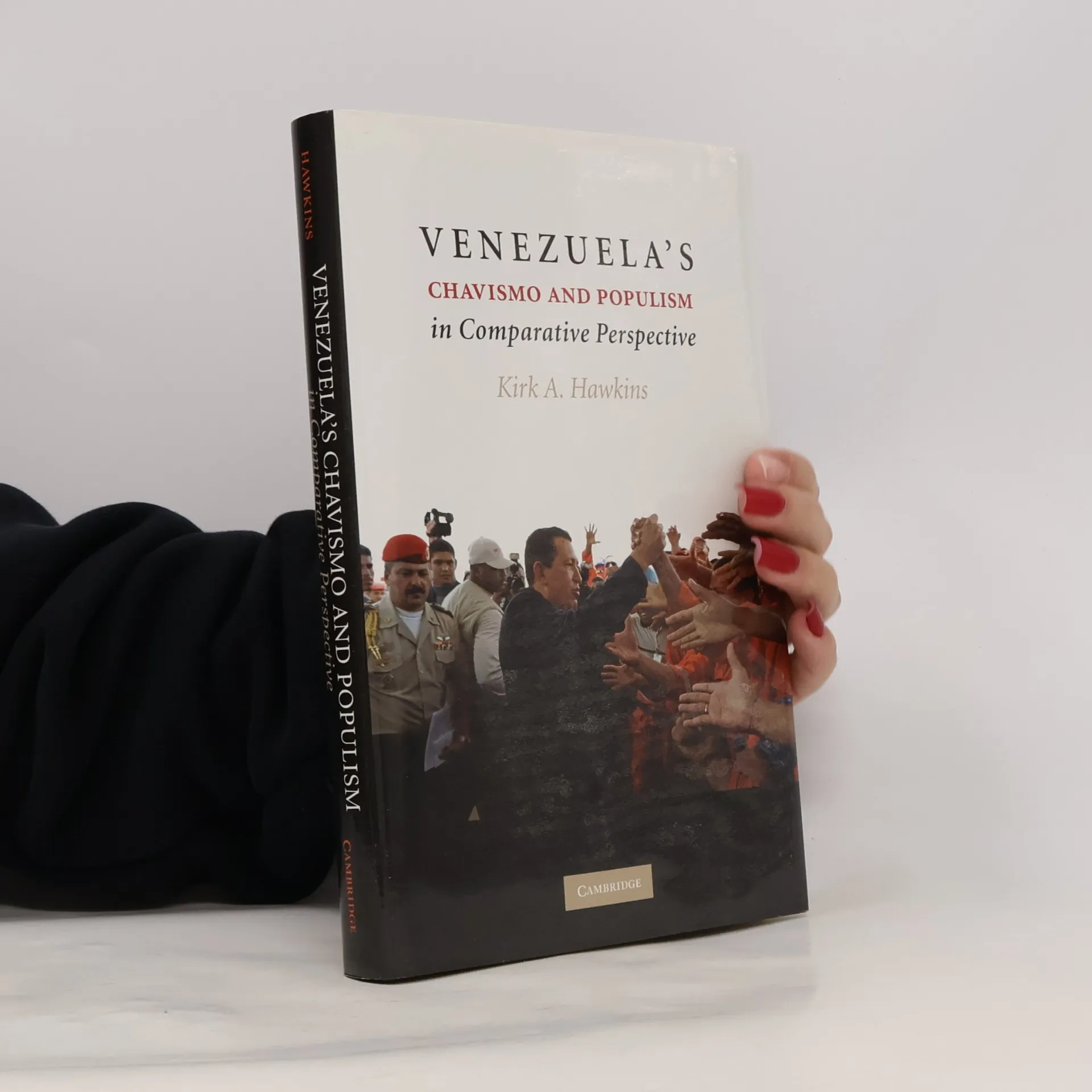

Venezuela's Chavismo And Populism In Comparative Perspective
Autores
Parámetros
- 290 páginas
- 11 horas de lectura
Más información sobre el libro
Populism is best understood as a Manichaean worldview linked to a characteristic language or discourse. Chavismo, the movement that sustains Hugo Chávez in Venezuela, is a paradigmatic instance of populism. Using a novel, cross-country dataset on populist discourse, combined with extensive data from within Venezuela and across other countries, this book demonstrates that populist movements can be understood as responses to widespread corruption and economic crisis. The book analyzes the Bolivarian Circles and government missions in Venezuela, revealing how populist ideas influence political organization and policy. The analysis provides important insight into the nature of populism, including its causes and consequences, and addresses broader questions about the role of ideas in politics.
Compra de libros
Venezuela's Chavismo And Populism In Comparative Perspective, Kirk Andrew Hawkins
- Idioma

- Publicado en
- 2010
- Encuadernación
- (Tapa dura),
- Estado del libro
- Muy Bueno
- Precio
- 17,39 €
Métodos de pago
Nadie lo ha calificado todavía.
- Título
- Venezuela's Chavismo And Populism In Comparative Perspective
- Idioma
- Inglés
- Autores
- Kirk Andrew Hawkins
- Editorial
- Cambridge University Press
- Publicado en
- 2010
- Formato
- Tapa dura
- Páginas
- 290
- ISBN10
- 052176503X
- ISBN13
- 9780521765039
- Serie
- Etiquetas
- Política, EE.UU., Literatura especializada, América del Sur, Populismo, Venezuela
- Descripción
- Populism is best understood as a Manichaean worldview linked to a characteristic language or discourse. Chavismo, the movement that sustains Hugo Chávez in Venezuela, is a paradigmatic instance of populism. Using a novel, cross-country dataset on populist discourse, combined with extensive data from within Venezuela and across other countries, this book demonstrates that populist movements can be understood as responses to widespread corruption and economic crisis. The book analyzes the Bolivarian Circles and government missions in Venezuela, revealing how populist ideas influence political organization and policy. The analysis provides important insight into the nature of populism, including its causes and consequences, and addresses broader questions about the role of ideas in politics.