

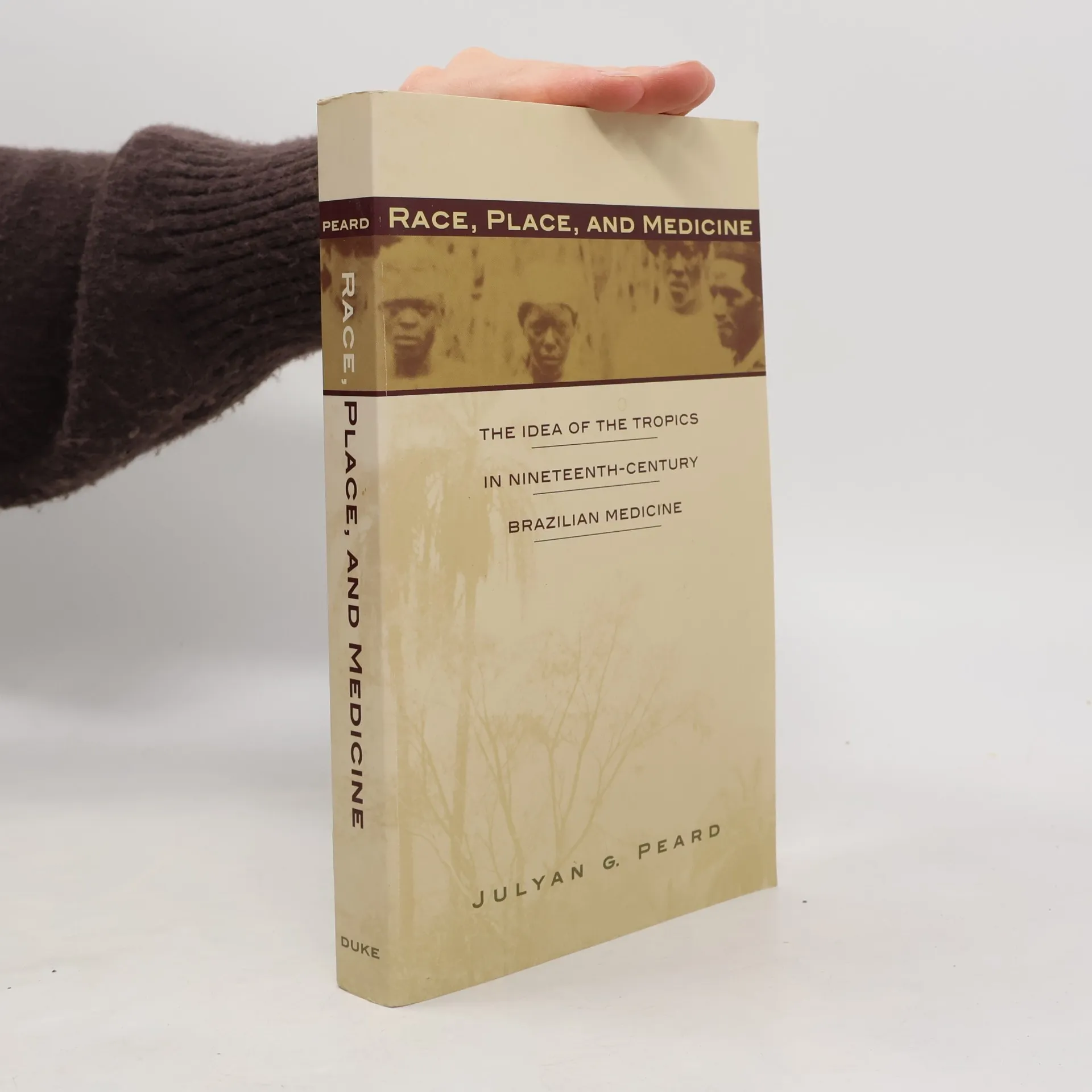



Race, Place, and Medicine
The Idea of the Tropics in Nineteenth-Century Brazil
Autores
Parámetros
- 328 páginas
- 12 horas de lectura
Más información sobre el libro
Race, Place, and Medicine examines the impact of a group of nineteenth-century Brazilian physicians who became known posthumously as the Bahian Tropicalista School of Medicine. Julyan G. Peard explores how this group of obscure clinicians became participants in an international debate as they helped change the scientific framework and practices of doctors in Brazil. Peard shows how the Tropicalistas adapted Western medicine and challenged the Brazilian medical status quo in order to find new answers to the old question of whether the diseases of warm climates were distinct from those of temperate Europe. They carried out innovative research on parasitology, herpetology, and tropical disorders, providing evidence that countered European assumptions about Brazilian racial and cultural inferiority. In the face of European fatalism about health care in the tropics, the Tropicalistas forged a distinctive medicine based on their beliefs that public health would improve only if large social issues—such as slavery and abolition—were addressed and that the delivery of health care should encompass groups hitherto outside the doctors’ sphere, especially women. But the Tropicalistas’ agenda, which included biting social critiques and broad demands for the extension of health measures to all of Brazil’s people, was not sustained. Race, Place, and Medicine shows how imported models of tropical medicine—constructed by colonial nations for their own needs—downplayed the connection between socioeconomic factors and tropical disorders. This study of a neglected episode in Latin American history will interest Brazilianists, as well as scholars of Latin American, medical, and scientific history.
Compra de libros
Race, Place, and Medicine, Julyan G. Peard
- Idioma

- Publicado en
- 1999
- Encuadernación
- (Tapa dura),
- Estado del libro
- Dañado
- Precio
- 23,49 €
Métodos de pago
Nadie lo ha calificado todavía.
- Título
- Race, Place, and Medicine
- Subtítulo
- The Idea of the Tropics in Nineteenth-Century Brazil
- Idioma
- Inglés
- Autores
- Julyan G. Peard
- Editorial
- Duke University Press
- Publicado en
- 1999
- Formato
- Tapa dura
- Páginas
- 328
- ISBN10
- 0822323761
- ISBN13
- 9780822323761
- Serie
- Categorías
- Etiquetas
- EE.UU., Medicina, Literatura especializada, Siglo XIX, Historia social, América del Sur, Brasil, América Latina, Historia de la medicina, Medicina Tropical
- Descripción
- Race, Place, and Medicine examines the impact of a group of nineteenth-century Brazilian physicians who became known posthumously as the Bahian Tropicalista School of Medicine. Julyan G. Peard explores how this group of obscure clinicians became participants in an international debate as they helped change the scientific framework and practices of doctors in Brazil. Peard shows how the Tropicalistas adapted Western medicine and challenged the Brazilian medical status quo in order to find new answers to the old question of whether the diseases of warm climates were distinct from those of temperate Europe. They carried out innovative research on parasitology, herpetology, and tropical disorders, providing evidence that countered European assumptions about Brazilian racial and cultural inferiority. In the face of European fatalism about health care in the tropics, the Tropicalistas forged a distinctive medicine based on their beliefs that public health would improve only if large social issues—such as slavery and abolition—were addressed and that the delivery of health care should encompass groups hitherto outside the doctors’ sphere, especially women. But the Tropicalistas’ agenda, which included biting social critiques and broad demands for the extension of health measures to all of Brazil’s people, was not sustained. Race, Place, and Medicine shows how imported models of tropical medicine—constructed by colonial nations for their own needs—downplayed the connection between socioeconomic factors and tropical disorders. This study of a neglected episode in Latin American history will interest Brazilianists, as well as scholars of Latin American, medical, and scientific history.