Compra 10 libros por 10 € aquí!
Bookbot

Brigitte Falkenburg

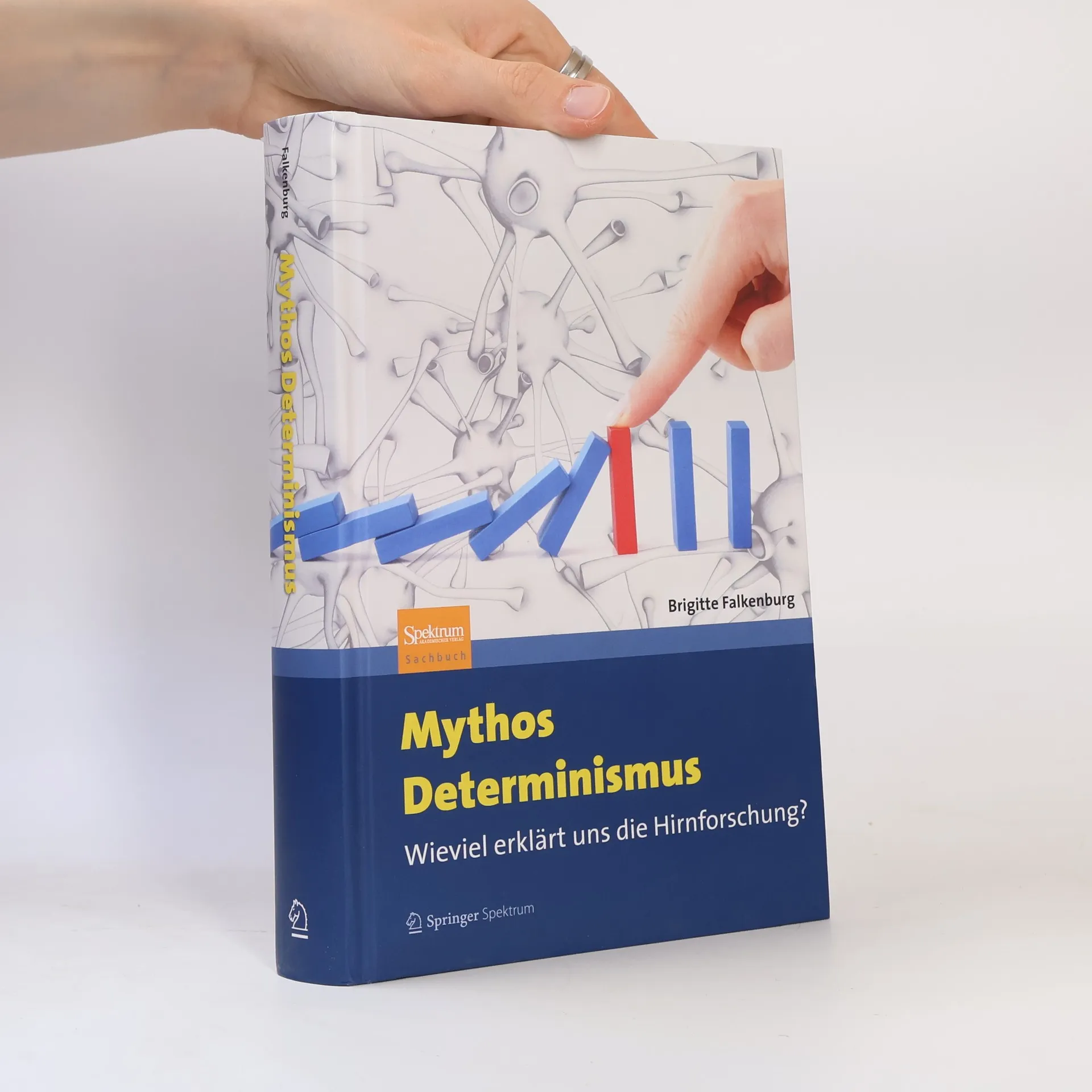
    Mythos Determinismus
    Modelldenken in den Wissenschaften
    Verursachung
    Particle Metaphysics
    Why more is different
    Kants Cosmology
    • Kants Cosmology

      From the Pre-Critical System to the Antinomy of Pure Reason

      • 304 páginas
      • 11 horas de lectura

      Focusing on Kant's intellectual evolution, the book traces his shift from an atomistic cosmology in the mid-1750s to the critical perspective outlined in the Critique of Pure Reason. It explores the internal challenges of his early theories and highlights the significance of the incongruent counterparts argument in his philosophical development. Additionally, it examines the emergence of the cosmological antinomy and its implications for transcendental idealism and the teleology of human reason, making it a valuable resource for scholars and students of Kant's philosophy.

      Kants Cosmology
    • Why more is different

      • 290 páginas
      • 11 horas de lectura

      The physics of condensed matter, in contrast to quantum physics or cosmology, is not traditionally associated with deep philosophical questions. However, as science - largely thanks to more powerful computers - becomes capable of analysing and modelling ever more complex many-body systems, basic questions of philosophical relevance arise. Questions about the emergence of structure, the nature of cooperative behaviour, the implications of the second law, the quantum-classical transition and many other issues. This book is a collection of essays by leading physicists and philosophers. Each investigates one or more of these issues, making use of examples from modern condensed matter research. Physicists and philosophers alike will find surprising and stimulating ideas in these pages.

      Why more is different
    • Particle Metaphysics

      A Critical Account of Subatomic Reality

      • 404 páginas
      • 15 horas de lectura

      Exploring the intricate relationship between metaphysics and human understanding, this work delves into two key advantages of metaphysical inquiry. The first addresses the challenges of comprehending the mind's deeper properties through reason, often resulting in disappointment. The second, more significant advantage relates to understanding the empirical concepts that underpin human judgment, highlighting metaphysics as a study of the limits of reason. Additionally, it connects the particle concept to historical philosophical traditions, tracing its evolution from ancient atomism through to early modern physics.

      Particle Metaphysics
    • Mythos Determinismus

      Wieviel erklärt uns die Hirnforschung?

      Brigitte Falkenburg untersucht die neuronalen Mechanismen des Gehirns und deren Einfluss auf den menschlichen Geist aus neurobiologischer Sicht. Sie kritisiert überholte mechanistische Vorstellungen und bietet eine neue Perspektive auf das Verhältnis von Geist und Gehirn sowie auf Themen wie freien Willen und Determinismus.

      Mythos Determinismus
    • Kants Kosmologie

      Die wissenschaftliche Revolution der Naturphilosophie im 18. Jahrhundert

      Kants Kosmologie von 1755/56 vereinte wesentliche Elemente der Wolffschen Metaphysik und der Newtonschen Physik und legte den Grundstein für eine moderne physikalische Kosmologie. Doch 1781 verworf Kant diese Ansätze zugunsten der Erkenntniskritik. Um die sachlichen Gründe für Kants „Revolution der Denkart“ zu klären, untersucht die Arbeit zunächst sein „analytisches“ Begründungsverfahren und die daraus resultierenden Probleme. 1768 widerlegte Kant die an Leibniz orientierte relationale Theorie von Raum und Zeit, fand jedoch keinen Ersatz in Newtons Theorie des absoluten Raums. Der Ausweg lag in der Theorie von Raum und Zeit als Formen der Anschauung, die mit der rationalistischen Erkenntnistheorie brach. Die Antinomie der reinen Vernunft entdeckte Kant erst ab 1772, als er seine Theorie der Verstandeserkenntnis entwickelte und die Möglichkeit kosmologischer Erkenntnis mit dem mathematischen Unendlichkeitsbegriff verband. Die Rekonstruktion der Antinomienlehre von 1781 zeigt, wie die vier Formen der Antinomie ein kohärentes Ganzes bilden. Kants Argumentation besagt, dass eine rationalistisch oder empiristisch begründete Kosmologie zu widersprüchlichen naturalistischen Annahmen führt. Die kritische Metaphysik der Natur ist daher in eine finitistische Erkenntnistheorie eingebettet. Das Schlusskapitel untersucht, wie Kants kritische Philosophie zur modernen Physik und deren Philosophie steht.

      Kants Kosmologie