
Reclaiming Your Life from a Traumatic Experience teaches patients how to emotionally process their traumatic experience in order to reduce their Post Traumatic Stress Disorder and other trauma-related problems.
Barbara Olasov Rothbaum Libros



PTSD
- 144 páginas
- 6 horas de lectura
"When we listen to the news or go online, we often hear or read about trauma and traumatic events rocking our world. Some of these events have ripple effects beyond those directly affected, and many events go undocumented, unreported, and often unsaid. Trauma can happen to anyone at almost any time. More than 2 million people are injured and over 30,000 are killed in car crashes in the US every year. One in 4 -5 women will be a victim of sexual assault in her lifetime. 2018 saw multiple natural disasters in the US. The #metoo movement is highlighting how common are sexual harassment and assault, and this movement is encouraging support for survivors."--
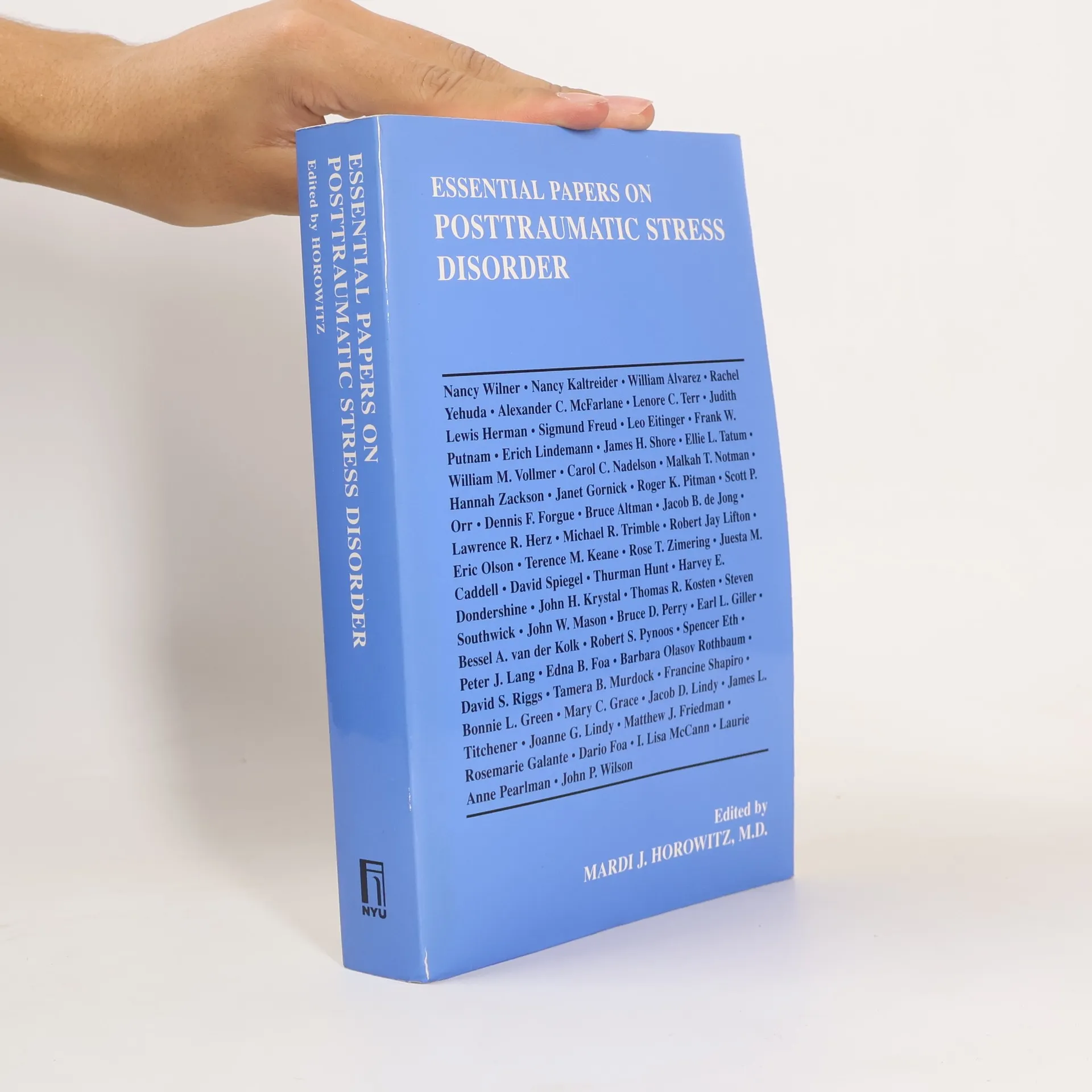
Essential Papers in Psychoanalysis Series - 14: Essential Papers on Post Traumatic Stress Disorder
- 320 páginas
- 12 horas de lectura
A collection of the most important writings on understanding and treating PTSDEssential Papers on Post Traumatic Stress Disorder collects the most important writings on the comprehension and treatment of Post Traumatic Stress Disorder. Editor Mardi J. Horowitz provides a concise and illuminating introductory essay on the evolution of our understanding of Post Traumatic Stress Disorder, and establishes the conceptual framework and terminology necessary to understand the disorder. The collected essays which follow provide a rich and comprehensive take on the complexity of Post Traumatic Stress Disorder, illuminating such issues as the variety of individual and cultural responses, the roles of pre- and post-traumatic causative forces, and the fluctuating complexities of diagnostic categories.Divided into sections addressing the broad topics of diagnosis, etiology, and treatment, Essential Papers on Post Traumatic Stress Disorder combines classic essays with more challenging and controversial approaches. Contributors include Sigmund Freud, Erich Lindemann, Leo Eitinger, Carol C. Nadelson, Malkah T. Notman, Hannah Zackson, Janet Gornick, Bonnie L. Green, Mary C. Grace, Jacob D. Lindy, James L. Titchener, Joanne G. Lindy, Lenore C. Terr, Rosemarie Galante, Dario Foa, Edna B. Foa, Barbara Olasov Rothbaum, David S. Riggs, Tamara B. Murdock, James H. Shore, Ellie L. Tatum, William M. Vollmer, Roger K. Pittman, Scott P. Orr, Dennis F. Forgue, Bruce Altman, Jacob B. de Jong, Lawrence R. Herz, Judith Lewis Herman, Rachel Yehuda, Alexander McFarlane, Frank W. Putnam, Robert Jay Lifton, Eric Olson, Nancy Wilner, Nancy Kaltrider, William Alvarez, Michael R. Trimble, Epstein, Terence M. Keane, Rose T. Zinering, Juesta M. Caddell, John H. Krystal, Thomas R. Kosten, Steven Southwick, John W. Mason, Bruce D. Perry, Earl L. Giller, David Spiegel, Thurman Hunt, Harvey E. Dondershire, Bessel A. van der Kolk, Peter J. Lang, Robert S. Pynoos, Spencer Eth, Matthew J. Friedman, Francine Shapiro, John P. Wilson, Jacob D. Lindy, I. Lisa McCann, and Laurie Anne Pearlman.
Nowe, zaktualizowane wydanie jednego z najskuteczniejszych programów terapii PTSD. Osoby, które doświadczyły traumy, często przeżywają ją na nowo, unikając sytuacji, które mogą wywołać przykre wspomnienia. Zmagają się z negatywnymi myślami, obniżonym nastrojem, ciągłym napięciem oraz trudnościami w odczuwaniu pozytywnych emocji, co prowadzi do cierpienia psychicznego i obniżonej jakości życia. Poradnik jest częścią programu terapeutycznego dla osób zdiagnozowanych z PTSD lub doświadczających objawów tego zaburzenia. W drugiej edycji zaktualizowano kliniczne elementy programu, bazując na doświadczeniach specjalistów oraz wynikach najnowszych badań. Autorki przystępnie wyjaśniają, czym jest PTSD, jak się objawia i jak sobie z nim radzić, opisując etapy, cele i techniki terapii metodą przedłużonej ekspozycji. Czytelnik nauczy się strategii redukcji stresu i lęku, konfrontacji z traumatycznymi wspomnieniami oraz przetwarzania emocji. Poradnik stanowi uzupełnienie podręcznika terapeuty, zawiera materiały do zadań zleconych przez terapeutę oraz wskazówki dotyczące zapobiegania nawrotom zaburzenia, wspierając uczestników terapii między sesjami.