

First Published in 1995. Routledge is an imprint of Taylor & Francis, an informa company.
Leonard Lawlor Libros
Este autor se adentra en la filosofía continental de los siglos XIX y XX, explorando la intrincada relación entre el pensamiento y el azar. Su obra examina críticamente las distinciones dentro del discurso filosófico, notablemente las diferencias entre el pensamiento de Ricoeur y Derrida. Además, el autor es fundamental para avanzar en el estudio del concepto de la carne de Merleau-Ponty a través de contribuciones editoriales y como editor fundador de una revista internacional trilingüe dedicada a su pensamiento.

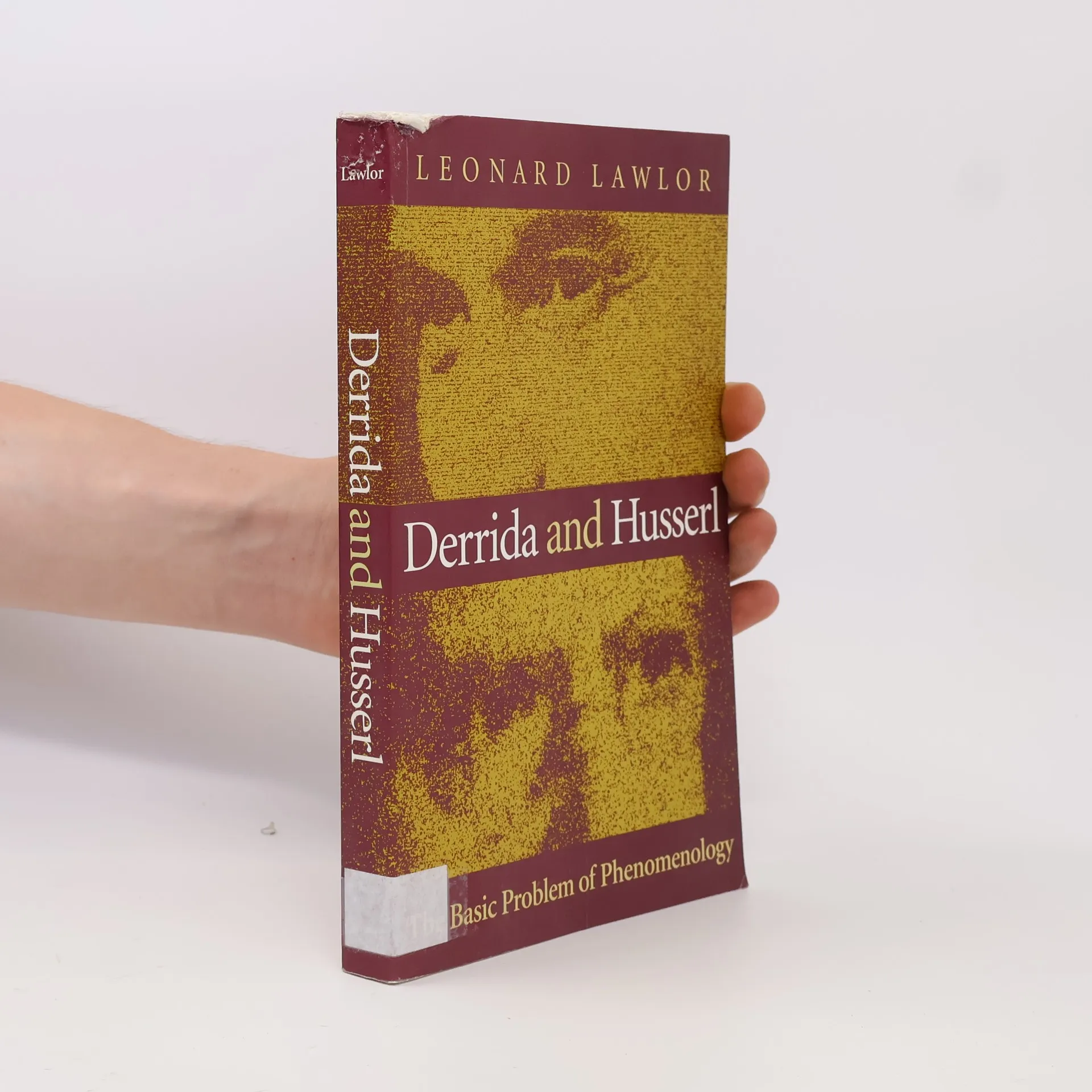
What is the nature of the relationship of Jacques Derrida and deconstruction to Edmund Husserl and phenomenology? Is deconstruction a radical departure from phenomenology or does it trace its origins to the phenomenological project? In Derrida and Husserl, Leonard Lawlor illuminates Husserl’s influence on the French philosophical tradition that inspired Derrida’s thought. Beginning with Eugen Fink’s pivotal essay on Husserl’s philosophy, Lawlor carefully reconstructs the conceptual context in which Derrida developed his interpretation of Husserl. Lawlor’s investigations of the work of Jean Cavaillès, Tran-Duc-Thao, and Jean Hyppolite, as well as recent texts by Derrida, reveal the depth of Derrida’s relationship to Husserl’s phenomenology. Along the way, Lawlor revisits and sheds light on the origin of many important Derridean concepts, such as deconstruction, the metaphysics of presence, différance, intentionality, the trace, and spectrality.
The Cambridge Foucault Lexicon
- 758 páginas
- 27 horas de lectura
The Cambridge Foucault Lexicon is a reference tool that provides clear and incisive definitions and descriptions of all of Foucault's major terms and influences, including history, knowledge, language, philosophy, and power. It also includes entries on philosophers about whom Foucault wrote and who influenced Foucault's thinking, such as Deleuze, Heidegger, Nietzsche, and Canguilhem. The entries are written by scholars of Foucault from a variety of disciplines such as philosophy, gender studies, political science, and history. Together, they shed light on concepts key to Foucault and to ongoing discussions of his work today.