
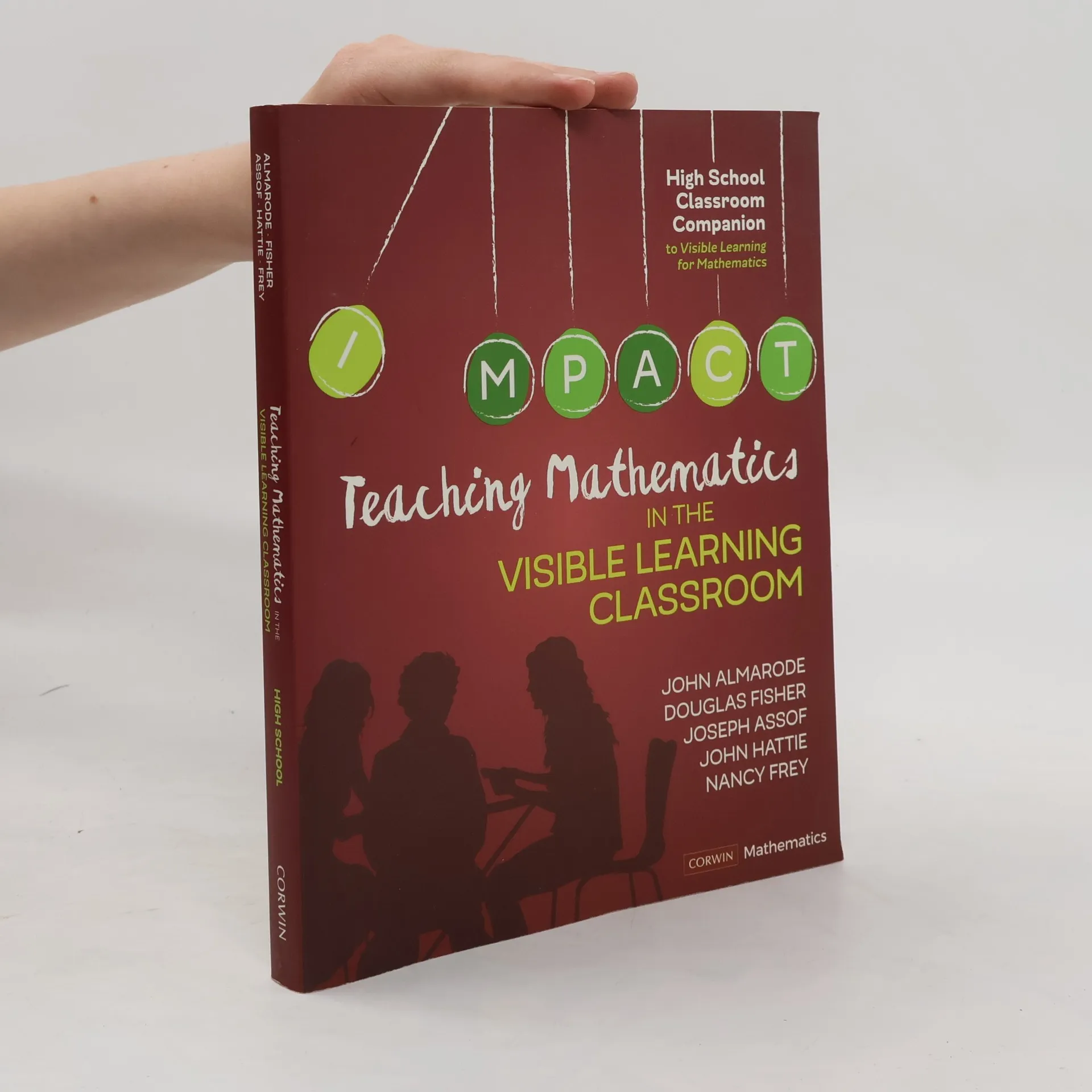
How can teachers generate those lightbulb aha moments of understanding for
their students? This book helps to answer that question by showing Visible
Learning strategies in action in high-impact mathematics classrooms.
Provide students a clear view of what success looks like for any process, task, or product. What does success look like for your students? How will they know if they have learned? This essential component of teaching and learning can be difficult to articulate but is vital to achievement for both teachers and students. The Success Criteria Playbook catapults teachers beyond learning intentions to define clearly what success looks like for every student--whether face-to-face or in a remote learning environment. Designed to be used collaboratively in grade-level, subject area teams--or even on your own--the step-by-step playbook expands teacher understanding of how success criteria can be utilized to maximize student learning and better engage learners in monitoring and evaluating their own progress. Each module is designed to support the creation and immediate implementation of high-quality, high impact success criteria and includes: - Templates that allow for guided and independent study for teachers. - Extensive STEM-focused examples from across the K-12 STEM curriculum to guide teacher learning and practice. - Examples of success criteria applied across learning domains and grades, including high school content, skills, practices, dispositions, and understandings.
Feedback keeps learning moving forward. Picture water pouring into a crystal goblet. That's how clear and dynamic feedback must be. You can achieve that perfect swirl of giving, receiving, and integrating feedback with this remarkable book, which is organized into 16 modules for self-study or PLCs. Major concepts include: Defining Feedback: learn the most useful types of feedback, why to align them with transparent criteria, how to gather evidence. 4 C's of Feedback: offer it with care, credibility, clarity, and clear communication Gathering Evidence for Feedback: use a balance of verbal, written, and kinesthetic responses; peer collaboration, checks-for-understanding, technology, and more.
Leading rigorous instruction is no easy task. This series is a powerful, yet simple model for deepening student's learning experiences and focuses on urgent high impact practices that creatively meet and extend the curriculum standards and serves as a road map that has tons of grab and go ideas. These guides are a "must have" resource that new and experienced teachers will return to time and time again to refine their skills. -- Lakita Combs Read less