

Bookbot

Cédric Durand

    Das Prinzip Verzweigung
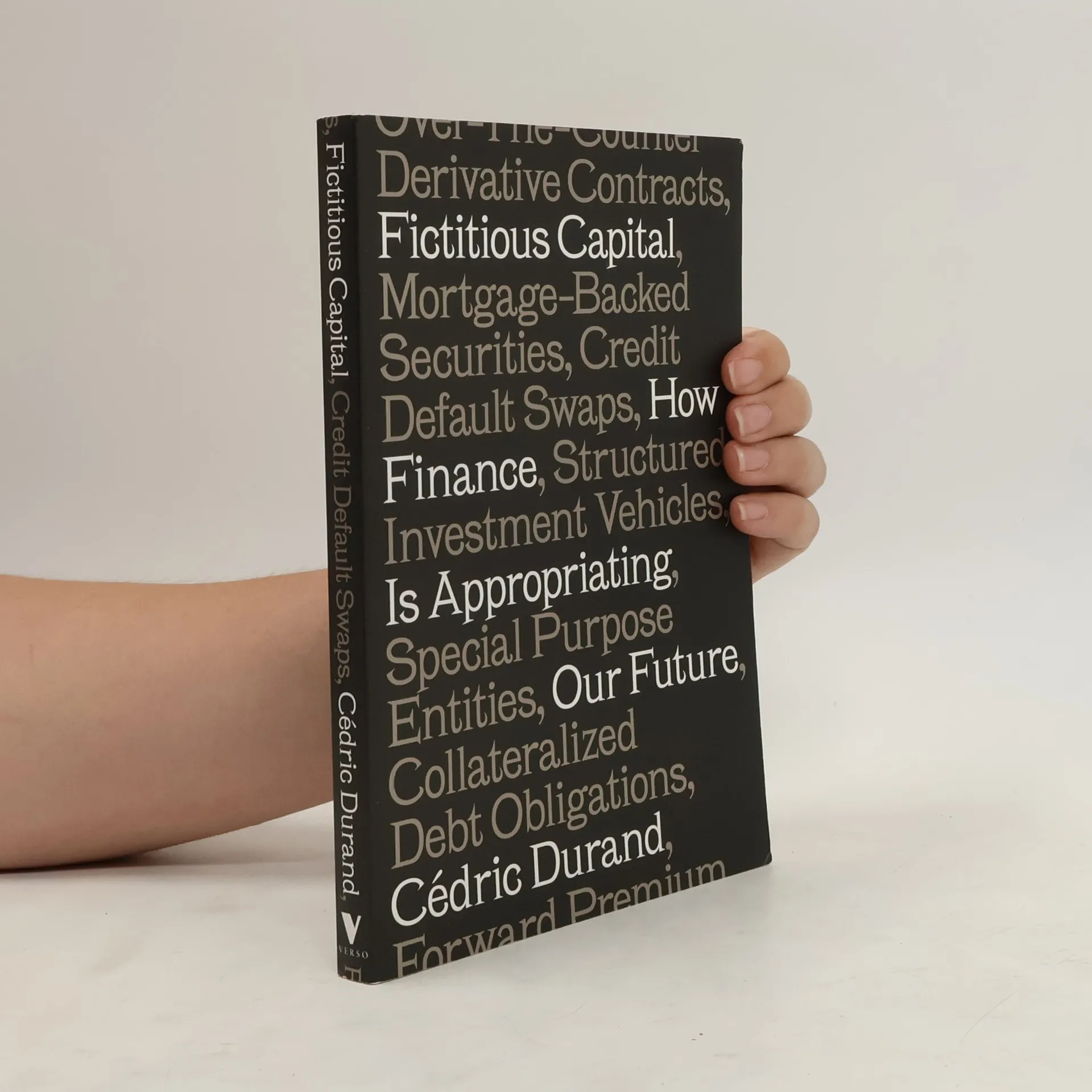
    Fictitious Capital
    How Silicon Valley Unleashed Techno-feudalism
    • How Silicon Valley Unleashed Techno-feudalism

      The Making of the Digital Economy

      • 240 páginas
      • 9 horas de lectura

      Exploring the decline of the New Economy, this book delves into the emergence of techno-feudalism, a system characterized by a digital divide and the concentration of wealth and power in the hands of a few. It critiques the socio-economic implications of this shift, highlighting how technology has reshaped societal structures, often leading to increased inequality and diminished opportunities for the masses. Through insightful analysis, the author examines the consequences of this regression and the challenges it poses for the future.

      How Silicon Valley Unleashed Techno-feudalism
      3,7
    • Fictitious Capital

      • 164 páginas
      • 6 horas de lectura

      Cédric Durand is a promising young French economist whose new book offers a significant intervention into understanding capitalism's excesses over the past forty years and the rise of finance. Durand provides an insightful analysis of finance-driven capitalism, questioning its prosperity amid declining investment and productivity. He argues that the connection between the shareholder value principle and the globalization of the real economy is key to this phenomenon. The book explores the destructive role of finance in contemporary political economy, filled with brilliant insights and a broad historical and theoretical scope. Utilizing Marx's concept of 'fictitious capital,' Durand sheds light on the inner workings of modern global capitalism and challenges the obfuscations of mainstream economics and neoliberal thought regarding finance's influence. Students seeking to grasp the precarious political and economic landscape will find this exposition rich in data and clear in theory. Reading this compelling work equips readers with the knowledge necessary for the challenges ahead.

      Fictitious Capital
      3,8
    • Das Prinzip Verzweigung

      Über ökologische Planung in Wirtschaft und Gesellschaft

      • 328 páginas
      • 12 horas de lectura

      Wie lässt sich die ökologische Transformation realisieren – nicht als spontane Anpassung, sondern als bewusster, gemeinschaftlich gesteuerter Prozess? In »Das Prinzip Verzweigung« fordern Durand und Keucheyan gesellschaftliche Planung, um Produktion, Energie und Konsum im Rahmen der planetaren Grenzen demokratisch zu organisieren. Sie zeigen, dass die ökologische Krise nicht auf einen Mangel an Ideen, sondern auf einen Mangel an Koordination zurückgeht. Sie knüpfen an historische Erfahrungen der Wirtschaftsplanung in Krisenund Kriegszeiten an – und sie denken radikal neu: dezentral, partizipativ und ökologisch. Gegen die Ideologie des freien Marktes formulieren sie die Prinzipien einer planbaren Zukunft, in der gesellschaftliche Bedürfnisse und ökologische Realitäten wieder zur Deckung kommen. Ihr Plädoyer gilt einer neuen Kultur der Verantwortung, die Planung nicht als Zwang, sondern als kollektive Gestaltung begreift – als Voraussetzung für Freiheit, Gleichheit und Nachhaltigkeit. Ein eindringliches, kämpferisches Buch über die Kunst, das Kommende zu gestalten.

      Das Prinzip Verzweigung