

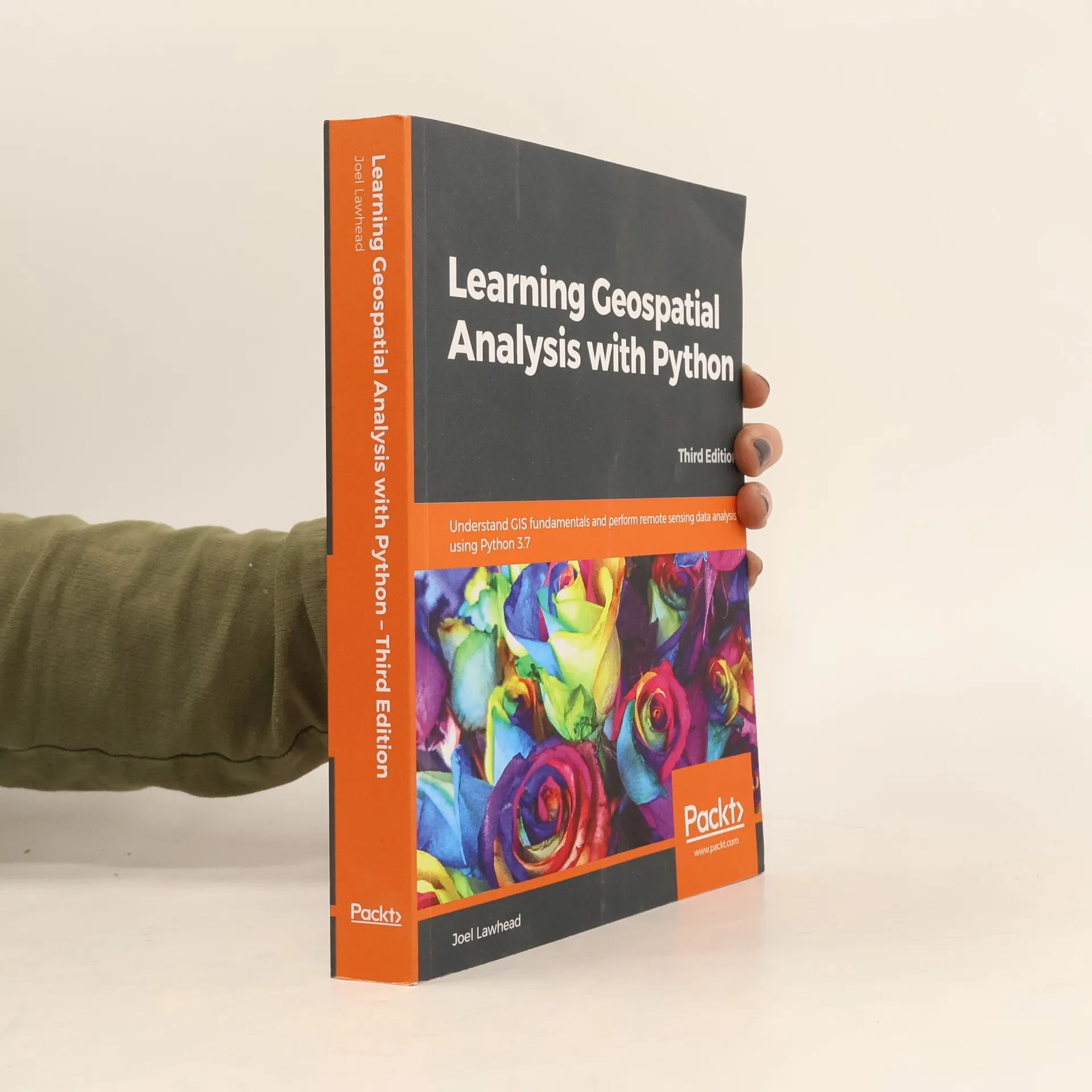
Learning Geospatial Analysis with Python
Understand GIS Fundamentals and Perform Remote Sensing Data Analysis Using Python 3.7 - Third Edition
- 456 páginas
- 16 horas de lectura
Learn the core concepts of geospatial data analysis for building actionable GIS applications. This guide introduces GIS solutions using the latest features in Python 3.7 and explores various GIS tools and libraries, including PostGIS, QGIS, and PROJ. You'll automate geospatial analysis workflows with Python and Jupyter, applicable across diverse domains like defense, farming, and medicine. The book covers GIS techniques, geodatabases, and geospatial raster data, utilizing built-in tools and libraries in Python 3.7. You'll gain insights into software packages, APIs, and algorithms suitable for various scenarios. Additionally, you'll learn to apply Python GIS processes to different challenges, including working with remote sensing data. By the end, you'll be equipped to create a generic corporate system for managing customer support requests and field personnel. Key learning outcomes include automating workflows, coding a basic GIS in just 60 lines, creating thematic maps with tools like PyShp and OGR, understanding geospatial data formats, producing elevation contours, and applying analysis to real-time data tracking. This book is ideal for Python developers, researchers, or analysts interested in geospatial modeling and GIS analysis, with a foundational knowledge of digital mapping and scripting languages being beneficial.