

Bookbot

Poornachandra Sarang

    Professional Apache 2.0
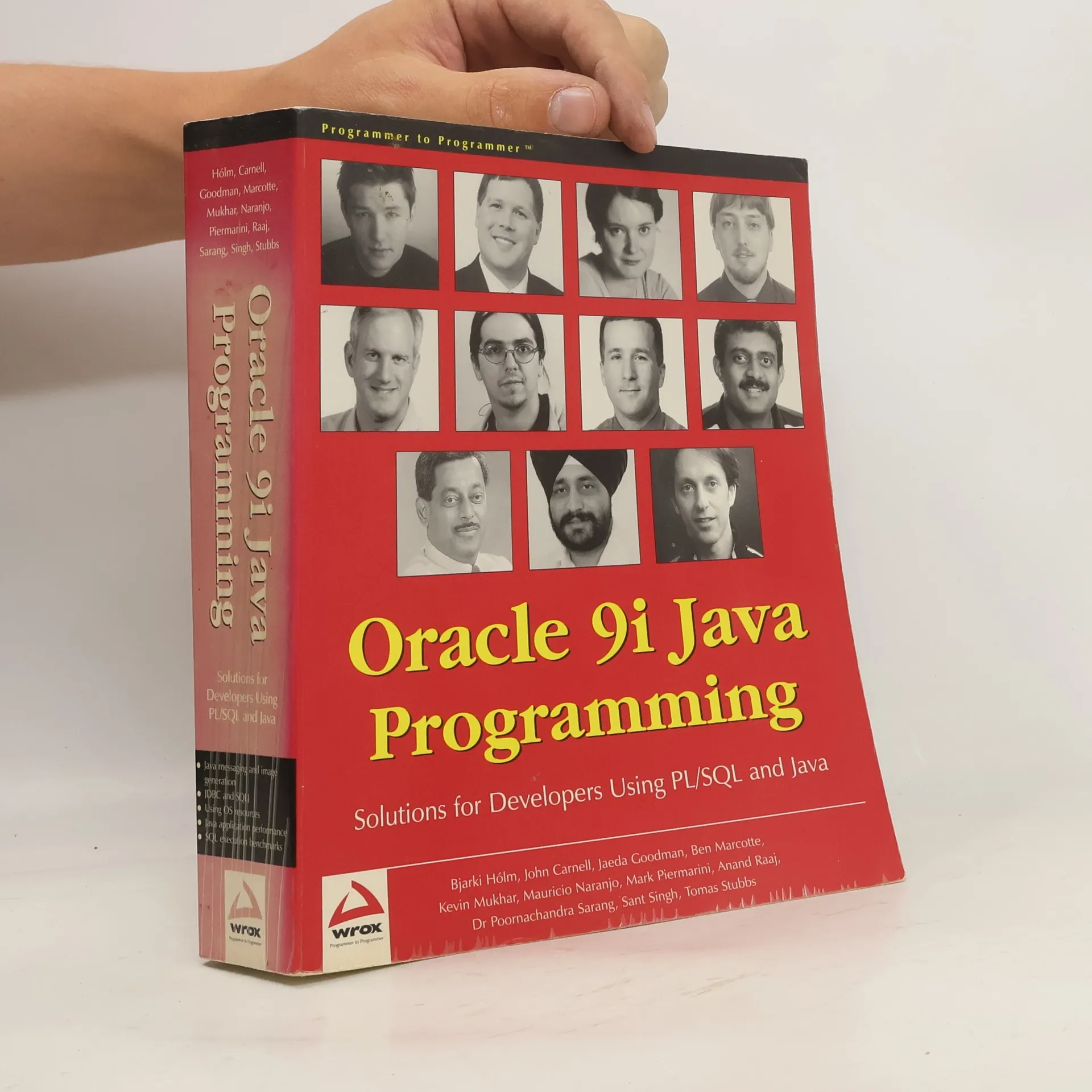
    Programmer to Programmer: Oracle 9i Java Programming
    • Professional Apache 2.0

      • 896 páginas
      • 32 horas de lectura

      The power and flexibility of Apache have made it the most popular web server on the Internet. Now, after three years of development, the Apache Software Foundation has released Apache 2.0. With the introduction of OS-specific Multi-Processing Modules (MPMs) and the Apache Portable Runtime, Apache 2.0 runs on more platforms with greater ease. Apache 2.0 brings a significant revision of the Apache build system, a more powerful architecture, and numerous improvements and additions to modules and directives. This book provides a comprehensive guide to all that is new in Apache 2.0, together with the most recent enhancements to Apache 1.3. New capabilities, support for embedded scripting, performance tuning, monitoring, and server security are presented in focused, easily applied sections. What does this book cover? - The Apache 2.0 web server, including upgrades and updates from Apache 1.3 - New features in Apache 1.3, and migration of Apache 1.3 servers to Apache 2.0 - Installing Apache from a binary distribution or building from source for UNIX and Windows - Delivering dynamic content efficiently and securely with CGI and FastCGI - Virtual hosting with Apache - simple, complex, and en masse - Proxying and caching, fault tolerance and clustering, and benchmarking of Apache servers - Monitoring and securing Apache servers - Extending Apache with third-party modules for Perl, Python, PHP, Tcl, Java, Ruby, and WebDAV

      Professional Apache 2.02002
    • Programmer to Programmer: Oracle 9i Java Programming

      Solutions for Developers Using PL/SQL and Java

      • 825 páginas
      • 29 horas de lectura

      This book focuses on utilizing Java within the Oracle database, emphasizing real-world applications for developers. It explores when to use Java from a performance standpoint, including benchmarks, and highlights scenarios where Java offers functionality that PL/SQL cannot. The text demonstrates Java's ability to access external system resources, such as operating system commands and network sockets, and leverages Java Utilities for messaging and graphics generation. For instance, it details an application that creates a pie chart image from a query and distributes it via JavaMail. Java complements PL/SQL's programming capabilities, allowing for the handling of complex data types and task scheduling alongside Java's file transfer and compression features. The book is structured into four sections: the first provides a rapid Java tutorial for PL/SQL programmers; the second focuses on database access using JDBC and SQLJ, detailing the conversion between Java and SQL data types; the third section applies learned concepts to practical problem-solving with Java and PL/SQL; and the fourth examines performance issues, including Java application tuning and SQL tuning, guiding readers on when to choose between Java and PL/SQL for database operations.

      Programmer to Programmer: Oracle 9i Java Programming2001
      3,0