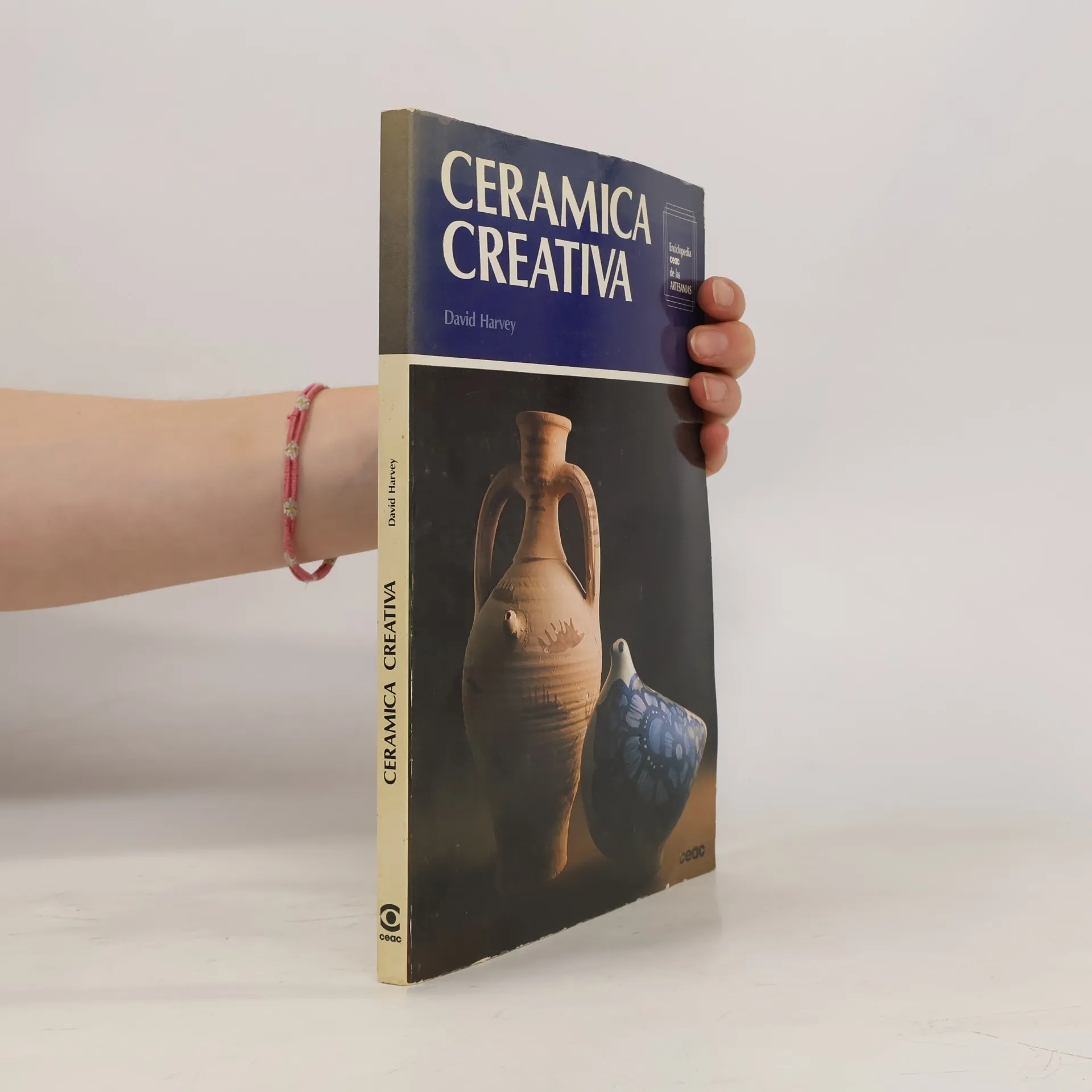
Enciclopedia ceac de las Artesanias: Ceramica creativa
- 126 páginas
- 5 horas de lectura


David Harvey es un destacado teórico social cuya obra ha dado forma a la geografía moderna. Sus extensos ensayos y libros examinan el capitalismo global, en particular su forma neoliberal. Los análisis de Harvey han revitalizado los debates sobre la clase social y los métodos marxistas como herramientas para criticar la sociedad contemporánea. Sus contribuciones al debate social y político son reconocidas internacionalmente.



“My aim is to get you to read a book by Karl Marx called Capital, Volume 1, and to read it on Marx’s own terms…”The biggest financial crisis since the Great Depression has generated a surge of interest in Marx’s work in the effort to understand the origins of our current predicament. For nearly forty years, David Harvey has written and lectured on Capital, becoming one of the world’s most foremost Marx scholars.Based on his recent lectures, this current volume aims to bring this depth of learning to a broader audience, guiding first-time readers through a fascinating and deeply rewarding text. A Companion to Marx’s Capital offers fresh, original and sometimes critical interpretations of a book that changed the course of history and, as Harvey intimates, may do so again.David Harvey’s video lecture course can be found here: davidharvey.org/reading-capital/
David Harvey tackles Marx's notebooks that have spawned wide-ranging and raging controversies
Clean tight copy; close to very good; minor mark on frontispiece; Dust jacket poor - creases and minor tear
"The biggest financial crisis since the Great Depression shows no sign of coming to a close and Marx's work remains key in understanding the cycles that lead to recession. For nearly forty years, David Harvey has written and lectured on Capital, becoming one of the world's most foremost Marx scholars.Based on his recent lectures, and following the success of his companion to the first volume of Capital, Harvey turns his attention to Volume 2, aiming to bring his depth of learning to a broader audience, guiding first-time readers through a fascinating and hitherto neglected text. Whereas Volume 1 focuses on production, Volume 2 looks at how the circuits of capital, the buying and selling of goods, realize value.This is a must-read for everyone concerned to acquire a fuller understanding of Marx's political economy"-- Provided by publisher
David Harvey is unquestionably the most influential, as well as the most cited, geographer of his generation. This book brings together for the first time seminal articles published over three decades on the tensions between geographical knowledges and political power and on the capitalist production of space. schovat popis
Amidst waves of economic crises, health crises, class struggle and neo-fascist reaction, few possess the clarity and foresight of world-renowned theorist, David Harvey. Since the publication of his bestselling A Brief History of Neoliberalism, Harvey has been tracking the evolution of the capitalist system as well as tides of radical opposition rising against it. In The Anti-Capitalist Chronicles, Harvey introduces new ways of understanding the crisis of global capitalism and the struggles for a better world. While accounting for violence and disaster, Harvey also chronicles hope and possibility. By way of conversations about neoliberalism, capitalism, globalization, the environment, technology, social movements and crises like COVID-19, he outlines, with characteristic brilliance, how socialist alternatives are being imagined under very difficult circumstances. In understanding the economic, political and social dimensions of the crisis, Harvey’s analysis in The Anti-Capitalist Chronicles will be of strategic importance to anyone wanting to both understand and change the world.
In this new book, David Harvey seeks to determine what is meant by the term in its different contexts and to identify how accurate and useful it is as a description of contemporary experience.
Neoliberalism - the doctrine that market exchange is an ethic in itself, capable of acting as a guide for all human action - has become dominant in both thought and practice throughout much of the world since 1970 or so. Writing for a wide audience, David Harvey, author of The New Imperialism and The Condition of Postmodernity, here tells the political-economic story of where neoliberalization came from and how it proliferated on the world stage. Through critical engagement with this history, he constructs a framework, not only for analyzing the political and economic dangers that now surround us, but also for assessing the prospects for the more socially just alternatives being advocated by many oppositional movements.
Collecting David Harvey's finest work on Paris during the second empire, Paris, Capital of Modernity offers brilliant insights ranging from the birth of consumerist spectacle on the Parisian boulevards, the creative visions of Balzac, Baudelaire and Zola, and the reactionary cultural politics of the bombastic Sacre Couer. The book is heavily illustrated and includes a number drawings, portraits and cartoons by Daumier, one of the greatest political caricaturists of the nineteenth century.
Marx's Capital explained by its greatest expositor in simple, understandable terms.
This edition clearly explains accounting information's role in making sound business decisions and focuses upon the aspects of accounting practice which are most relevant to the non-specialist manager.
For three centuries the capitalist system has shaped western society, informed its rulers, and conditioned the lives of its people. Has the time come to move beyond it?Using his unrivalled knowledge of the subject, Harvey lays bare the follies of the international financial system, looking at the nature of capitalism, how it works and why sometimes it doesn't. He examines the vast flows of money that surge round the world in daily volumes well in excess of the sum of all its economies. He looks at the cycles of boom and bust in the world's housing and stock markets and shows that periodic episodes of meltdown are not only inevitable in the capitalist system but essential to its survival. The Enigma of Capital is a timely call-to-arms for the end of the capitalism, and makes a compelling case for a new social order that would allow us to live within a system that could be responsible, just and humane
The world's leading geographer establishes new foundations for the understanding of social life at different times and different places. * Reintroduces concepts of value into postmodern social theory.
Following on from The Enigma of Capital, the world's leading Marxist thinker explores the hidden workings of capital and reveals the forces that will lead inexorably to the demise of our system.
People around the world are confused and concerned. Is it a sign of strength or of weakness that the US has suddenly shifted from a politics of consensus to one of coercion on the world stage? What was really at stake in the war on Iraq? Was it all about oil and, if not, what else was involved? What role has a sagging economy played in pushing the US into foreign adventurism and what difference does it make that neo-conservatives rather than neo-liberals are now in power? Whatexactly is the relationship between US militarism abroad and domestic politics?These are the questions taken up in this compelling and original book. Closely argued but clearly written, 'The New Imperialism' builds a conceptual framework to expose the underlying forces at work behind these momentous shifts in US policies and politics. The compulsions behind the projection of US power on the world as a 'new imperialism' are here, for the first time, laid bare for all to see.This new paperback edition contains an Afterword written to coincide with the result of the 2004 American presidental election.
Long before Occupy, cities were the subject of much utopian thinking. They are the centers of capital accumulation as well as of revolutionary politics, where deeper currents of social and political change rise to the surface. Do the financiers and developers control access to urban resources or do the people? Who dictates the quality and organization of daily life? Rebel Cities places the city at the heart of both capital and class struggles, looking at locations ranging from Johannesburg to Mumbai, from New York City to São Paulo. Drawing on the Paris Commune as well as Occupy Wall Street and the London Riots, Harvey asks how cities might be reorganized in more socially just and ecologically sane ways—and how they can become the focus for anti-capitalist resistance.
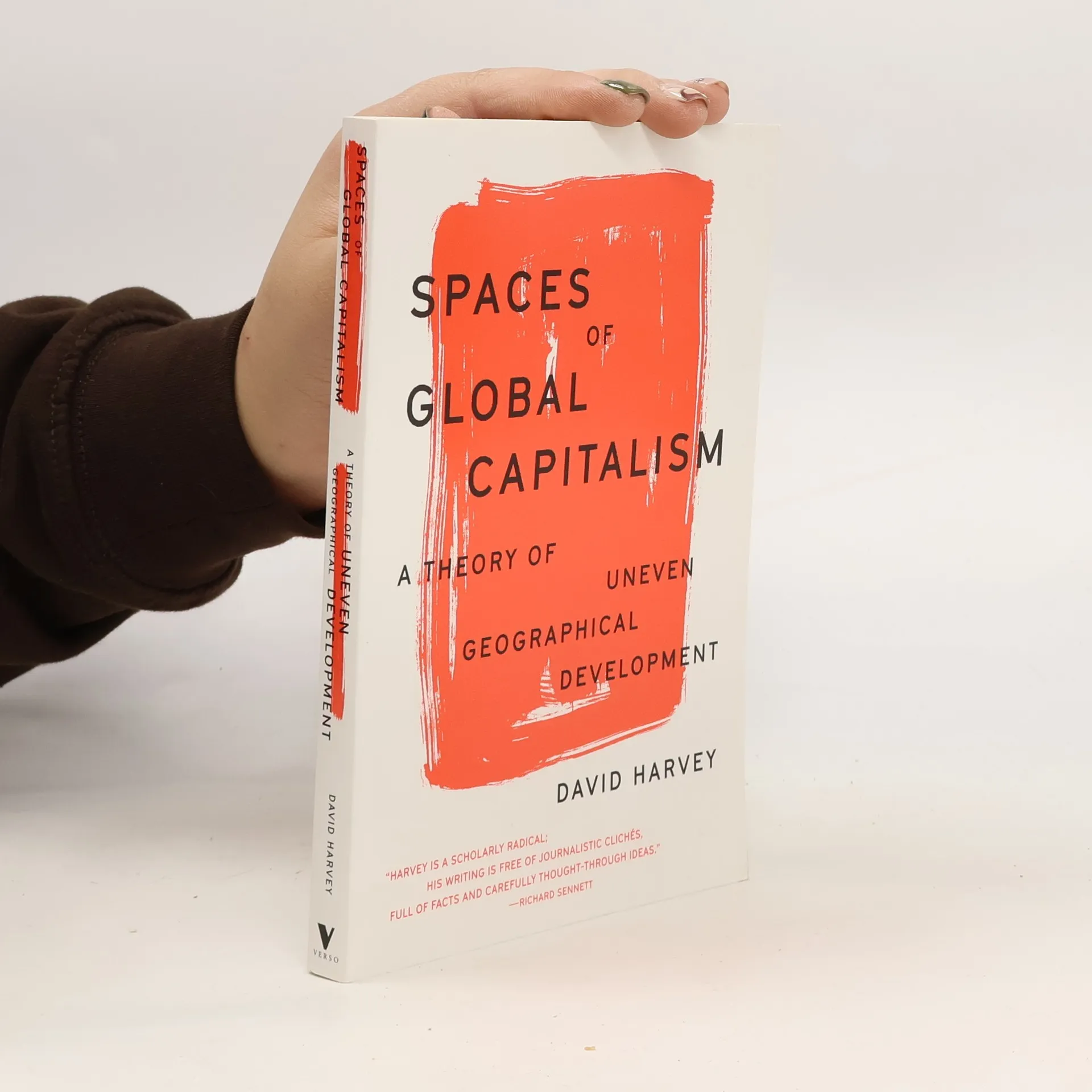
Fiscal crises have cascaded across much of the developing world with devastating results, from Mexico to Indonesia, Russia and Argentina. The extreme volatility in contemporary political economic fortunes seems to mock our best efforts to understand the forces that drive development in the world economy. David Harvey is the single most important geographer writing today and a leading social theorist of our age, offering a comprehensive critique of contemporary capitalism. In this fascinating book, he shows the way forward for just such an understanding, enlarging upon the key themes in his recent work: the development of neoliberalism, the spread of inequalities across the globe, and ‘space’ as a key theoretical concept. Both a major declaration of a new research programme and a concise introduction to David Harvey’s central concerns, this book will be essential reading for scholars and students across the humanities and social sciences.
An investigation into farming practices throughout a period of seismic change.
During 1990-94, many locomotive classes became extinct, but new builds helped to redress the balance. Speedlink ended, but the first Eurostars appeared. In 1994, the Channel Tunnel opened. This book chronicles these developments. It also uses pictures to record the end of an important railway era. schovat popis
: These additions encompass retinopathy of prematurity, ventilation and intensive care management, respiratory audit, necrotising enterocolitis, normal and abnormal pathology, pharmacology, ethics and organising neonatal care. This remains one of the few readable books covering all aspectsof the special management and intensive care of very small neonates. An increasing number of very low birth weight babies are now being successfully delivered and, with advances in technology, thriving.
Die Kluft zwischen Marx’ theoretischen und historischen Schriften wird kontrovers diskutiert. David Harvey nutzt seine These der 'Akkumulation durch Enteignung' zur Analyse des globalen Kapitalismus und führt die marxistische Methodendiskussion fort. Andere Autoren kritisieren Harveys Ansatz und bieten eigene Interpretationen von Marx’ Methodenkapitel an. Harvey wendet Marx’ Erkenntnisse auf aktuelle ökonomische Bedingungen an und thematisiert die Verallgemeinerbarkeit der 'Kapital-Methode' im Kontext des Sozialismus.
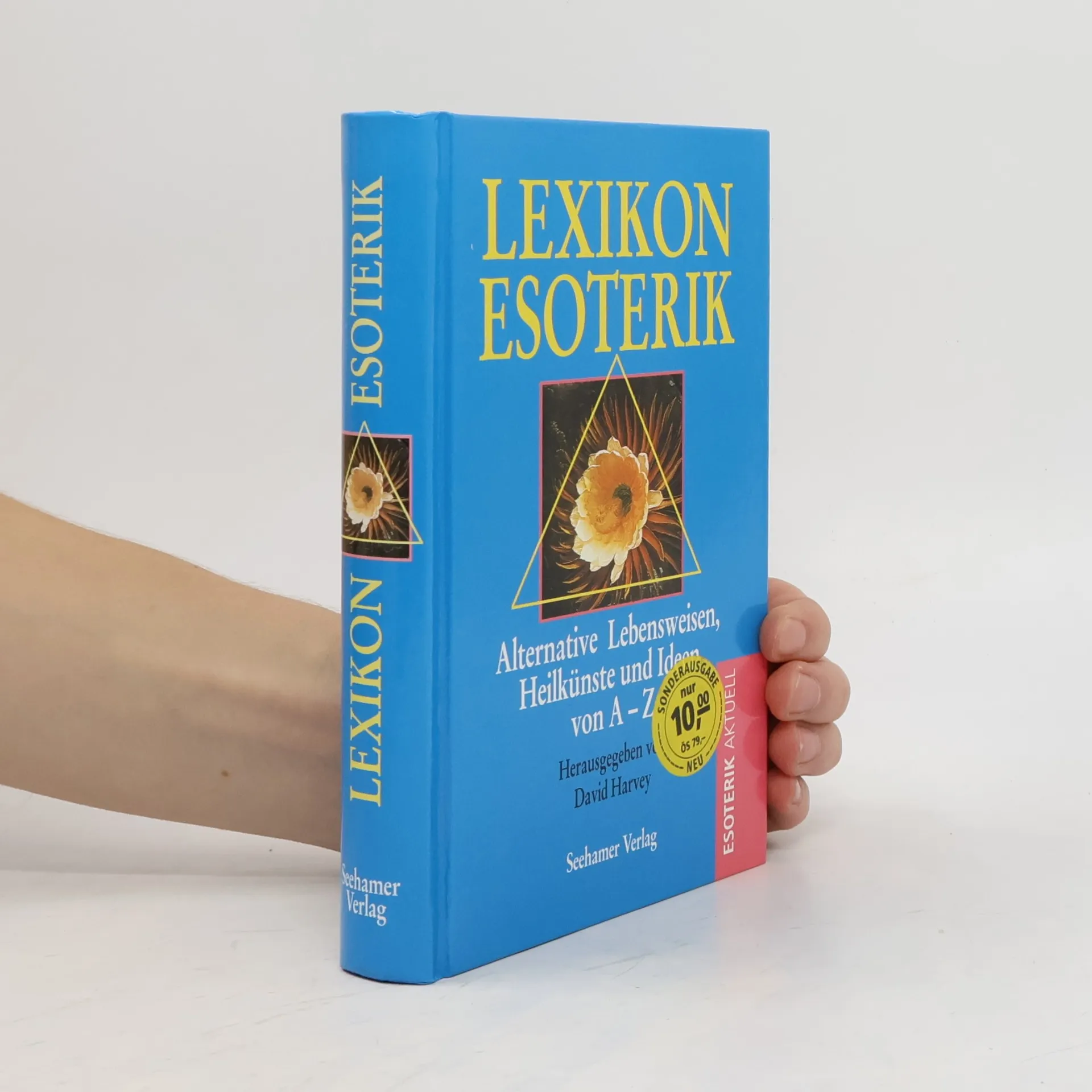
Lexikon Esoterik - Alternative Lebenswiesen, Heilkünste und Ideen von A-Z - bk154; Seehamer Verlag; Hrg. David Harvey; Paperback; 1997
Ein Begleiter für Einsteiger und Fortgeschrittene Aus dem Amerikanischen
Nachdem Roman Rosdolsky in den 1950er-Jahren in der New Yorker Public Library auf den kaum bekannten Text von Karl Marx’ »Grundrissen« stieß, bezeichnete er ihn als ein grundlegendes Werk der marxistischen Theorie, das jedoch aufgrund seiner Form und Ausdrucksweise schwer zugänglich ist. David Harvey möchte mit seinem Werk diesen komplexen Text einem breiten Publikum näherbringen. Marx’ Ziel war es, die Rolle des Kapitals für die Entwicklung und das Verständnis der bürgerlichen Gesellschaft zu zeigen. Harvey respektiert Marx’ Wunsch, die Widersprüche der bürgerlichen Produktion aufzuzeigen, und verdeutlicht die Relevanz seiner Analysen für den gegenwärtigen Kapitalismus anhand vieler Beispiele. Das Buch wird als unverzichtbarer Begleiter zu den »Grundrissen« beschrieben und ist sowohl für erfahrene Leser als auch für Einsteiger hilfreich. Leser betonen, dass Harveys Erklärungen den Text erhellen und einen neuen Zugang ermöglichen. Der Inhalt umfasst eine Einleitung des Autors, verschiedene Aspekte der Geldzirkulation, der Produktion des Kapitals, die Rolle von Raum und Zeit, sowie gesellschaftliche Klassen und politische Ökonomie. Ein Anhang bietet Einblicke in Marx’ Pläne für zukünftige Arbeiten.
Ein hellrotes Bändchen aus den 2010er Jahren
Zwei Grundlagentexte für die kapitalismuskritische Bewegung beleuchten die urbanen Wurzeln der Finanzkrise. Die Theoriebildung im Marxismus zeigt strukturelle Ähnlichkeiten zur bürgerlichen Ökonomie. Die Rolle des Immobilienmarktes in der Krise 2007-09 sowie die damit verbundene Arbeitslosigkeit und Sozialkürzungen bleiben unzureichend analysiert, da die Urbanisierung und Bebauung nicht in die allgemeine Theorie der Bewegungsgesetze des Kapitals integriert werden. Viele marxistische Theoretiker tendieren dazu, den Crash als Manifestation ihrer bevorzugten Krisentheorien zu interpretieren, sei es der Fall der Profitrate oder Unterkonsumtion. Die Definition der Kommunisten, wie sie von Marx und Engels im Kommunistischen Manifest beschrieben wird, umfasst alle, die aktiv an einer anderen Zukunft arbeiten, als sie der Kapitalismus bietet. Diese Sichtweise zeigt, dass der traditionelle Kommunismus weitgehend obsolet ist, während Millionen von Menschen bereit sind, den antikapitalistischen Imperativ kreativ umzusetzen. Die Bewegung für alternative Globalisierung in den späten 1990er Jahren, die verkündete, „Eine andere Welt ist möglich“, legt nahe, dass auch „Ein anderer Kommunismus möglich“ ist. Um grundlegende Veränderungen unter den heutigen Bedingungen der kapitalistischen Entwicklung zu erreichen, ist ein solcher Ansatz notwendig.
„Der Kapitalismus steht unter dem Druck, die Umschlagszeit zu senken, die Zirkulation des Kapitals zu beschleunigen und folglich den Zeithorizont der Entwicklung zu revolutionieren. Aber dies gelingt nur durch langfristige Investitionen (z. B. in die bebaute Umwelt, in ausgefeilte und stabile Infrastrukturen für Produktion, Konsumtion, Austausch, Kommunikation und Ähnliches). (.) Der Kapitalismus steht unter dem Druck, alle räumlichen Barrieren zu eliminieren, Raum durch Zeit zunichte zu machen (Marx), aber dies kann nur durch die Erzeugung eines fixen Raumes gelingen. Dadurch erzeugt der Kapitalismus eine geographische Landschaft (.), die für seine eigene Akkumulationsdynamik zu einem bestimmten Moment seiner Geschichte geeignet ist, nur um diese geographische Landschaft wieder zerstören und zu einem späteren Zeitpunkt erneut aufbauen zu müssen, um sie der Akkumulation anzupassen.“ (David Harvey)
Čo ak ekonomický poriadok, ktorý dnes považujeme za prirodzený, nie je výsledkom nevyhnutného vývoja, ale dôsledkom konkrétnych politických rozhodnutí a mocenských zápasov? V tejto už klasickej práci skúma David Harvey zrod a globálne šírenie neoliberalizmu – ideológie, ktorá od 70. rokov 20. storočia zásadne pretvorila štát, ekonomiku aj každodenný život miliónov ľudí. Harvey sleduje cestu neoliberalizmu od ekonomických kríz a experimentov v Čile cez vlády Margaret Thatcherovej a Ronalda Reagana až po transformáciu Číny a vzostup finančného kapitálu. Ukazuje, ako privatizácia, deregulácia a oslabovanie verejných inštitúcií zmenili rozloženie moci a bohatstva v súčasnom svete. Kniha neprináša len dejiny jednej ekonomickej doktríny. Je aj naliehavou analýzou spoločenských dôsledkov rastúcich nerovností, oslabovania demokracie a komodifikácie verejného života. Harveyho dôkladná a prístupná interpretácia ponúka nevyhnutný rámec na pochopenie sveta po studenej vojne – a na premýšľanie o jeho možných alternatívach.
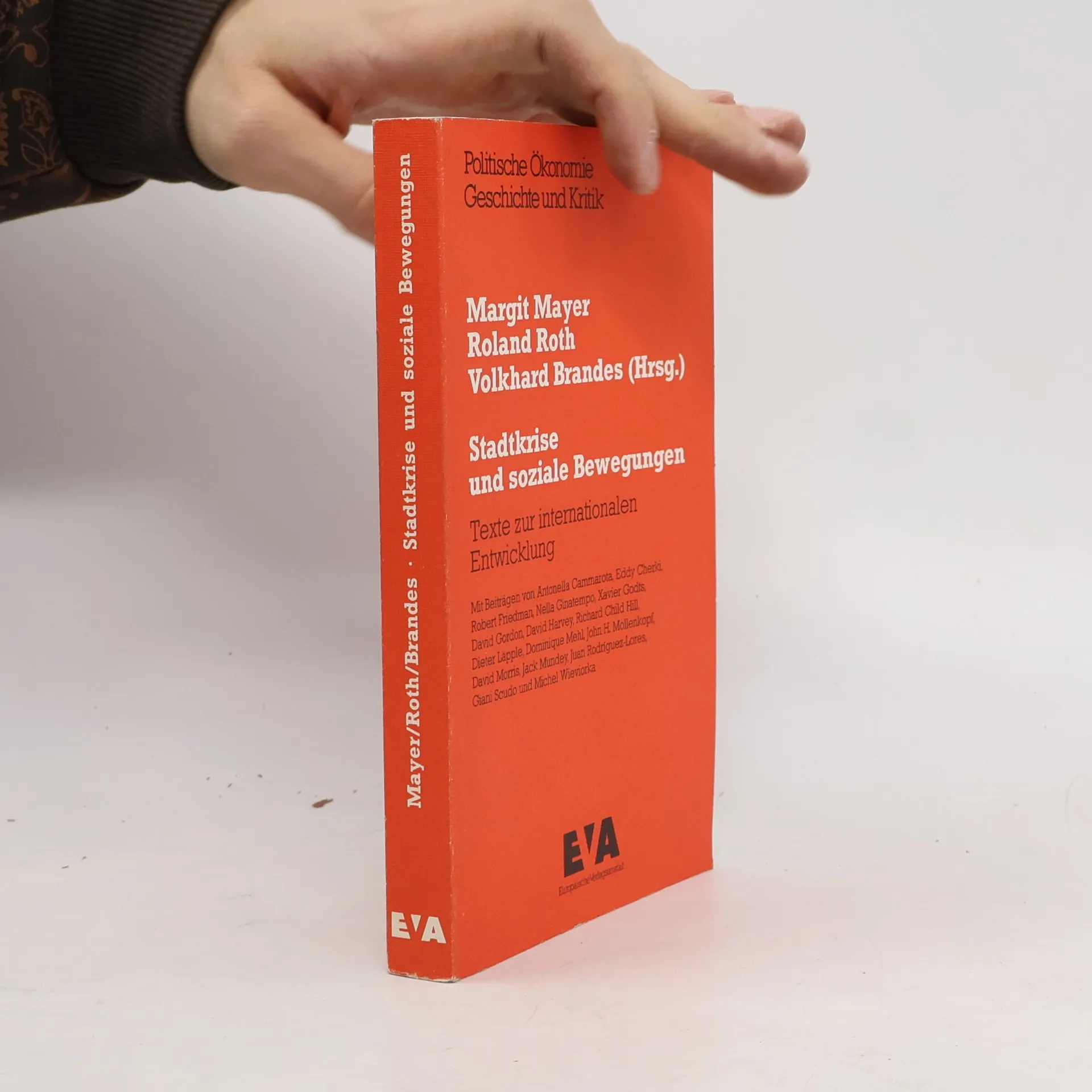
Texte zur internationalen Entwicklung
This book makes available to undergraduates the author's recent writing (including a new essay on flexible accumulation and the city of spectacle) on the physical and social environment of western cities, in which he explores the links between the processes and pressures of urbanization, the culture of urban life - in effect the culture of the west - and the nature of capitalism in the post-industrial world. The collection contains three of the five essays from "Consciousness and the Urban Experience" and four of the eight from "The Urbanization of Capital". The essays embody the combination of theory, observation and interpretation most characteristic of the author's recent work, and address the needs and interests of students of urban processes in departments of geography, sociology and politics. The book is aimed at students of urbanization and urban society in departments of geography, sociology and politics.
Nos auteurs n'ont pas d'imagination, ils ne font que vous raconter des HISTOIRES VRAIES dans lesquelles, l'argent, le pouvoir, la perversion, la passion et la folie mènent des hommes et des femmes à commettre des actes irréversibles qui vous plongeront dans l'horreur et vous frissonnerez de terreur encore bien longtemps après la dernière ligne.Pourquoi un fan se transforme-t-il en un meurtrier et en vient-il à tuer son idole? Cette question est abordée dans la narration des meurtres de célébrités telles que : John Lennon et Gianni Versace qui ont bouleversé le monde. Stalker, terme anglais pour harceleur, est entré dans la langue française par la presse « People ». Pour déclarer son amour à Jodie Foster, J.W. Hinckley à attenter à la vie du président Reagan et l'a grièvement blessé. Brad Pitt, Steven Spielberg, Madonna et d'autres stars sont terrorisées par des stalkers et nous vous en rapportons les faits.Ce livre contient des photographies parfois insoutenables.