

A challenging exploration of the visual arts from 1880 through 1920, Modern Starts is an unconventional guide to the beginnings of modernism. Deliberately abandoning customary labels--such as Fauvism, Cubism, and Futurism--and accepted chronological ordering, Modern Starts offers many pathways, each independent and self-sufficient, intended to suggest fresh modes of looking at and thinking about works both very familiar and quite unfamiliar. Loosely organized into three thematic sections, the book begins with "People," treating the great period of early modern figurative art from Rodin and Matisse to Munch. "Places" features landscapes and cityscapes by such artists as Atget, Cazanne, de Chirico, and Lager. "Things" addresses the importance of object-like works, such as Duchamp's "Readymades" and Brancusi's sculptures; and representations of things from Picasso's still lifes to Lucian Bernhard's advertising posters. Provocative juxtapositions, new contexts, and inventive interplays of mediums provide a stimulating look at the beginnings of modernism. Published to coincide with MoMA2000, an 18-month series of exhibitions at The Museum of Modern Art, New York drawn from the Museum's incomparable collection. Modern Starts is the first in a series of three volumes focusing on distinct 1880-1920, 1920-60, and 1960-2000.
The Museum of Modern Art (New York) Orden de los libros (cronológico)

Museum of Modern Art New York
- 1000 páginas
- 35 horas de lectura
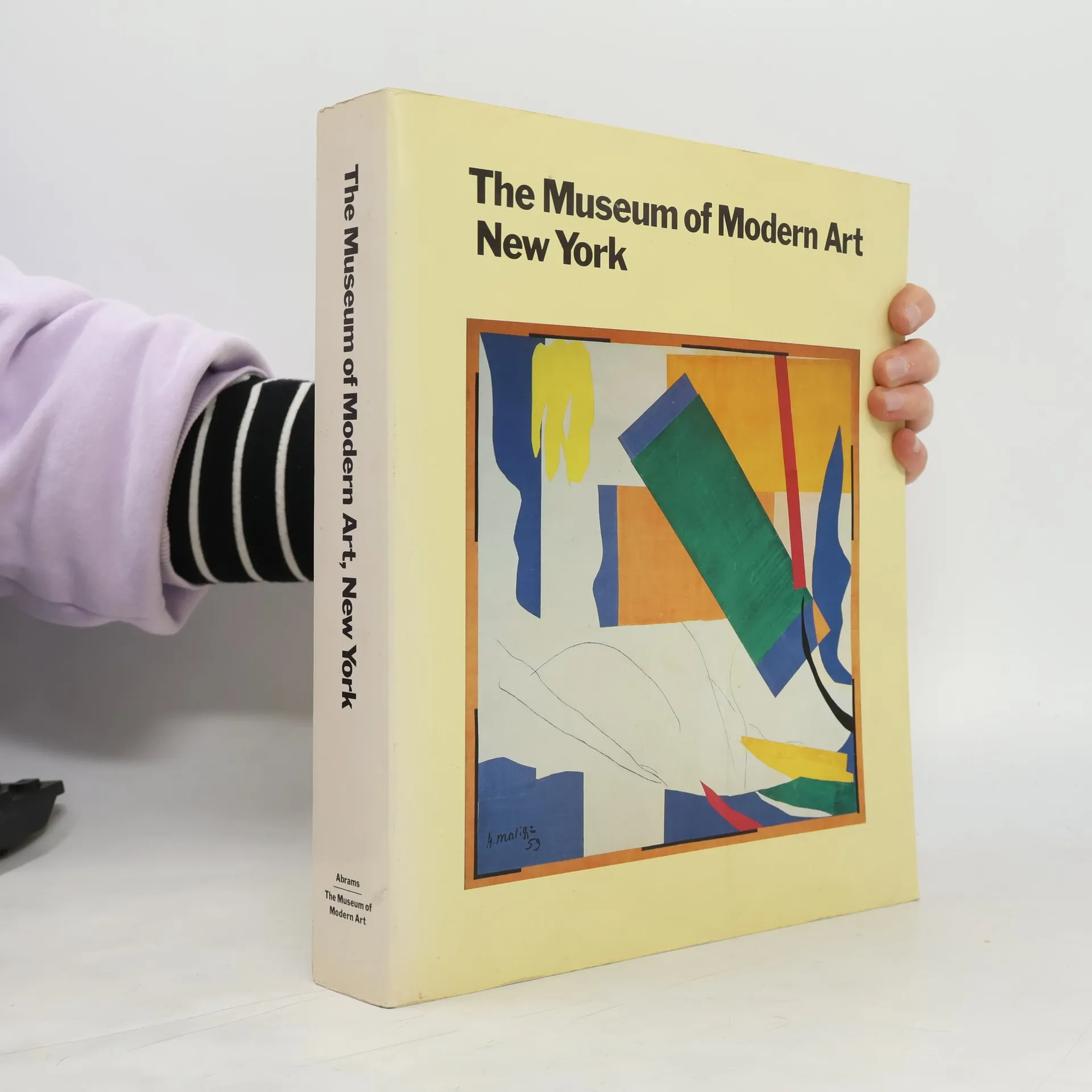
To choose 1,000 works to represent a museum whose total collection exceeds 100,000--now that's curating. Imagine the restraint required to compile a catalog of the collection of the Museum of Modern Art in New York--the first museum exclusively dedicated to art of the 19th and 20th centuries, and the first to recognize modern-art disciplines (photography, film, industrial design, installation). The collection is carefully and tastefully represented in this 600-page tome. Multiple frontispieces representing each of the museum's departments welcome the reader, followed by a thorough and illustrated introduction to the museum's directors, exhibitions, donors, acquisitions, and architecture. Then comes the good stuff: 1,000 works from the museum's six curatorial departments: Painting and Sculpture, Drawings, Prints and Illustrated Books, Architecture and Design, Photography, and Film and Video, each section introduced by an essay explaining the development of the particular collection. Clear, large, color illustrations of Cezanne's The Bather, Munch's Madonna, Wyeth's Christina's World, and sculpture by Oldenburg, Serra, Morris, and Beuys leave a reader gasping, "They have that?" First published in 1984, the book was reprinted in 1997 by Abradale, Abrams's more affordable imprint. While the huge catalog is now less expensive, keep in mind that its content has not been revised since its first edition.