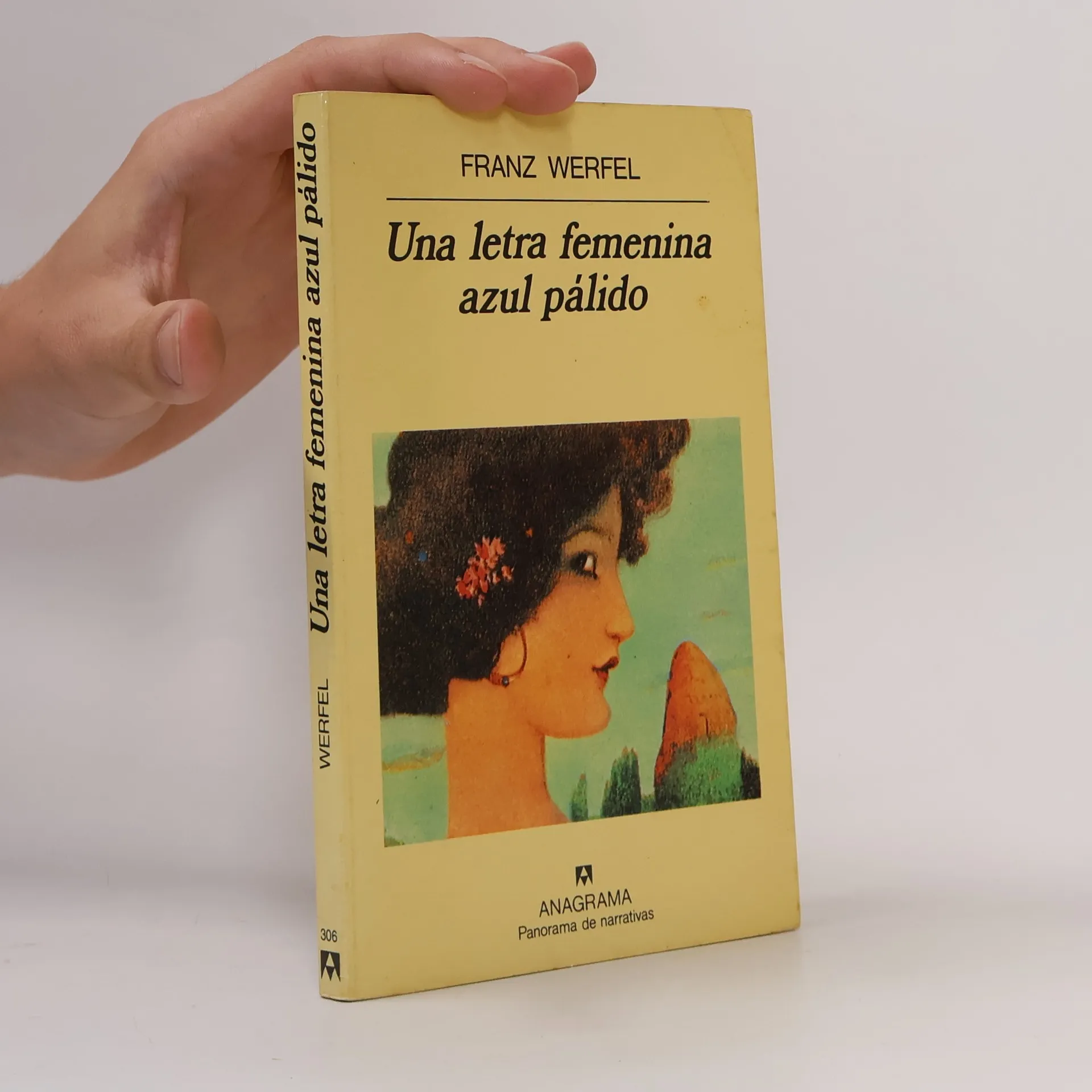
Una letra femenina azul pálido
- 144 páginas
- 6 horas de lectura
In February 1940, Franz Werfel embarked on a new short novel, a departure from his earlier bestsellers, which would unfold as a tragicomic tale reflecting a world on the brink of becoming inhospitable. This narrative serves as a prelude to Holocaust literature, centering on a suppressed love triangle involving Leonidas Tachezy, a high-ranking Austrian bureaucrat; his younger wife Amelie; and Vera Wormser, a Jewish woman from his past. Leonidas had fallen in love with Vera when she was just fourteen, but after marrying Amelie, he encounters Vera again in a German university town. He promises her marriage but ultimately withdraws from her life, returning to his comfortable existence until a letter arrives, penned in Vera's unmistakable pale blue ink. In a manner reminiscent of Humbert Humbert in Lolita, Leonidas recounts his "crime" against Vera to an imaginary courtroom, revealing the characters' evasions and self-deceptions. The story captures the essence of interwar Austria, highlighting the complexities of anti-Semitism and the diverse Austrian populace. This NEA-award-winning translation makes Werfel's novella accessible to a new generation, affirming his place alongside contemporaries like Mann, Kafka, and Musil in the literary canon.