

The maths we learn in school can seem like an abstract set of rules, laid down by the ancients and not to be questioned. In fact, Jordan Ellenberg shows us, maths touches on everything we do, and a little mathematical knowledge reveals the hidden structures that lie beneath the world's messy and chaotic surface. In How Not to be Wrong, Ellenberg explores the mathematician's method of analyzing life, from the everyday to the cosmic, showing us which numbers to defend, which ones to ignore, and when to change the equation entirely. Along the way, he explains calculus in a single page, describes G del's theorem using only one-syllable words, and reveals how early you actually need to get to the airport.
Jordan Ellenberg Libros
1 de enero de 1971



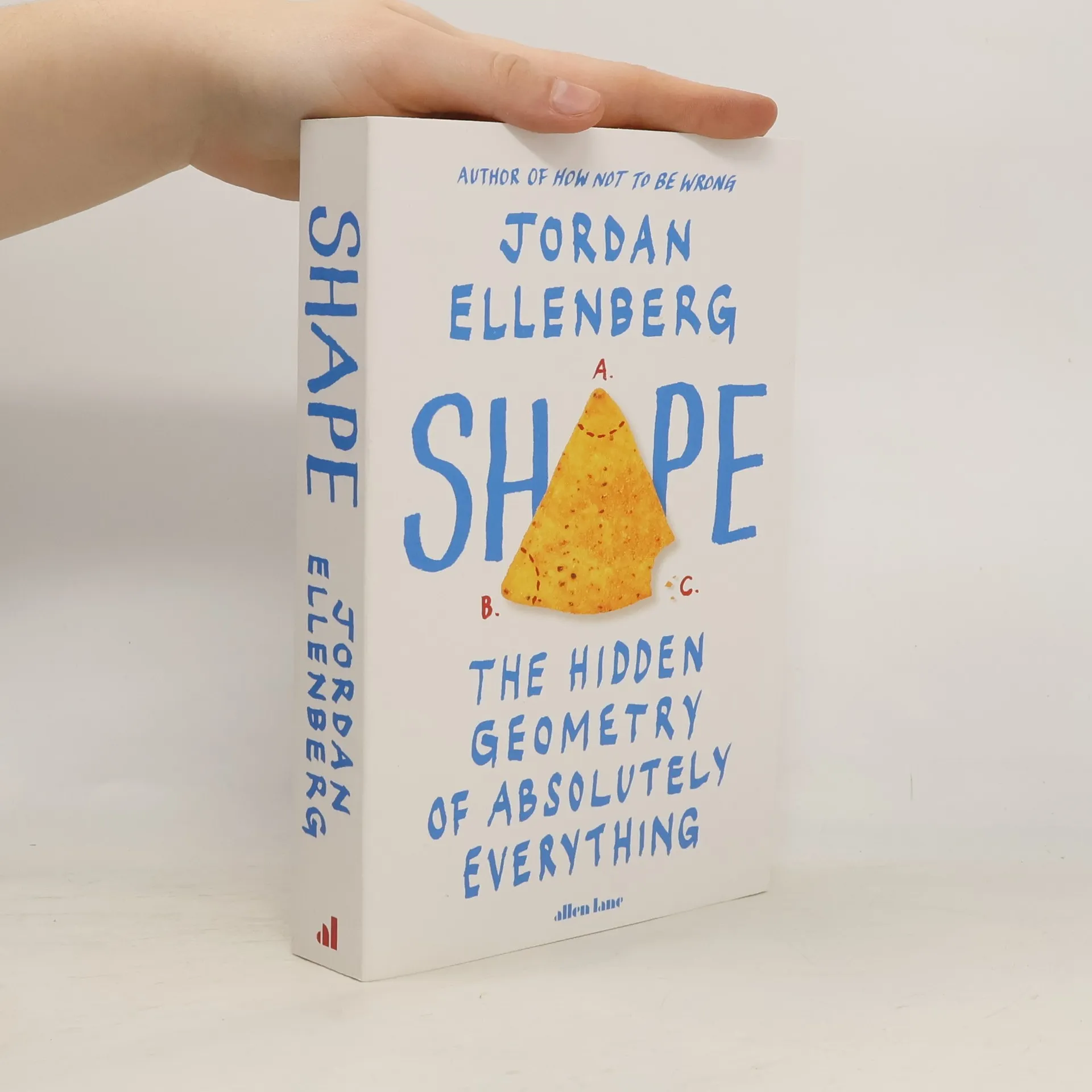

Shape. The Hidden Geometry of Absolutely Everything
- 480 páginas
- 17 horas de lectura
Shape reveals the geometry underneath some of the most important scientific, political, and philosophical problems we face. Geometry asks: Where are things? Which things are near each other? How can you get from one thing to another thing? Those are important questions. Geometry doesn't just measure the world-it explains it. Shape shows us how
Nos âmes perdues
- 539 páginas
- 19 horas de lectura
Deux êtres brisés peuvent-ils renaître ensemble ?Après un tragique accident qui lui a laissé des séquelles aussi bien physiques que psychologiques, Hanna McAlister tente de se reconstruire. Mais ses camarades ne lui rendent pas la tâche facile.Entre moqueries et harcèlement, elle s'enferme un peu plus chaque jour dans sa bulle.Mais lors de sa rentrée en terminale, Hanna fait la connaissance d'Holden Scott, beau garçon au charme ténébreux qui porte les stigmates d'un sombre passé. Derrière le sourire enjôleur, Hanna perçoit les failles d'Holdent.Entre les deux adolescents, l'attirance est bien réèlle. Vont-ils pouvoir s'aider à retrouver le goût de vivre ?Leurs cicatrices réciproques vont-elles disparaître grâce à l'amour de l'autre ?ELLEN STUART est une Picarde de 29 ans qui est passionnée par l'écriture depuis l'âge de 12 ans, âge auquel elle a commencé à écrire ses propres chansons. C'était la bulle dans laquelle elle aimait se réfugier, mettre des mots sur ses émotions. C'est bien plus tard que l'envie dévorante d'écrire un roman a vu le jour pour ne plus jamais s'arrêter. Depuis, elle écrit principalement des histoires avec des héros tourmentés pour exorciser ses propres démons et donner de l'espoir aux gens.Nos âmes perdues est son quatrième roman édité, un an après sa publication sur Wattpad.
Shape
Die verborgene Geometrie von Biologie, Strategie, Demokratie und eigentlich absolut allem
Die meisten Menschen erinnern sich an Geometrie als sterile Übungen im Staub der neunten Klasse. Eine obskure Reihe von seltsamen Schritten zu noch unverständlicheren Beweisführungen, nur um eine Tatsache über Dreiecke zu zeigen, die von vornherein klar war. Und doch ist das nur ein winziger Teil der eigentlichen Geometrie. Jordan Ellenberg – einer der führenden Mathematiker unserer Zeit – offenbart in »Shape«, dass es die Geometrie ist, die hinter einigen der wichtigsten wissenschaftlichen, politischen und philosophischen Probleme steckt, denen wir gegenüberstehen: Wie sollte eine Demokratie ihre Vertreter wählen? Wie kann man verhindern, dass eine Pandemie die Welt überschwemmt? Wie lernen Computer? Können antike griechische Proportionen den Aktienmarkt vorhersagen? Was sollten Kinder in der Schule lernen, wenn sie wirklich denken lernen wollen? Alles Fragen zur Geometrie. Denn schon das Wort »Geometrie« kommt aus dem Griechischen und bedeutet »Vermessung der Welt«. Und selbst das ist eine Untertreibung: Denn die Geometrie misst die Welt nicht nur, sie erklärt sie auch. Jordan Ellenbergs Blickwinkel auf die Welt bietet eine radikal andere Perspektive auf die verborgene Geometrie hinter Biologie, Strategie, Information, Demokratie – und eigentlich absolut allem.