Herbert Spencer Libros
Herbert Spencer fue un destacado pensador de la era victoriana cuya extensa obra exploró un concepto inclusivo de la evolución como desarrollo progresivo en el mundo físico, los organismos biológicos, la mente humana y las sociedades. Un entusiasta exponente de las ideas evolutivas, desarrolló estos conceptos en una amplia gama de disciplinas, incluyendo ética, religión, antropología, economía, teoría política, filosofía, literatura, biología, sociología y psicología. Spencer es especialmente reconocido por acuñar la frase "supervivencia del más apto", un concepto que adaptó del trabajo de Darwin y extendió a los ámbitos de la sociología y la ética.





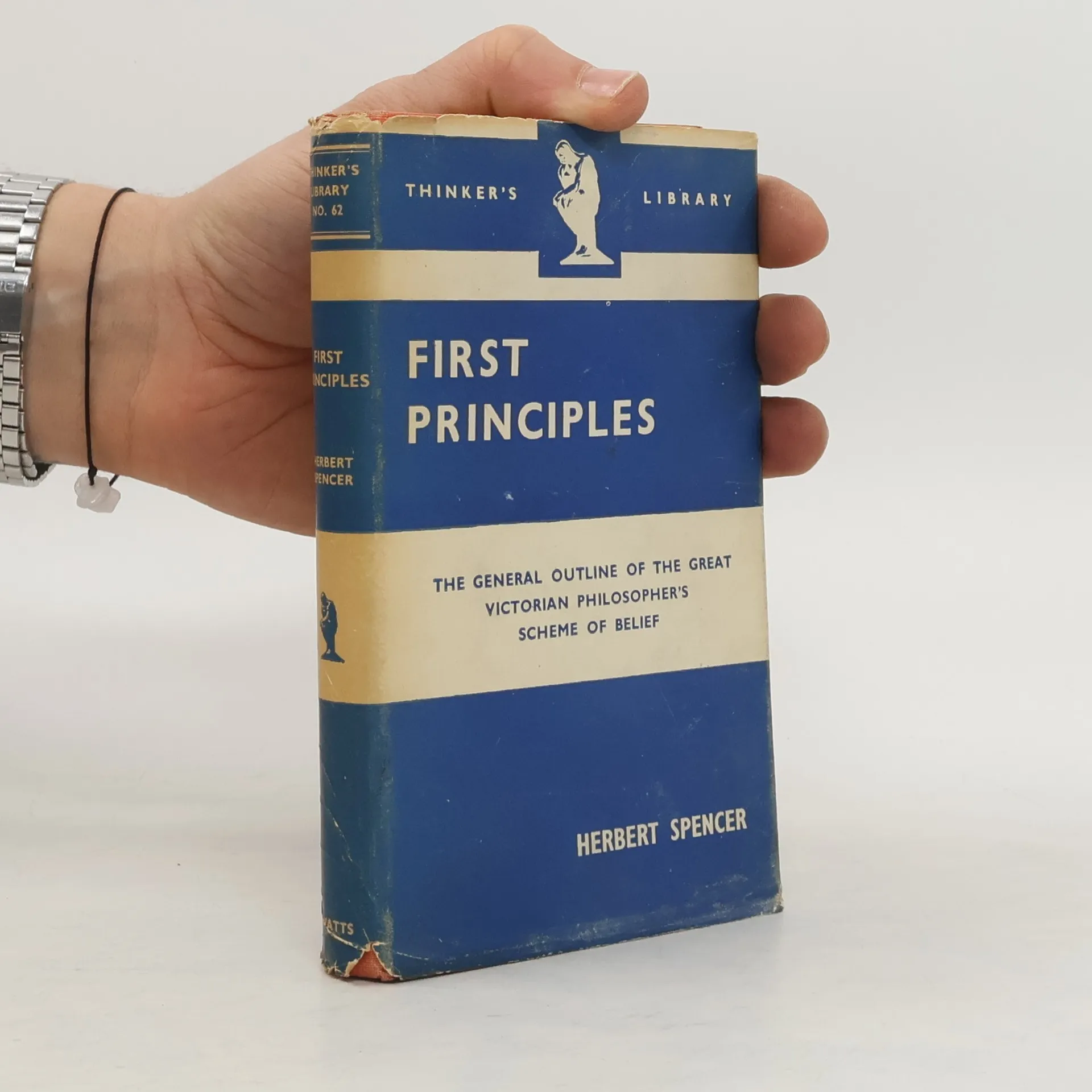
Spencer develops various specific disastrous ramifications of the wholesale substitution of the principle of compulsory cooperation—the statist principle—for the individualist principle of voluntary cooperation. His theme is that “there is in society . . . that beautiful self-adjusting principle which will keep all its elements in equilibrium. . . . The attempt to regulate all the actions of a community by legislation will entail little else but misery and compulsion.” Herbert Spencer joined the staff of the London and Birmingham Railway as an engineer in 1837 and in 1848 took a position as editor of The Economist. Please note: This title is available as an ebook for purchase on Amazon, Barnes and Noble, and iTunes.
The book is a reproduction of a historical work, published by Megali, a company dedicated to producing large print editions. This initiative aims to enhance accessibility for readers with impaired vision, ensuring that important historical texts can be enjoyed by a wider audience.
The Penrose Annual 1971
Volume 64
Prameny ke studiu sociologie práva. 1
- 121 páginas
- 5 horas de lectura
Obsah: 1 Herbert Spencer: POTŘEBA SOCIOLOGICKÉHO STUDIA 2 Niklas Luhmann: VÝVOJ SPOLEČNOSTÍ A PRÁVA 3 Arnošt Inocenc Bláha: SOCIOLOGIE PRÁVA 4 Emanuel Chalupný: PRÁVO A MRAVNOST 5 Pitirim Sorokin: SOCIÁLNÍ FUNKCE PRÁVA 6 Theodor Geiger: PRÁVO A MOC (Variace na staré téma) 7 Eugen Ehrlich: STÁT A PRÁVO 8 Max Weber: DIFERENCIACE PRÁVNÍCH ODVĚTVÍ 9 Pjotr Ivanovic ŠTŮČKA: PRÁVO — REVOLUCE 10 Adam Podgorecki: SPOLEČENSKÉ PODMÍNKY ÚČINNÉHOPŮSOBENI PRÁVNÍCH PŘEDPISŮ 11 Friederich August von HAYEK: „NOMOS: PRÁVO SVOBODY“
Einleitung in das Studium der Soziologie
- 284 páginas
- 10 horas de lectura
Einleitung in das Studium der Soziologie - Zweiter Teil ist ein unveränderter, hochwertiger Nachdruck der Originalausgabe aus dem Jahr 1875. Hansebooks ist Herausgeber von Literatur zu unterschiedlichen Themengebieten wie Forschung und Wissenschaft, Reisen und Expeditionen, Kochen und Ernährung, Medizin und weiteren Genres. Der Schwerpunkt des Verlages liegt auf dem Erhalt historischer Literatur. Viele Werke historischer Schriftsteller und Wissenschaftler sind heute nur noch als Antiquitäten erhältlich. Hansebooks verlegt diese Bücher neu und trägt damit zum Erhalt selten gewordener Literatur und historischem Wissen auch für die Zukunft bei.
Informace o severoamerických indiánech a jejich životě.