Focusing on advanced microeconometric methods, this revised graduate-level text integrates cross-section and panel data techniques while emphasizing behavioral assumptions. It balances rigor with intuitive insights, covering both linear and nonlinear models, including those addressing dynamics and individual differences. The book details various estimation frameworks, such as methods of moments and maximum likelihood, alongside specific models like probit, logit, Tobit, and approaches for count data, missing data, and causal effects, making it a comprehensive resource for econometric research.
Jeffrey M. Wooldridge Libros


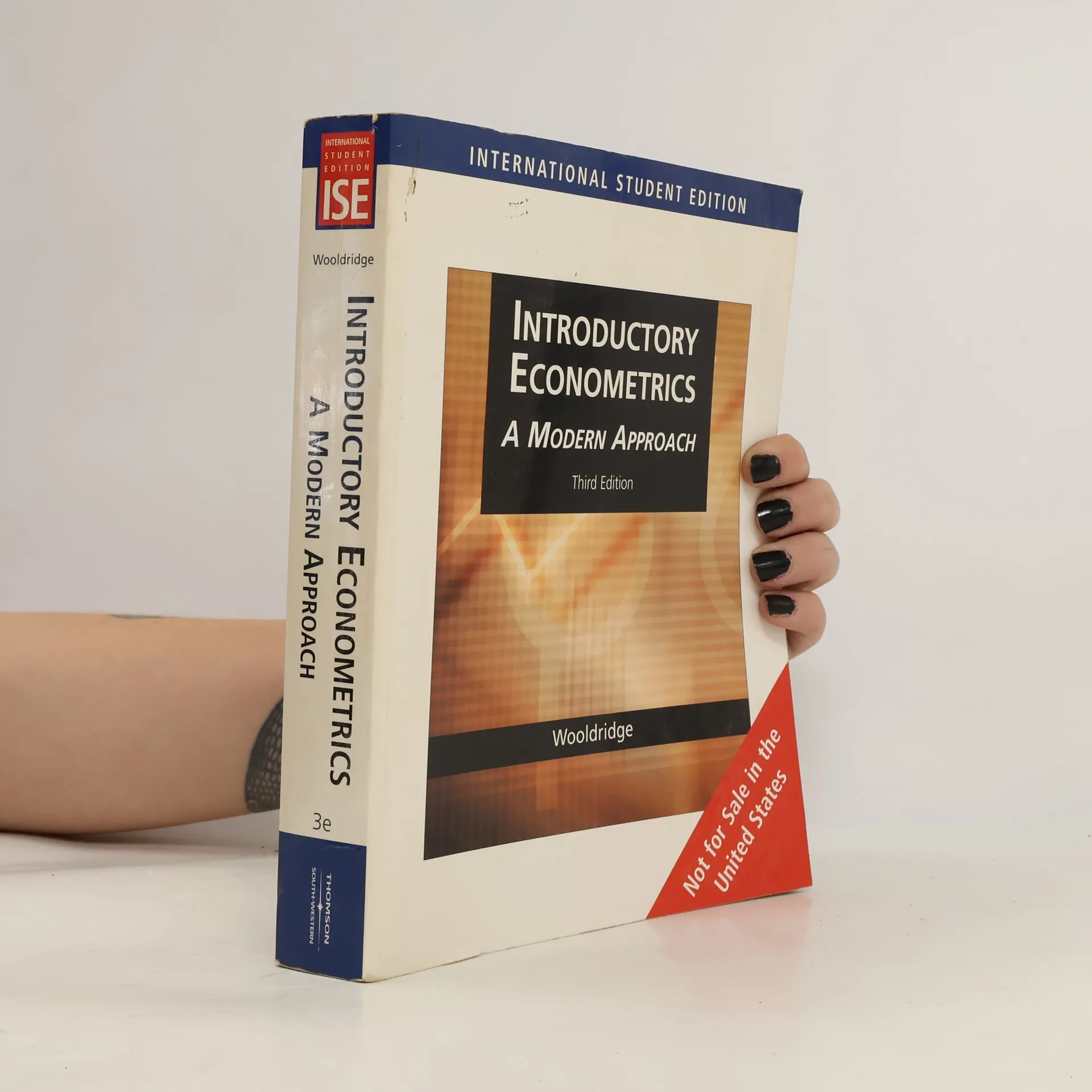
Introductory Econometrics : A Modern Approach
- 912 páginas
- 32 horas de lectura
This book uniquely demonstrates how econometrics has moved beyond a set of abstract tools to become genuinely useful for answering questions in business, policy evaluation, and forecasting
Gain an understanding of how econometrics can answer today's questions in business, policy evaluation and forecasting with Wooldridge's INTRODUCTORY ECONOMETRICS: A MODERN APPROACH, 7E. Unlike traditional texts, this book's practical, yet professional, approach demonstrates how econometrics has moved beyond a set of abstract tools to become genuinely useful for answering questions across a variety of disciplines. The author has organized the book's presentation around the type of data being analyzed with a systematic approach that only introduces assumptions as they are needed. This makes the material easier to understand and, ultimately, leads to better econometric practices. Packed with relevant applications, the text incorporates more than 100 data sets in different formats. Updates introduce the latest developments in the field, including the recent advances in the so-called "causal effects" or "treatment effects," to provide a complete understanding of the impact and importance of econometrics today.