Handbuch der Menschenkenntnis
Mutmaßungen aus 2500 Jahren


Este autor profundiza en el estudio de las jerarquías y su impacto en el comportamiento humano y las organizaciones. Su trabajo a menudo examina cómo los sistemas pueden fomentar o impedir el progreso y la eficiencia. Un tema clave es comprender cómo los individuos navegan por estas estructuras y cómo se pueden optimizar. Sus ideas ofrecen perspectivas valiosas sobre la dinámica del poder y la gestión.





Mutmaßungen aus 2500 Jahren
Peter récidive cette fois avec l'idée (assez connue) que les systèmes organisationnels ou les bureaucraties ont tendance à évoluer au point d'en venir à occuper tout le temps et tout l'espace. Stimulant.
Hainer Kober, geboren 1942, lebt in Soltau. Er hat u. a. Werke von Stephen Hawking, Steven Pinker, Jonathan Littell, Georges Simenon und Oliver Sacks übersetzt. Dr. Laurence J. Peter, 1919 in Vancouver/Kanada geboren, war tätig als Lehrer, Erziehungs- und Sozialberater, Schulpsychologe, Gefängnislehrer und Universitätsprofessor. Er ist der Erfinder und Autor des «Peter-Prinzips», des «Peter-Programms» sowie von «Das Peter-Prinzip im Lichte neuer Forschung». Laurence Peter starb 1990 in Kalifornien.
191 pages. Ex-Library. Book and Jacket are both in Good condition. There is some light shelf and reading wear, but still a presentable copy.
Peter-Prinzip im Lichte neuerer Forschung
Peter's people
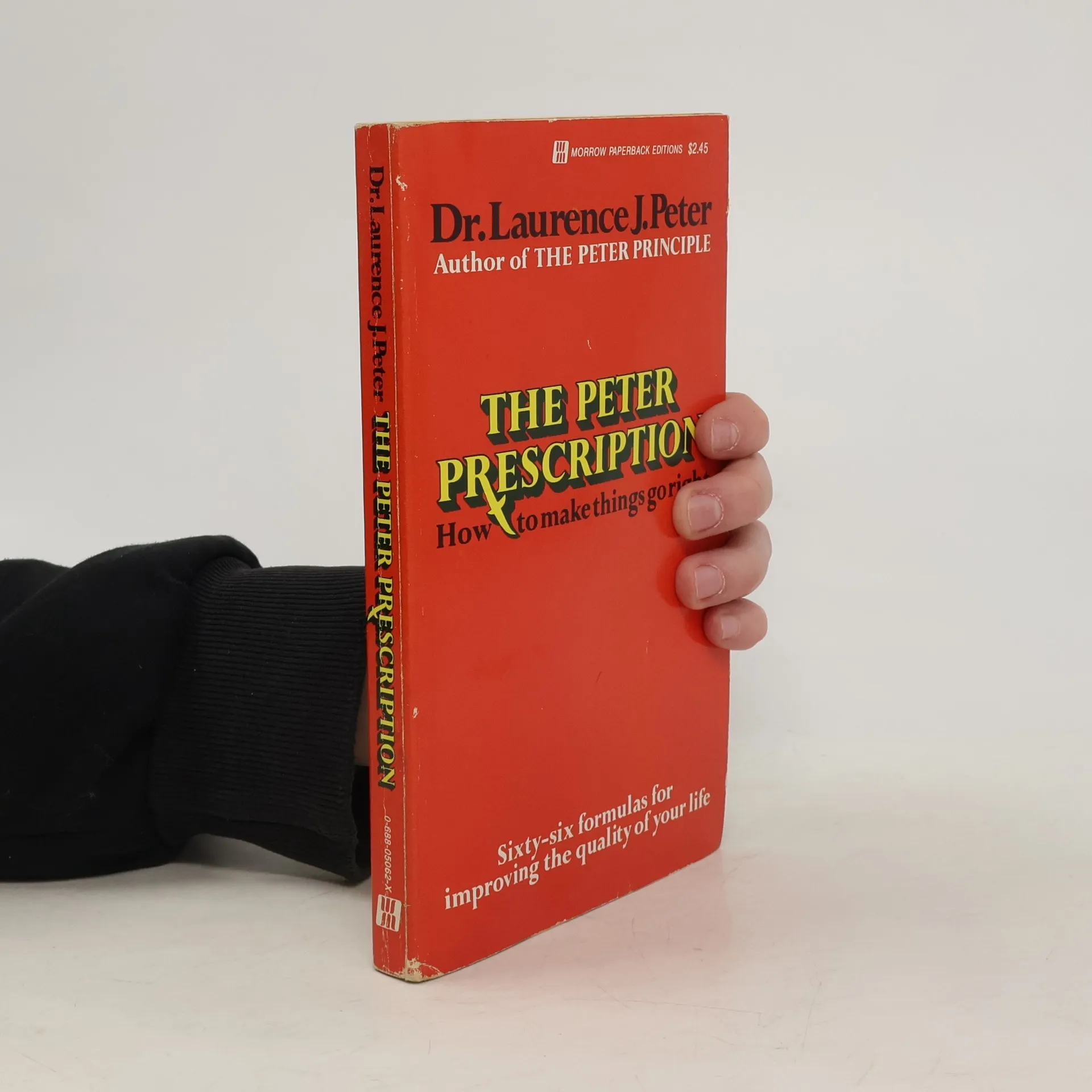
Blending wit and wisdom, Dr. Peter discusses the need for individuals to realize their potential if they are to achieve happiness in life
Why is the human race foundering in a morass of occupational, academic, and administrative inefficiency? Here, at last, is the answer in the delightful, dead-pan humor of this book. Not only do the authors reveal why the world is so completely screwed up, but they provide proven techniques for creative control of personal, social, and business problems. They analyze the reasons for human failure and tell how to achieve a state of well-being by avoiding that unwanted, ultimate promotion. Students of Freud, Potter, and Parkinson will be fascinated by this satirical examination of man's tendency to escalate himself to oblivion at his level of incompetence.
Puentes de autopista que colapsan durante la inauguración, cohetes que fallan en el lanzamiento, gerentes que arruinan sus empresas, funcionarios que dan información incorrecta, médicos que amputan la pierna equivocada, entre otros. Quien conoce el principio de Peter no se sorprende de nada. En una jerarquía, cada empleado tiende a ascender hasta un nivel para el cual no está capacitado. Esto es lo que ha descubierto el científico Laurence J. Peter. Según el principio de Peter, los sistemas jerárquicos se estabilizan con promociones ficticias y puestos inútiles, así como con la eliminación de empleados problemáticos. Esto incluye tanto a los miembros incompetentes como a los extremadamente competentes, que pueden obstaculizar el funcionamiento. Con numerosas anécdotas de la administración, la economía y la burocracia, Peter y Hull revelan astutamente por qué ocurren muchos errores y ofrecen consejos sobre cómo evitar alcanzar el nivel de incompetencia y prevenir promociones no deseadas.