




Compra 10 libros por 10 € aquí!
Bookbot

Hermann Haken

    12 de julio de 1927 – 14 de agosto de 2024
    Information and Self-Organization
    Advanced Synergetics
    Synergetics
    Synergetic Cities: Information, Steady State and Phase Transition
    Information Adaptation: The Interplay Between Shannon Information and Semantic Information in Cognition
    Brain Dynamics
    • Brain Dynamics

      An Introduction to Models and Simulations

      • 348 páginas
      • 13 horas de lectura

      This is an excellent introduction for graduate students and nonspecialists to the field of mathematical and computational neurosciences. The book approaches the subject via pulsed-coupled neural networks, which have at their core the lighthouse and integrate-and-fire models. These allow for highly flexible modeling of realistic synaptic activity, synchronization and spatio-temporal pattern formation. The more advanced pulse-averaged equations are discussed.

      Brain Dynamics
    • Exploring the relationship between Shannon and semantic information, this monograph reveals how both types of information influence cognition. It introduces the concept of information adaptation, where the mind/brain adjusts to environmental information through its quantitative variations and meanings. The authors illustrate their theories mathematically and conceptually, focusing on three cognitive processes: pattern recognition, face learning, and moving object recognition, demonstrating the dynamic interplay between information types in cognitive development.

      Information Adaptation: The Interplay Between Shannon Information and Semantic Information in Cognition
    • Synergetic Cities: Information, Steady State and Phase Transition

      Implications to Urban Scaling, Smart Cities and Planning

      • 272 páginas
      • 10 horas de lectura

      Focusing on urban dynamics, this book presents a unique framework incorporating Synergetics, which examines cooperation and self-organization in cities. It intertwines information theory's semantic and pragmatic elements with optimization principles, while also addressing steady state maintenance and phase transitions to explore qualitative changes in urban structures and behaviors. This interdisciplinary approach provides fresh insights into the complexities of city life and development.

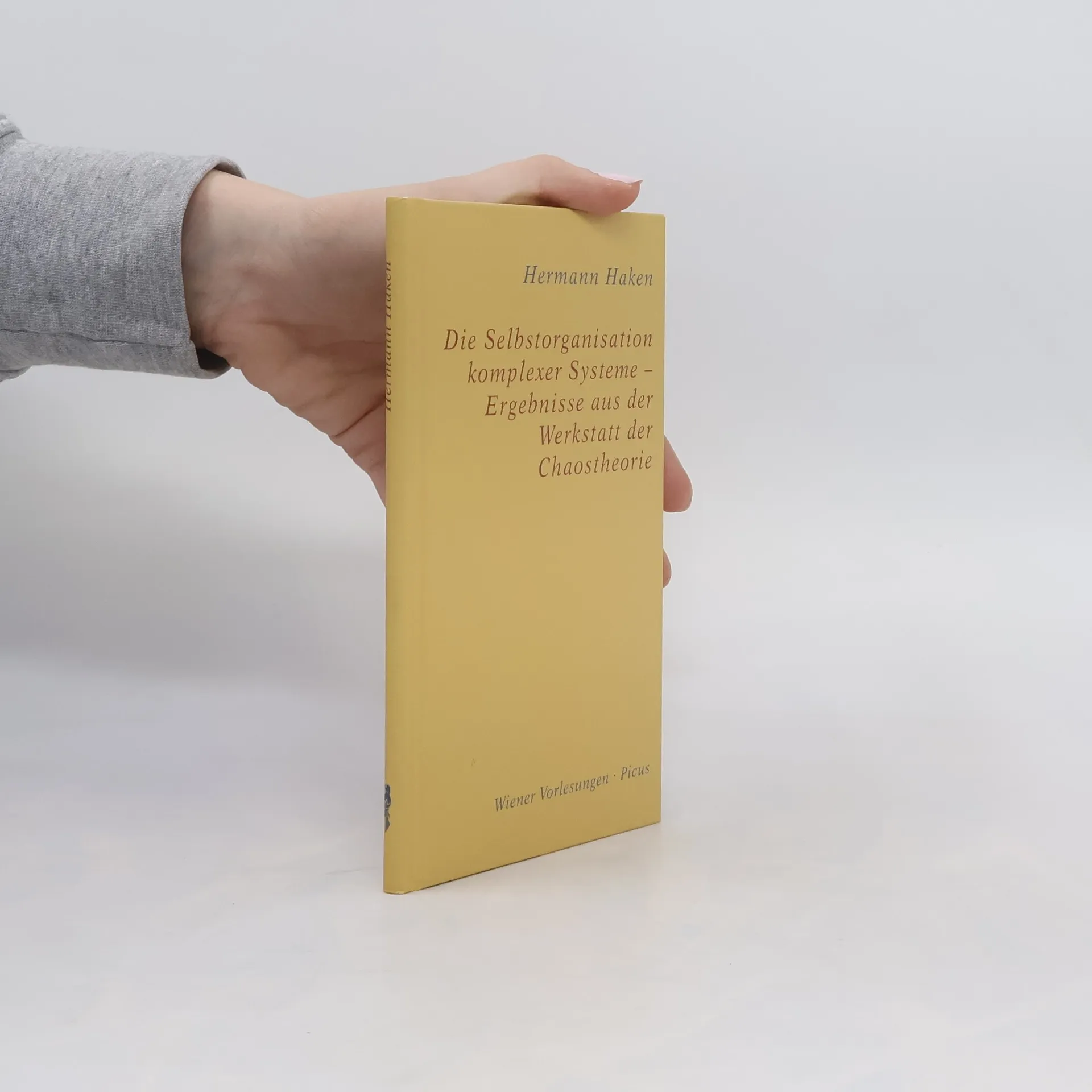
      Synergetic Cities: Information, Steady State and Phase Transition
    • Synergetics

      An Introduction

      • 408 páginas
      • 15 horas de lectura

      The book offers a comprehensive introduction to synergetics, an expanding field that intersects various scientific disciplines. It features updated discussions on key topics like self-organization in extended media and Benard instability, as well as an economic model illustrating transitions from full employment to underemployment using nonequilibrium phase transitions. Additionally, it includes a new section on discrete maps, which are essential for exploring chaotic motion and related phenomena. The third edition reflects significant recent developments and aims to enhance readability.

      Synergetics
    • Advanced Synergetics

      Instability Hierarchies of Self-Organizing Systems and Devices

      • 376 páginas
      • 14 horas de lectura

      The book explores the concept of self-organization across various disciplines, illustrating how systems in nature and technology develop structures and functions independently. It addresses the commonality of instabilities in both biological processes, like cell differentiation and evolution, and engineered devices, such as electronic oscillators. By examining the interplay between natural self-organization and man-made systems, the text highlights the fluid boundary between them, making it relevant for a diverse audience in science and engineering.

      Advanced Synergetics
    • Information and Self-Organization

      A Macroscopic Approach to Complex Systems

      • 276 páginas
      • 10 horas de lectura

      Cognitive science serves as a central theme, bridging disciplines such as mathematics, physics, and psychology through the concept of information. This edition introduces three new chapters that explore the interplay between Shannon information and semantic information, emphasizing how meaning influences cognitive processes. Additionally, it covers the emerging fields of quantum information and quantum computation, highlighting the essential connection between abstract information concepts and their physical realizations.

      Information and Self-Organization
    • Principles of Brain Functioning

      A Synergetic Approach to Brain Activity, Behavior and Cognition

      • 368 páginas
      • 13 horas de lectura

      The book emphasizes the necessity of interdisciplinary collaboration in brain research, integrating insights from biology, medicine, physics, and more. It targets graduate students, professors, and scientists, offering a blend of mathematical, verbal, and pictorial representations to convey essential concepts, making it accessible to a wider audience. The author acknowledges the contributions of former students and colleagues, highlighting the importance of diverse perspectives in advancing understanding of the brain's complex systems.

      Principles of Brain Functioning
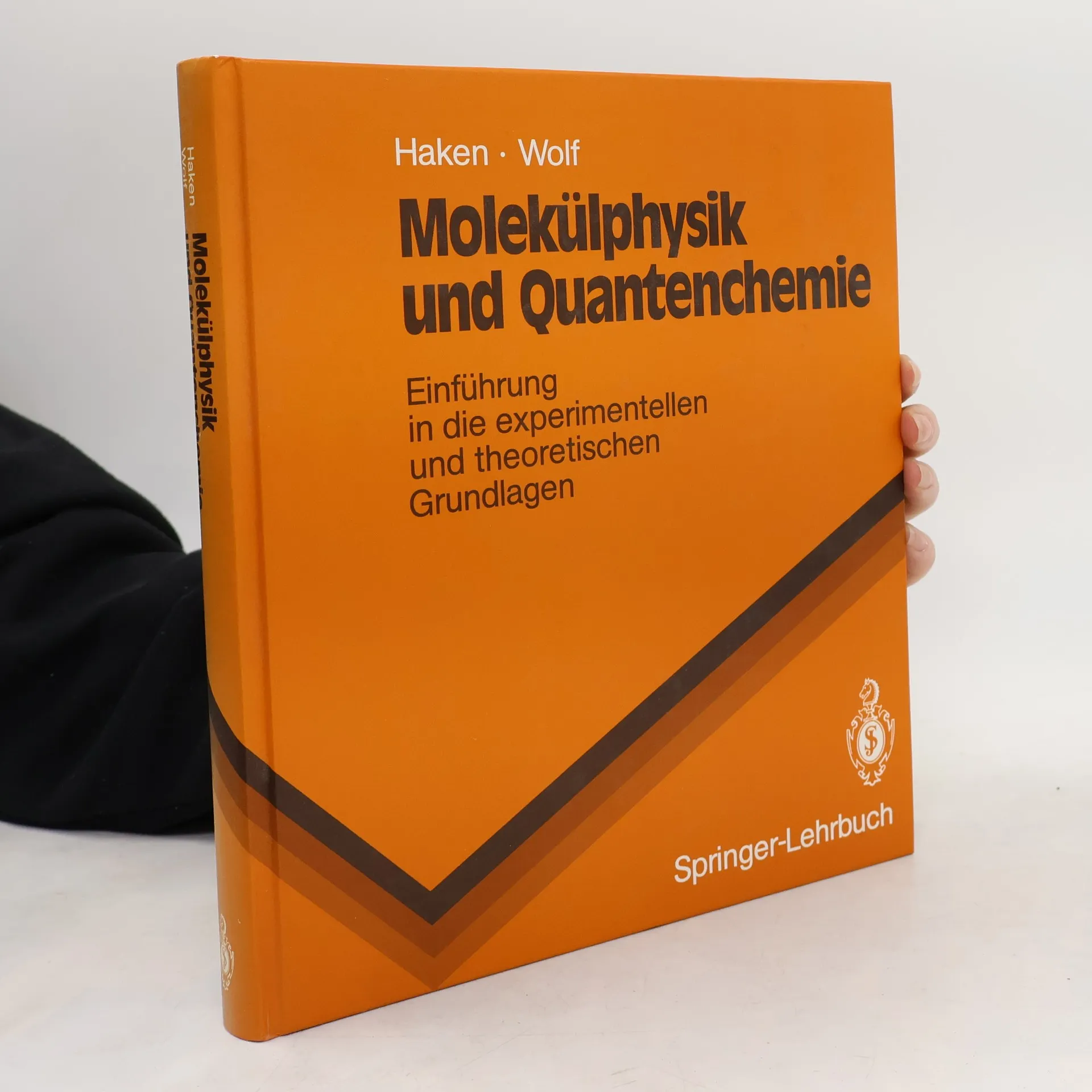
    • Molecular Physics and Elements of Quantum Chemistry

      Introduction to Experiments and Theory

      • 620 páginas
      • 22 horas de lectura

      This second edition of the textbook incorporates significant advancements in molecular physics, particularly focusing on single-molecule spectroscopy and the rapidly evolving field of molecular electronics, including electroluminescence and organic light-emitting diodes. The content has been expanded and corrected from the first edition, and new exercises are provided to enhance student understanding, with complete solutions available online. Aimed at students of physics and related fields, it assumes prior knowledge of atomic and quantum physics.

      Molecular Physics and Elements of Quantum Chemistry
    • The Process of Psychotherapy

      Causation and Chance

      • 188 páginas
      • 7 horas de lectura

      The book presents a comprehensive modeling framework for psychotherapy, integrating recent research findings. It emphasizes the importance of the therapist-client alliance and explores how therapeutic interventions are influenced by both deterministic and stochastic forces. Utilizing a Fokker-Planck approach alongside complexity theory's structural-mathematical framework, the authors provide a nuanced understanding of the dynamics at play in effective therapy.

      The Process of Psychotherapy
    • Synergetic Computers and Cognition

      A Top-Down Approach to Neural Nets

      • 260 páginas
      • 10 horas de lectura

      This book explores the innovative concept of the synergetic computer, presenting it as a significant alternative to traditional neural networks. It highlights advantages such as the elimination of ghost states and the explicit determination of synaptic strengths, which enhance learning and classification processes. The second edition introduces new sections on transformation properties and stereopsis, while also addressing the application of pulse-coupled neural nets in pattern recognition. It serves as a valuable resource for scientists, engineers, and graduate students in informatics and psychology.

      Synergetic Computers and Cognition