Bookbot

Nora Seligman Favorov

    Master of the House
    Stalin. New Biography of a Dictator
    • Stalin. New Biography of a Dictator

      • 424 páginas
      • 15 horas de lectura

      Joseph Stalin exercised supreme power in the Soviet Union from 1929 until his death in 1953. During that quarter-century, by Oleg Khlevniuk's estimate, he caused the imprisonment and execution of no fewer than a million Soviet citizens per year. Millions more were victims of famine directly resulting from Stalin's policies. What drove him toward such ruthlessness? This essential biography, by the author most deeply familiar with the vast archives of the Soviet era, offers an unprecedented, fine-grained portrait of Stalin the man and dictator. Without mythologizing Stalin as either benevolent or an evil genius, Khlevniuk resolves numerous controversies about specific events in the dictator's life while assembling hundreds of previously unknown letters, memos, reports, and diaries into a comprehensive, compelling narrative of a life that left long-lasting scars on the peoples over which he ruled and altered the course of world history.--Adapted from book jacket.

      Stalin. New Biography of a Dictator
      4,2
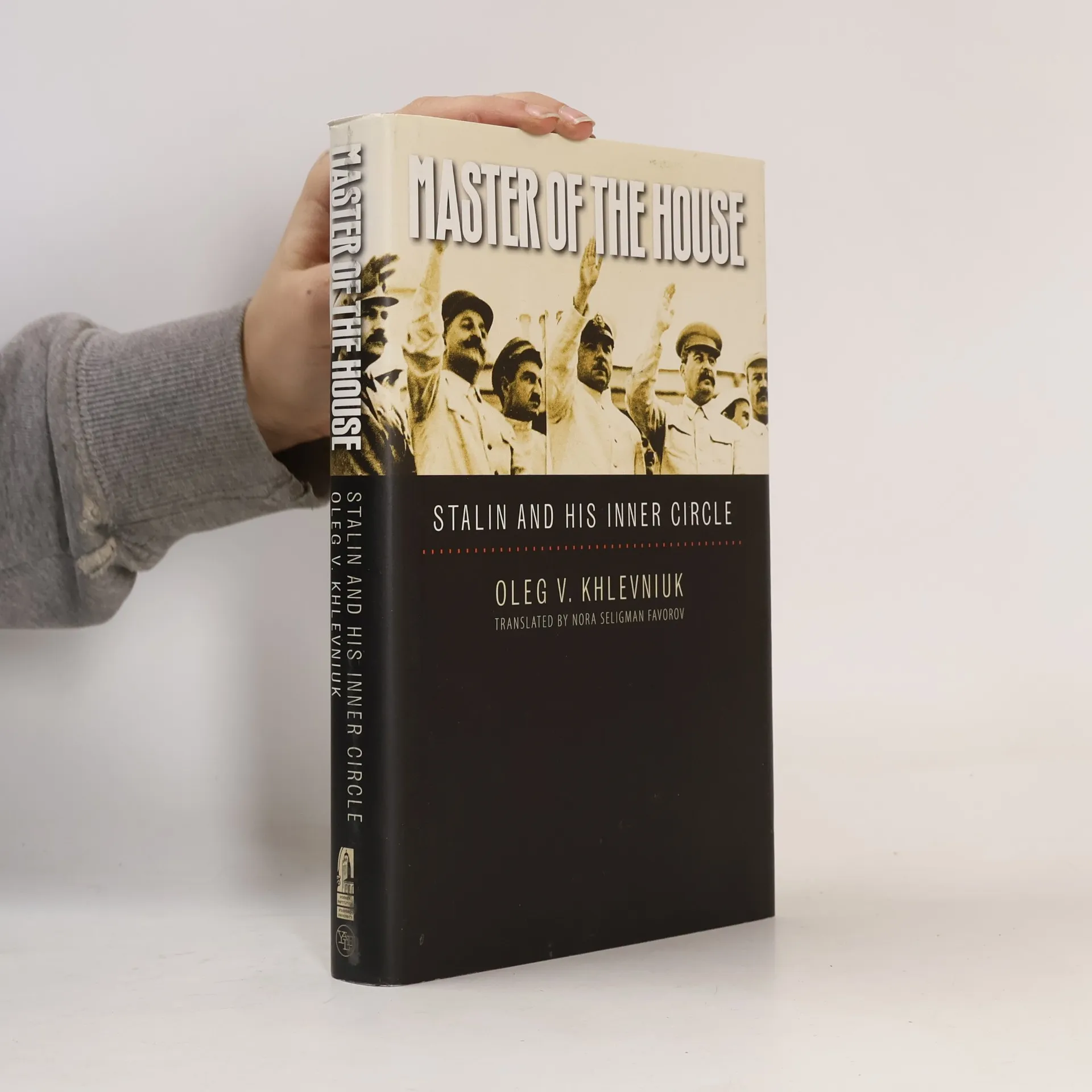
    • Master of the House

      Stalin and His Inner Circle

      • 344 páginas
      • 13 horas de lectura

      Based on meticulous research in previously unavailable documents in the Soviet archives, this compelling book illuminates the secret inner mechanisms of power in the Soviet Union during the years when Stalin established his notorious dictatorship. Oleg V. Khlevniuk focuses on the top organ in Soviet Russia’s political hierarchy of the 1930s—the Political Bureau of the Central Committee of the Communist Party—and on the political and interpersonal dynamics that weakened its collective leadership and enabled Stalin’s rise.Khlevniuk’s unparalleled research challenges existing theories of the workings of the Politburo and uncovers many new findings regarding the nature of alliances among Politburo members, Sergei Kirov’s murder, the implementation of the Great Terror, and much more. The author analyzes Stalin’s mechanisms of generating and retaining power and presents a new understanding, unmatched in texture and depth, of the highest tiers of the Communist Party in a crucial era of Soviet history.

      Master of the House