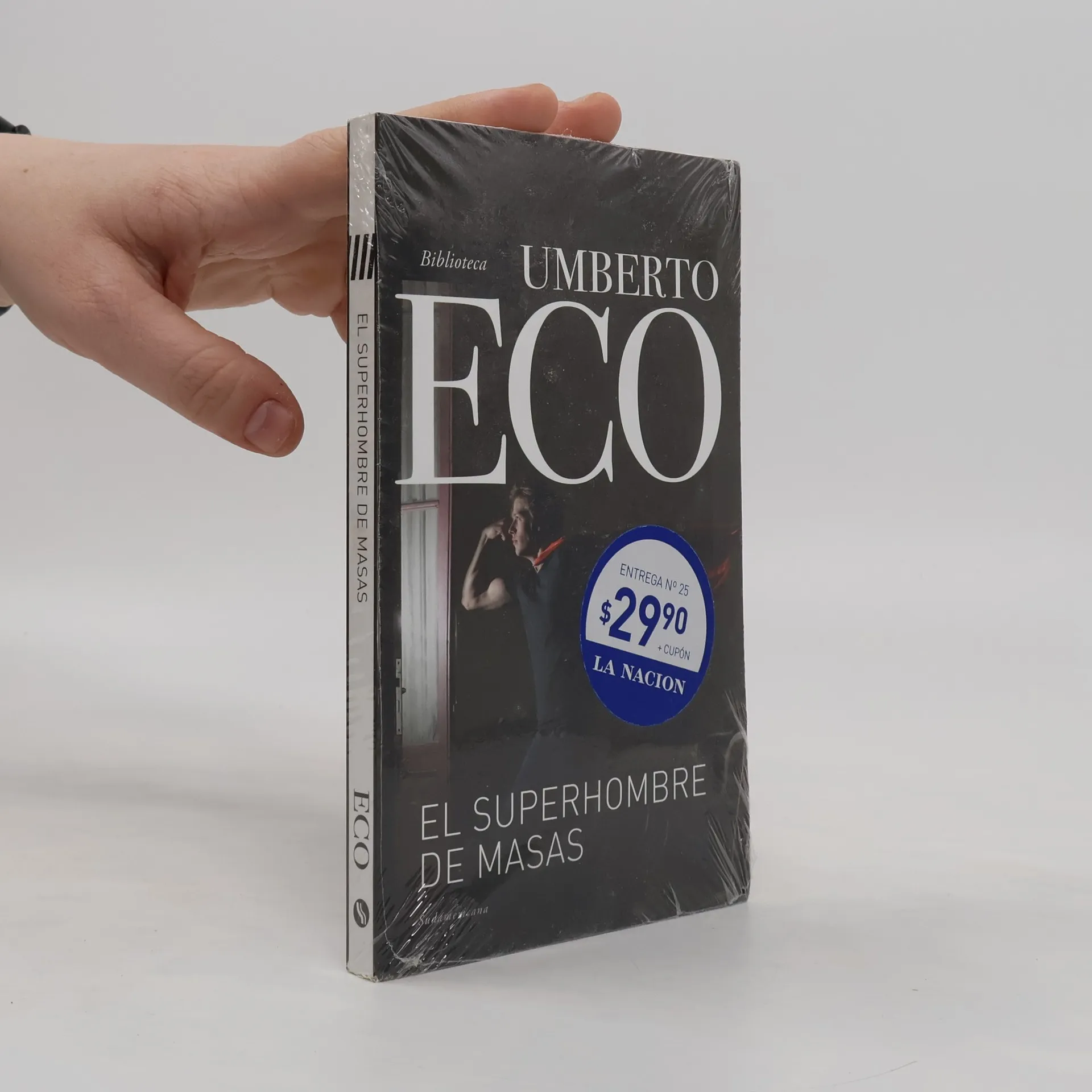
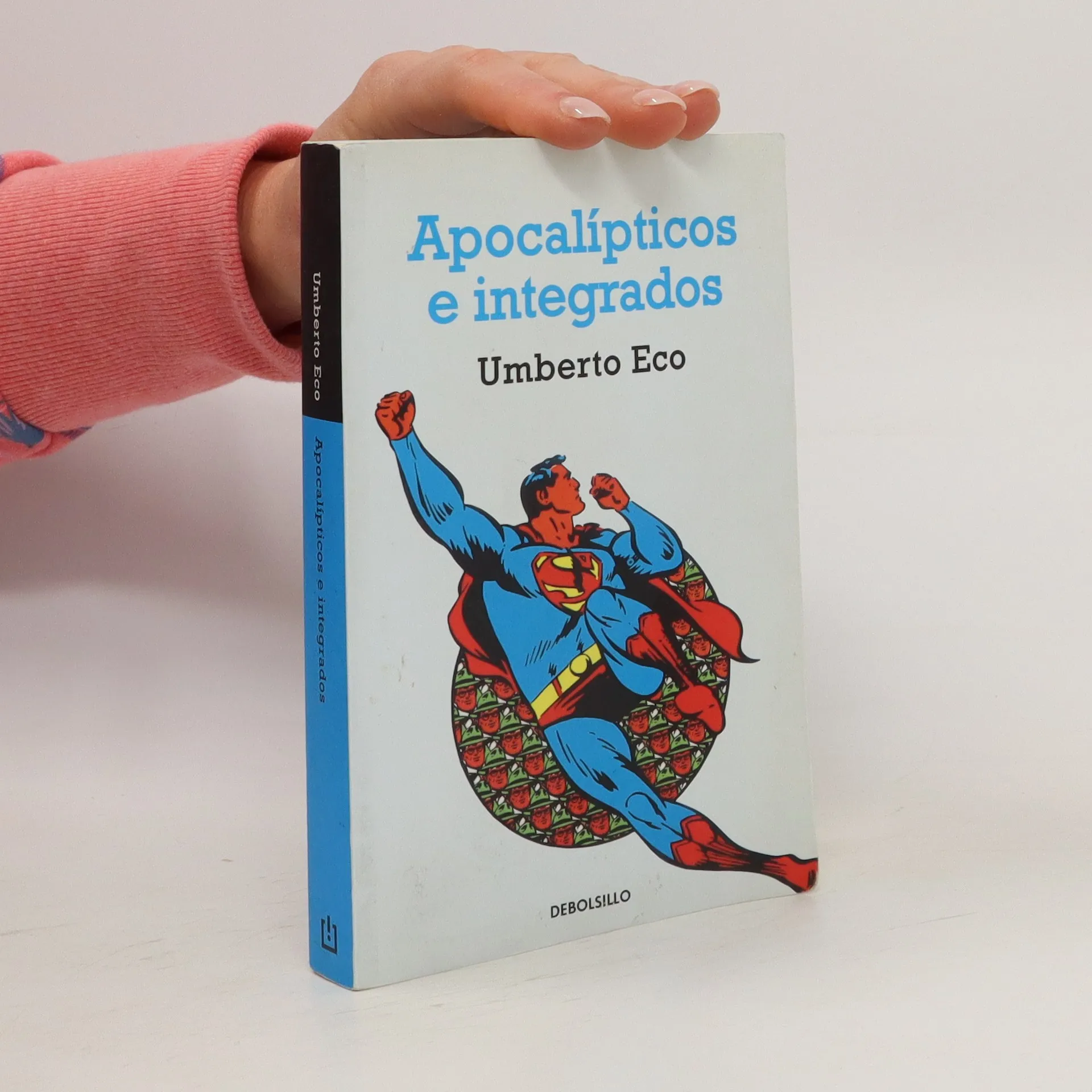
En una serie de ensayos magistrales sobre la cultura de masas -en los que analiza la estructura del mal gusto, la lectura de los cómics, el mito de Superman, la canción de consumo, el papel de los medios audiovisuales como instrumento de información o el influjo de la televisión en el mundo de hoy-, Eco se plantea el problema central de la doble postura ante la cultura de masas: la de los apocalípticos, que ven en ella la «anticultura», el signo de una caída irrecuperable, y la de los integrados, que creen optimistamente que estamos viviendo una magnífica generalización del marco cultural.
Umberto Eco Libros
5 de enero de 1932 – 19 de febrero de 2016
La brillante ficción de Umberto Eco es conocida por su uso lúdico del lenguaje y los símbolos, su asombrosa variedad de alusiones y referencias, y su ingenioso uso de acertijos e invenciones narrativas. Sus agudos ensayos sobre la cultura moderna están llenos de un delicioso sentido del humor y la ironía. Sus ideas sobre semiótica, interpretación y estética lo han establecido como uno de los pensadores más importantes del mundo académico.


La obra propone un recorrido por la historia hecho de pesadillas, terrores y amores de casi tres mil años, donde los sentimientos de repulsa y de conmovedora compasión se dan la mano, y el rechazo de la deformidad va acompañado de éxtasis decadentes ante las más seductoras violaciones de todos los canones clásicos. Entre demonios, locos, presencias perturbadoras y deformidades, se descubre una vena iconográfica extraordinariamente amplia.
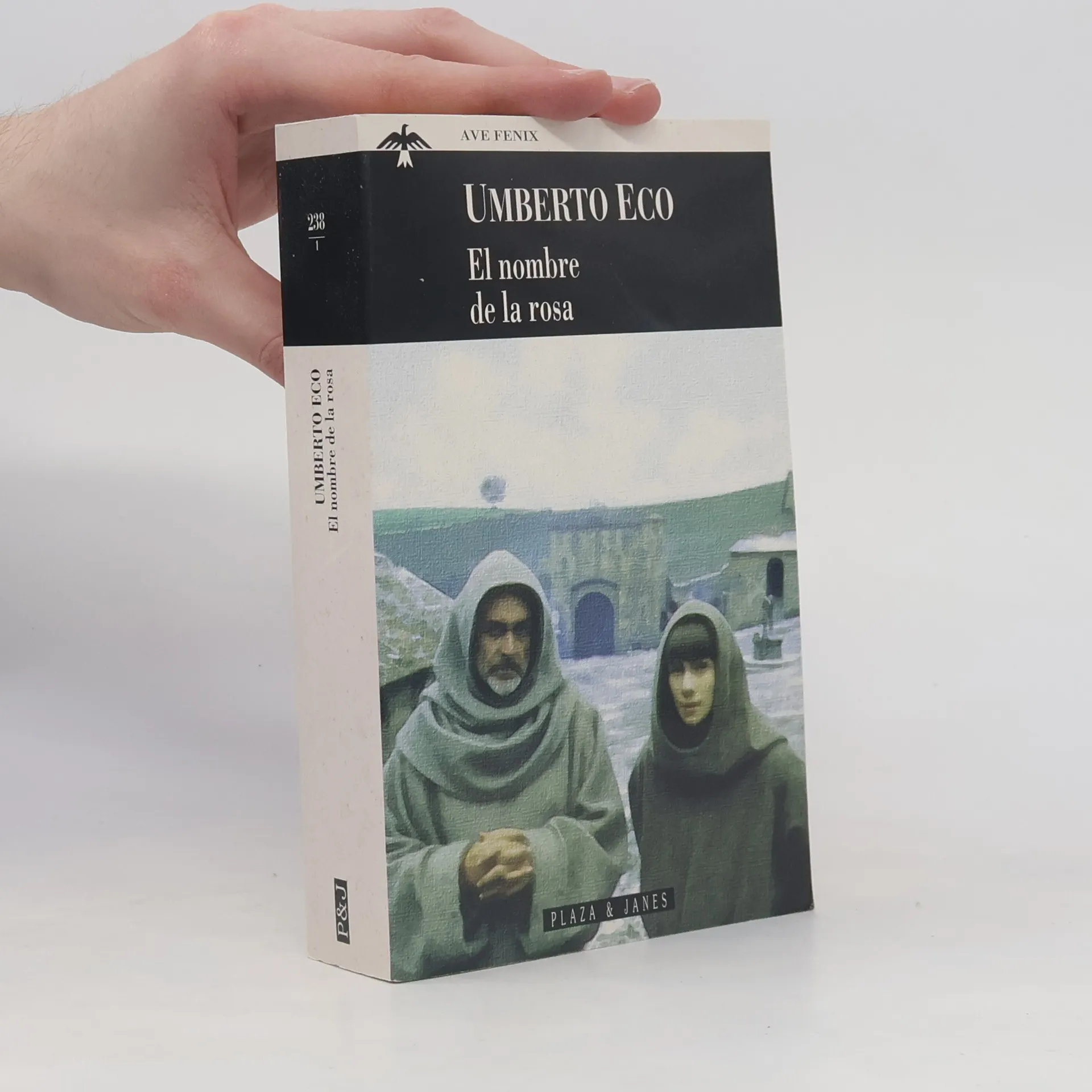
Ave Fenix: El nombre de la rosa
- 782 páginas
- 28 horas de lectura
El nombre de la rosa ofrece distintos puntos de interés; primero, una trama apasionante y constelada de golpes de efecto, que narra las actividades detectivescas de Guillermo de Baskerville para esclarecer los crímines de una abadía benedictina; segundo, la reconstrucción portentosa de una época especialmente conflictiva, reconstrucción que no se para en lo exterior, sino que se centra en las formas de pensar y sentir del siglo XIV; y tercero, el modo en que Umberto Eco el teórico, Umberto Eco el ensayista, ha construido su primera novela, escrita -nos dice- por haber descubierto, en edad madura, "aquellos" sobre lo cual no se puede teorizar, aquello que hay que narrar.
Tratado de semiótica general
- 461 páginas
- 17 horas de lectura
Publicado ocho años después de La estructura ausente, el presente libro de Umberto Eco intenta sus unificar sus investigaciones semióticas desarrolladas hasta hoy para elaborar una teoría global de todos los sistemas de significación y de comunicación. Este proyecto de semiótica general comprende dos partes fundamentales, dialécticamente independientes: una teoría de los códigos, que intenta explicar la organización cultural de cualquier sistema significativo, y una teoría de la producción de signos, que reelabora los planteamientos tradicionales en este campo, sustituyendo la tipología de los signos por una tipología de los modos de producción de signos.
La búsqueda de la lengua perfecta en la cultura europea
- 318 páginas
- 12 horas de lectura
Esta coleccion nacio de la voluntad de cinco editores europeos -Laterza, en Italia, Basil Blackwell, en Gran Bretana, Beck Verlag, en Alemania, Le Seuil, en Francia y Critica en Espana- interesados en colaborar, desde el ambito de la historia de la cultura, a la construccion de la Union Europea. Los libros que se han ido publicando en esta coleccion, que recoge autores de todos los paises y que ya ha sido traducida a lenguas como el turco, el japones, el portugues, el checo o el bulgaro, han sido consensuados siempre por los cinco editores y refrendados por el prestigioso historiador medievalista frances Jacques Le Goff, director de la coleccion. Cuando la unidad linguistica del mundo romano se vino abajo y se formaron las lenguas que todavia hoy se hablan en Europa, la cultura europea trato de reconstruir la lengua perfecta. La taxonomia de las ciencias naturales, los lenguajes formalizados o los proyectos de inteligencia artificial son fruto de ese anhelo.
Analizando los trabajos de los principales pensadores de la Edad Media, Umberto Eco nos presenta un aspecto fascinante: la búsqueda de la verdadera belleza en la naturaleza, en el arte y en el ser humano. Eco, reconocido autor y académico, considera que su labor científica es de gran importancia. Como destacado semiólogo, medievalista y culturalista, ha dejado una huella significativa en el ámbito académico. En esta obra, Eco introduce a los no especialistas en las ideas de pensadores medievales como Tomás de Aquino, San Buenaventura, Duns Escoto y Guillermo de Ockham, quienes abordaron cuestiones estéticas. ¿Qué es la belleza? ¿De qué se compone en la naturaleza, en el arte, en Dios y en el ser humano? ¿Existen una belleza verdadera y objetiva, independiente del espectador? La búsqueda de respuestas a estas preguntas en la Edad Media nos permite comprender mejor nuestro propio sentido de lo bello y reevaluar las diversas manifestaciones de la belleza en el mundo que nos rodea.
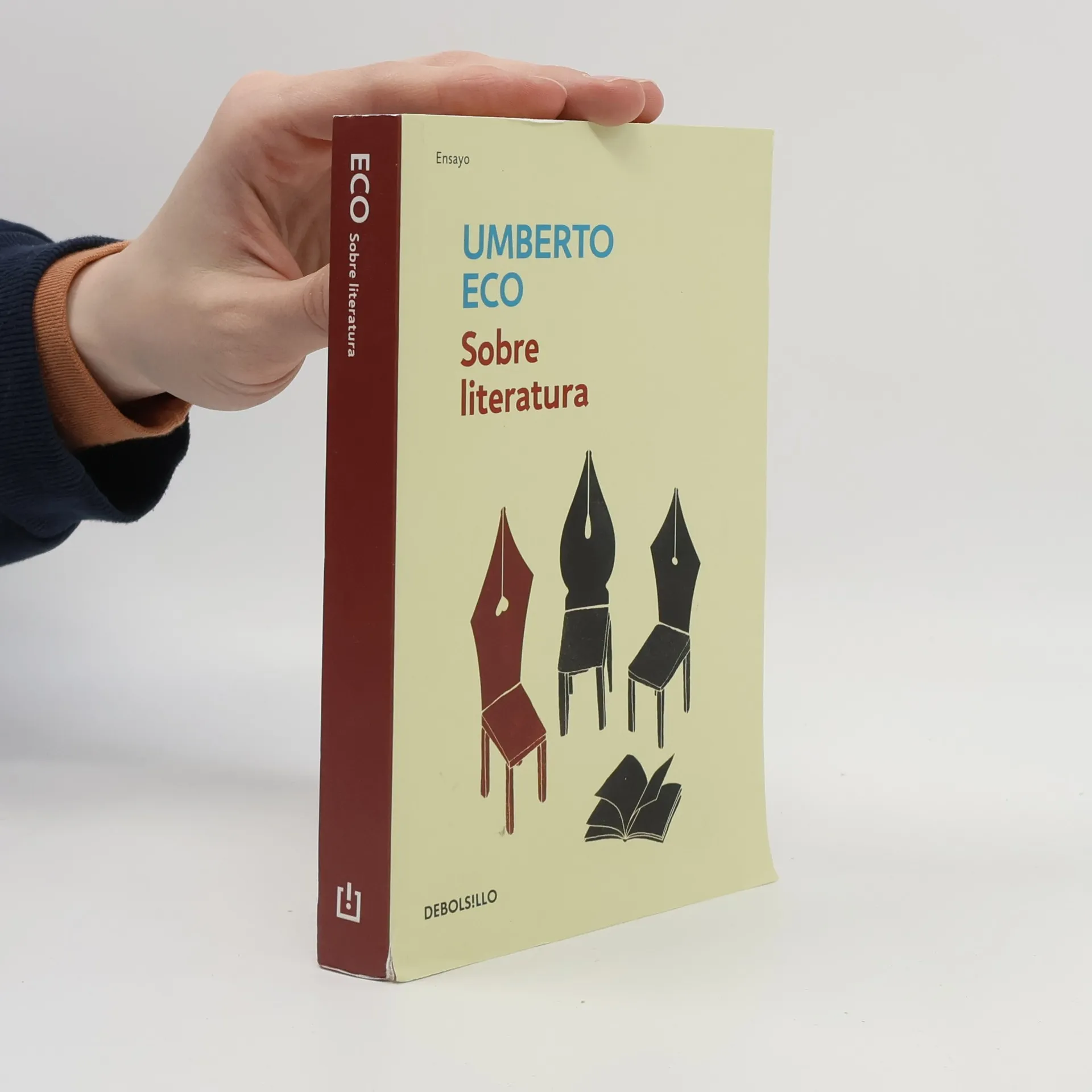
Sobre literatura
- 352 páginas
- 13 horas de lectura
Una coleccion de ensayos brillantes que abordan temas clasicos sobre la literatura. Sobre literature es una recopilacion de ensayos breves dirigidos a un publico muy amplio y cuyo sujeto de estudio es siempre la literatura. Asi, Eco desgrana los enigmas ocultos tras las palabras mas bellas. Desde reflexiones sobre los grandes autores de la historia hasta los problemas habituales enla creacion literaria, Se trata, en cualquier caso, de escritos ocasionales que revelan una continuidad de los intereses del autor, una visita ignorar estas fuentes de inspiracion, que arrojan una nueva luz sobre el quehacer literario del gran semiologo italiano.
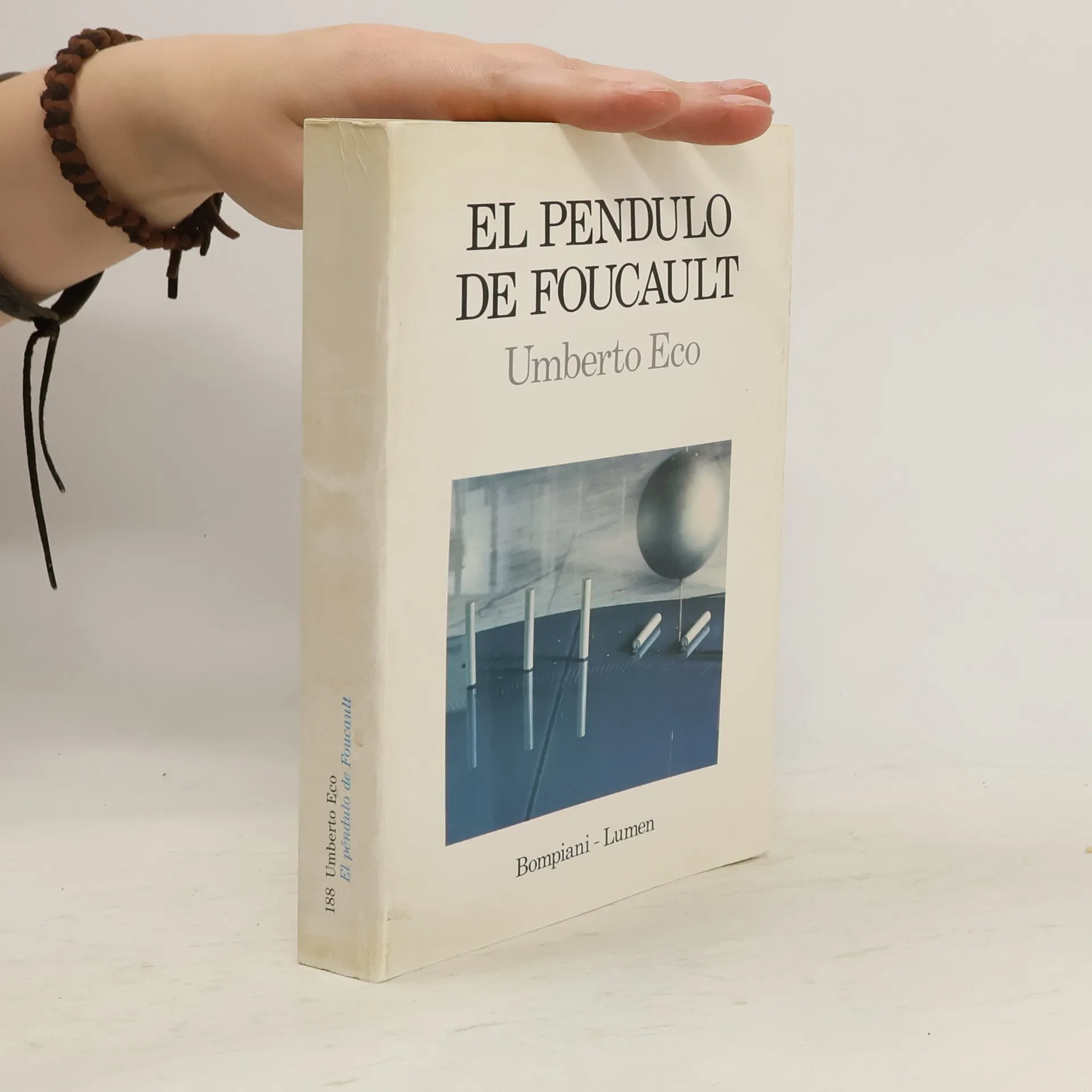
El péndulo de Foucault
- 585 páginas
- 21 horas de lectura
Tres intelectuales que trabajan en una editorial de Milán establecen contacto con autores interesados en las ciencias ocultas, las sociedades secretas y las conjuras cósmicas. Entre bromas y veras, y mezclando lo profesional con aspectos insólitos de sus vidas, estos hombres urden juntos un plan que dejará de ser un juego para convertirse en pesadilla. Después del éxito internacional de El nombre de la rosa, Umberto Eco quiso continuar explorando el mundo de la novela con esta obra, donde la intriga se une a un apasionante viaje hacia el mundo de los templarios.
Segundo diario mínimo
- 368 páginas
- 13 horas de lectura
Una recopilación de textos en los que Umberto Eco (1932-2016) da cabida tanto a temas profundos como a reflexiones intrascendentes sobre el día a día.
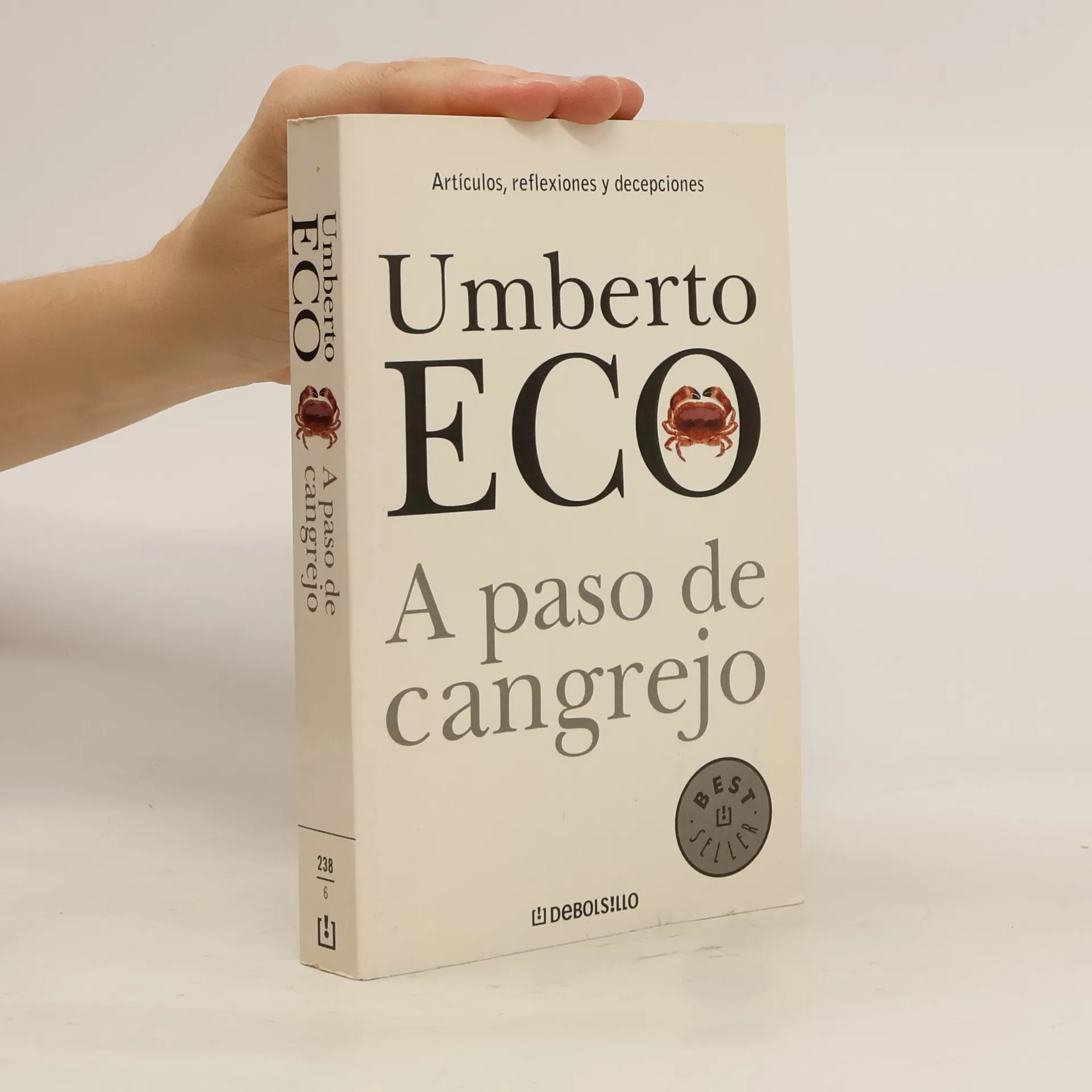
A paso de cangrejo. Artículos, reflexiones y decepciones
- 392 páginas
- 14 horas de lectura
A paso de cangrejo, es decir, hacia atrás, parece avanzar la historia en este nuevo milenio. Los avances científicos y los progresos democráticos que prometían un futuro brillante se han transformado en conflictos e insatisfacciones. La humanidad, tras el 11 de septiembre, ha entrado en una peligrosa regresión. Viejos conflictos territoriales y guerras medievales con tintes de "cruzada" resurgen, junto con la nostalgia por los totalitarismos, el antisemitismo y diversas formas de racismo. En algunos lugares, persiste la lucha contra las teorías evolutivas de Darwin. Eco, inspirado por el jurista Norberto Bobbio, que propuso que el deber de los intelectuales es sembrar dudas en lugar de certezas, critica la vida contemporánea, las guerras, la política internacional y el consumismo en grandes superficies como único ocio viable. También señala el papel perjudicial de los medios de comunicación, que construyen una imagen del mundo basada en el espectáculo y la manipulación. El resultado es un libro intenso y combativo, repleto de análisis lúcidos sobre nuestro entorno. Eco nos invita a reflexionar sobre el presente y el futuro, ofreciendo un trabajo que evade el maniqueísmo y aboga por la cautela intelectual ante un panorama incierto.
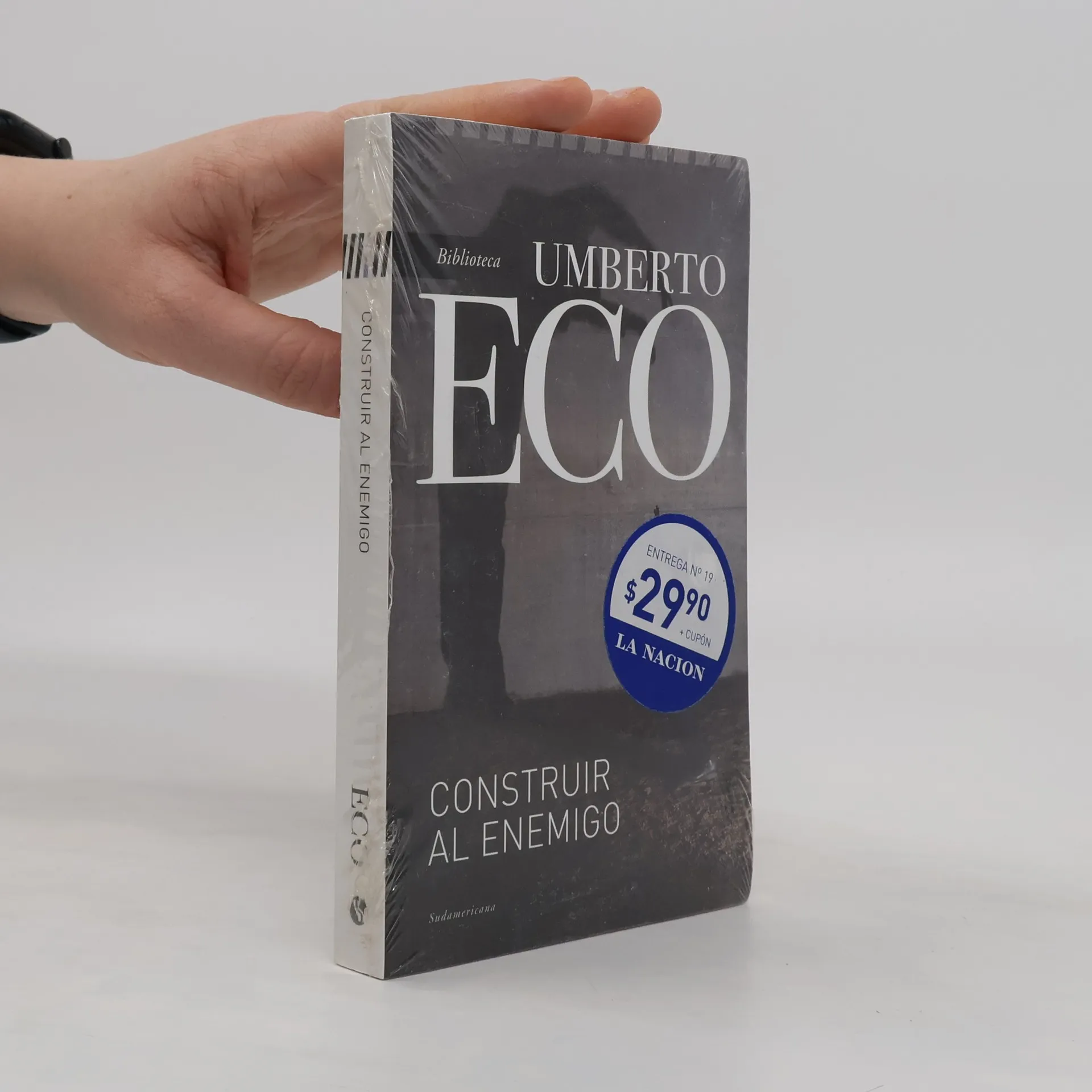
En su prólogo, Umberto Eco describe estas piezas como "textos de ocasión", escritos por encargo o por diversión. Sin embargo, cuando un gran maestro escribe así, cada frase se convierte en un regalo para el lector. El libro comienza con "Construir al enemigo", donde se destaca la utilidad de tener un rival al que dirigir nuestras debilidades; si no hay uno, hay que crearlo. A continuación, se presentan textos que abordan temas como Dan Brown, Barack Obama y Angela Merkel, así como una reflexión sobre Wikileaks que invita a considerar el poder del silencio en una sociedad saturada de escándalos. También se expone la corrupción política italiana, vinculada a la imagen de mujeres bellas que buscan el éxito, y Eco ofrece un agudo análisis sobre el ruido mediático generado por los centros de poder para distraer al ciudadano y ocultar noticias importantes. Además, se explora "Ulises" de Joyce, proporcionando una nueva perspectiva sobre una novela que muchos mencionan, pero pocos han leído. Eco, con su vasta experiencia, conecta temas aparentemente distantes, y "Construir al enemigo" ejemplifica su inteligencia al servicio de lectores que buscan algo más que titulares.
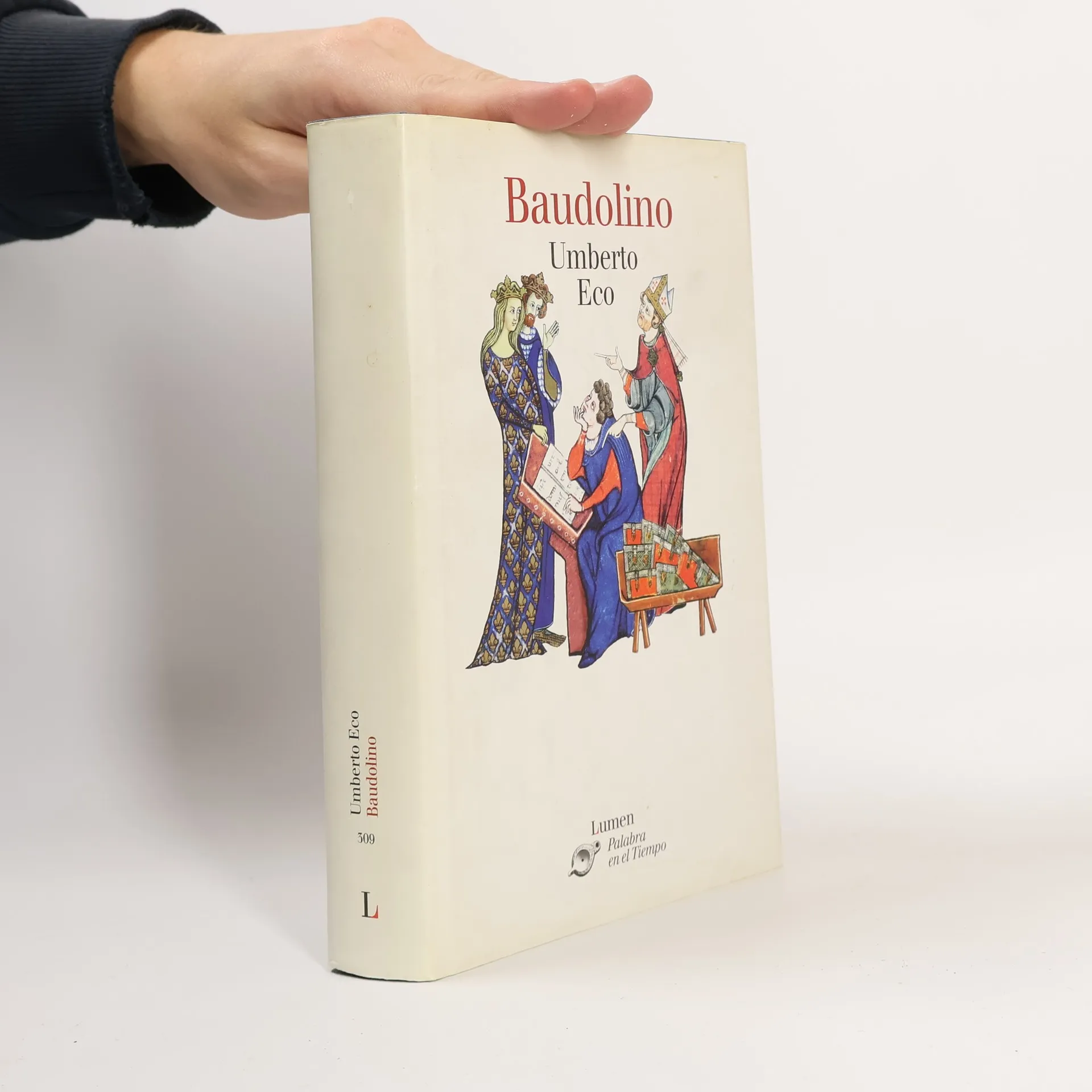
Baudolino
- 348 páginas
- 13 horas de lectura
En una zona del bajo Piamonte donde años después se fundaría la ciudad de Alessandria, el fantasioso y embustero Baudolina conquista a Federico Barbarroja y se convierte en su hijo adoptivo. Baudolino inventa historias que se transforman en Historia y, empujado por la imaginación de su ahijado, Federico emprende una cruzada por restituir al Preste Juan las más prestigiosa reliquia de la cristiandad, el Santo Grial. Federico muere en el intento, y será Baudolino quien continúe el viaje hacia tierras lejanas, desafiando monstruos y enamorando a la más singular de las hijas de Eva. Aventura picaresca, novela histórica, relato de un delito imposible, teatro de invenciones lingüísticas hilarantes, esta obra es una celebarción del mito y la utopía.
El Cementerio de Praga
- 592 páginas
- 21 horas de lectura
Debolsillo. Barcelona. 2013. 19x13 cm. 592 p. Encuadernación en rúst. de editorial. Colección 'Best seller'. Traducido del Italiano . ISBN: 978-84-9989-981-7
La isla del día de antes
- 422 páginas
- 15 horas de lectura
En el verano de 1643 y en los mares del Sur, un joven piamontés, Roberto de la Grive, arriba como náufrago a una nave desierta. La nave está llena de animales desconocidos y de extrañas máquinas y artilugios, y ante ella, próxima e inalcanzable (no sólo, descubriremos después, en el espacio, sino también en el tiempo) una isla de ensueño. Roberto escribe cartas a la 'Señora'; a través de las cuales se adivina poco a poco su pasado: duelos, asedios, lances amorosos, alambicadas disputas de salón. Se trata, de hecho, de la lenta y traumática iniciación al mundo de la nueva ciencia, las razones de estado, las redes de espionaje de Mazarino y Richelieu, la guerra de los treinta años, en suma, a un cosmos en el que la tierra ha dejado de ser para muchos el centro del universo. En este 'Mar de la Inocencia' nada es inocente, y Roberto lo sabe desde el principio, porque ha llegado a estas Antípodas para resolver -sin personalmente desearlo- el misterio por el cual forcejean las nuevas potencias de la época: el secreto del Punto Fijo.
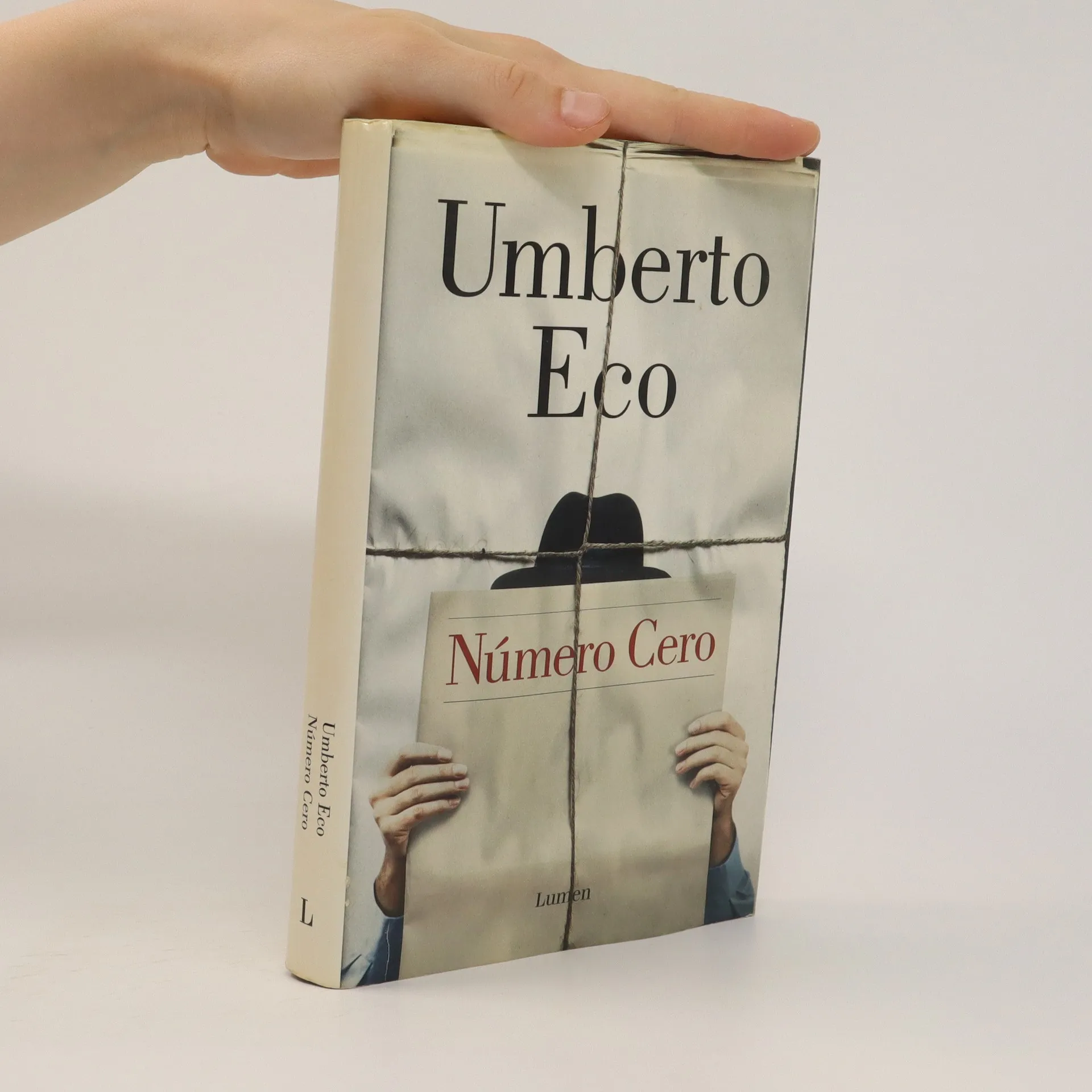
Número Cero
- 218 páginas
- 8 horas de lectura
Los perdedores y los autodidactas siempre saben mucho más que los ganadores. Si quieres ganar, tienes que concentrarte en un solo objetivo, y más te vale no perder el tiempo en saber más: el placer de la erudición está reservado a los perdedores. Con estas credenciales se nos presenta Colonna, el protagonista de Número 0, que en abril de 1992, a sus cincuenta años, recibe una extraña propuesta de un tal Simei: va a convertirse en redactor jefe de Domani, un diario que se adelantará a los acontecimientos a base de suposiciones y mucha imaginación, sin reparar casi en límite que separa la verdad de la mentira, y chantajeando de paso las altas esferas del poder. El hombre, que hasta la fecha ha malvivido como documentalista y en palabras de su ex mujer es un perdedor compulsivo, acepta el reto a cambio de una cantidad considerable de dinero, y arranca la aventura. Reunidos en un despacho confortable, Colonna y otros seis colegas preparan los que serán los Número 0, las ediciones anticipadas del nuevo periódico, indagando en archivos que hablan de los secretos ocultos de la CIA, del Vaticano y de la vida de Mussolini. Todo parece ir sobre ruedas hasta que un cadáver tendido en una callejuela de Milán y un amor discreto cambian el destino de nuestro héroe y el modo en que sus lectores vamos a mirar la realidad, o lo que queda de ella
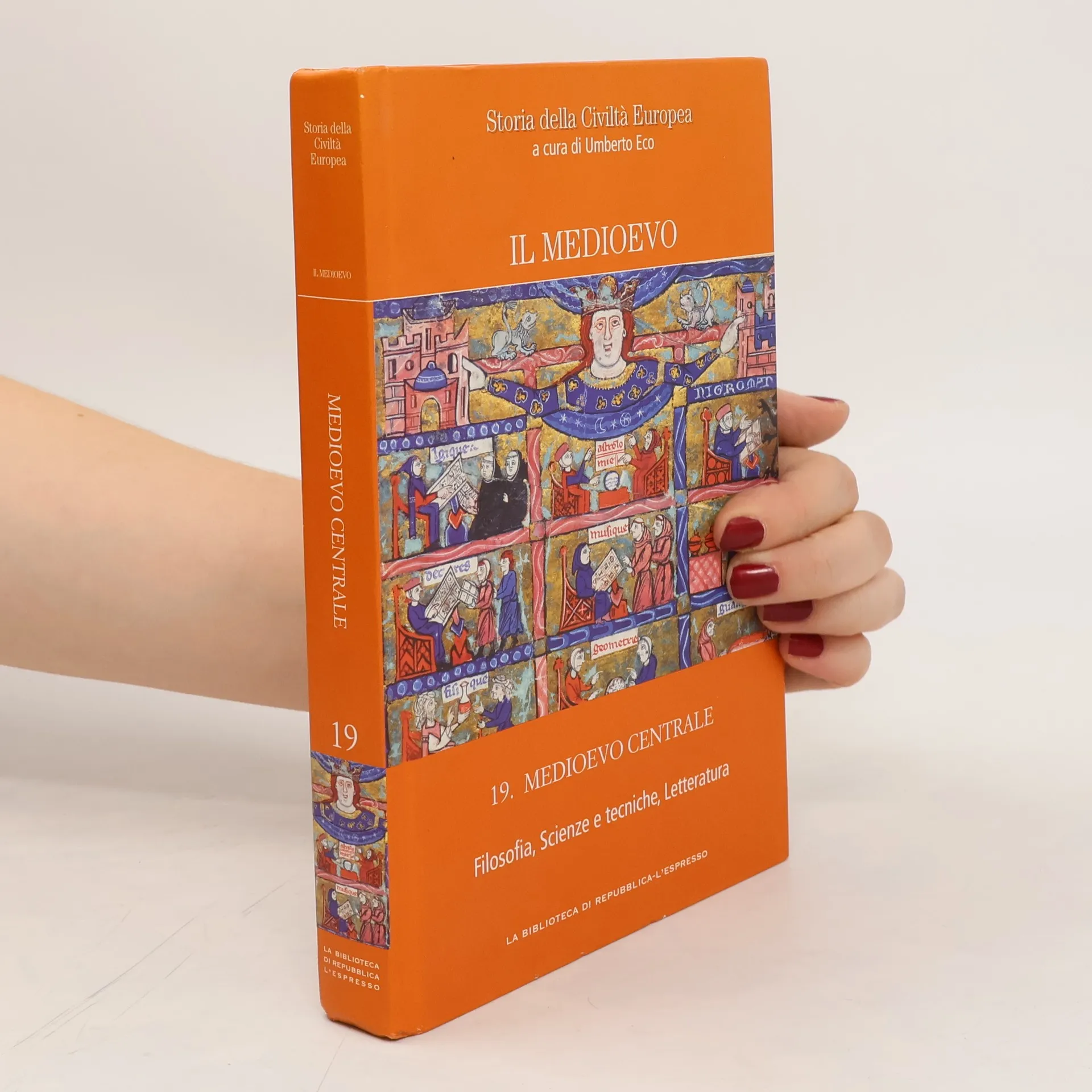
Il medioevo. 19. medioevo centrale
Filosofia, Scienze e tecniche, Letteratura
¿En qué creen los que no creen?
Un diálogo sobre la ética en el fin del mundo
La nueva Edad Media
- 155 páginas
- 6 horas de lectura
Las hipótesis prospectivas de un retroceso de la civilización hacia la nueva edad media buscan sus causas en la disolución de los vínculos sociales, la privatización del poder y los conflictos entre grupos competidores. De los cuatro trabajos reunidos en este volumen, el de umberto eco destaca los paralelismos entre la Europa medieval y la sociedad contemporánea, tales como la sensación de inseguridad, las sectas marginadas, el carácter visual de la cultura, el principio de autoridad y el gusto por el formalismo en la reflexión intelectual. Furio colombo describe las concentraciones tecnológicas que comienzan a disputar al Estado los atributos del poder y adelanta las características que revestirán la vida en los territorios neo-feudales. Francesco alberoni examina las sombrías perspectivas que aguardan a los países industrializados en vías de decadencia. Giuseppe sacco reflexiona sobre las posibilidades de modificar mediante una adecuada política de organización del territorio las tendencias hacia la ruptura del consenso, la fragmentación social y la multiplicación de identidades culturales y códigos de conducta.
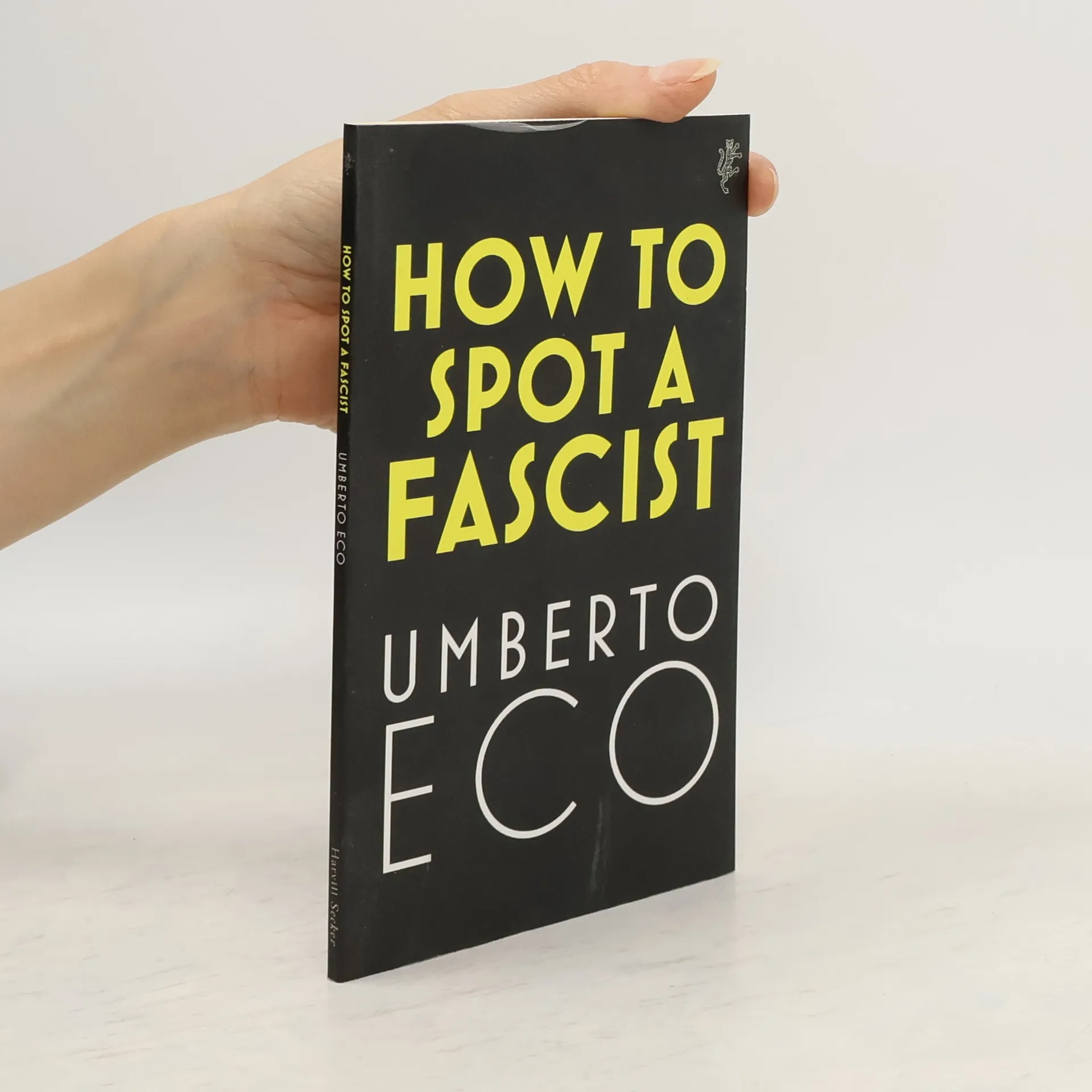
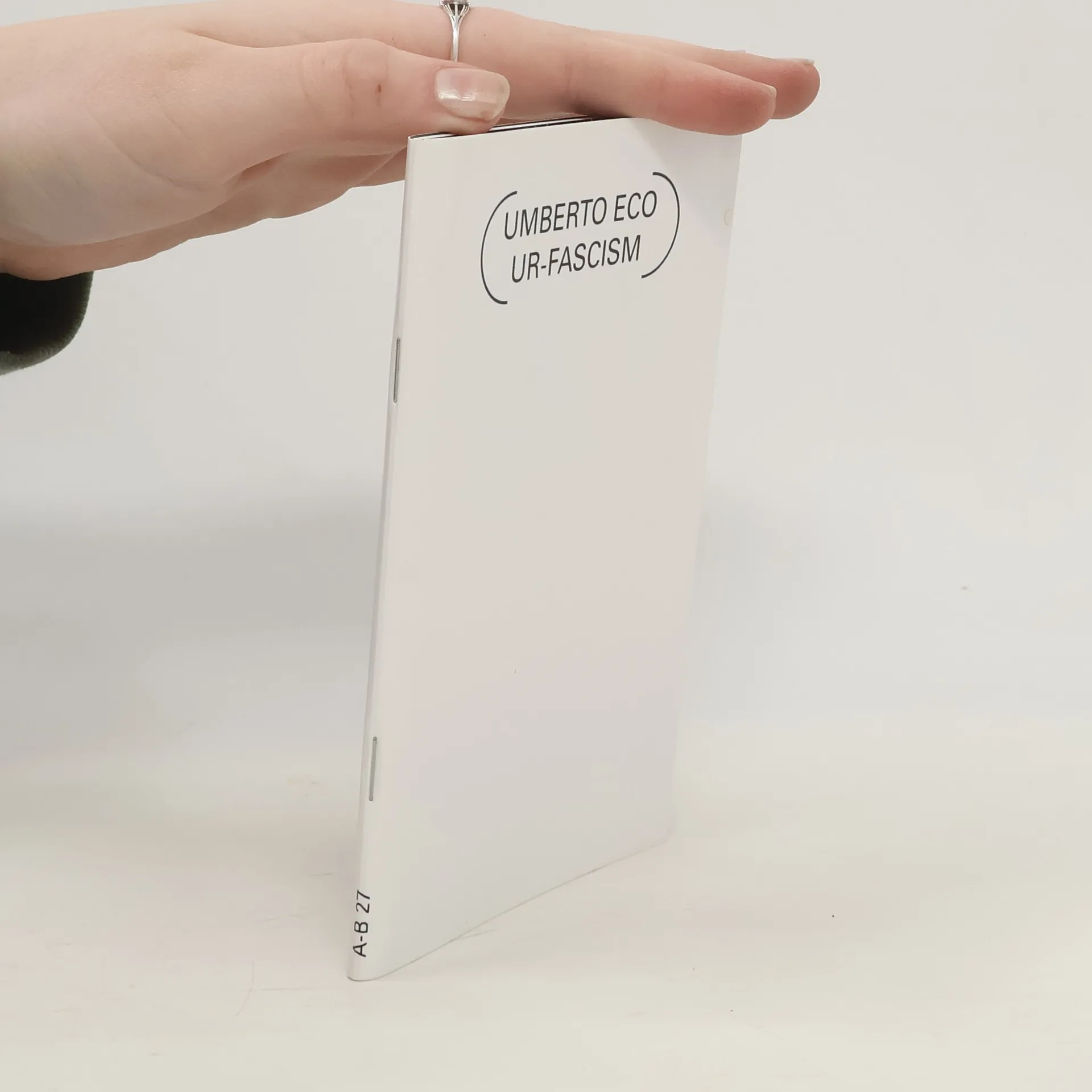
How to Spot a Fascist
- 64 páginas
- 3 horas de lectura
We are here to remember what happened and to declare solemnly that 'they' must never do it again. But who are 'they'? HOW TO SPOT A FASCIST is a selection of three thought-provoking essays on freedom and fascism, censorship and tolerance - including Eco's iconic essay 'Ur-Fascism', which lists the fourteen essential characteristics of fascism, and draws on his own personal experiences growing up in the shadow of Mussolini. Umberto Eco remains one of the greatest writers and cultural commentators of the last century. In these pertinent pieces, he warns against prejudice and abuses of power and proves a wise and insightful guide for our times. If we strive to learn from our collective history and come together in challenging times, we can hope for a peaceful and tolerant future. Freedom and liberation are never-ending tasks. Let this be our motto: 'Do not forget.'
The Story of Time
- 304 páginas
- 11 horas de lectura
Exploring this elusive and often controversial subject, Umberto Eco, Sir Ernst Gombrich, and others contributes essays and reflections on the meaning of time.
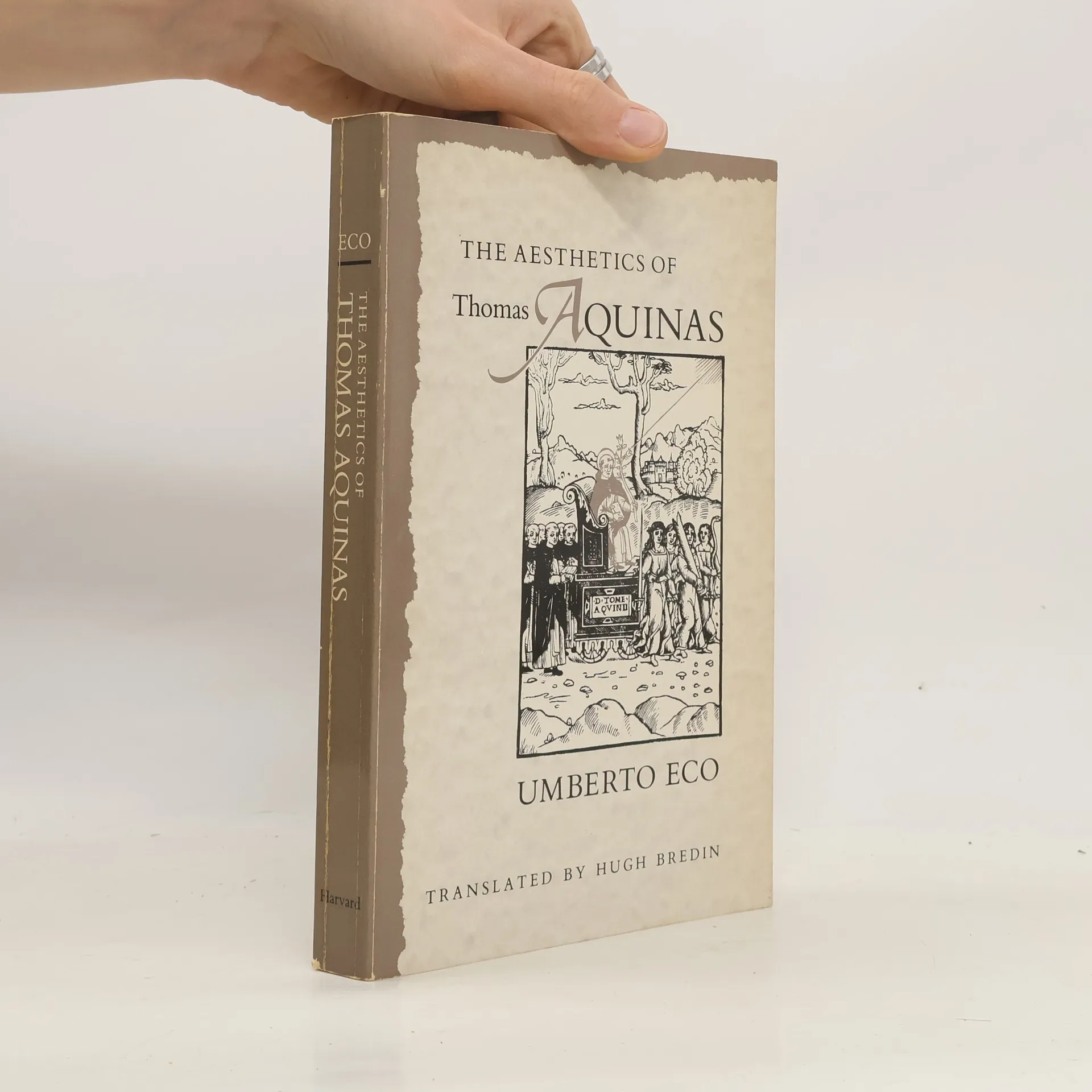
The Aesthetics of Thomas Aquinas
- 302 páginas
- 11 horas de lectura
Umberto Eco introduces English-speaking readers to the rich and complex aesthetic theories of Thomas Aquinas, a medieval thinker often recognized primarily as a theologian. Aquinas inherited concepts of art and beauty from classical traditions but transformed them through the lens of Christian theology and advancements in metaphysics and optics during the thirteenth century. Eco sets the context by exploring the vibrant aesthetic sensibility of medieval times and delves into Aquinas's ideas on transcendental beauty, aesthetic perception (visio), and the three conditions of beauty: integrity, proportion, and clarity—principles that later influenced James Joyce. He applies these theories to Aquinas's reflections on God, humanity, music, poetry, and scripture, and compares Aquinas's poetics with those of Dante. In a concluding chapter from the second Italian edition, Eco discusses how Aquinas's aesthetics were absorbed and transformed in late medieval thought, drawing parallels between Thomistic methodology and contemporary structuralism. As the only comprehensive English treatment of Aquinas's aesthetics, this work appeals to philosophers, medievalists, historians, critics, and those engaged in poetics, aesthetics, or the history of ideas.
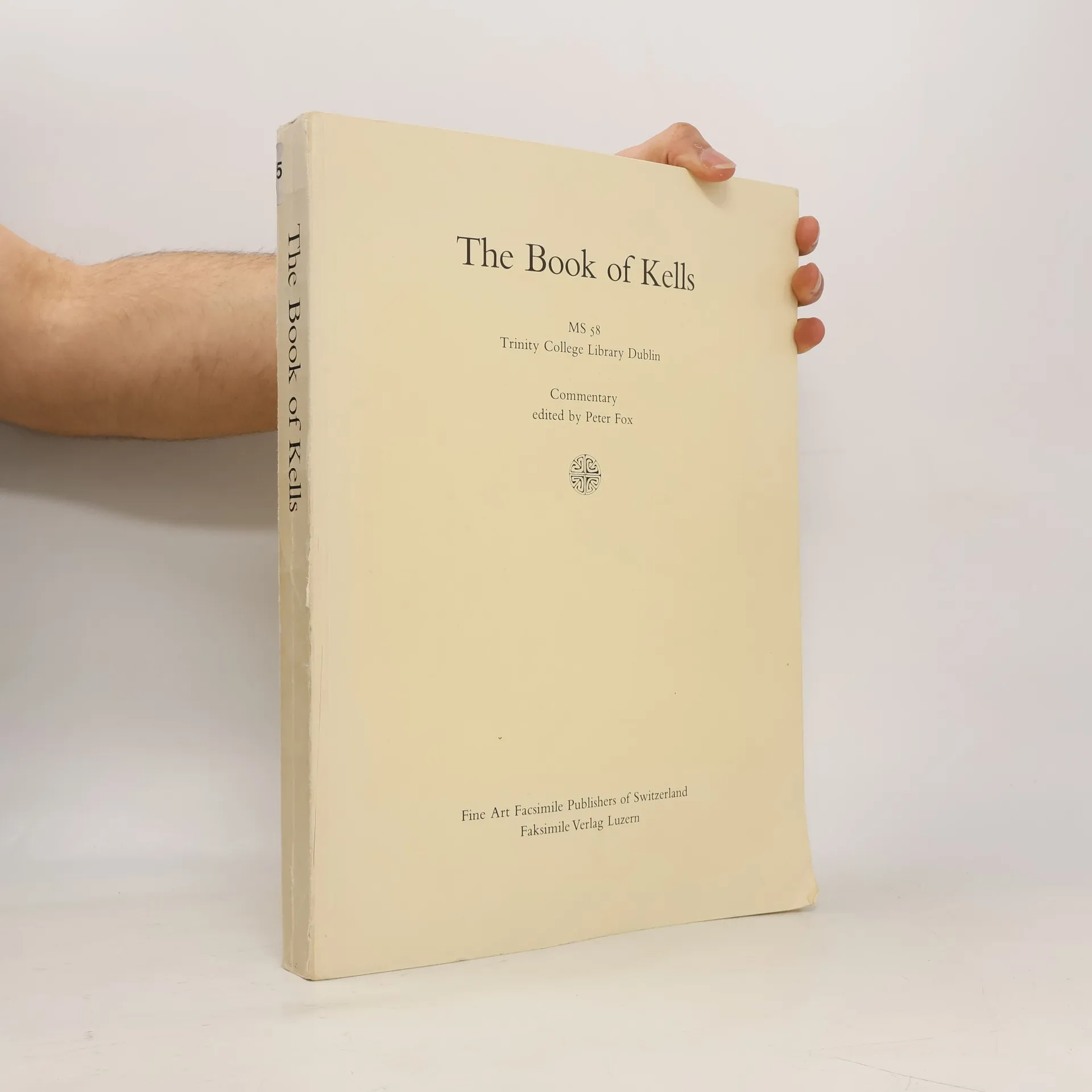
Book of Kells
MS 58, Trinity College Library, Dublin: Commentary, Fine Art Facsimile Volume
- 681 páginas
- 24 horas de lectura
1990 published fine art full colour facsimile of The Book of Kells (MS 58, Trinity College, Dublin) and the related Commentary edited by Peter Fox which features a forward by Umberto Eco and includes Meehan amongst the contributors, both published by Faksimile Verlag of Luzern.
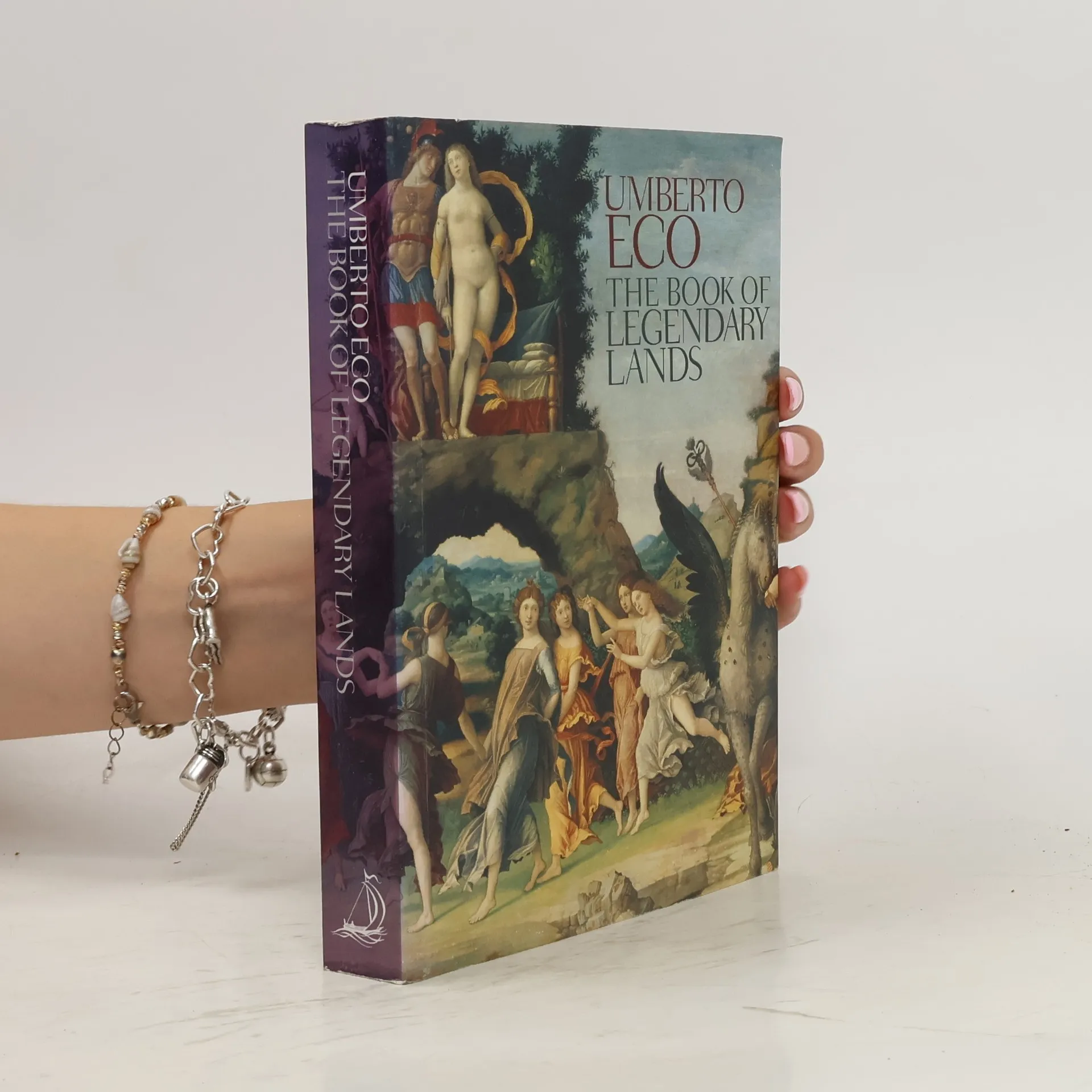
The Book of Legendary Lands
- 480 páginas
- 17 horas de lectura
In the tradition of his books On Beauty and On Ugliness and The Infinity of Lists, Umberto Eco presents an enthralling illustrated tour of the fabled places that have awed and eluded us through the ages. "Eco is one of the most influential thinkers of our time" Los Angeles Times From the epic poems of Homer to contemporary science fiction, from the Holy Scriptures to modern mythology and fairy tale, literature and art are full of illusory places we have at some time believed are real, and onto which we have projected our dreams, ideals and fears. Umberto Eco leads us on an illuminating journey through these legendary lands - Atlantis, Thule and Hyperborea, the Earth's interior and the Land of Cockaigne - and explores utopias and dystopias where our imagination can confront concepts that are too incredible, or too challenging, for our limited real world. In The Book of Legendary Lands the author's text is accompanied by several hundred carefully assembled works of art and literature; the result is a beautifully illustrated volume with broad and enduring appeal. Translated from Italian by Alastair McEwen
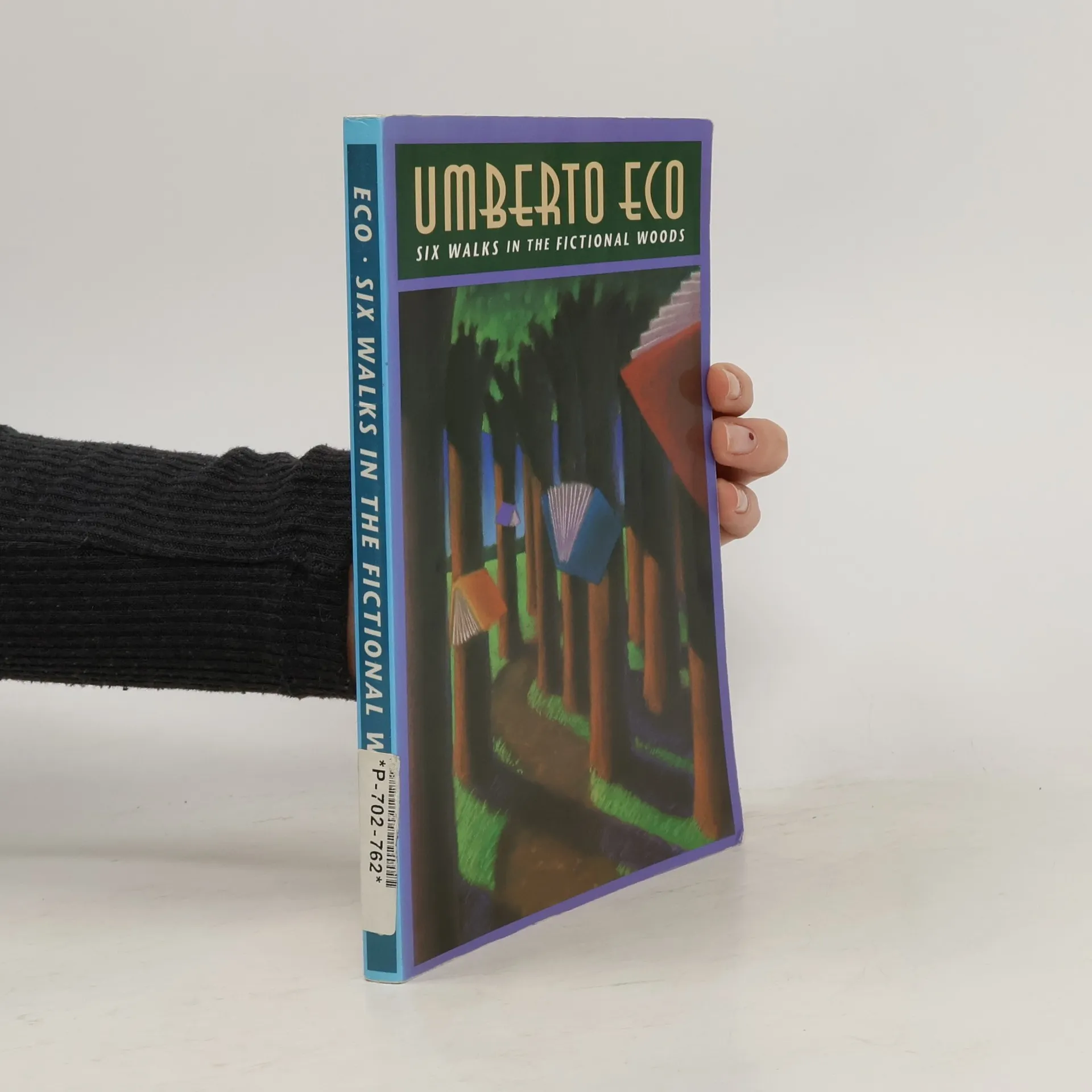
Six Walks in the Fictional Woods
- 160 páginas
- 6 horas de lectura
In Six Walks in the Fictional Woods Umberto Eco shares with us his Secret Life as a reader―his love for MAD magazine, for Scarlett O'Hara, for the nineteenth-century French novelist Nerval's Sylvie , for Little Red Riding Hood, Agatha Christie, Agent 007 and all his ladies. We see, hear, and feel Umberto Eco, the passionate reader who has gotten lost over and over again in the woods, loved it, and come back to tell the tale, The Tale of Tales. Eco tells us how fiction works, and he also tells us why we love fiction so much. This is no deconstructionist ripping the veil off the Wizard of Oz to reveal his paltry tricks, but the Wizard of Art himself inviting us to join him up at his level, the Sorcerer inviting us to become his apprentice.
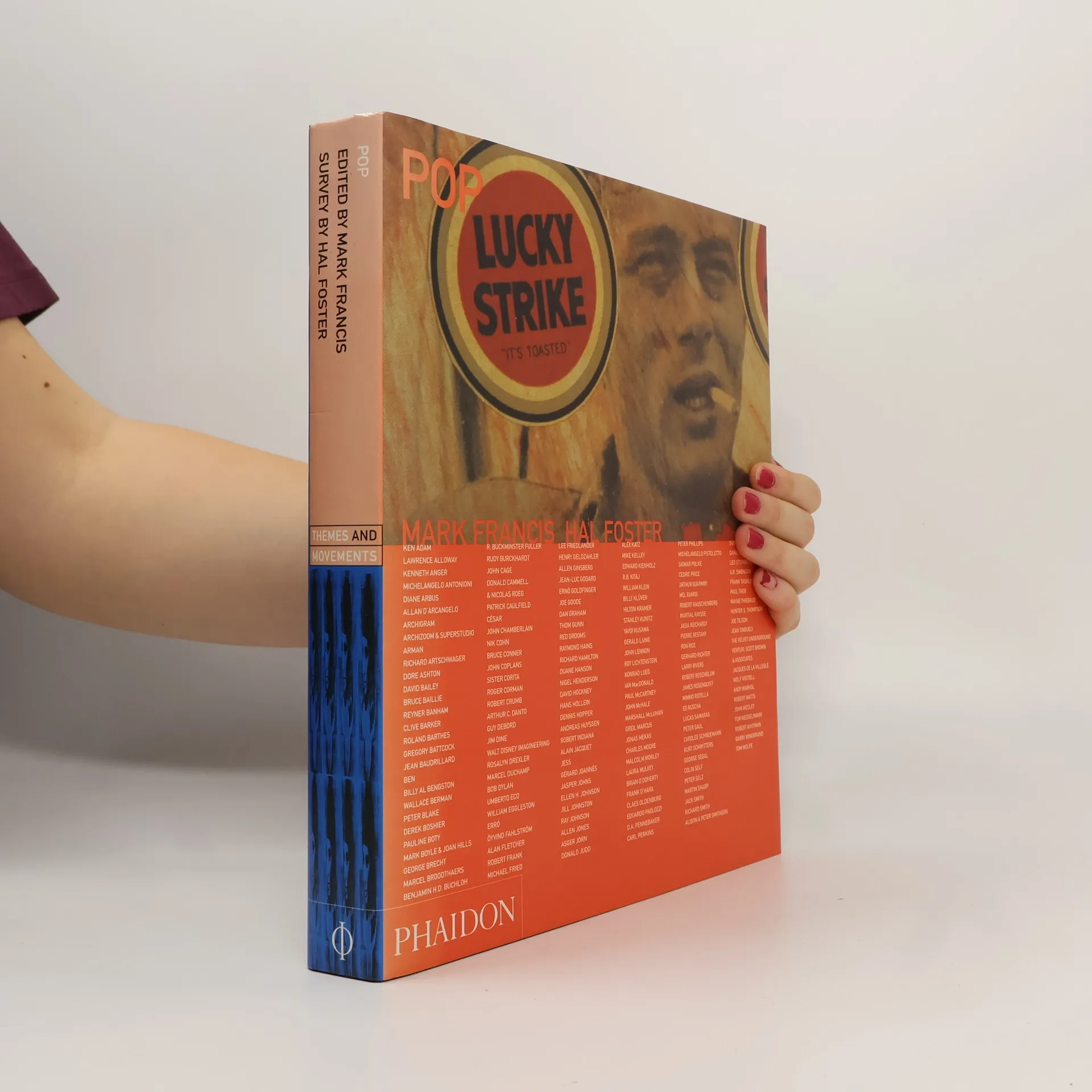
Themes and Movements: Pop
- 304 páginas
- 11 horas de lectura
Exploring the evolution of Pop culture from the late 1950s to the late 1960s, this comprehensive survey examines its impact on art, film, photography, and architecture, highlighting the interplay between mass production and mass media. Unlike other works that focus solely on Pop art, it offers a holistic view of the movement's influence across America, Britain, and Europe, showcasing its diverse manifestations and cultural significance during this transformative era.
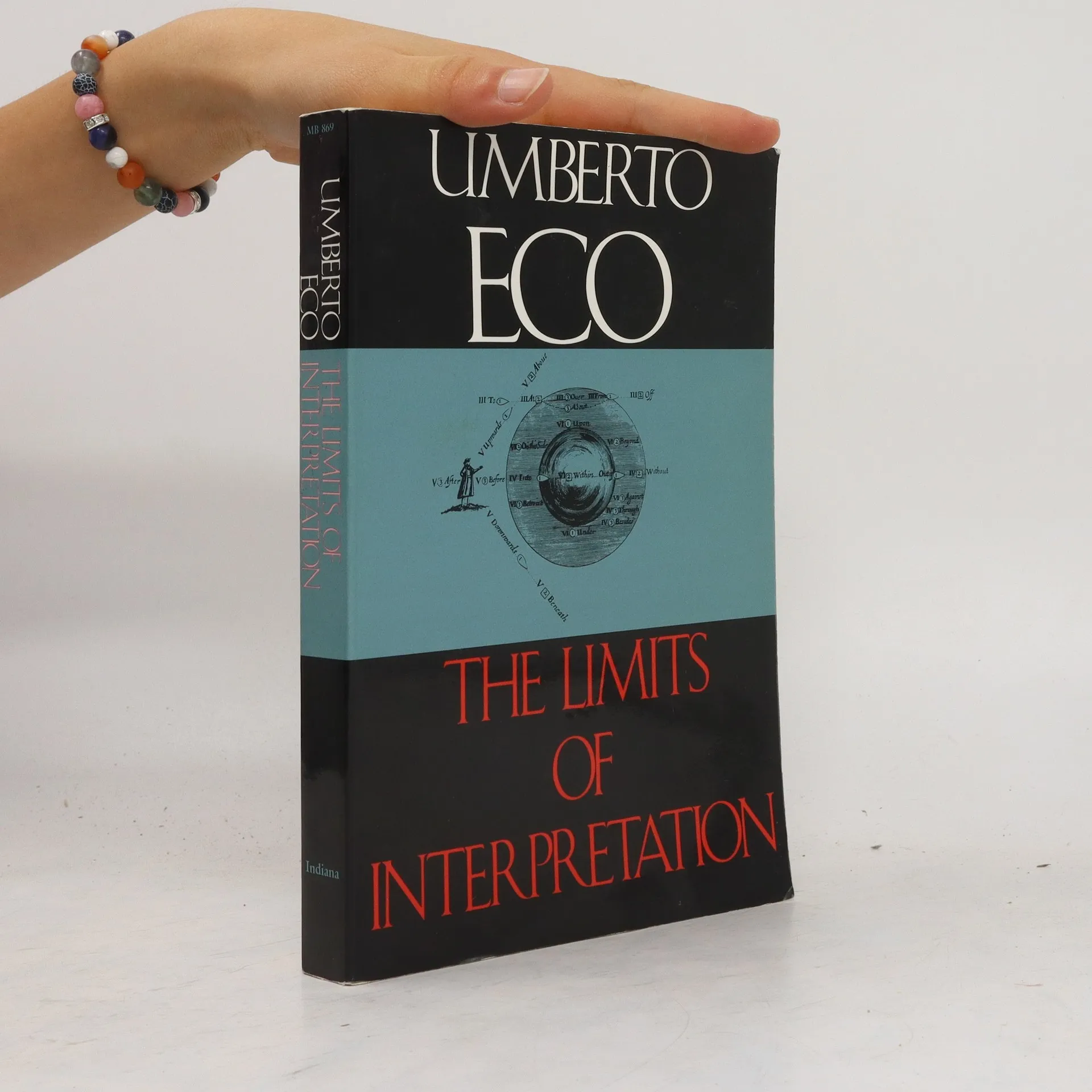
The Limits of Interpretation
- 308 páginas
- 11 horas de lectura
Umberto Eco focuses here on what he once called "the cancer of uncontrolled interpretation"--that is, the belief that many interpreters have gone too far in their domination of texts, thereby destroying meaning and the basis for communication.
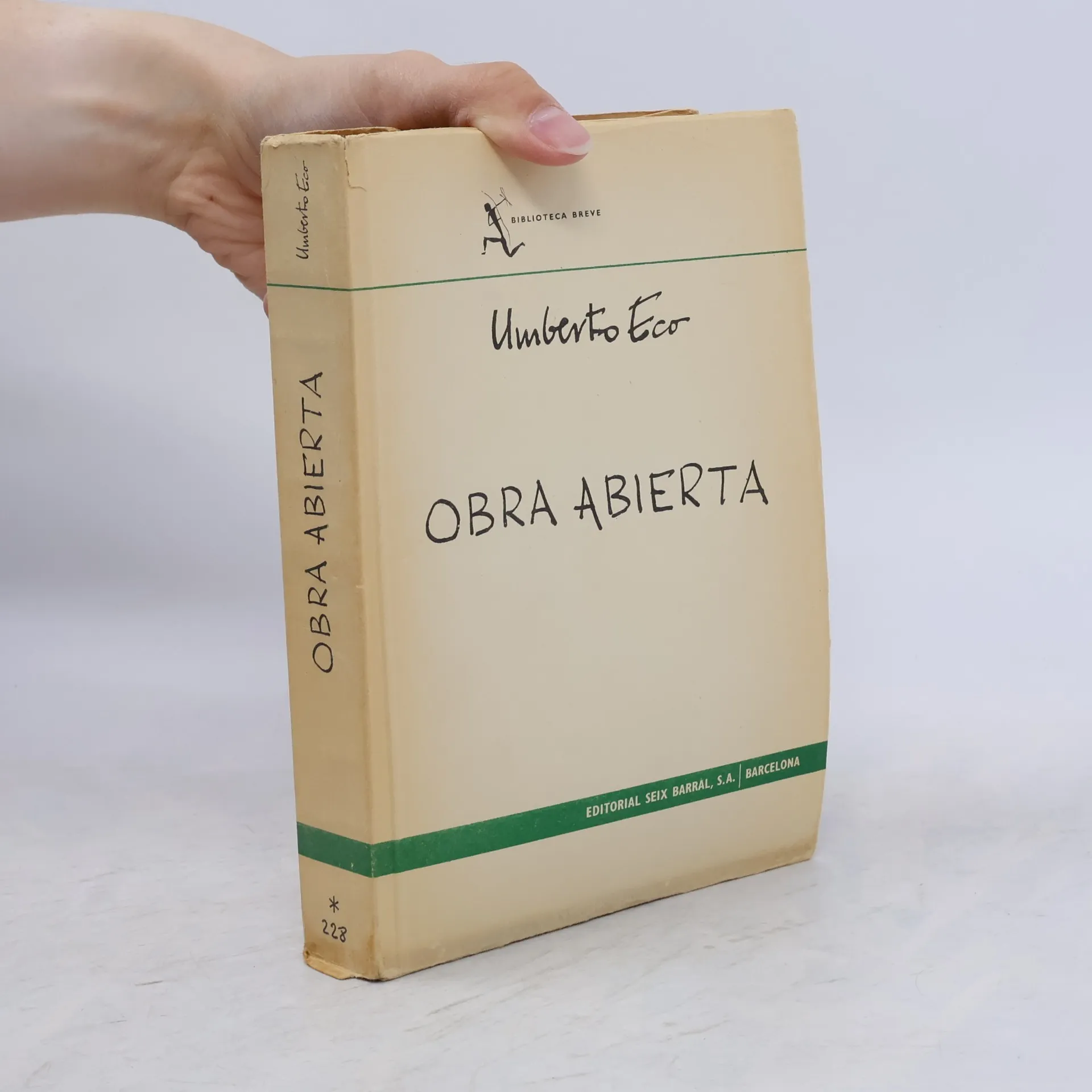
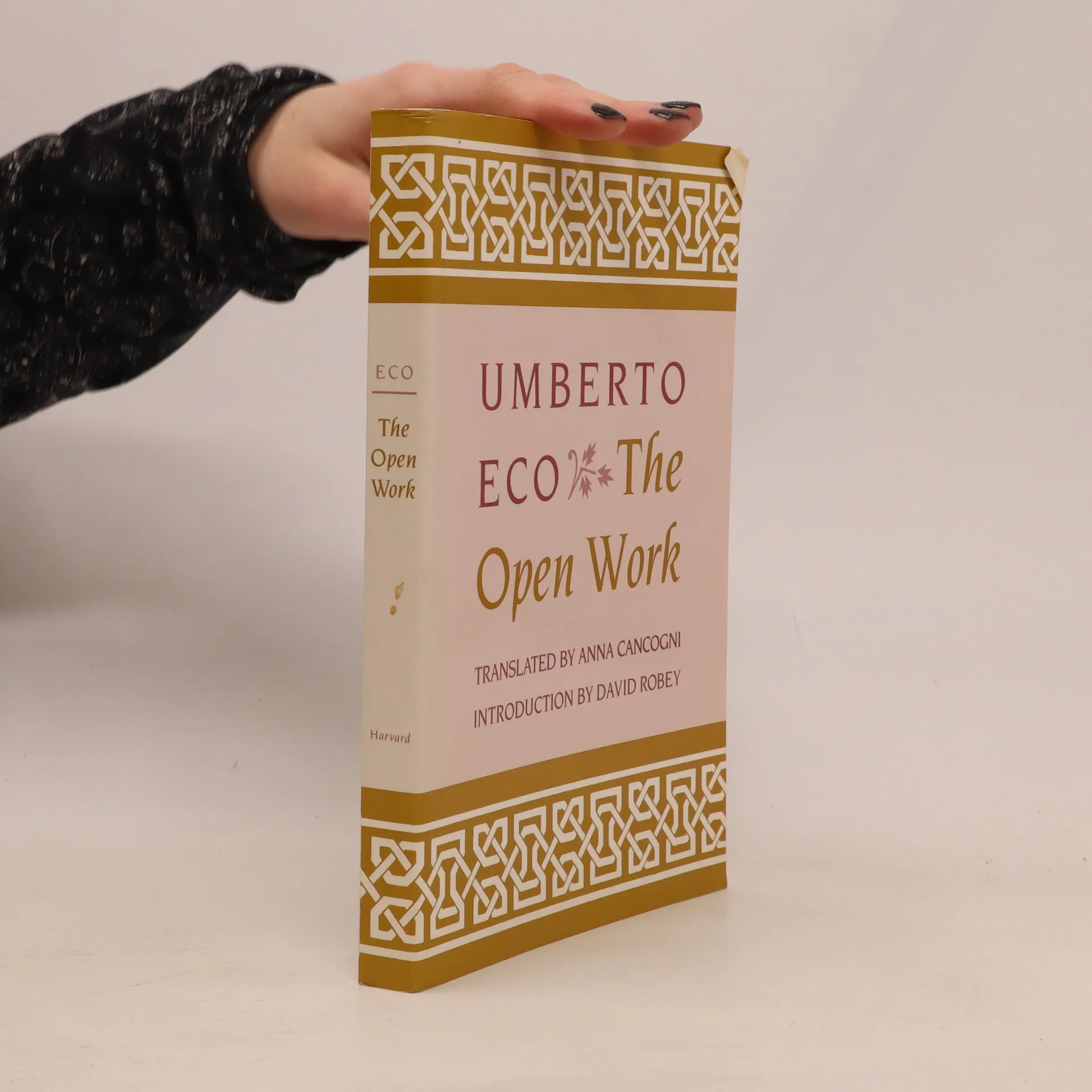
This book is significant for its concept of "openness"--the artist's decision to leave arrangements of some constituents of a work to the public or to chance--and for its anticipation of two themes of literary theory: the element of multiplicity and plurality in art, and the insistence on literary response as an interaction between reader and text.
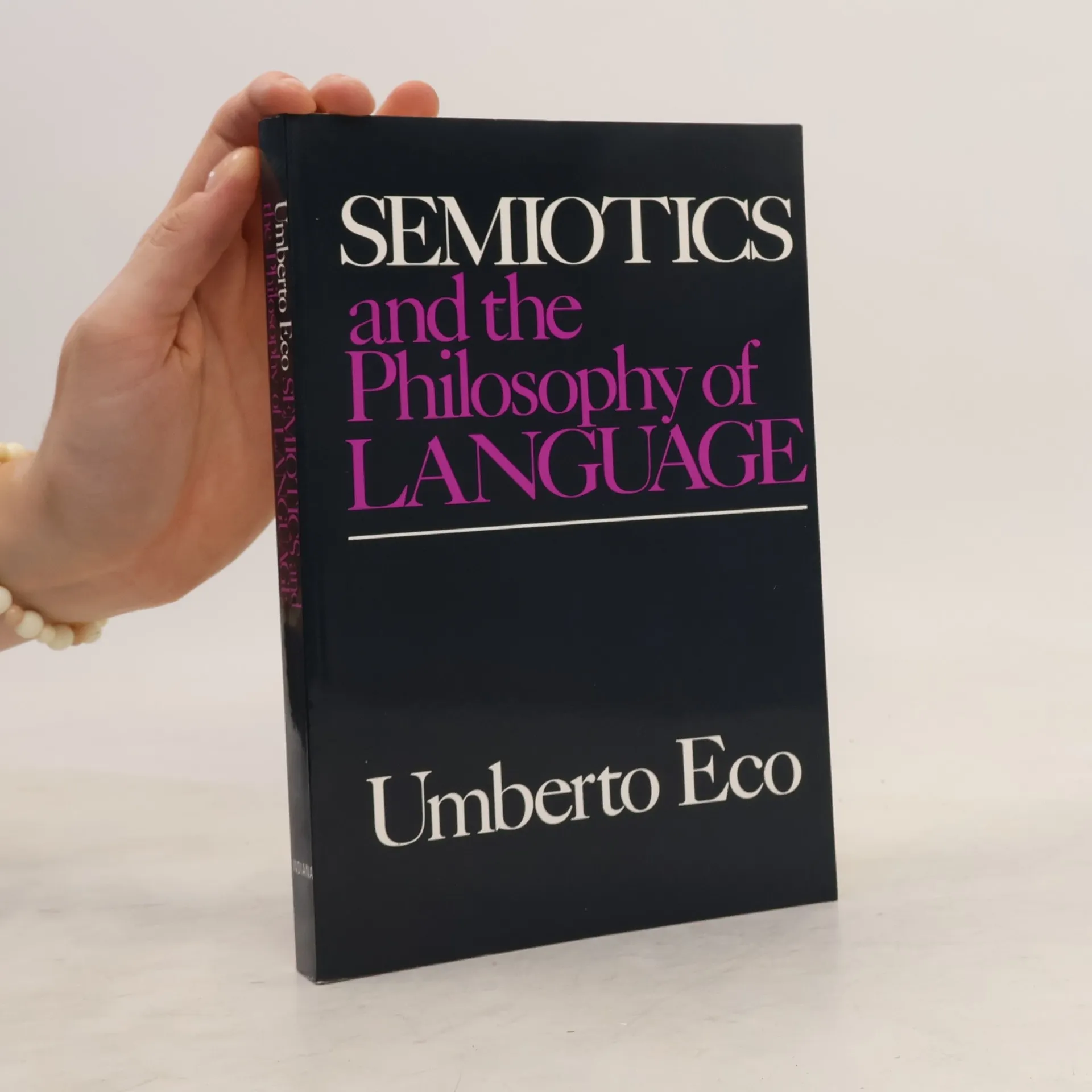
Original title: Semiotica e filosofia del linguaggio.
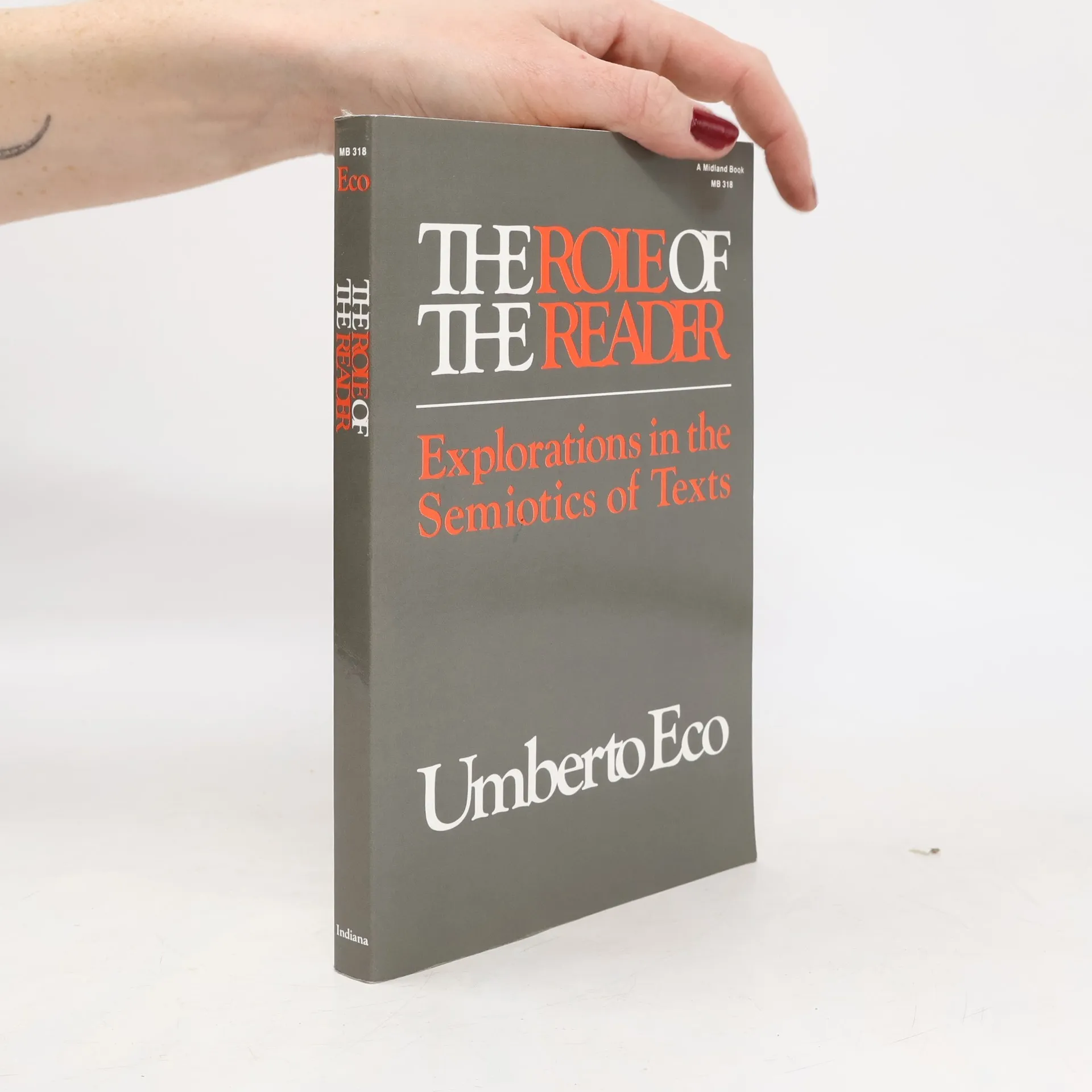
The Role of the Reader
- 284 páginas
- 10 horas de lectura
... not merely interesting and novel, but also exceedingly provocative and heuristically fertile." --The Review of Metaphysics... essential reading for anyone interesting in... the new reader-centered forms of criticism." --Library JournalIn this erudite and imaginative book, Umberto Eco sets forth a dialectic between 'open' and 'closed' texts.
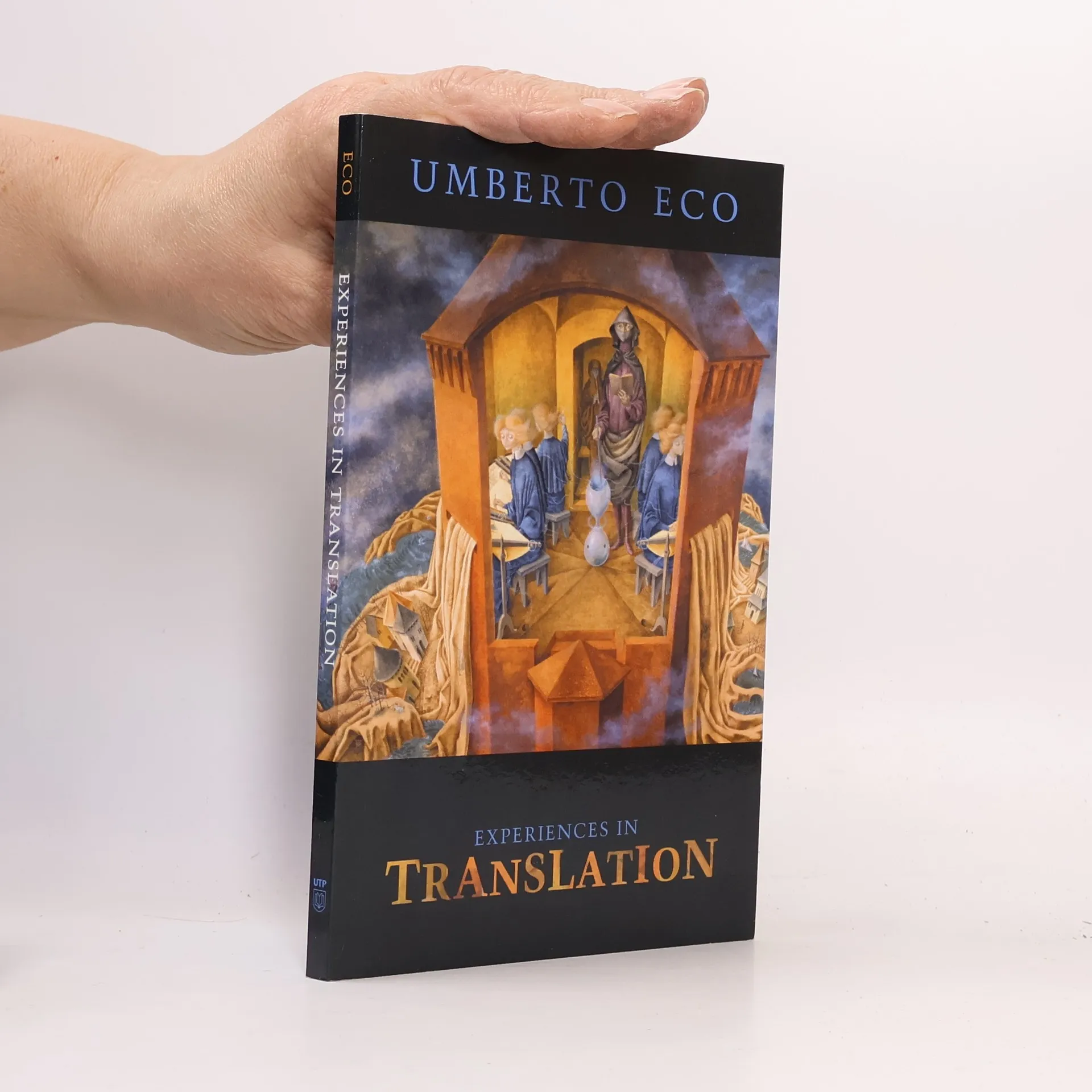
In this book Umberto Eco argues that translation is not about comparing two languages, but about the interpretation of a text in two different languages, thus involving a shift between cultures.
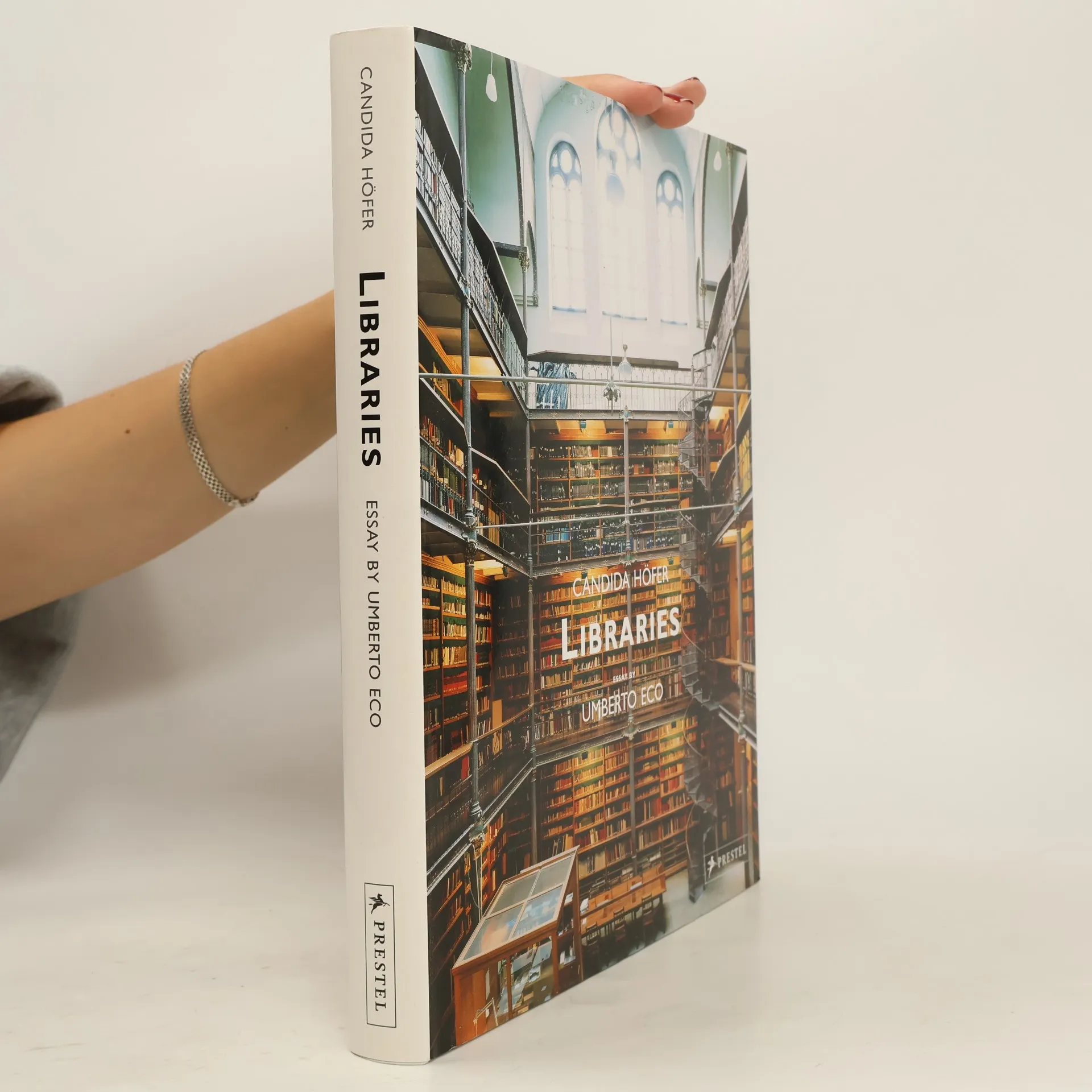
This striking book shows the world's most beautiful libraries through Candida Höfer's mesmerizing photographs. No one photographs spaces quite like Candida Höfer and no one has captured better the majesty, stillness, and eloquence of libraries. Traveling around the world, Höfer shows the exquisite beauty to be found in order, repetition, and form--rows of books, lines of desks, soaring shelves, and even stacks of paper create patterns that are both hypnotic and soothing. Photographed with a large-format camera and a small aperture, these razor-sharp images of the Pierpont Morgan Library in New York, the Escorial in Spain, Villa Medici in Rome, the Hamburg University library, the Bibliotheque Nationale de France in Paris, and the Museo Archeologico in Madrid, to name a few, communicate more than just the superb architecture. Glowing with subtle color and natural light, Höfer's photographs, while devoid of people, shimmer with life and remind us again and again that libraries are more than just repositories for books. Umberto Eco's essay about his own attachment to libraries is the perfect introduction to an otherwise wordless, but sublimely reverent journey.
On the Shoulders of Giants
- 336 páginas
- 12 horas de lectura
A posthumous collection of essays by one of our greatest contemporary thinkers that provides a towering vision of Western culture. In Umberto Eco’s first novel, The Name of the Rose, Nicholas of Morimondo laments, “We no longer have the learning of the ancients, the age of giants is past!” To which the protagonist, William of Baskerville, replies: “We are dwarfs, but dwarfs who stand on the shoulders of those giants, and small though we are, we sometimes manage to see farther on the horizon than they.” On the Shoulders of Giants is a collection of essays based on lectures Eco famously delivered at the Milanesiana Festival in Milan over the last fifteen years of his life. Previously unpublished, the essays explore themes he returned to again and again in his writing: the roots of Western culture and the origin of language, the nature of beauty and ugliness, the potency of conspiracies, the lure of mysteries, and the imperfections of art. Eco examines the dynamics of creativity and considers how every act of innovation occurs in conversation with a superior ancestor. In these playful, witty, and breathtakingly erudite essays, we encounter an intellectual who reads comic strips, reflects on Heraclitus, Dante, and Rimbaud, listens to Carla Bruni, and watches Casablanca while thinking about Proust. On the Shoulders of Giants reveals both the humor and the colossal knowledge of a contemporary giant.
Interpretation and Overinterpretation
- 164 páginas
- 6 horas de lectura
The book features a provocative exploration of literary interpretation, blending Eco's expertise as a novelist and literary theorist. With a humorous and insightful approach, he navigates a wide array of topics, drawing connections between influential figures like Dante, Chomsky, and Derrida. Eco's unique style shines through, making complex ideas accessible and engaging for readers interested in the nuances of literature and its interpretation.
Harvest Original: Misreadings
- 180 páginas
- 7 horas de lectura
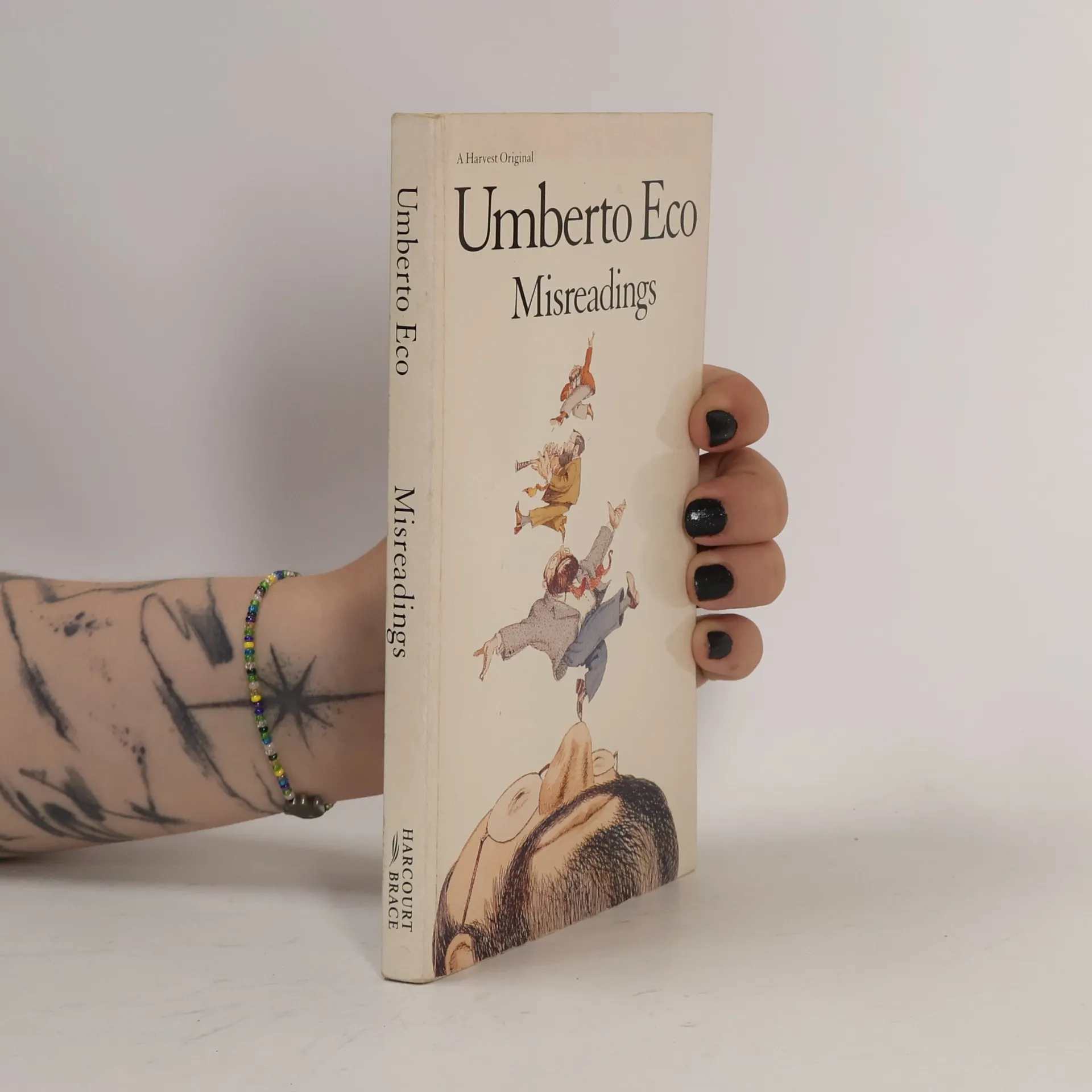
Satirical essays in which Eco pokes fun at the oversophisticated, the overacademic, and the overintellectual and makes penetrating comments about our modern mass culture and the elitist avant-garde. “A scintillating collection of writings” (Los Angeles Times). Translated by William Weaver. A Helen and Kurt Wolff Book
On beauty : a history of a Western idea
- 438 páginas
- 16 horas de lectura
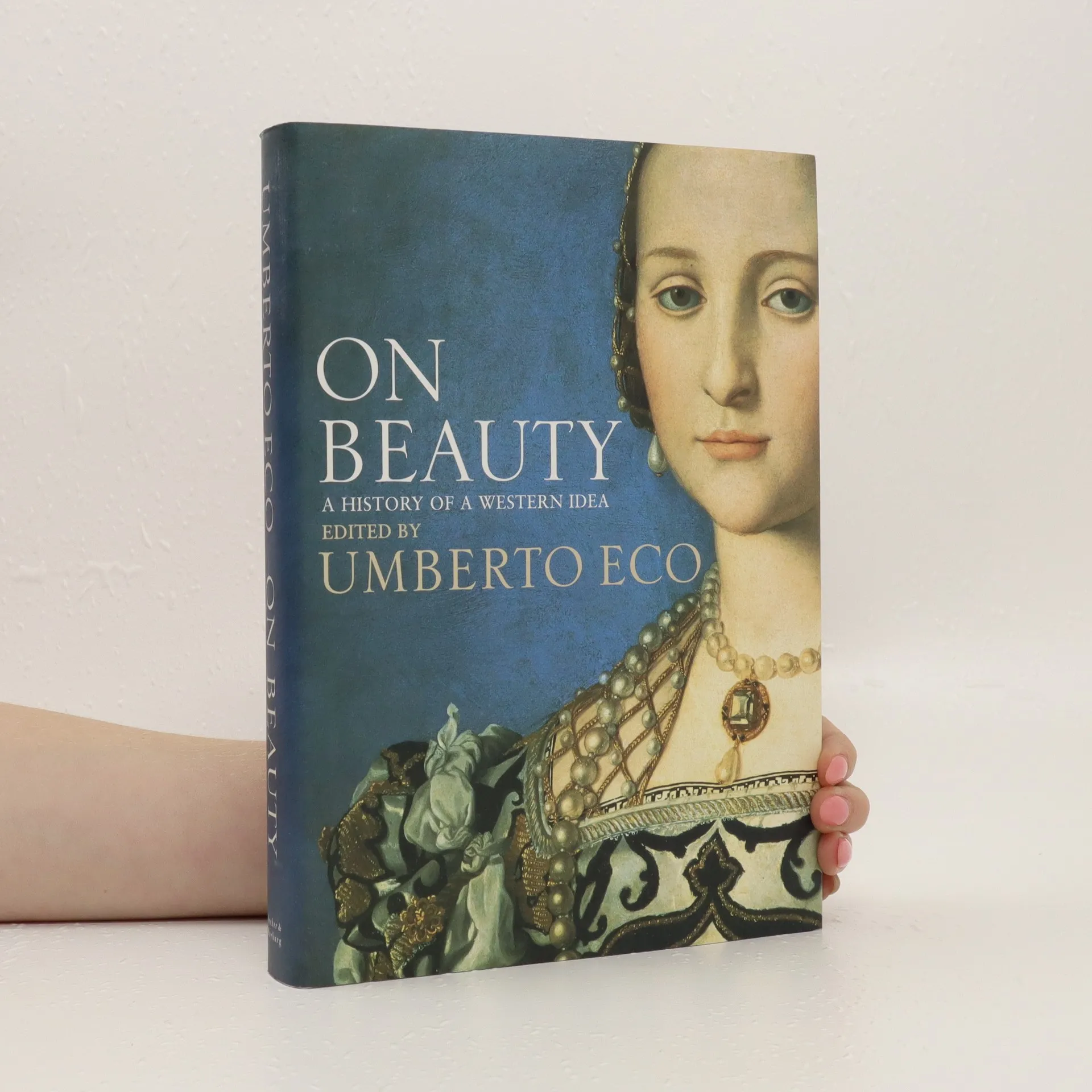
'On Beauty' is neither a history of art, nor a history of aesthetics but Umberto Eco draws on the histories of both these disciplines to define the ideas of beauty that have informed sensibilities from the classical world to modern times.
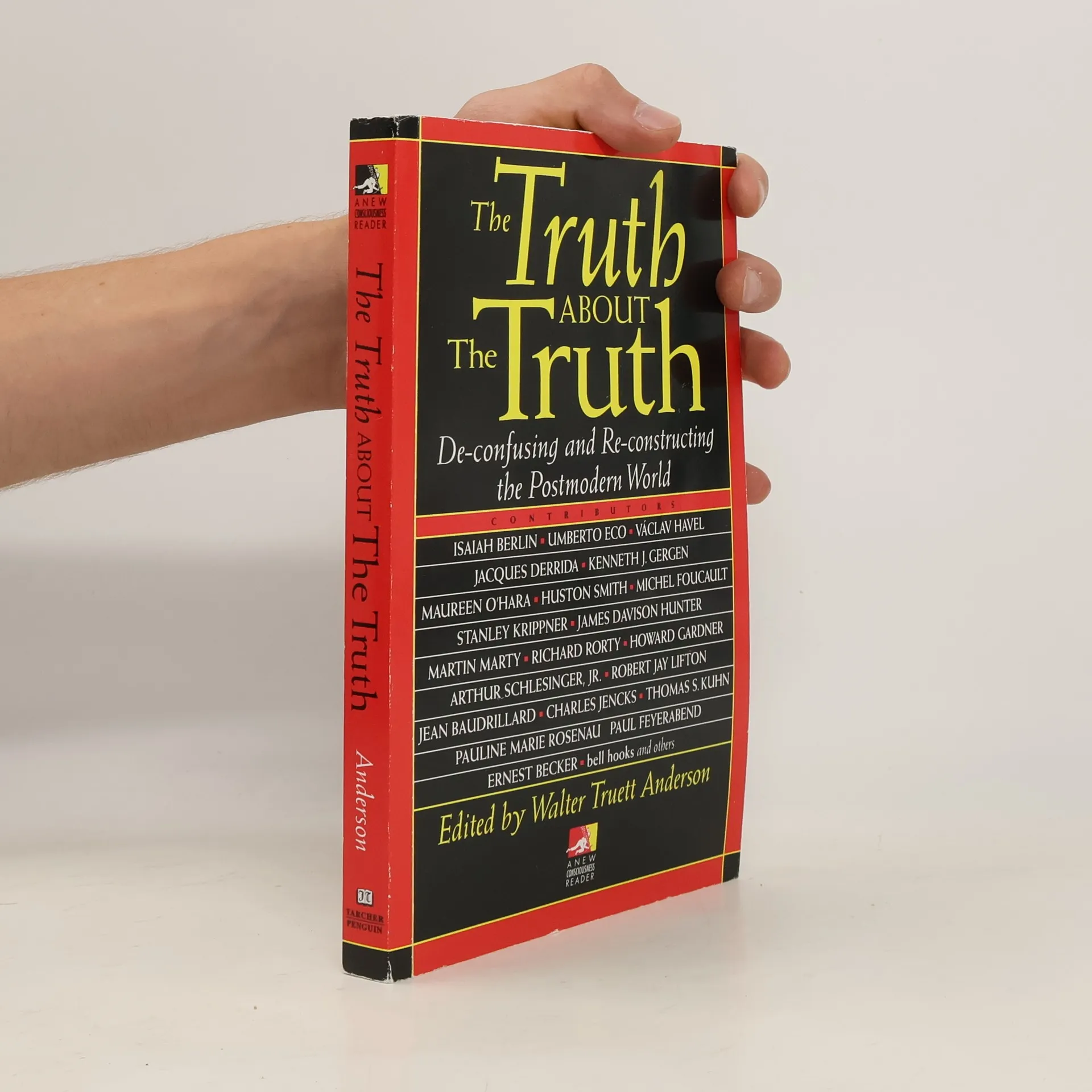
The Truth About the Truth
De-confusing and Re-constructing the Postmodern World
- 272 páginas
- 10 horas de lectura
Includes essays and excerpts from the works of prominent modern thinkers such as Umberto Eco, Jacques Derrida, and Isaiah Berlin among others.
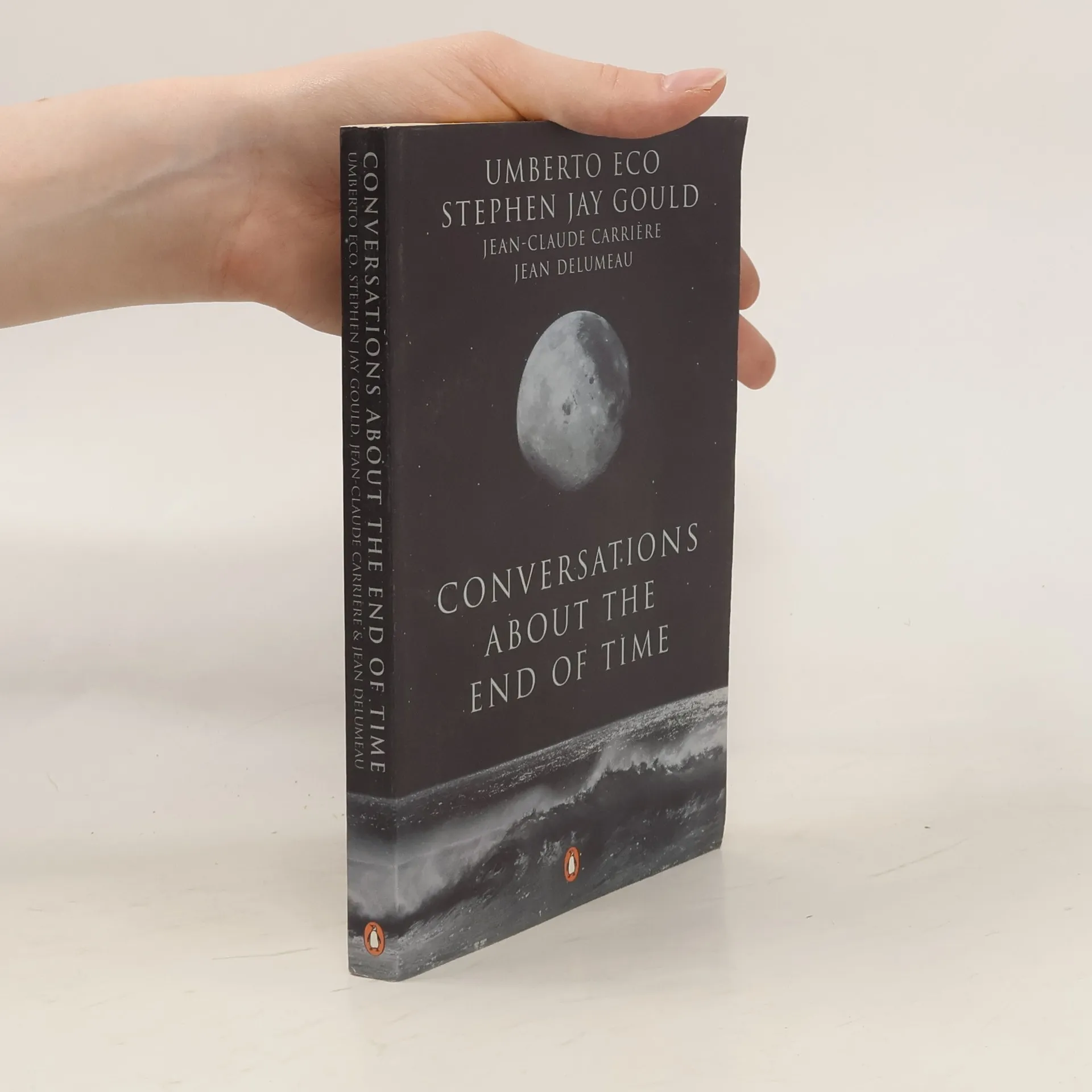
Conversations about the End of Time
- 228 páginas
- 8 horas de lectura
Where does our fascination with the Apocalypse come from? Is time cyclical or linear? Can society survive without ideology? Can children be philosophers? The contributors examine these questions and other of our preoccupations, cast back to the fears and hopes of previous generations and examine the challenges to come.
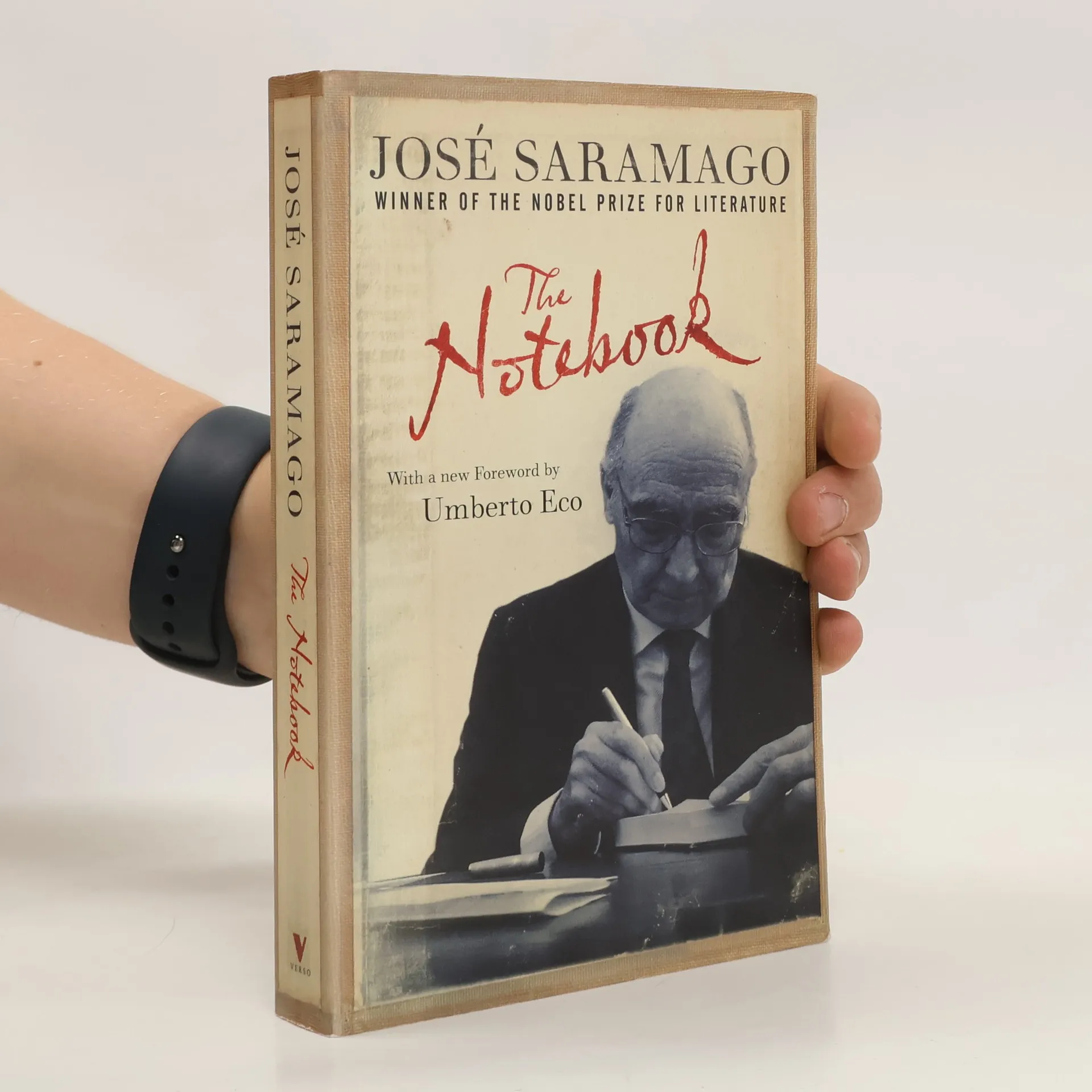
The Notebook
- 284 páginas
- 10 horas de lectura
A year in the life of the Nobel laureate on the anniversary of his death.
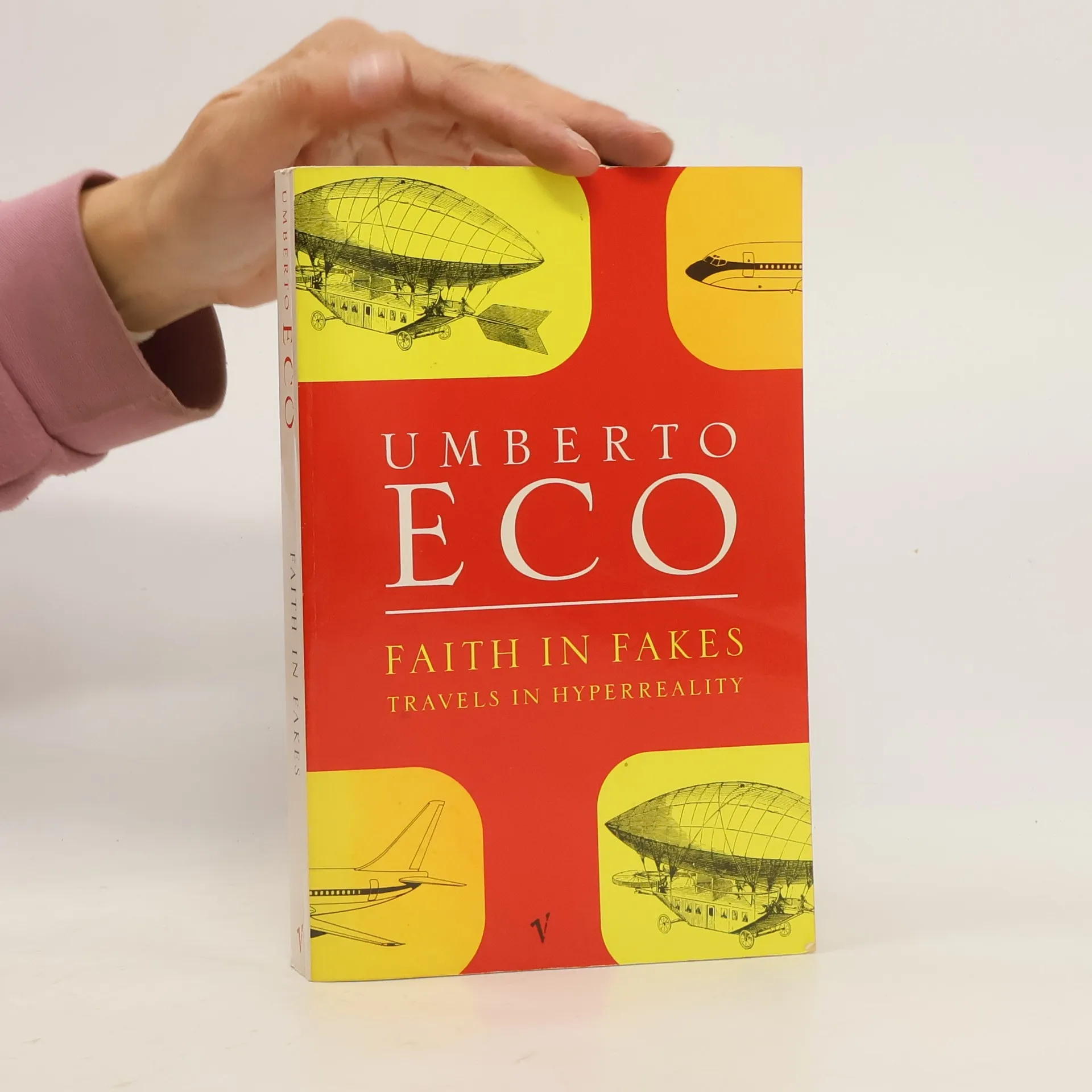
Faith In Fakes
- 316 páginas
- 12 horas de lectura
Holography, wax museums, the secret meaning of spectator sports, Superman and the intellectual effects of over-tight jeans are just a few of the subjects covered in this collection of witty, entertaining and thought-provoking delights from Umberto Eco, celebrated author of The Name of the Rose.
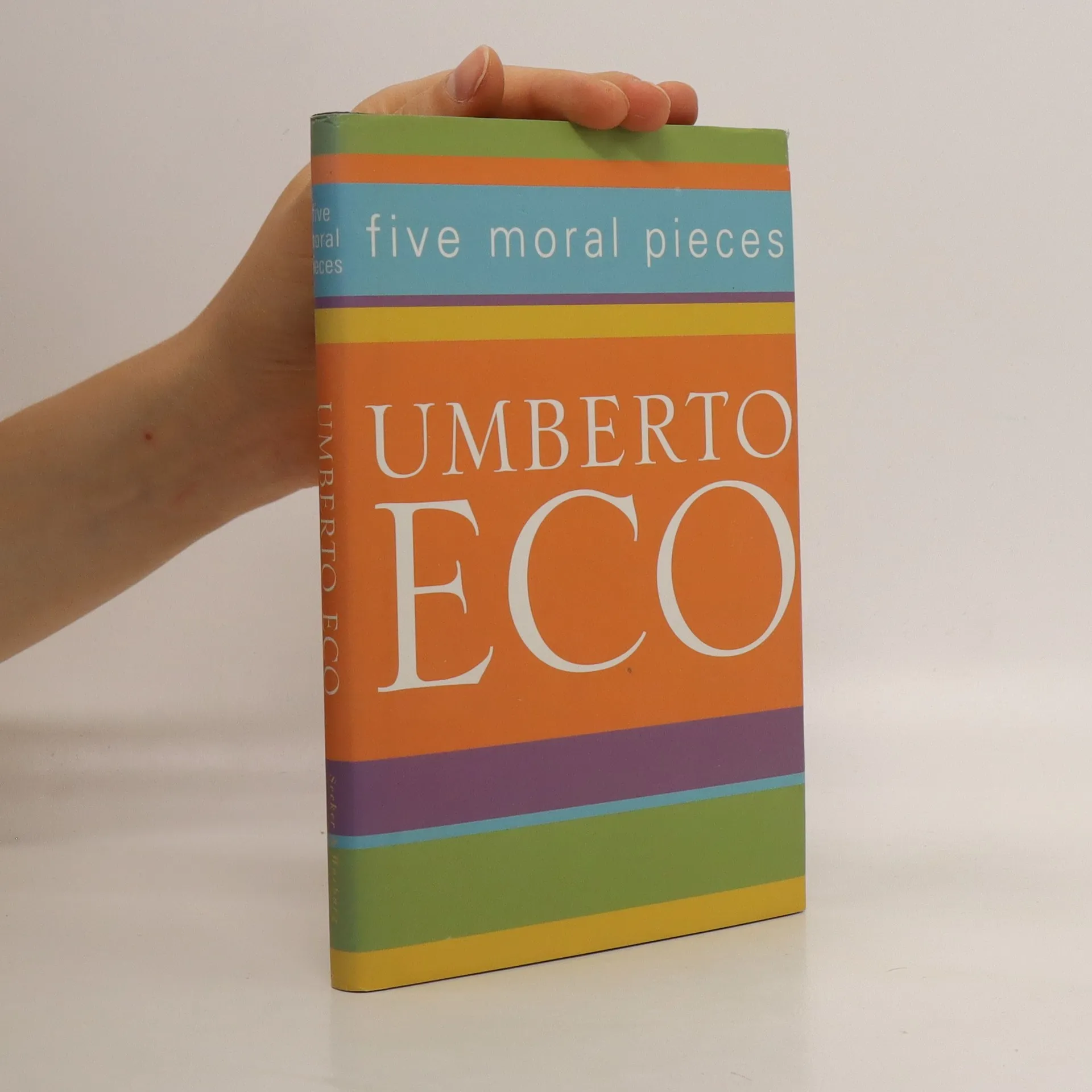
Five moral pieces
- 111 páginas
- 4 horas de lectura
embracing the web of multi-culturalism that has become a fact of contemporary life from New York to New Delhi, Eco argues that we are more connected to people of othe traditions and customs than ever before, making tolerance the ultimate value in today's world.
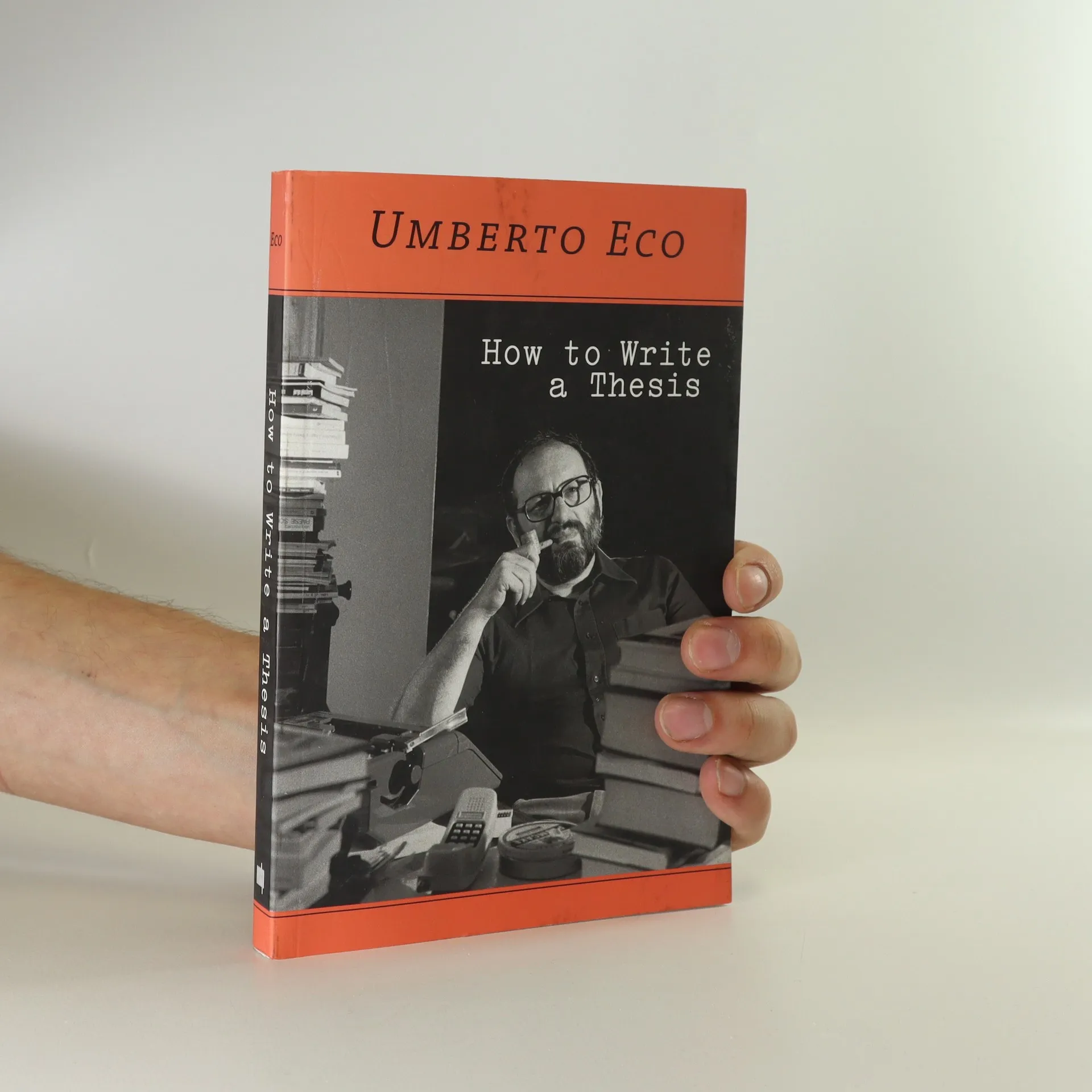
How To Write a Thesis
- 256 páginas
- 9 horas de lectura
Umberto Eco's wise and witty guide to researching and writing a thesis, published in English for the first time
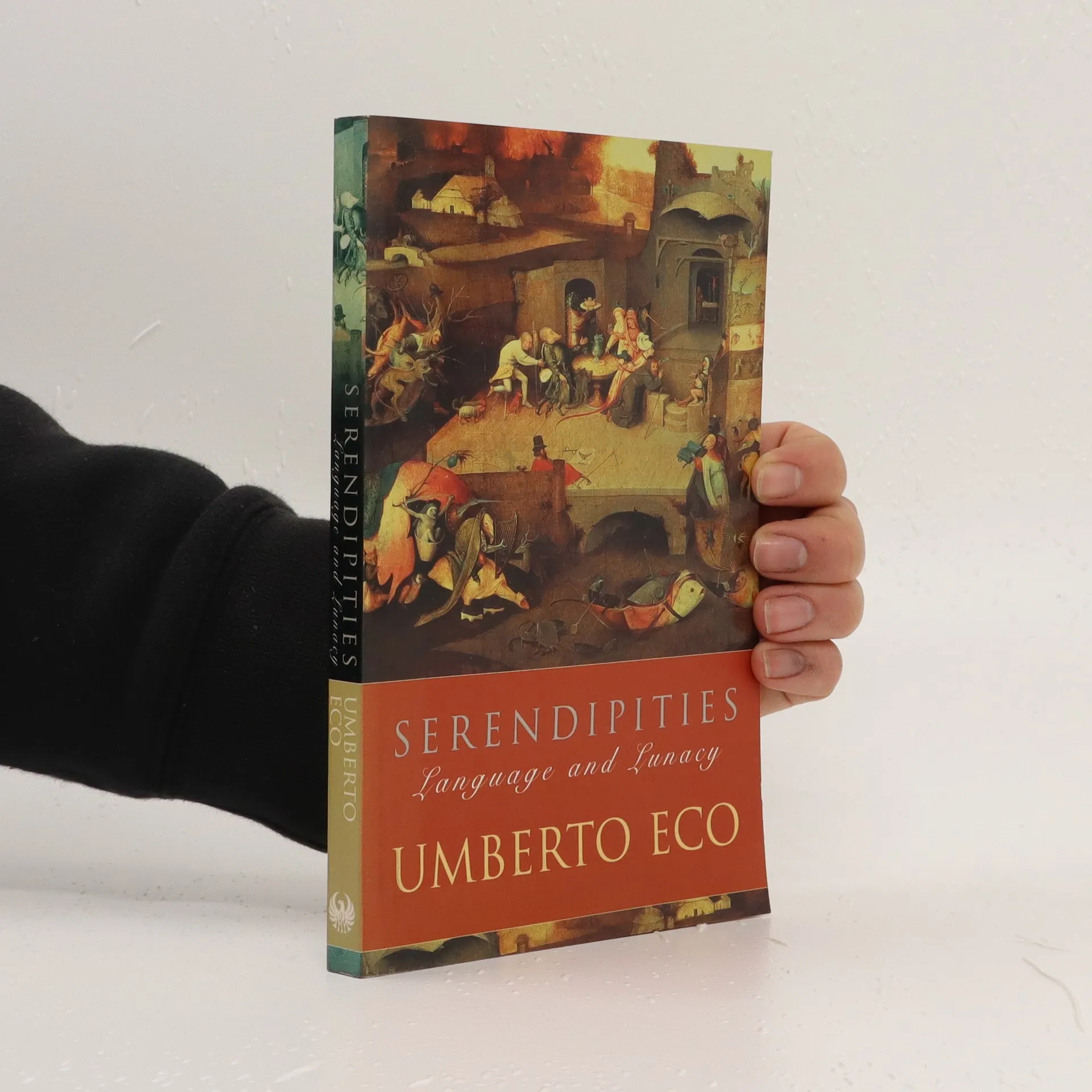
The extraordinary historical consequences of errors and fictional inventions. SERENDIPITIES is an iconoclastic, dazzlingly erudite and witty demonstration, by one of the world's most brilliant thinkers, of how myths and lunacies can produce historical developments of no small significance. In Eco's words, 'even errors can produce interesting side effects'. Eco's book shows how: -- believers in a flat earth helped Columbus accidentally discover America -- the medieval myth of Prester John, the Christian king in Asia, assisted the European drive eastward -- the myth of the Rosicrucians affected the Masons, leading in turn to the widespread belief in a Jewish masonic plot to dominate the world and other forms of paranoid anti-Semitism in the nineteenth and twentieth centuries
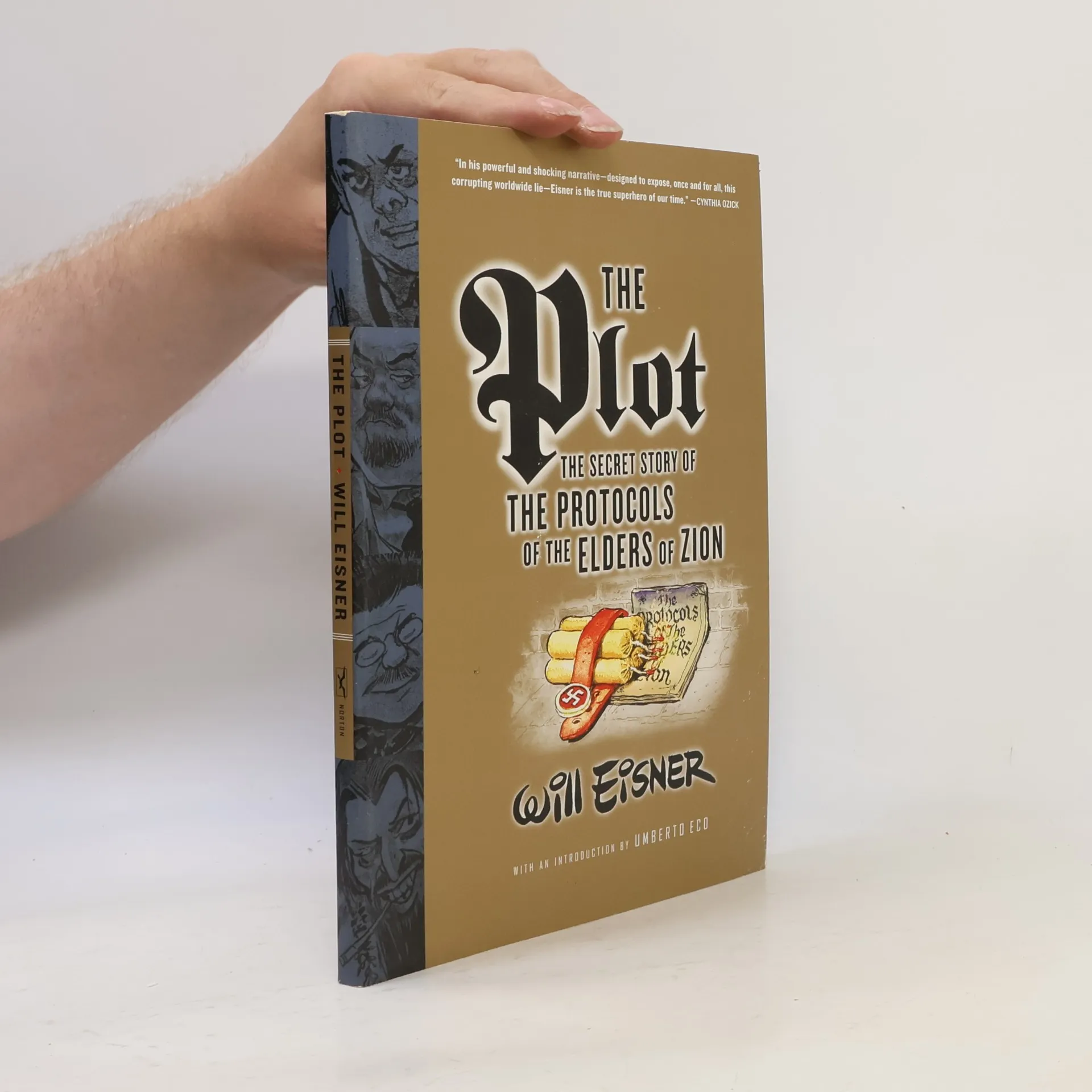
The plot : the secret story of The protocols of the elders of Zion
- 160 páginas
- 6 horas de lectura
Presented in graphic-novel format, an examination of the 1905 plot fabricated by anti-Semitic secret police that was used to accuse Jewish leaders of wanting to take over the world discusses the contributions of such individuals as Tsar Nicholas II, Henry Ford, and Adolph Hitler, tracing how Protocols became an internationally accepted truth and tragically succeeded far beyond propagandistic ambitions. 50,000 first printing.
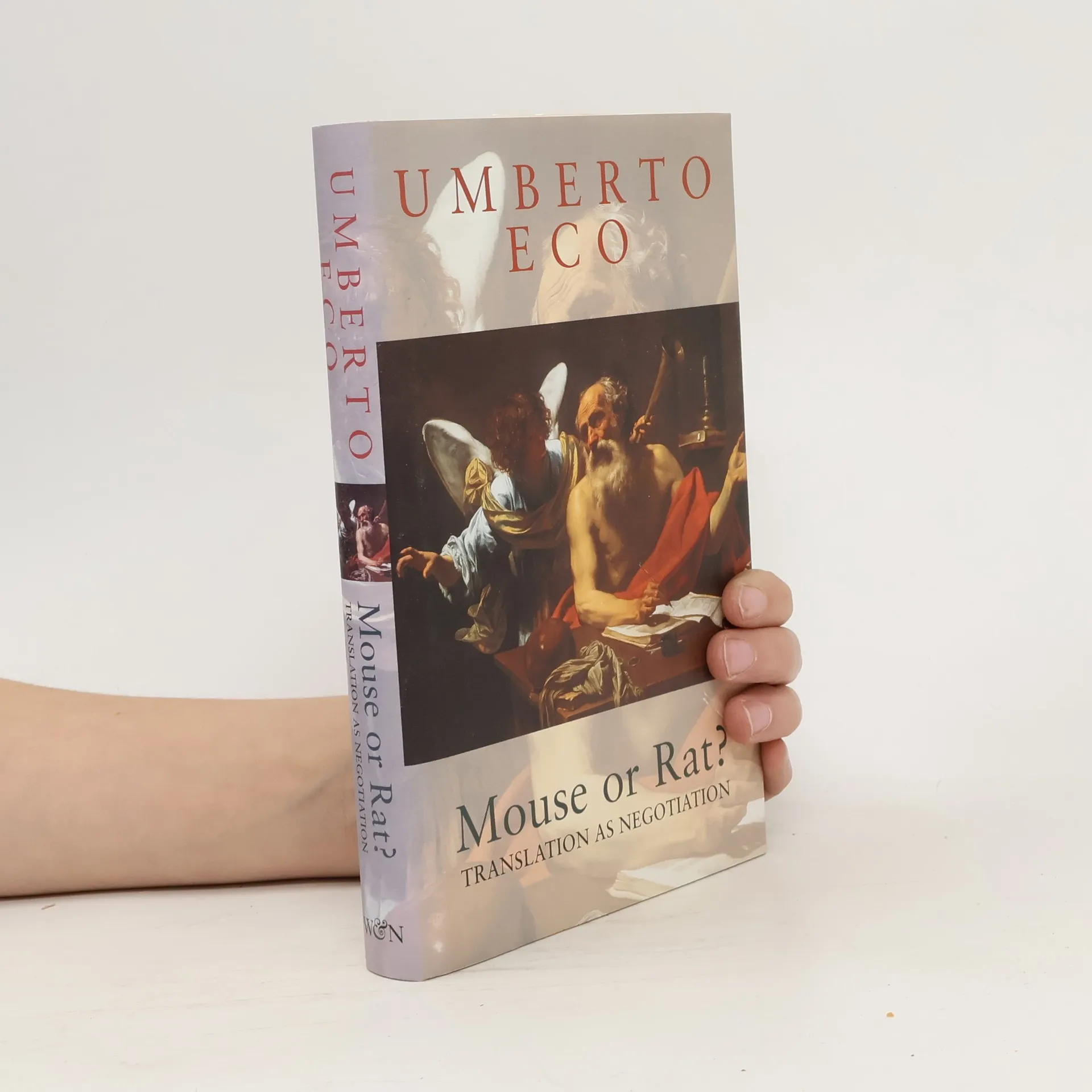
Mouse or Rat?
- 164 páginas
- 6 horas de lectura
Based on a series of lectures on translation these essays are thought-provoking and compelling discussions on the difficulties of translating faithfully. Using examples from classic literary texts including his own bestselling novels Eco examines the rights and wrongs, the misunderstandings and the 'negotiations' needed in order to translate. He examines various problems in translation with great wit and humour. Pointing out the pitfalls of literal translation, he asks a machine to translate the beginning of the Bible into Spanish then back into English, then into German and then again back into English. The result is very funny but as Eco points out, it is still vaguely recognisable as a version of the Bible and obviously not the first adventure of Harry Potter. He discusses every form of interpretation and expression from poetry to film and music always demonstrating with vivid examples the disastrous but often hilarious outcome of mistranslation.The main point of all these essays is that translation is always a matter of negotiation; whether it be a loss or a gain on either side a translator's job is to decide what elements are vital and which may be neglected.
Chronicles of a Liquid Society
- 320 páginas
- 12 horas de lectura
There are people you've never met and yet you miss them when they are gone... Eco's famously ironic voice is penetrating ... The issues Eco addresses are so enormous in their scale they seem insurmountable, yet his measured, erudite commentary assures you that they can be understood and therefore resolved Financial Times
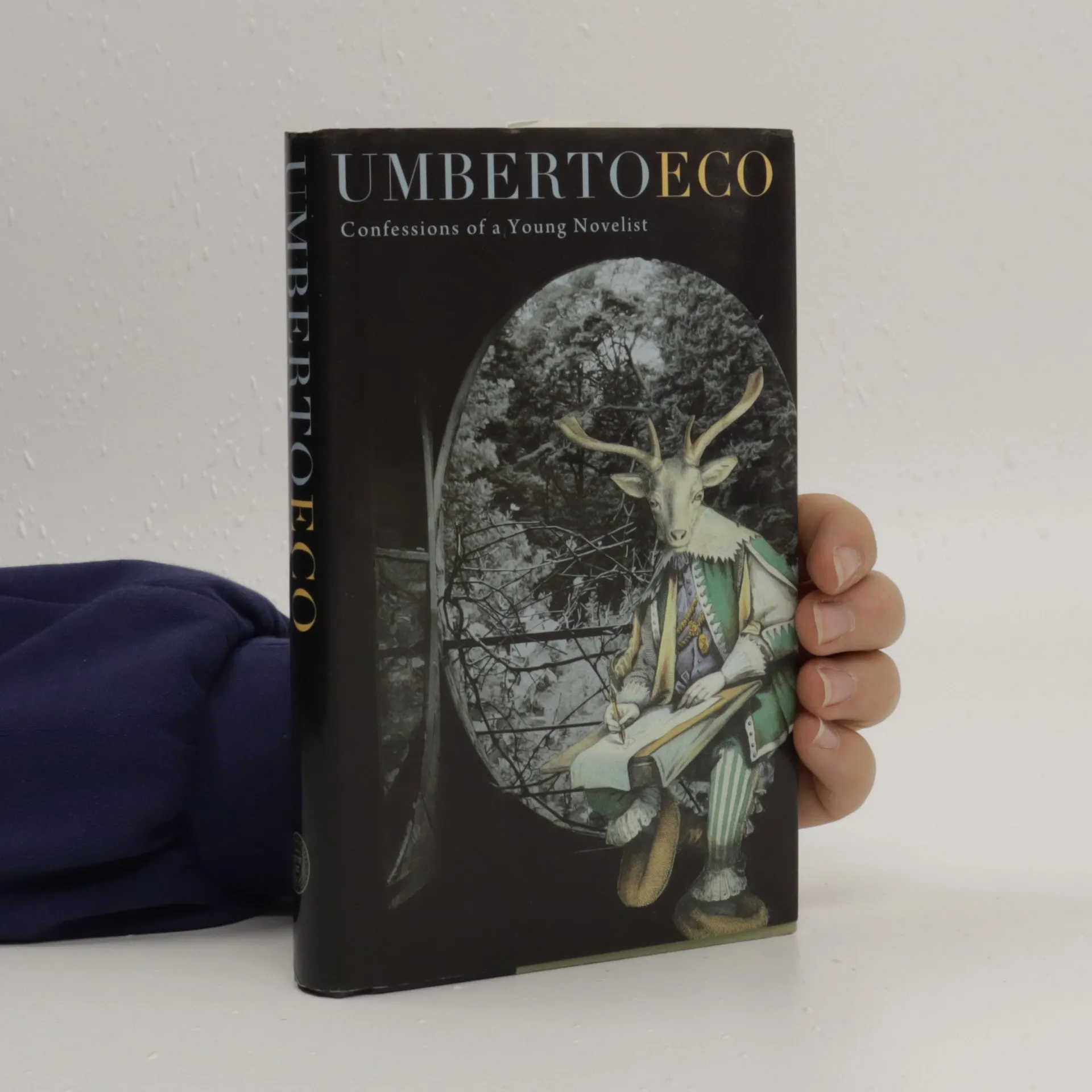
Umberto Eco published his first novel, The Name of the Rose, in 1980, when he was nearly fifty. In these “confessions,” the author, now in his late seventies, looks back on his long career as a theorist and his more recent work as a novelist, and explores their fruitful conjunction. He begins by exploring the boundary between fiction and nonfiction—playfully, seriously, brilliantly roaming across this frontier. Good nonfiction, he believes, is crafted like a whodunnit, and a skilled novelist builds precisely detailed worlds through observation and research. Taking us on a tour of his own creative method, Eco recalls how he designed his fictional realms. He began with specific images, made choices of period, location, and voice, composed stories that would appeal to both sophisticated and popular readers. The blending of the real and the fictive extends to the inhabitants of such invented worlds. Why are we moved to tears by a character’s plight? In what sense do Anna Karenina, Gregor Samsa, and Leopold Bloom “exist”? At once a medievalist, philosopher, and scholar of modern literature, Eco astonishes above all when he considers the pleasures of enumeration. He shows that the humble list, the potentially endless series, enables us to glimpse the infinite and approach the ineffable. This “young novelist” is a master who has wise things to impart about the art of fiction and the power of words.
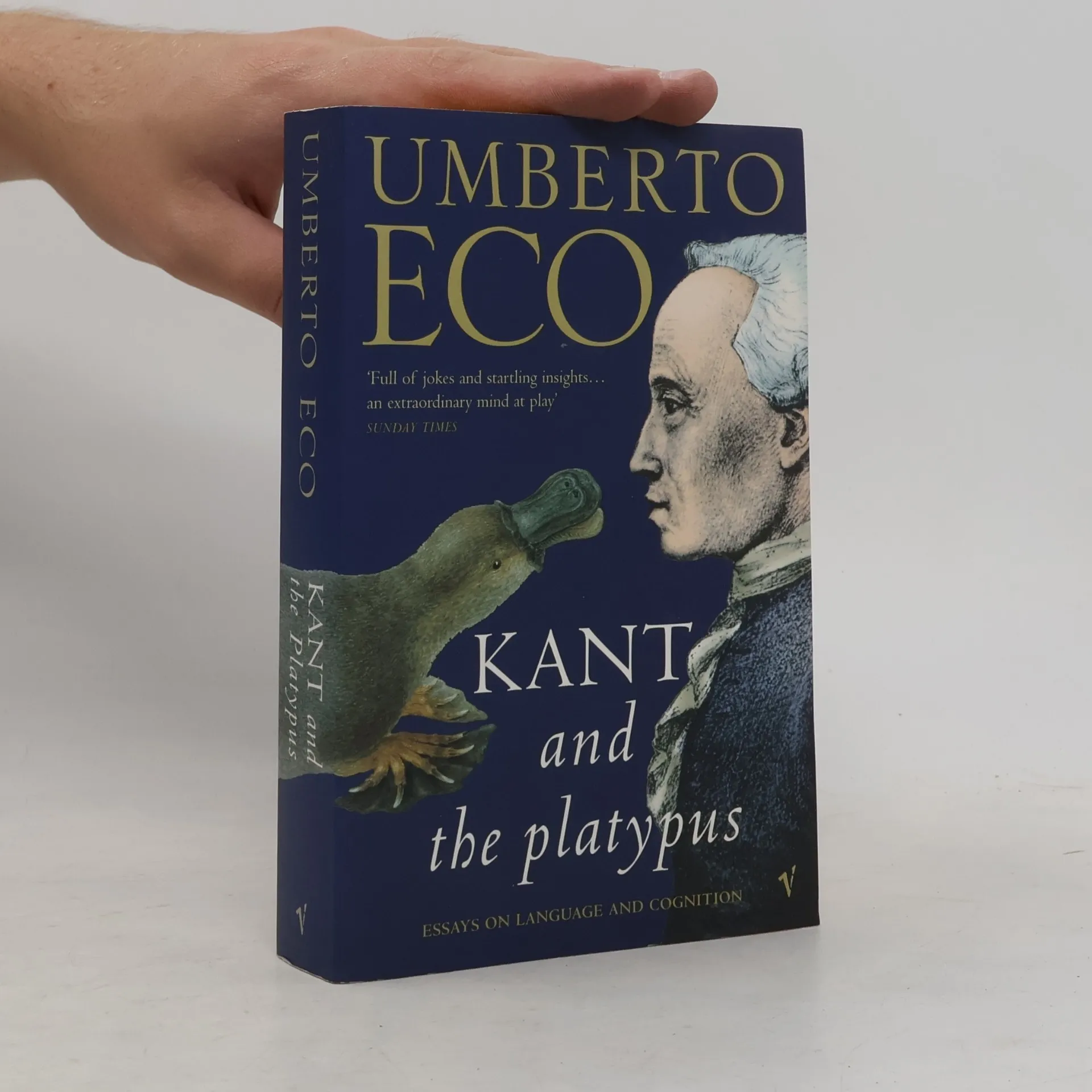
Kant and the Platypus
- 480 páginas
- 17 horas de lectura
How we know that a cat is a cat is a nice philosophical poser, and has been since the time of Plato. Why we should all agree on calling the animal a cat is equally interesting, yet it throws up the problem that lies at the heart of all modern philosophy:
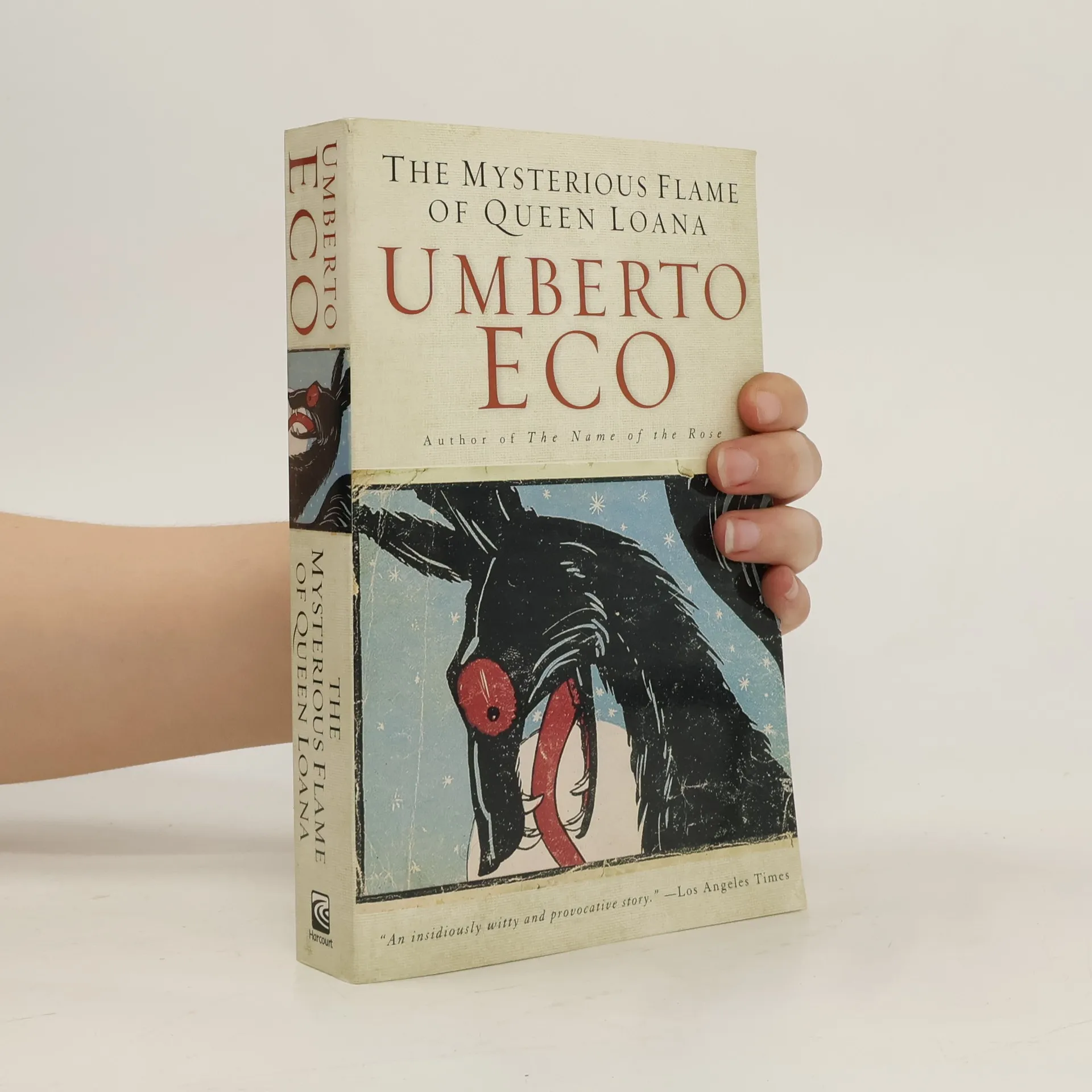
The Mysterious Flame of Queen Loana
- 480 páginas
- 17 horas de lectura
To recall his memories, Yambo withdraws to the family home where he searches old newspapers, comics, records, photo albums, and diaries to relive the story of his generation: Mussolini, Catholic education and guilt, Josephine Baker, Flash Gordon, and Fred Astaire.
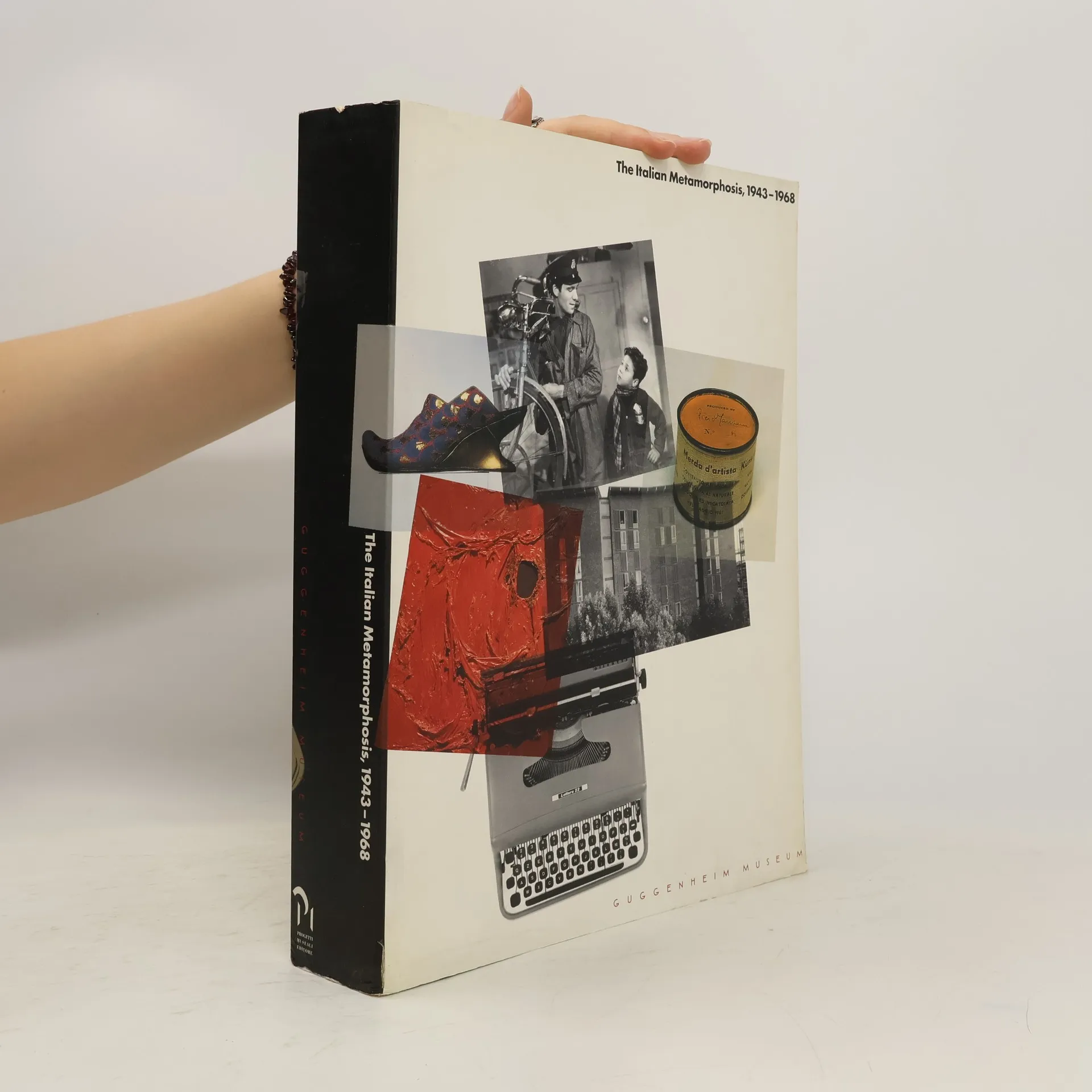
Hard cover with dust jacket. Guggenheim museum exhibition by famed curator Germano Celant.
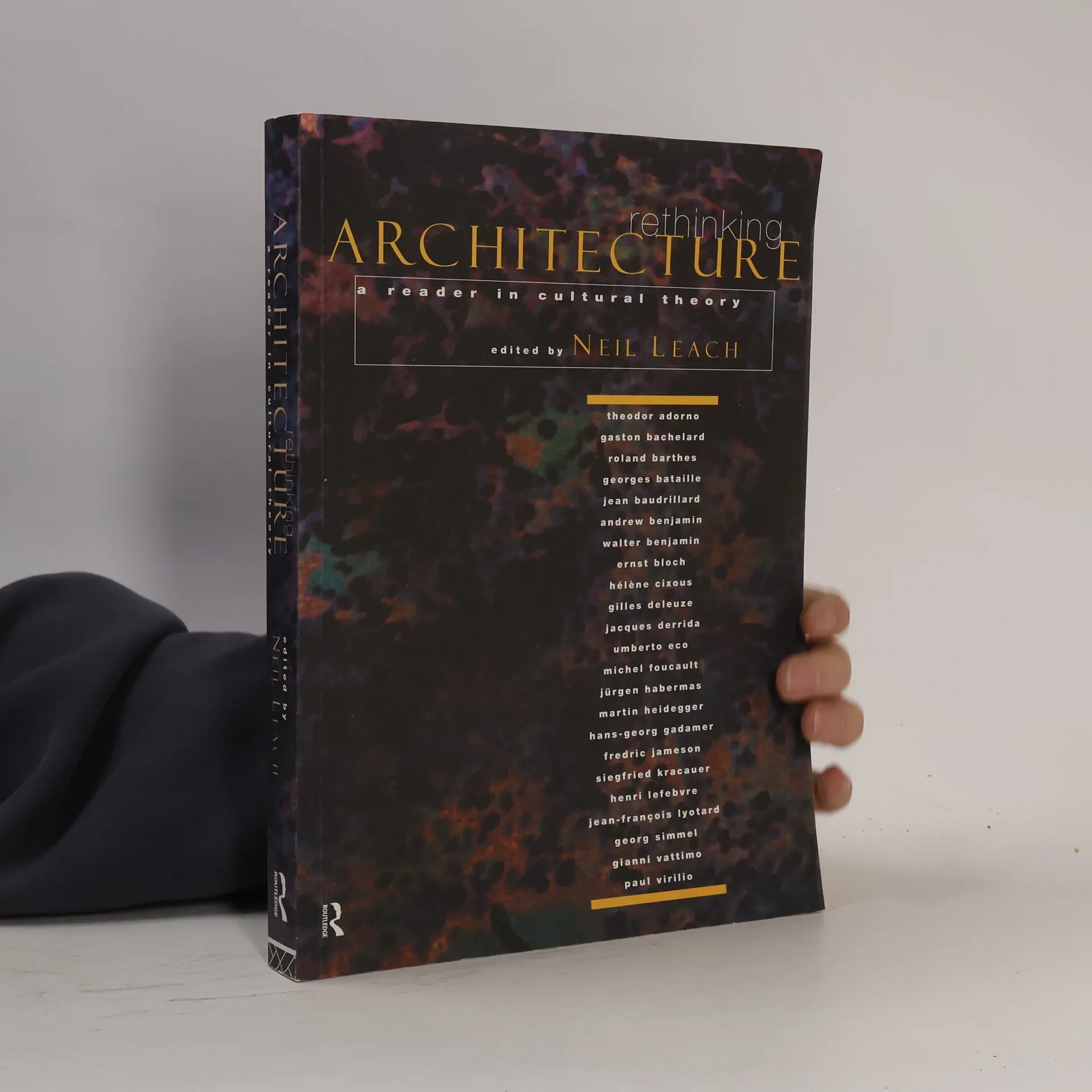
The collection features essential writings from influential philosophers and cultural theorists of the twentieth century, exploring the foundational ideas that have shaped urban environments and architectural experiences. It delves into the theoretical frameworks that underpin contemporary architecture, offering insights into the cultural and philosophical contexts that inform our understanding of space and design. This compilation serves as a critical resource for those interested in the intersection of architecture, philosophy, and urban theory.
Vertiges de la liste
- 410 páginas
- 15 horas de lectura
In the history of Western culture we find lists of saints, ranks of soldiers, catalogues of grotesque creatures or medicinal plants, and hordes of treasure. This infinity of lists is no coincidence: a culture prefers enclosed, stable forms when it is sure of its own identity, while when faced with a jumbled series of ill-defined phenomena, it starts making lists. The poetics of lists runs throughout the history of art and literature. We do not only see it at work in ancient bestiaries, the celestial hosts of angels or the naturalist collections of the 16th century. We also find it more obliquely from Homer to Joyce, from the treasures of Gothic cathedrals to the fantastic landscapes of Bosch and cabinets of curiosities, until we get to Andy Warhol and Arman in the 20th century. In this 5-colour illustrated edition, Umberto Eco reflects on how the idea of catalogues has changed over the centuries and how, from one period to another, it has expressed the spirit of the times. His essay is accompanied by a literary anthology and a wide selection of works of art illustrating and analysing the texts presented. This new illustrated essay is a companion volume to On Beauty and On Ugliness.
Portraits
- 272 páginas
- 10 horas de lectura
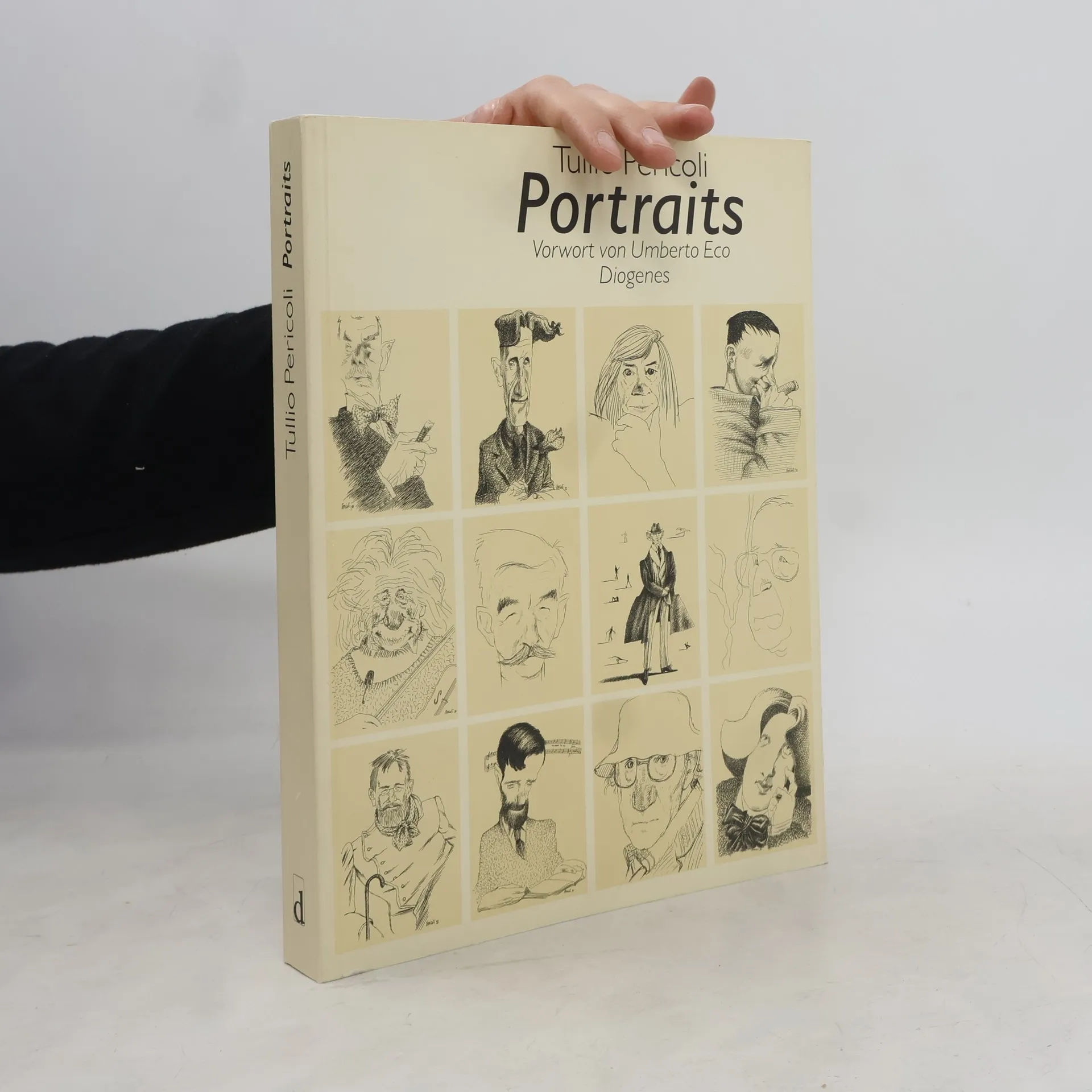
Tullio Pericoli, seit 1964 eine feste Größe in der italienischen Kulturszene, wurde erstmals 1988 in Deutschland ausgestellt. Bekannt für seine Karikaturen in Zeitungen, hat er sich als politischer Satiriker und Gesellschaftskritiker etabliert. Seine wahre Leidenschaft gilt jedoch dem Portraitieren. Pericoli zeigt in seinen Portraits nicht immer die besten Seiten seiner 'Modelle', sondern vielmehr die interessantesten. Er ist nie boshaft; stattdessen spielt er mit den Schwächen und Stärken der Charaktere, die er darstellt. Humor und Ironie sind seine Mittel, um tiefere Einsichten zu vermitteln. Er diffamiert nicht, sondern entlarvt und schafft durch diese kritische Distanz eine Aussagekraft, die auch bei näherer Betrachtung Bestand hat. Die Sammlung umfasst rund zweihundert Bilder großer Dichter, Denker, Maler und Musiker, von A bis Z, darunter Persönlichkeiten wie Adorno, Borges, Einstein, Kafka, Shakespeare und viele andere. Pericoli gelingt es, die Essenz seiner Modelle einzufangen und gleichzeitig einen kritischen Blick auf deren Charakterzüge zu werfen. Seine Arbeiten sind eine Einladung, die Komplexität menschlicher Natur zu erkunden.
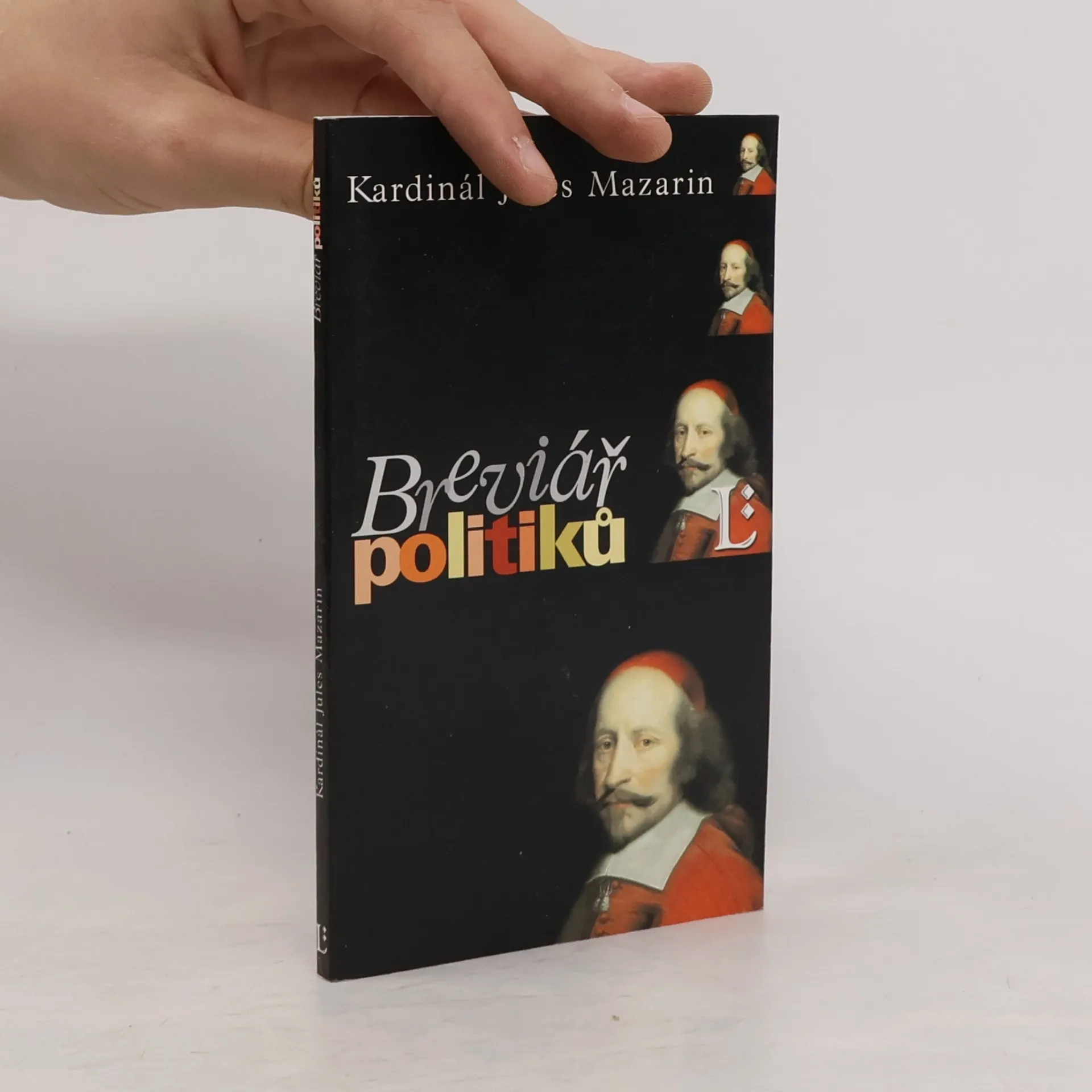
Breviář politiků
- 116 páginas
- 5 horas de lectura
Získávaje stále přízeň mocných, uměl Mazarin odstranit své nepřátele, dostat se na první místo a udržet si je během dvou vlád až do své smrti. Lze tedy v jeho breviáři najít několik pragmatických lekcí, které ještě dnes mohou být užitečné každému vlivnému člověku. Byť se prohnaný kardinál nezatěžuje morálkou ani spravedlností, staví na odiv udivující svěžest, a dokonce určitou naivitu.
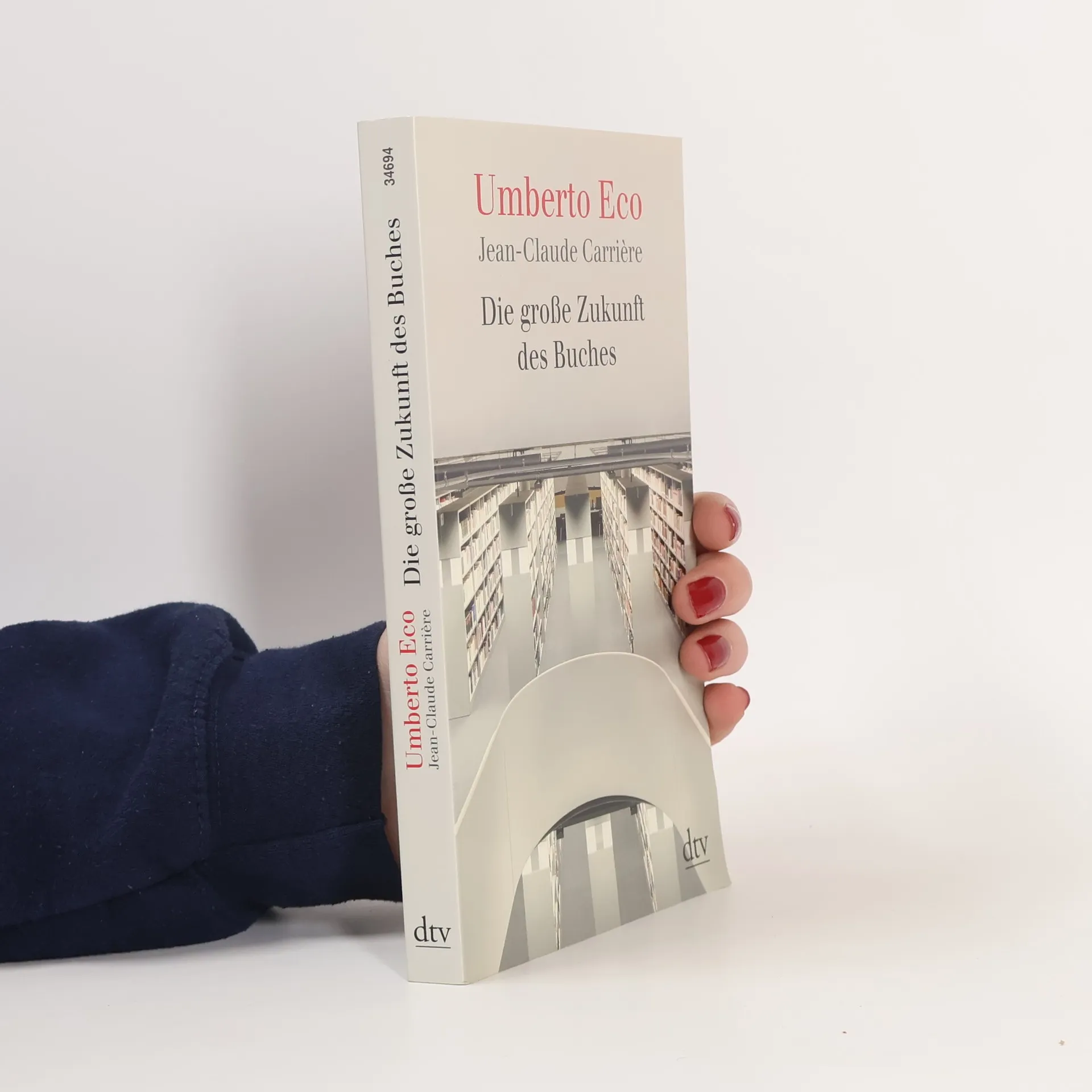
Eine schmunzelnde Hommage an die Gutenberg-Galaxie, die alle Leser entzücken wird, die das Buch als Gegenstand lieben. Und womöglich bei den Besitzern von E-Books einige Nostalgie wachruft. 'Was an diesem Buch gefällt, ist die Gelassenheit, mit der sich die beiden alten Bücherfreunde über das Vergnügen und Laster der Bibliophilie austauschen.' Süddeutsche Zeitung 'Am Ende weiß man auch nicht zu sagen, warum man es vor allem gelesen hat - wegen seiner luziden Gedanken oder aus Freude am Lesen, die es entfacht.' Die Welt
Od stromu k labyrintu: Historické studie o znaku a interpretace
- 656 páginas
- 23 horas de lectura
V této knize předkládá Umberto Eco své studie o historii znakových teorií. Popisuje dva modely encyklopedického poznání, z nichž jeden vychází z ideje stromu (systematického větvení pojmů) a druhý z ideje labyrintu. V dalších kapitolách pak hledá sémiotickou reflexi ve filozofických systémech od Platóna a Aristotela přes Tomáše Akvinského či Viléma Ockhama ke Kantovi, ale nemenší pozornost věnuje rétorickým spisům (například barokním výkladům o metafoře) či kabalisticky založenému učení o „kombinatorickém umění“ (Raymondovi Lullovi a Picovidella Mirandola). Tato materiálově mimořádně bohatá kniha shrnuje Ecovy různorodé výzkumy z posledních desetiletí, autor jí však dokázal vtisknout přehlednou monografickou podobu.
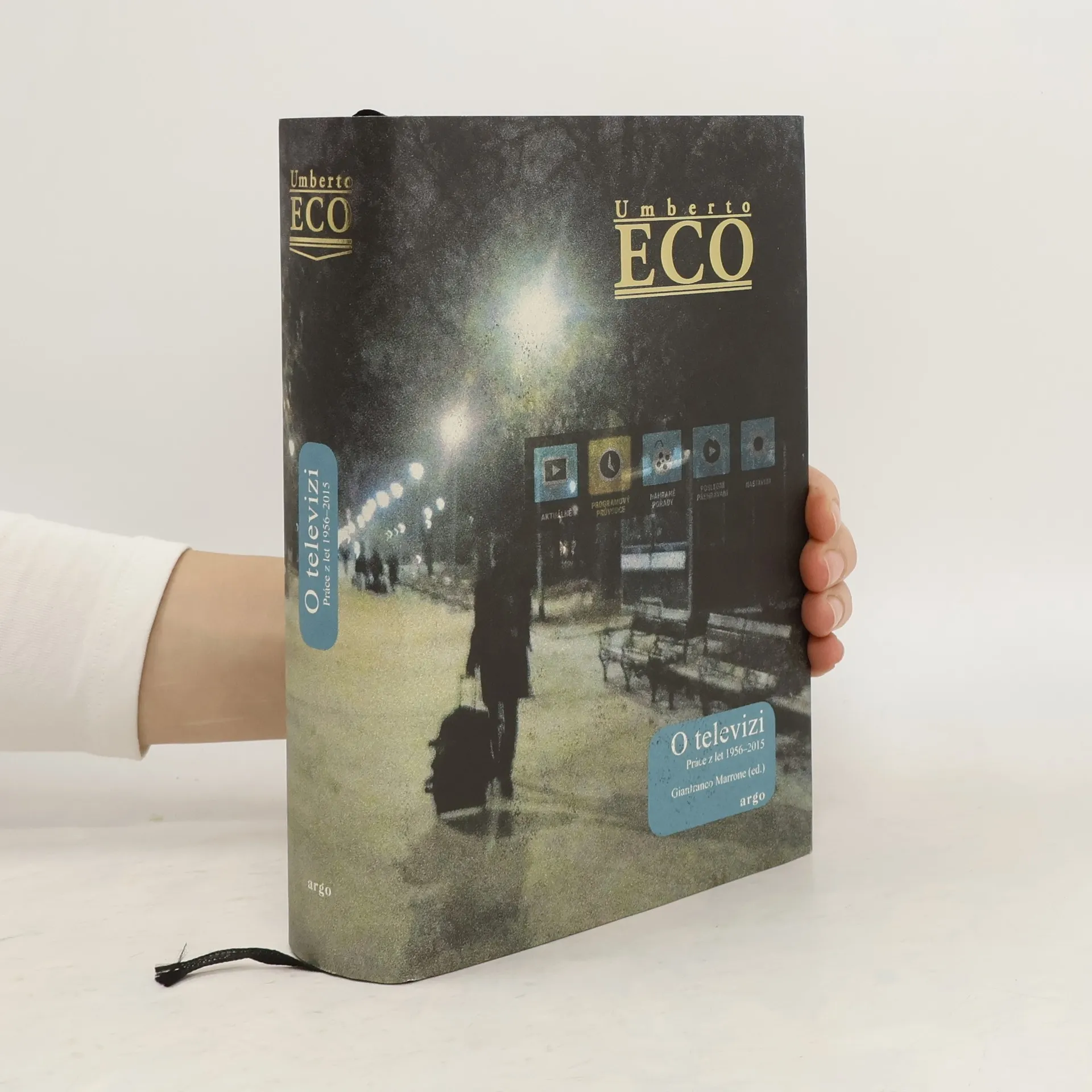
Nový svazek díla Umberta Eca je určen všem čtenářům, kteří chtějí poznat různé stránky televize jakožto svébytného jevu. Zahrnuje autorovy práce na dané téma z let 1956–2015 – eseje, příspěvky přednesené na kongresech i novinové články. Úvahy v nich obsažené pokrývají rozsáhlé časové období od prvních vysílaných pořadů až do dnešních dob, kdy se k televizi přidružuje internet a sociální sítě. Masmédia nepřenášejí ideologie, ona sama jsou ideologiemi, shrnuje své poznatky autor.
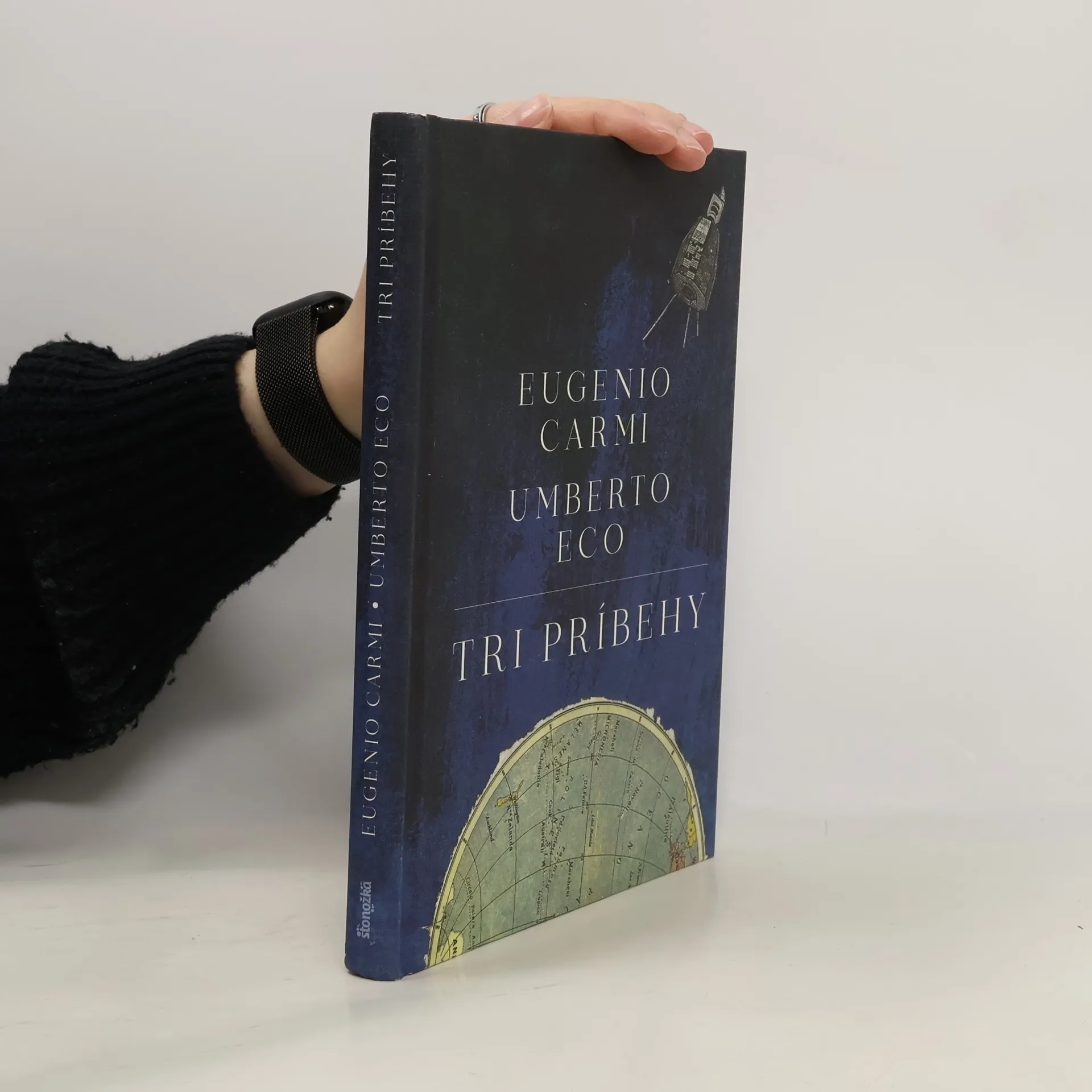
Tri príbehy
- 110 páginas
- 4 horas de lectura
Atómy uzavreté v jadrovej bombe sa vzbúria proti generálovi, ktorý chce rozpútať vojnu, pričom plánuje použiť obrovský arzenál ukrytý na pôjde. Traja navzájom súperiaci kozmonauti, Američan, Rus a Číňan, prichádzajú na Mars a stretávajú šesťrukého Marťana, vďaka ktorému sa z nich stanú priatelia. Márnomyseľný cisár vysiela prieskumníka, aby na malú, šťastnú a nevinnú planétu priniesol civilizáciu. Tri príbehy, ktoré porozprával Umberto Eco a ilustroval Eugenio Carmi, pre malých aj veľkých, čiže pre každého, kto potrebuje rozprávky. Maliar EUGENIO CARMI sám seba označoval za výrobcu obrázkov. Pri Umbertovi Ecovi sa z neho stal ilustrátor. UMBERTO ECO bol filozof, odborník na stredovek, semiológ a spisovateľ. Sám seba označoval za výrobcu slov. Pri Eugeniovi Carmim sa z neho stal rozprávkar.
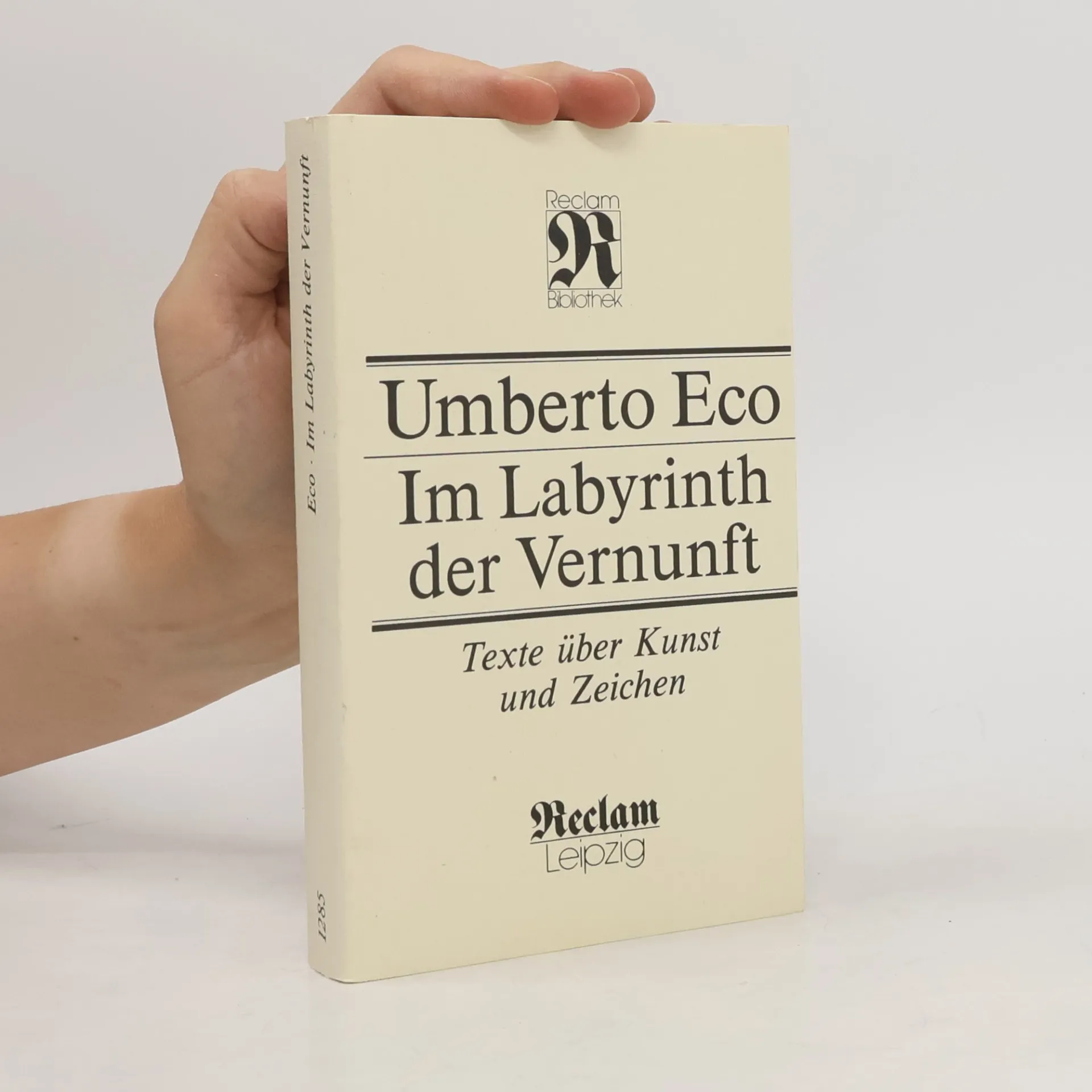
Im Labyrinth der Vernunft
- 479 páginas
- 17 horas de lectura
Signor Sigma hat Bauchweh und muss auf dem Weg zum Arzt an der Ampel warten, den Fahrplan lesen und schließlich die Diagnose einer Trinkerleber erhalten. Diese Erzählung verdeutlicht, dass unsere Lebenswelt ein Reich der Zeichen ist, das wir nur verstehen können, wenn wir lernen, sie zu deuten. Der Ausflug in die semiotische Gelehrsamkeit beginnt mit Herrn Sigma und dem Eco-Reader, der uns in die komplexe Welt von Umberto Eco einführt. Der Titel des Sammelbandes verweist auf die zentrale Bedeutung des Labyrinths in Ecos Denken, besonders in seinem Bestseller, wo die Bibliothek als Metapher für die enzyklopädische Totalität unserer Kultur dient. Alles Kulturelle wird als Kommunikationsprozess verstanden, der die Produktion und Interpretation von Zeichen umfasst. Diese Grundidee der Semiotik zieht sich durch die Sammlung, die Themen wie Massen- und Medienkultur, Kunsttheorie und die Schnittstelle von Erkenntnistheorie und Zeichenlehre behandelt. Eco präsentiert sein Wissen anschaulich und spannend, und obwohl die semiotische Vernunft heute etwas altmodisch erscheinen mag, bleibt die Erkenntnis bestehen, dass Zeichen erst im Gebrauch Bedeutung erlangen. Es geht nicht um die Rose, sondern um den Namen der Rose.
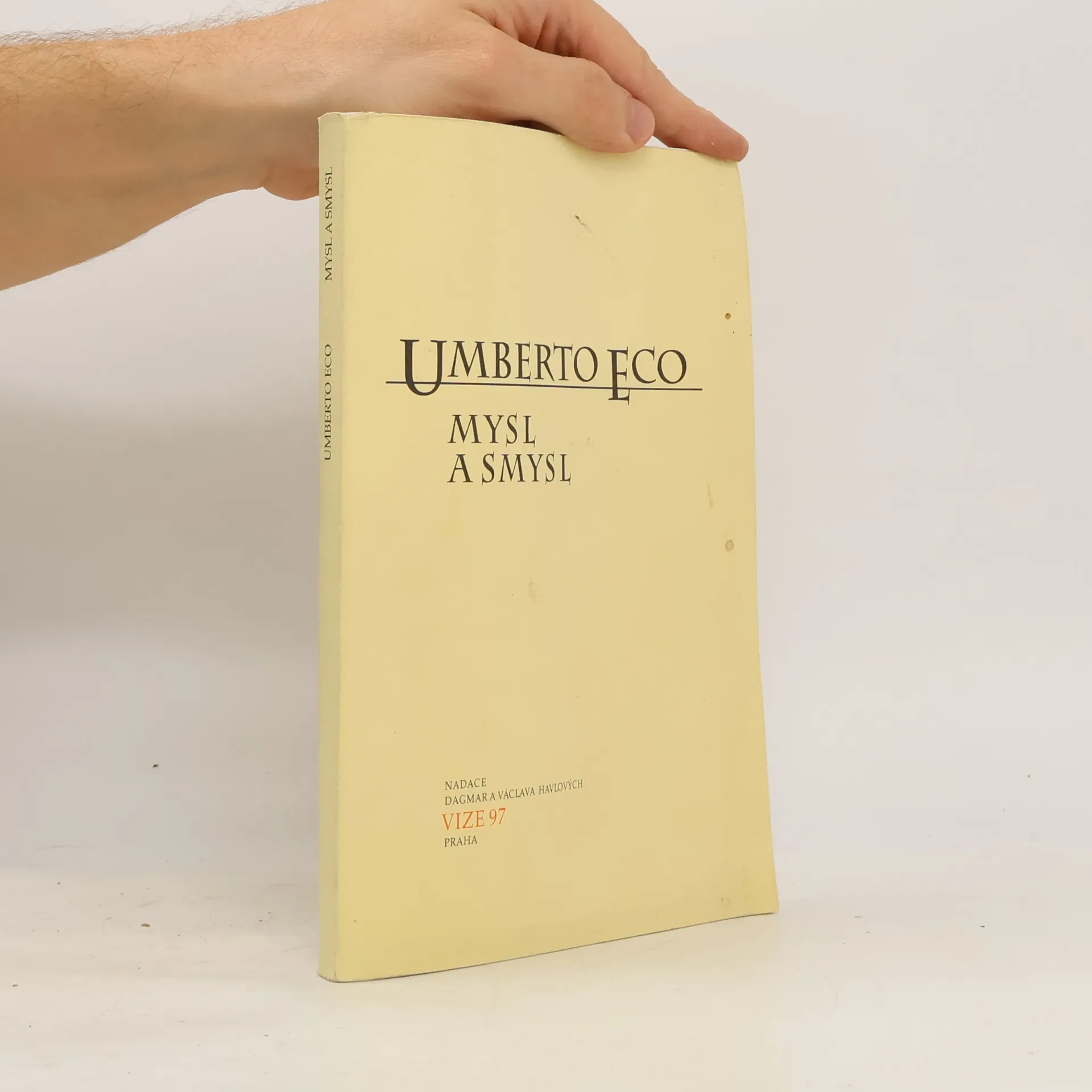
Sémiotický pohled na svět. Kniha textů italského spisovatele, literárního kritika, sémiotika, držitele ceny Nadace Dagmar a Václava Havlových Vize 97. Uspořádal Jiří Fiala, z angličtiny a francouzštiny přeložil Jiří Fiala, z italštiny Zdeněk Frýbort. Výt. č. 1-50 číslovány a podepsány autorem.
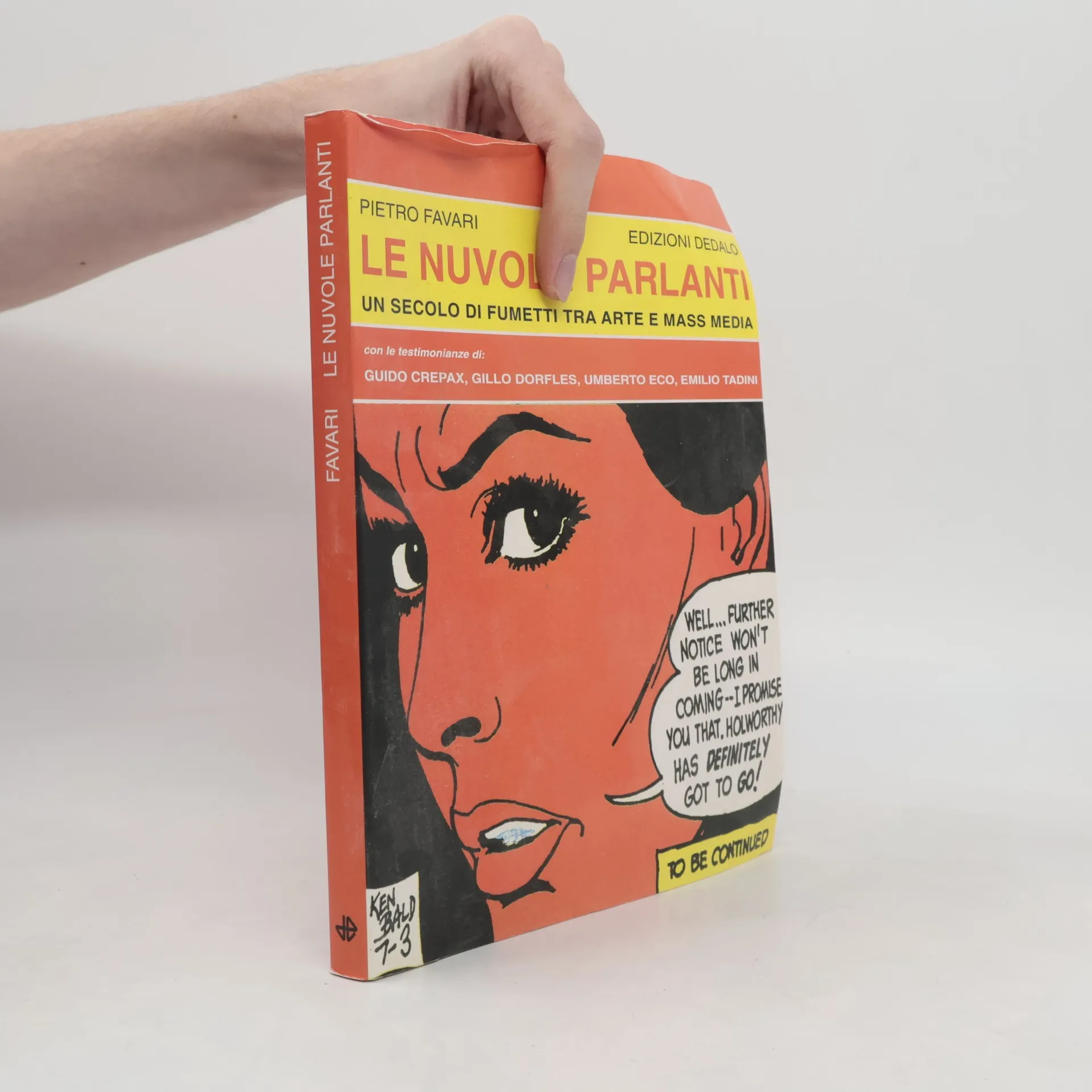
Immagine e consumo: Le nuvole parlanti
Un secolo di fumetti tra arte e mass media
- 223 páginas
- 8 horas de lectura
Italian
Soll man eher auf die Philosophen hören oder auf die Philosophinnen? Soll man Bücher sammeln oder lesen? Oder soll man einfach nur noch ins Kino gehen? Umberto Eco, einer der markantesten und unterhaltsamsten Kommentatoren unserer Alltagswelt, betrachtet in diesen scharfzüngigen Essays und Glossen Politik, Kultur und die allgemeine Lage. Es geht um Romane, Filme und Romanverfilmungen, um neue und antiquarische Bücher, Katastrophennachrichten und um den alltäglichen Krieg. Ein Feuerwerk an Belesenheit und Witz.
Pape Satan Aleppe
Cronache di una società liquida
Verschwörungen
Eine Suche nach Mustern
Wie funktionieren Verschwörungstheorien? Umberto Eco über die historischen Wurzeln von Querdenkern und Co. Der Verschwörungskult um QAnon fabuliert von einer Elite, die das Blut gefolterter Kinder trinke. Selbsternannte Skeptiker wettern gegen vermeintliche Impfkartelle. Andere wähnen sich mitten in Deutschland in einer versteckten Diktatur. Auch wenn sie in immer neuer Gestalt daherkommen, Verschwörungstheorien durchziehen die Geschichte. Dabei verlaufen sie stets nach demselben Muster – das kaum jemand so treffend erkannt und brillant beschrieben hat wie Umberto Eco. In beständigem Ringen mit Antisemitismus, Esoterik und Pseudowissenschaft hat er schon lange vor der aktuellen Flut an Verschwörungstheorien deren überzeitliche Strukturen freigelegt. Eco fehlt – sein Werk ist gültig und aktuell wie nie.
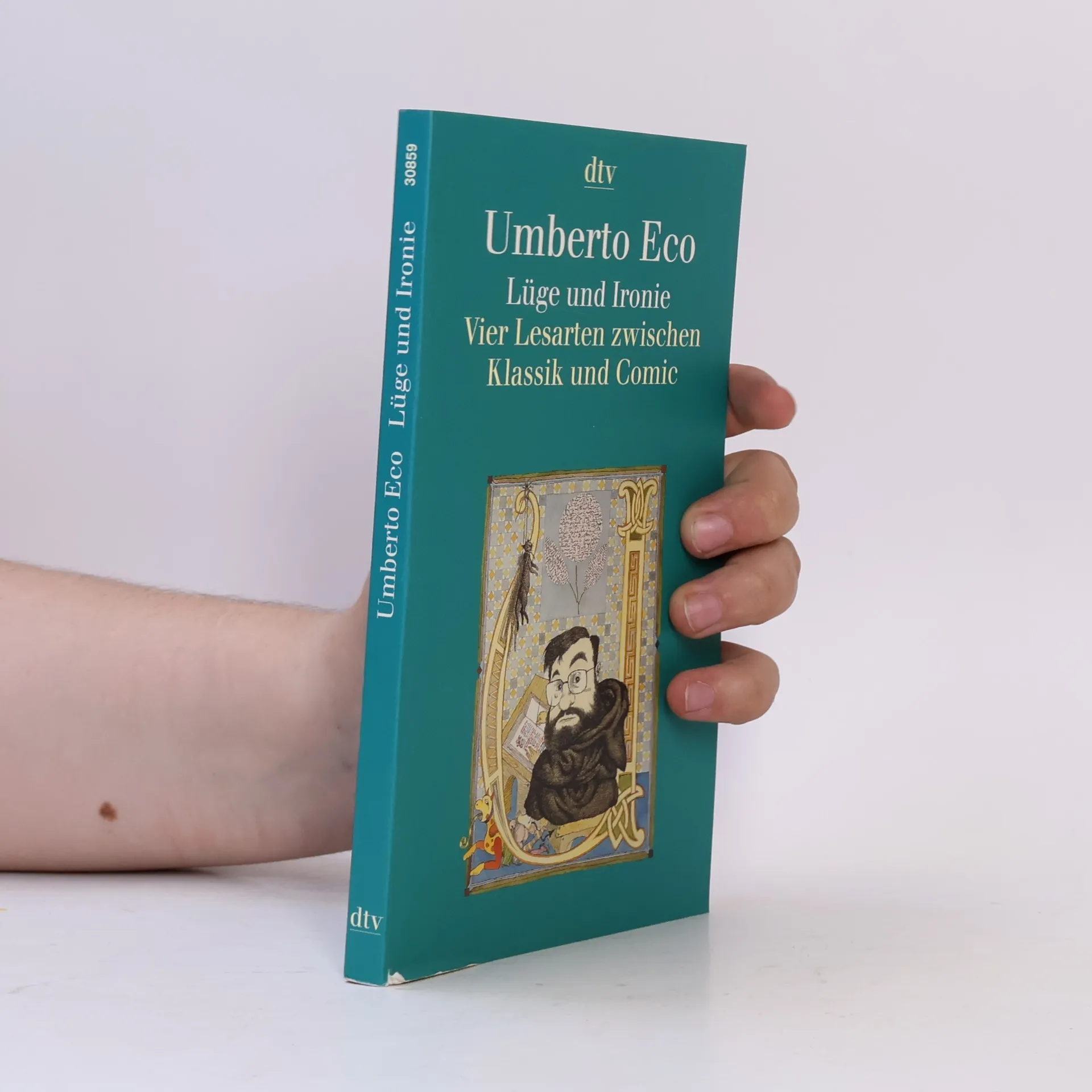
Lüge und Ironie
- 142 páginas
- 5 horas de lectura
Vier Lesarten zwischen Klassik und Comic Vier Essays zu verschiedenen Anlässen und auf den ersten Blick ganz unterschiedlichen Themen stellt Umberto Eco auf verblüffende Weise nebeneinander. Die Spannweite reicht von Manzonis ›Verlobten‹, dem berühmten Roman der italienischen Literatur, bis zu Corto Maltese, dem Kult-Comic von Hugo Pratt; von Cagliostro, dem falschen Grafen, der ganz Europa in Atem hielt, bis zu Achille Campanile, dem populären Ironiker des 20. Jahrhunderts. Doch die vier Schriften haben eines gemeinsam: In allen geht es um Strategien der Lüge und der Verstellung, des Mißbrauchs der Sprache und der Umkehrung dieses Mißbrauchs durch Ironie. Campanile und Pratt lügen aus Ironie, Cagliostro lügt aus Interesse (oder vielleicht aus Verdammnis, als der Gefangene seines eigenen Mythos, der er immer mehr wird), und Manzoni ergreift empört die Partei der Armen und Schwachen, die durch die verlogene Sprache der Mächtigen übertölpelt werden.
Heyne Jahresband 1990. Erzählungen prominenter Autoren.
- 380 páginas
- 14 horas de lectura
Die Buchanmerkung erwähnt Werke von Clive Barker, Mary Higgins Clark und Umberto Eco und umfasst insgesamt 380 Seiten.
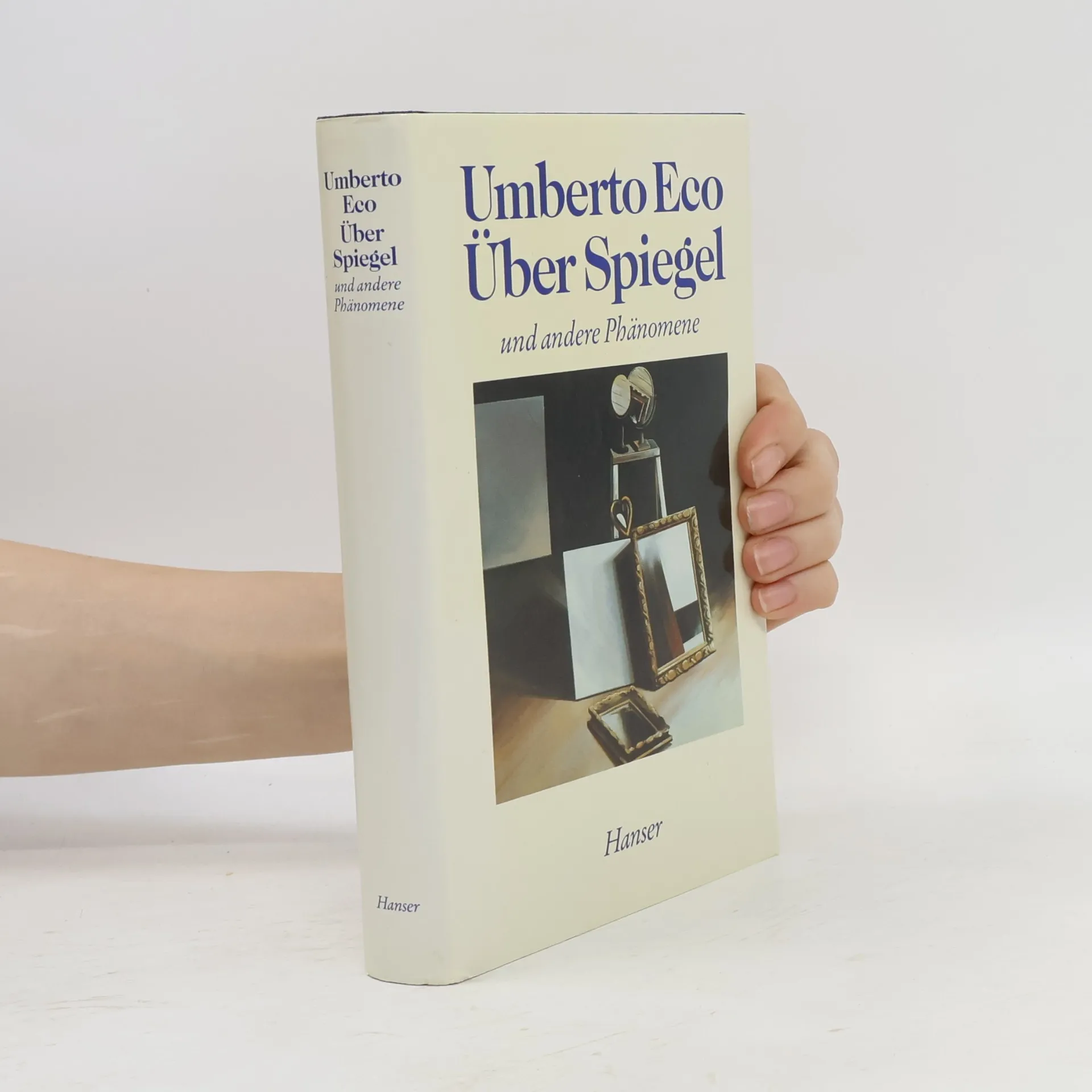
Sämtliche Glossen und Parodien
- 585 páginas
- 21 horas de lectura
Was haben Derrick und sexuelle Repression miteinander zu tun? Umberto Eco verknüpft sie zu einer provozierenden und unterhaltsamen Geschichte der Alltagskultur, die er hier in seinen gesammelten Glossen zum Besten gibt. Ein Buch, das stundenlanges Lesevergnügen verspricht ...§
Briefe an mein Enkelkind
- 140 páginas
- 5 horas de lectura
Liv Ullmann, Schauspielerin und Regisseurin, hat als UNICEF-Sonderbotschafterin 25 weitere prominente Zeitgenossen gebeten, persönliche Erfahrungen und Werte, die ihnen am Herzen liegen, weiterzugeben an real existierende eigene Enkelkinder wie überhaupt an alle jungen Menschen. In Briefen, Prosastücken und Reden sprechen sie von Frieden und Toleranz, von der Achtung von Mensch und Natur sowie von einem Leben in Würde: Harry Belafonte, Gro Harlem Brundtland, Dalai Lama, Umberto Eco, Oriana Fallaci, Marilyn French, Nadine Gordimer, Václav Havel, Thor Heyerdahl, Doris Lessing, Astrid Lindgren, Nelson Mandela, Martina Navratilova, Shimon Peres, Fay Weldon u. a.
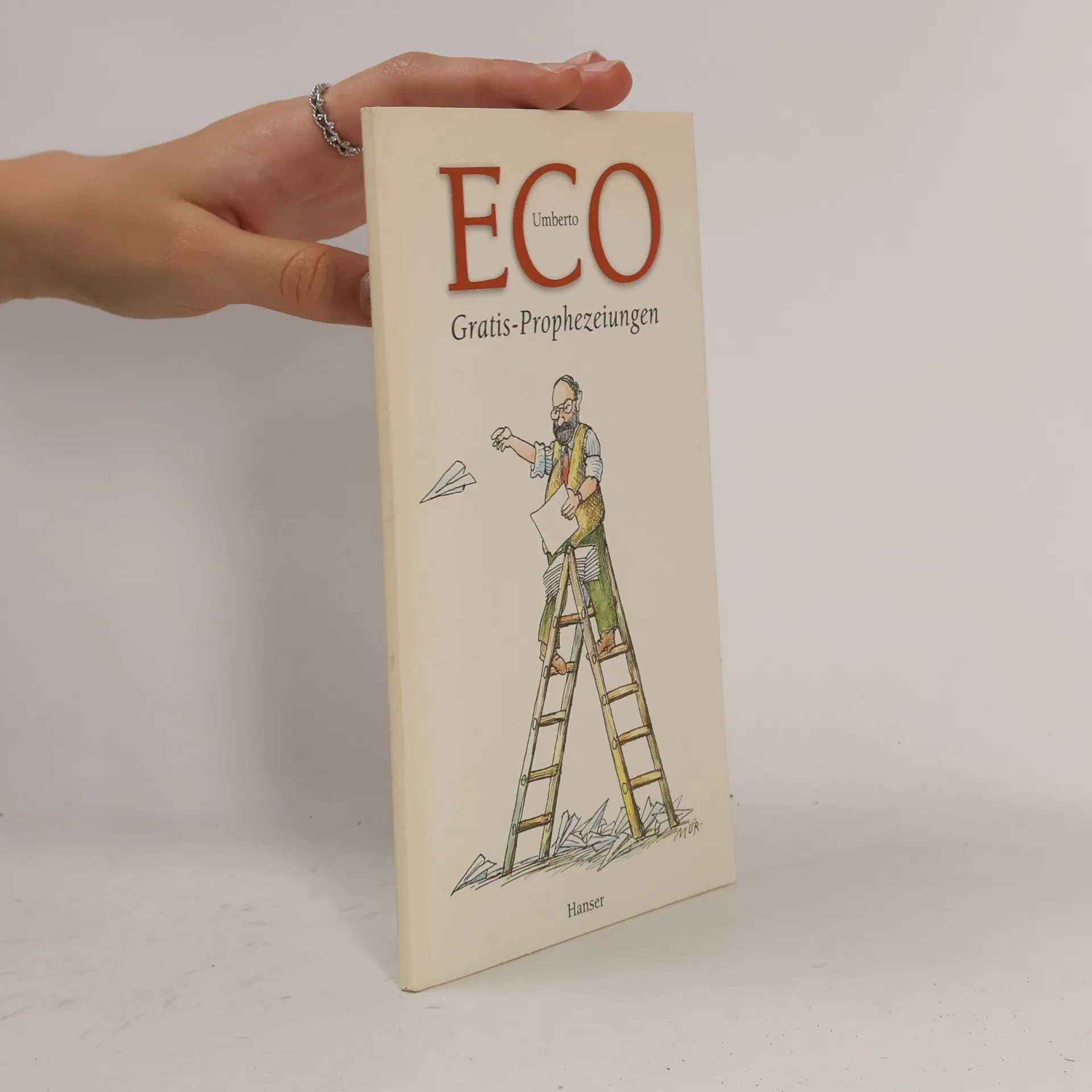
Gratis-Prophezeiungen
- 47 páginas
- 2 horas de lectura
Wie wählt man einen Präsidenten? Werden wir im allgemeinen Lärm bald paketweise Stille kaufen? Wird auf die großen Kriege mehr folgen als ein kleiner Frieden? Umberto Eco liefert hier gratis ein paar Prophezeiungen zum Stand der gegenwärtigen Dinge, wobei der scharfsinnigen Ironie dieses großen Schriftstellers und Polemikers natürlich keines der "Wunder" dieses wunderbaren Jahrtausends entgeht.
Drugie zapiski na pudełku od zapałek
- 122 páginas
- 5 horas de lectura
Ecos Essayband versammelt unter verschiedenen Themenkreisen Aufsätze zur Ästhetik, Analysen diverser Phänomene der populären Kultur, kritische Textinterpretationen, philosophische und semiotische Schriften. Schwerpunkte sind Formen der Darstellung, experimentelle und avantgardistische Kunst, Massenmedien und Literatur sowie die möglichen Welten der Science-fiction, detektivische Phantasie und Täuschung.
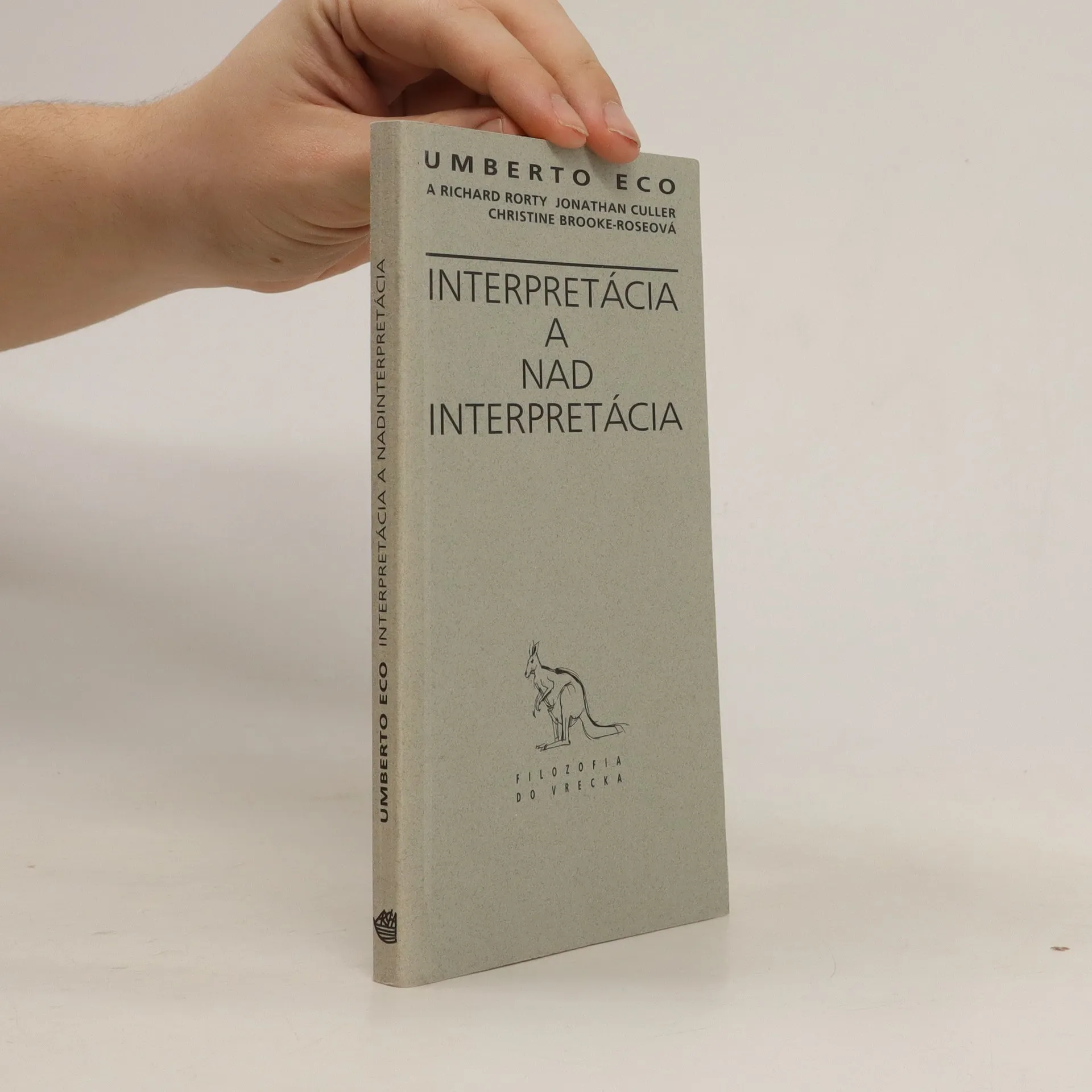
Interpretation and overinterpretation. Slovensky Interpretácia a nadinterpretácia
- 146 páginas
- 6 horas de lectura
Přednášky významného italského myslitele Umberta Eca o podstatě interpretace a polemické příspěvky současných filozofů k těmto textům. Z obálky knihy: Text je nástroj, vynájdený na to, aby utvoril svojho modelového čitateľa. Opakujem: tento čitateľ nie je autorom „jedinej správnej“ domnienky. Text môže rátať aj s takým modelovým čitateľom, ktorý má právo pokúsiť sa o nekonečný počet domnienok. Empirický čitateľ je len aktérom, vyslovujúcim domnienky o povahe modelového čitateľa, ktorého postuluje text. Keďže zámerom textu je v podstate vytvárať modelového čitateľa, schopného vyslovovať o ňom domnienky, vynachádzavosť modelového čitateľa spočíva v nájdení modelového, teda nie empirického, autora, ktorý v konečnom dôsledku splýva so zámerom textu. Text je teda viac než len parametrom, použitým na zhodnotenie interpretácie, je objektom, ktorý vytvára interpretácia v procese kruhového úsilia o potvrdenie svojej právoplatnosti na základe toho, čo podáva ako svoj výsledok. Nehanbím sa priznať, že tak definujem starý a stále platný „hermeneutický kruh“.
Exercises in Style
- 128 páginas
- 5 horas de lectura
On a crowded bus at midday, the narrator observes one man accusing another of jostling him deliberately. When a seat is vacated, the first man takes it. Later, in another part of town, the man is spotted again, while being advised by a friend to have another button sewn onto his overcoat. Exercises in Style retells this apparently unremarkable tale ninety-nine times, employing a variety of styles, ranging from sonnet to cockney to mathematical formula. Too funny to be merely a pedantic thesis, this virtuoso set of themes and variations is a linguistic rust-remover, a guide to literary forms and a demonstration of imagery and inventiveness.
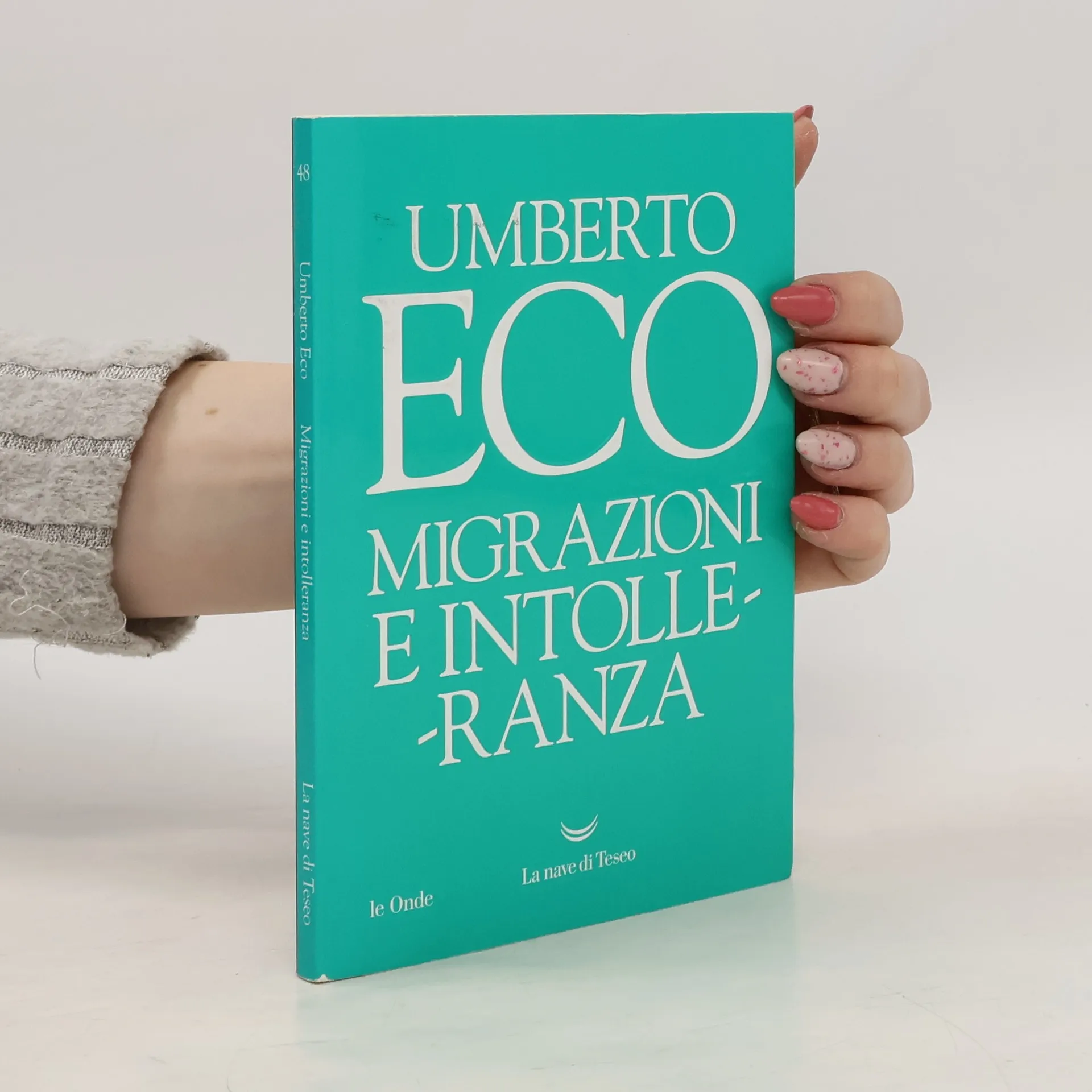
Migrazioni e intolleranza
- 71 páginas
- 3 horas de lectura
Le migrazioni differiscono dalle immigrazioni: queste ultime, infatti, possono essere sottoposte a controllo, la politica può servirsene, l'opinione pubblica può schierarsi a favore o contro di esse. Niente di tutto questo è possibile invece per le migrazioni. Violente o pacifiche che siano, sono come i fenomeni naturali: avvengono e nessuno le può controllare. Da sempre, i popoli si sono spostati da un territorio all'altro e, così facendo, hanno fondato civiltà, hanno creato e modificato culture, si sono adattati, hanno modificato l'ambiente in cui migravano, creando costumi e lingue nuove. Nell'epoca della disinformazione e della violenza, questo testo di Umberto Eco getta nuova luce sull'argomento che più divide l'opinione pubblica italiana e consegna al lettore un'interpretazione illuminante, rivoluzionaria, validissima del mondo in cui viviamo, e di come l'umanità tutta è riuscita a costruirlo
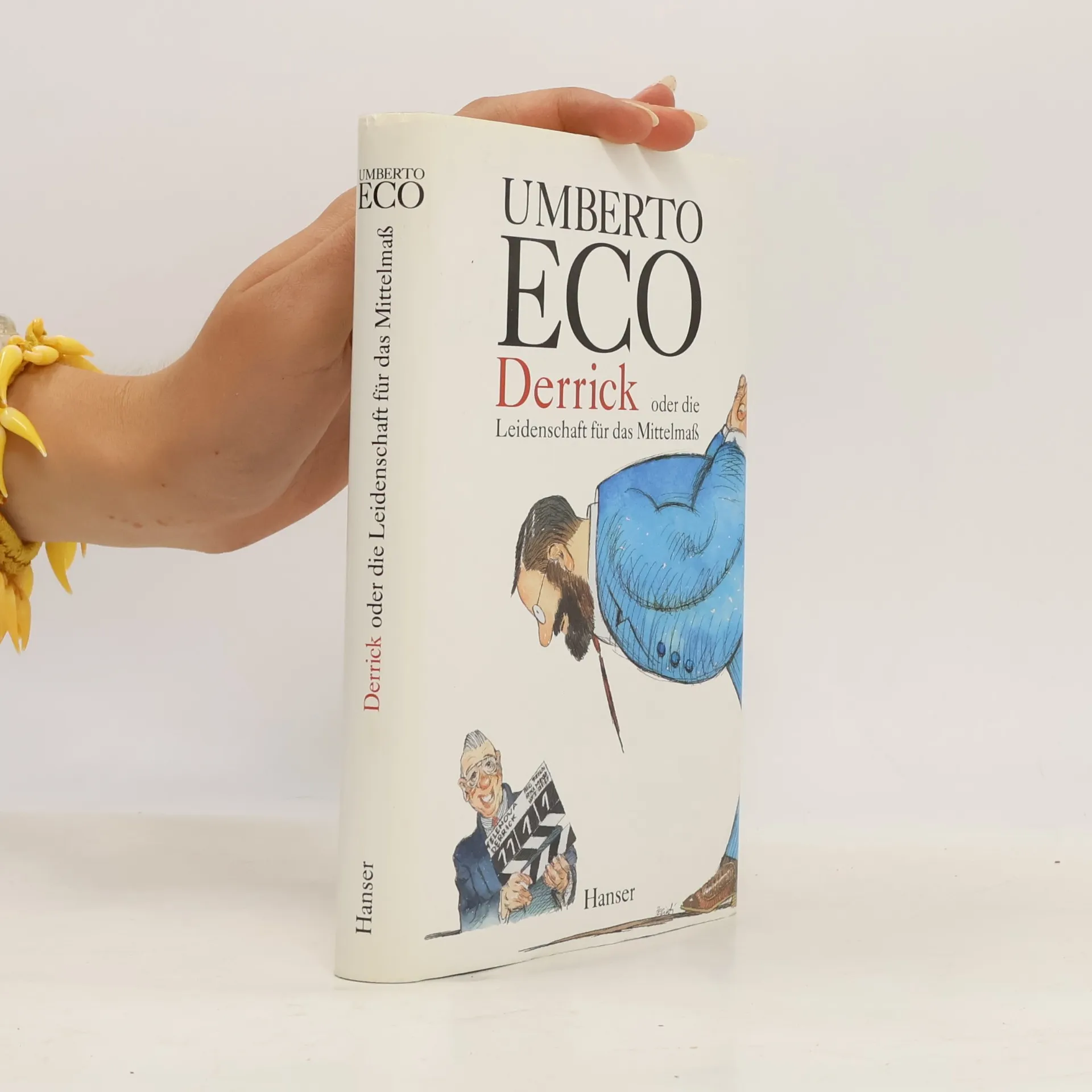
Derrick oder die Leidenschaft für das Mittelmaß
- 185 páginas
- 7 horas de lectura
Gibt es etwas Deutscheres als Kommissar Derrick, die vollkommene Verkörperung von Durchschnittlichkeit, Phlegma und Beamtenkarriere? Phänomene wie den deutschen Geist im Streifenwagen, Ginger Rogers und Clintons Verfehlungen, Andreottis Mafiaprozess und die neue Computerkultur kann niemand besser erklären als Umberto Eco. Ein Band voll ironisch-intelligenter Parodien.
In cosa crede chi non crede?
- 143 páginas
- 6 horas de lectura
Carteggio tra Carlo Maria Martini, ex arcivescovo di Milano e Umberto Eco: contiene delle perle autentiche, riferibili soprattutto a temi di grande profondità trattati con l’acume, la cultura, la franchezza di due autentici giganti del pensiero dei nostri mala tempora. Con interventi di Emanuele Severino Manlio Sgalambro Eugenio Scalfari Indro Montanelli Vittorio Foa Claudio Martelli
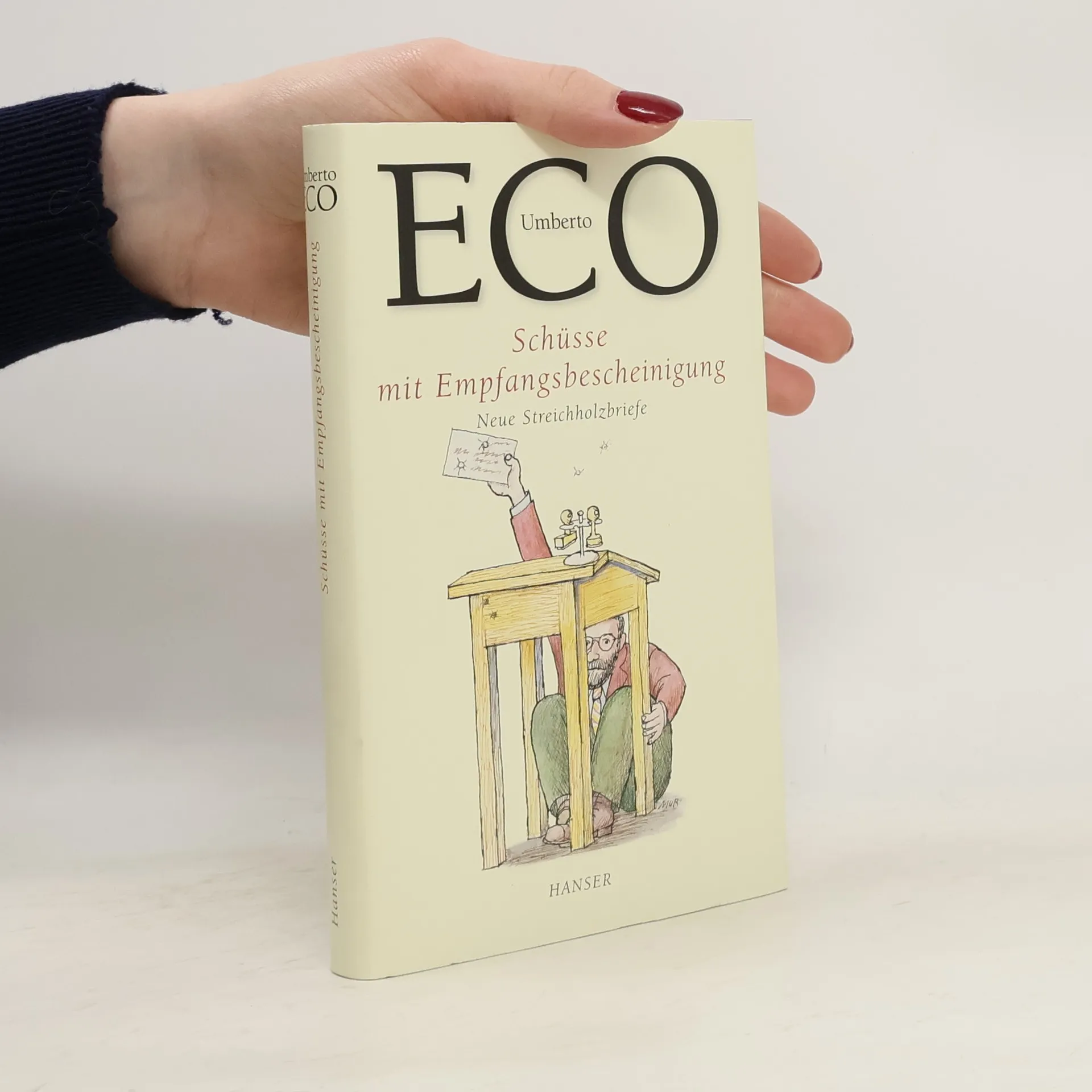
Gesammelte Streichholzbriefe. Aus d. Italien. v. Burkhart Kroeber
- 117 páginas
- 5 horas de lectura
Umfassende und unterhaltsame Reflexionen von Umberto Eco über Alltagsärgernisse und Zeitgeist-Phänomene. In "Streichholzbriefe" versammelt er 26 seiner besten Kolumnen aus "L' Espresso", die sowohl lehrreich als auch amüsant sind.