


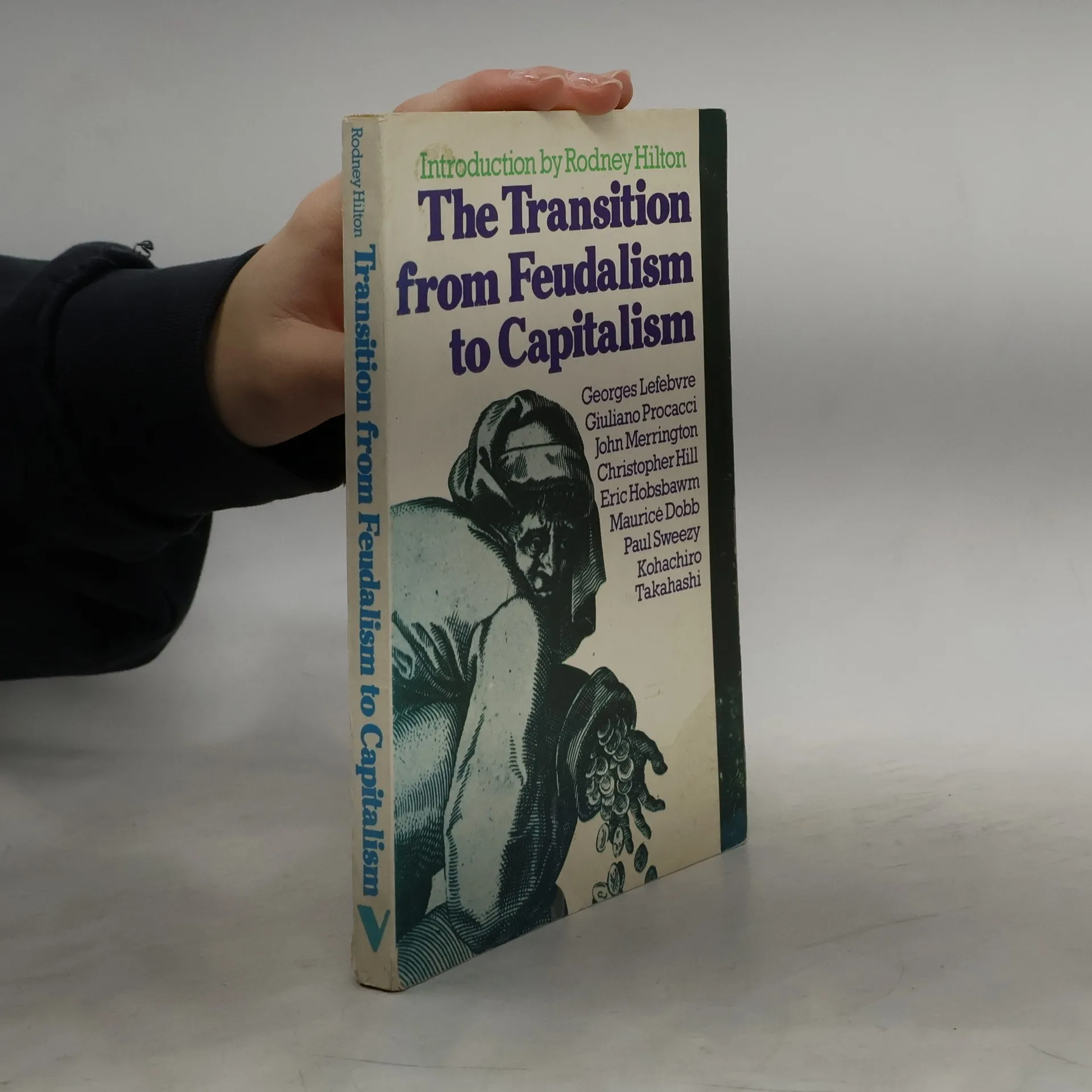
The Transition from Feudalism to Capitalism
- 194 páginas
- 7 horas de lectura
Georges Lefebvre fue un historiador francés, conocido principalmente por su obra sobre la Revolución Francesa y la vida campesina. Su erudición profundiza en los fundamentos sociales y económicos de estos períodos históricos cruciales. Los análisis de Lefebvre ofrecen una valiosa perspectiva sobre la existencia cotidiana de la gente común y sus roles en la configuración de los acontecimientos históricos. Su enfoque de investigación redefinió la comprensión de los movimientos de masas y su impacto social.


Georges Lefebvre's portrayal of Napoleon and his era is regarded as a classic and comprehensive biography of the great Corsican. His brilliant psychological sketch is among the finest written about him. The author narrates not only the military and political events but also illuminates the social and economic aspects of the time. In a sophisticated manner, he reflects Napoleon's biography and personality within the context of an epoch, its historical conditions, and its dynamics. With Napoleon, the French Revolution comes to an end, ushering in a new era. As a brilliant strategist, he exploited the political vacuum and the security needs of the new bourgeois society to establish his dictatorship. He waged wars across old Europe until it collapsed, paving the way for a reconstruction modeled after France: the modern Europe of nation-states and the contemporary European social order emerged.
Written by the greatest authority on the French Revolution, this masterly overview has taken its place as the definitive account.
Frei und gleich an Rechten werden die Menschen geboren und bleiben es. Die sozialen Unterschiede können sich nur auf das gemeine Wohl gründen. Eklärung der Menschen- und Bürgerrechte 1789, Artikel I
La grande peur de 1789 est un événement étonnant. En réaction aux incertitudes de la Révolution, d'un bout à l'autre du royaume, se répand l'idée que des aristocrates arment des brigands pour ravager les récoltes et massacrer le peuple. Aux contemporains déconcertés, elle apparut comme un mystère. Ceux qui voulurent, à toutes forces, en improviser une explication l'attribuèrent à un complot qu'ils rapportèrent, suivant leurs opinions, à l'aristocratie ou aux révolutionnaires. Œuvre majeure de Georges Lefebvre (1874-1959), cet ouvrage se situe à la croisée de l'histoire sociale et de l'histoire des mentalités. Il constitue une étude inégalée sur le rôle et la signification des foules dans la Révolution française et dans l'Histoire