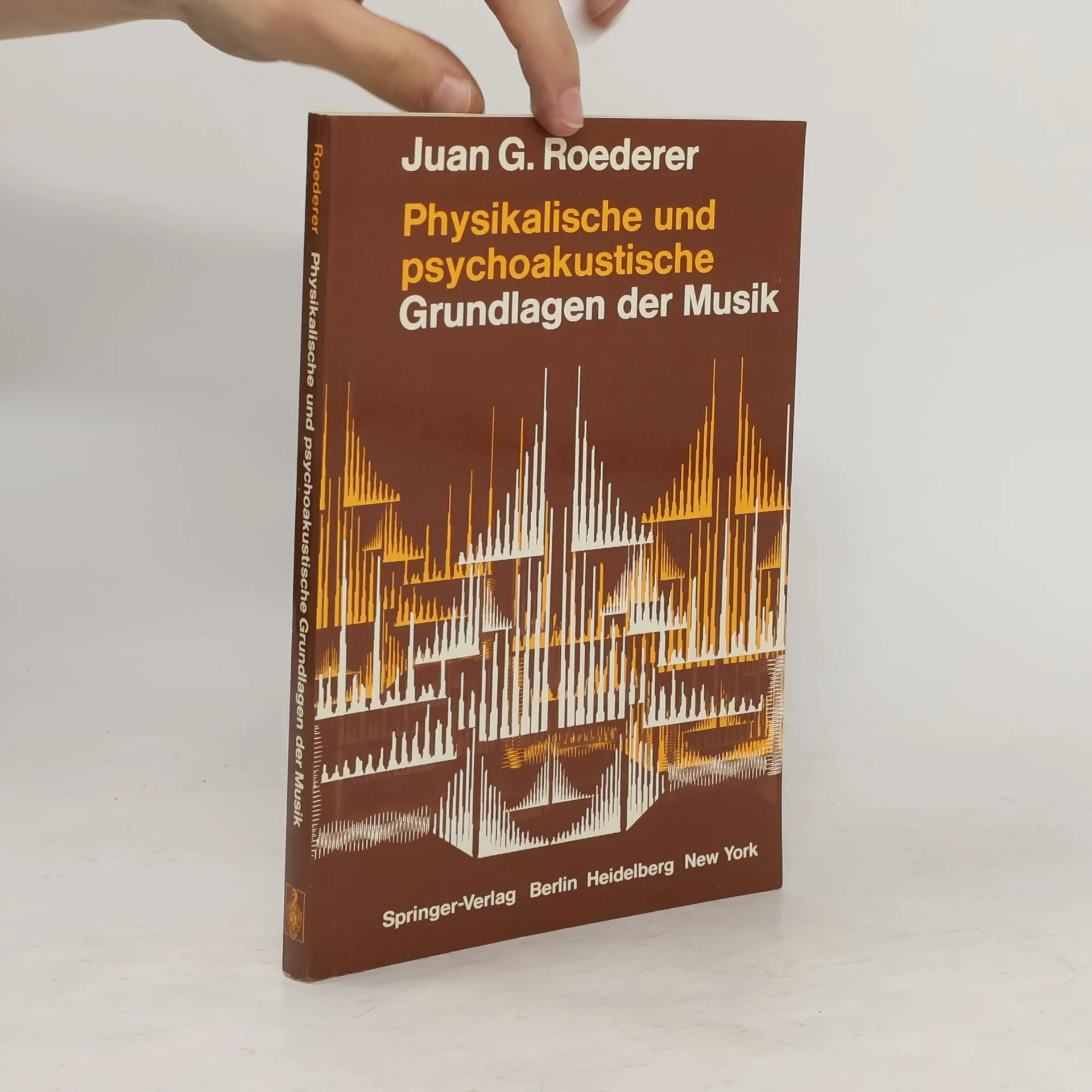
The exploration of how we hear music is grounded in acoustics, psychophysics, and neurobiology, revealing the intricate physical systems and biological processes involved. By integrating the latest discoveries in brain science and the mechanics of tone generation in musical instruments, the book offers a comprehensive understanding of the auditory experience.
Juan G. Roederer Libros


Information and Its Role in Nature
- 248 páginas
- 9 horas de lectura
Exploring the fundamental role of information in the natural world, this work delves into how information underpins various biological processes and systems. It discusses the interplay between information theory and the physical sciences, revealing how information shapes evolution, ecology, and the functioning of living organisms. The author presents a multidisciplinary approach, integrating insights from biology, physics, and philosophy, to highlight the significance of information as a driving force in nature's complexity and organization.
Dynamics of Magnetically Trapped Particles
Foundations of the Physics of Radiation Belts and Space Plasmas
- 212 páginas
- 8 horas de lectura
Focusing on the dynamic properties of magnetically trapped particles, this updated and expanded work delves into their behavior within planetary radiation belts and plasmas. It offers a theoretical explanation of the underlying physical processes, complemented by practical examples and recommendations for application.
Dieses Buch beschäftigt sich mit den physikalischen Systemen und psychoakustischen Prozessen, die in Zusammenhang mit jenem Phänomen stehen, das wir allgemein als „Musik“ bezeichnen. Es soll interessierten Musikern helfen, zu verstehen, auf welche physikalische Weise musikalische Töne in einem Musikinstrument erzeugt werden und sich im Raum ausbreiten und wie Musik vom Zuhörer empfangen und empfunden wird. Physikalisches und mathematisches Vorwissen jenseits des durchschnittlichen Schulniveaus ist dazu nicht erforderlich. Dem musikliebenden Wissenschaftler sollen viele Fragen, die er sich bezüglich Musik und Tonempfindung gestellt haben dürfte, beantwortet werden. Dem Musikpsychologen wird ein Versuch dargeboten, die Frage „Warum lieben wir Musik?“ von einem neuro-funktionellen Standpunkt aus zu erläutern.