

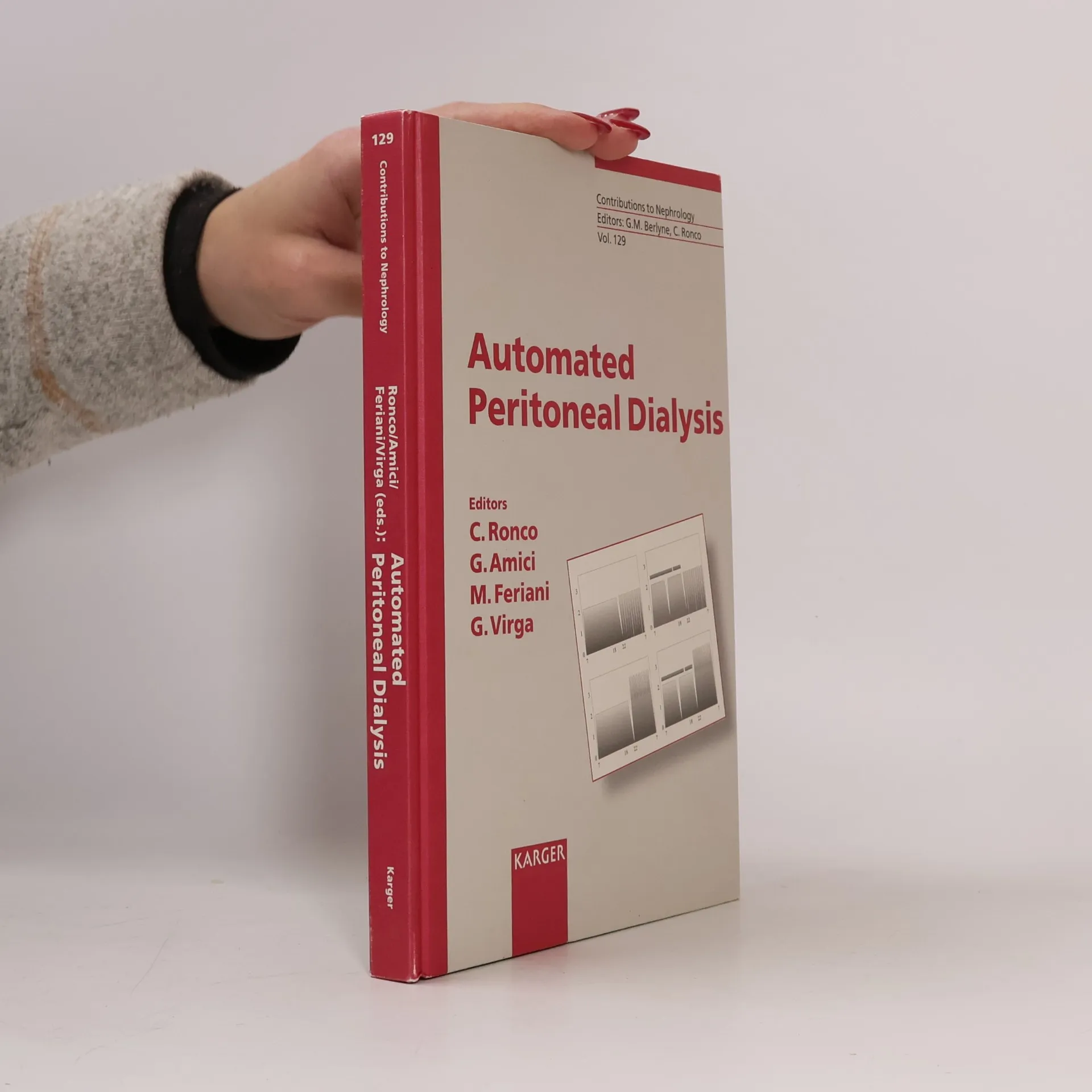

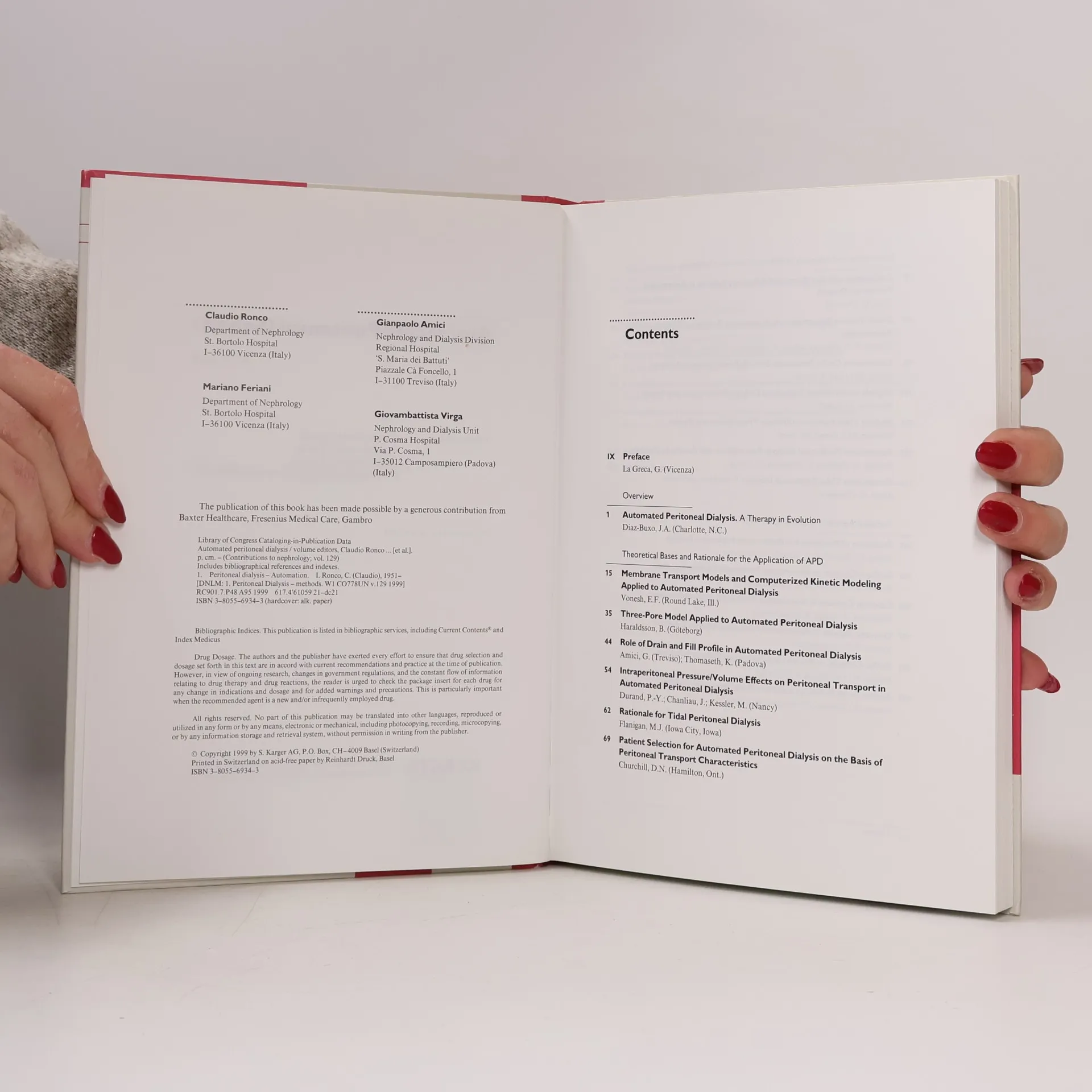
Contributions to Nephrology - 129: Automated Peritoneal Dialysis
Más información sobre el libro
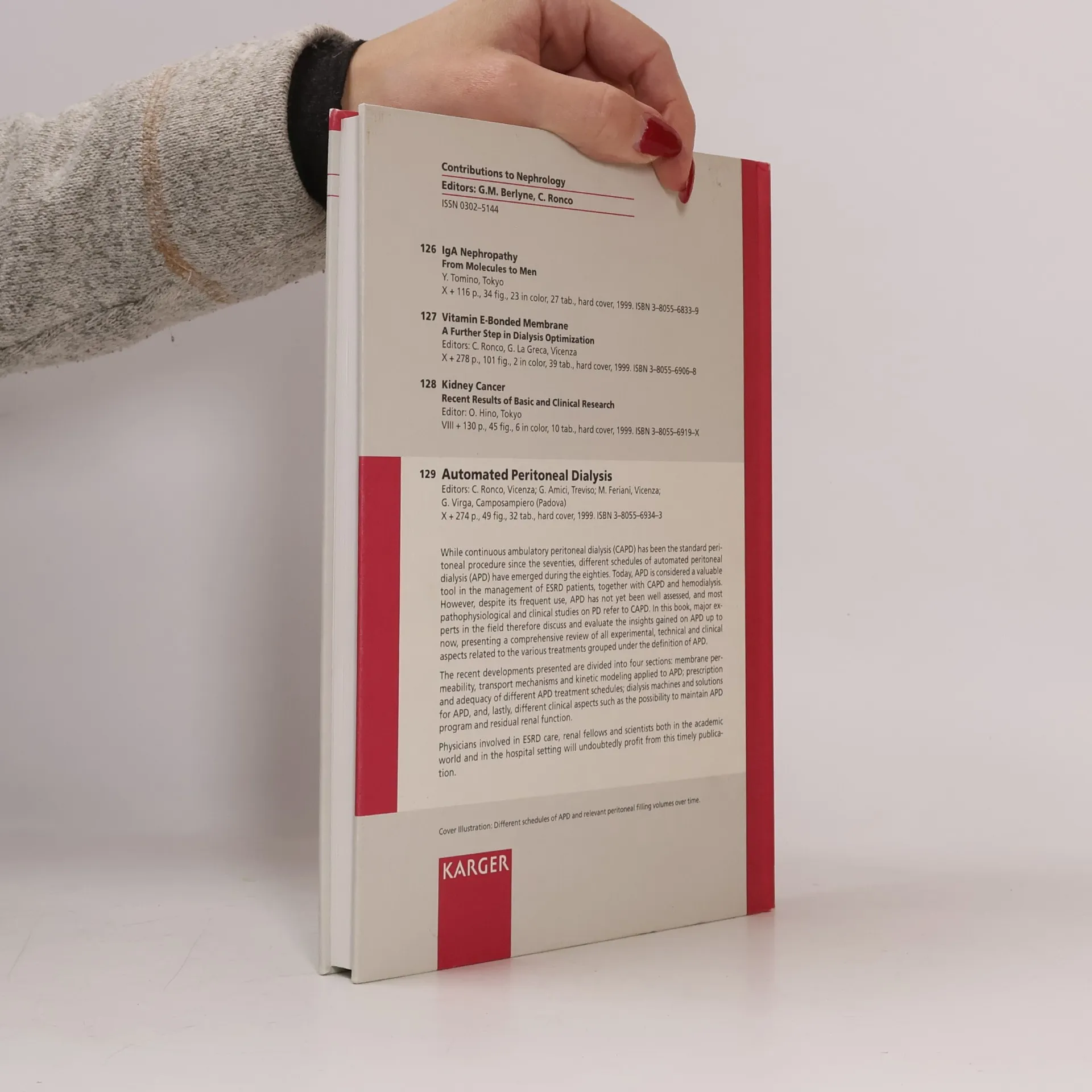
While continuous ambulatory peritoneal dialysis (CAPD) has been the standard peritoneal procedure since the seventies, different schedules of automated peritoneal dialysis (APD) have emerged during the eighties. Today, APD is considered a valuable tool in the management of ESRD patients, together with CAPD and hemodialysis. However, despite its frequent use, APD has not yet been well assessed, and most pathophysiological and clinical studies on PD refer to CAPD. In this book, major experts in the field therefore discuss and evaluate the insights gained on APD up to now, presenting a comprehensive review of all experimental, technical and clinical aspects related to the various treatments grouped under the definition of APD. The recent developments presented are divided into four sections: membrane permeability, transport mechanisms and kinetic modeling applied to APD; prescription and adequacy of different APD treatment schedules; dialysis machines and solutions for APD, and, lastly, different clinical aspects such as the possibility to maintain APD program and residual renal function. Physicians involved in ESRD care, renal fellows and scientists both in the academic world and in the hospital setting will undoubtedly profit from this timely publication.
Compra de libros
Contributions to Nephrology - 129: Automated Peritoneal Dialysis, Claudio Ronco, G. Amici, M. Feriani, G.M. Berlyne, G. Virga
- Idioma

- Publicado en
- 1999
- Encuadernación
- (Tapa dura),
- Estado del libro
- Bueno
- Precio
- 6,09 €
Métodos de pago
Nadie lo ha calificado todavía.
- Título
- Contributions to Nephrology - 129: Automated Peritoneal Dialysis
- Idioma
- Inglés
- Autores
- Claudio Ronco, G. Amici, M. Feriani, G.M. Berlyne, G. Virga
- Editorial
- Karger
- Publicado en
- 1999
- Formato
- Tapa dura
- Páginas
- 274
- ISBN10
- 3805569343
- ISBN13
- 9783805569347
- Serie
- Etiquetas
- Salud & Medicina, Medicina, Europa Occidental, Automatización
- Descripción
- While continuous ambulatory peritoneal dialysis (CAPD) has been the standard peritoneal procedure since the seventies, different schedules of automated peritoneal dialysis (APD) have emerged during the eighties. Today, APD is considered a valuable tool in the management of ESRD patients, together with CAPD and hemodialysis. However, despite its frequent use, APD has not yet been well assessed, and most pathophysiological and clinical studies on PD refer to CAPD. In this book, major experts in the field therefore discuss and evaluate the insights gained on APD up to now, presenting a comprehensive review of all experimental, technical and clinical aspects related to the various treatments grouped under the definition of APD. The recent developments presented are divided into four sections: membrane permeability, transport mechanisms and kinetic modeling applied to APD; prescription and adequacy of different APD treatment schedules; dialysis machines and solutions for APD, and, lastly, different clinical aspects such as the possibility to maintain APD program and residual renal function. Physicians involved in ESRD care, renal fellows and scientists both in the academic world and in the hospital setting will undoubtedly profit from this timely publication.