

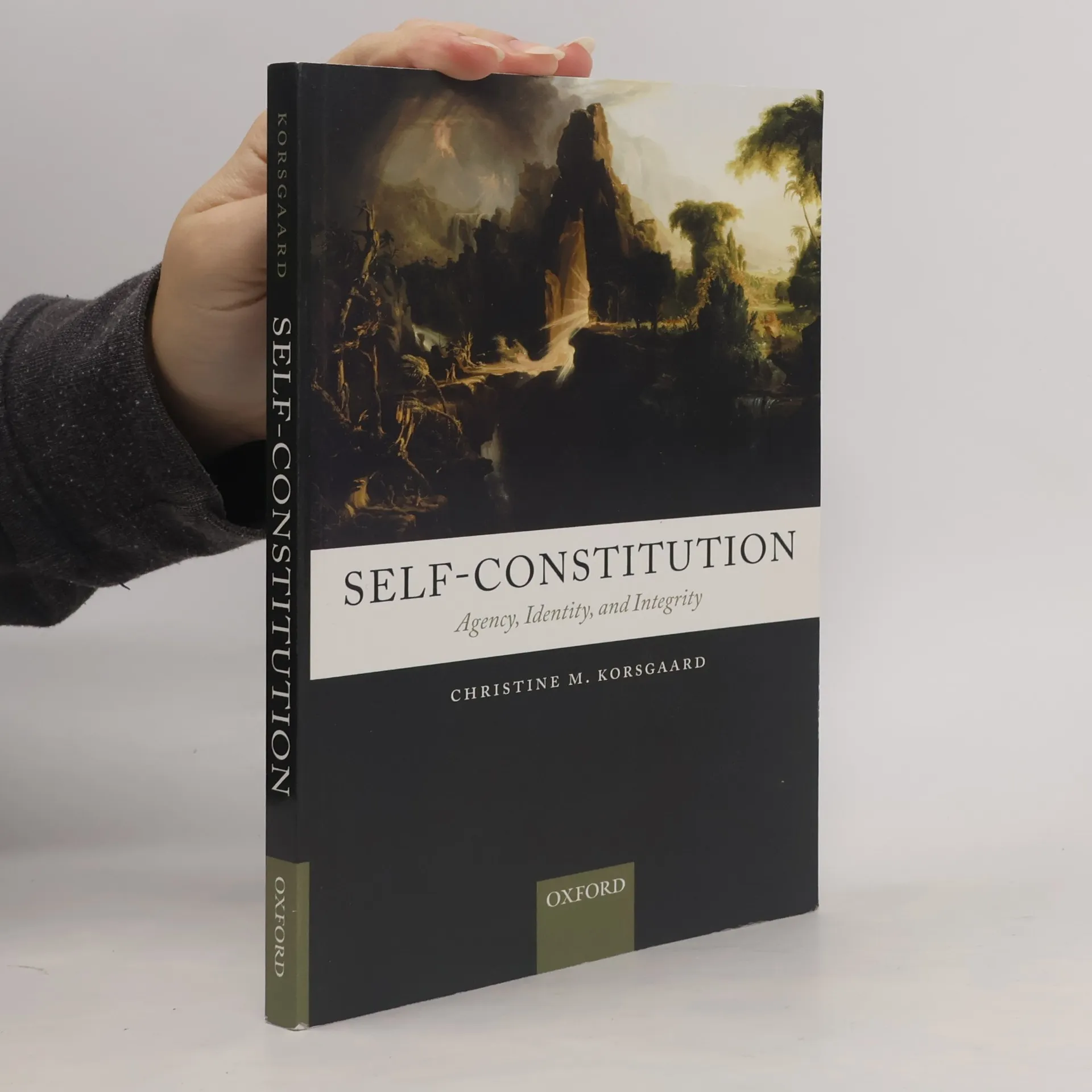

Self-Constitution
Agency, Identity, and Integrity
Autores
Más información sobre el libro
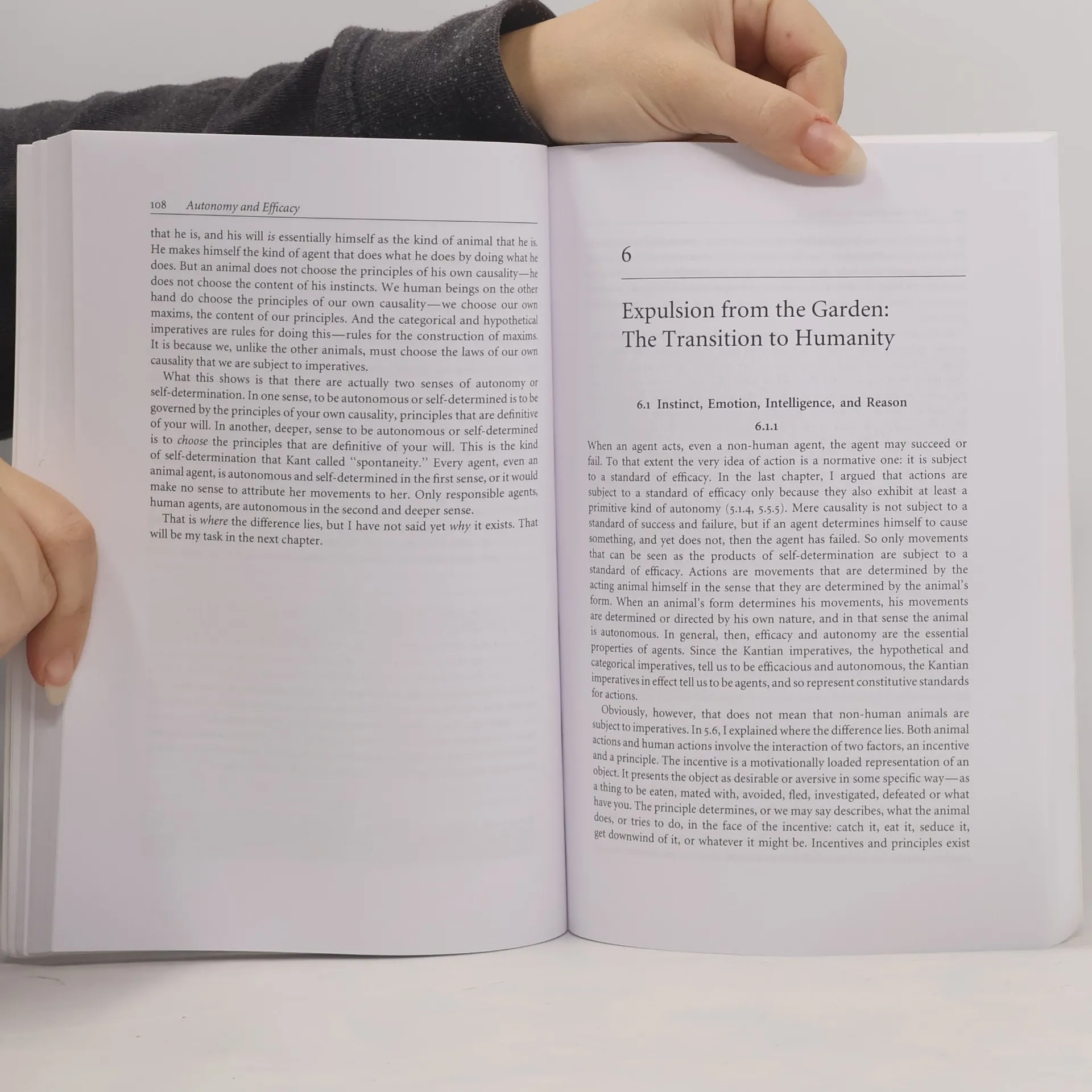
Christine M. Korsgaard explores the foundation of practical reason and moral obligation, emphasizing that human actions can be morally evaluated unlike those of other animals. She highlights that few philosophers have considered actions as morally good or bad based on their nature. Just as understanding the heart's function helps define a good heart, knowing an action's function is crucial for assessing its moral quality. Drawing from Plato, Aristotle, and Kant, Korsgaard posits that an action's function is to define the agency and identity of the person performing it. As rational beings, we recognize and control the principles that guide our actions. A good action is one that establishes its agent as the autonomous and effective cause of their own behavior. These qualities align with Kant's two imperatives of practical reason: the categorical imperative promotes autonomy, while the hypothetical imperative ensures efficacy. In shaping our impact on the world, we simultaneously shape our identities. Korsgaard develops a theory of action and interaction, arguing that integrity is essential for agency. She concludes that only morally good actions can fulfill the function of self-constitution inherent in action.
Compra de libros
Self-Constitution, Christine M. Korsgaard
- Idioma

- Publicado en
- 2009
- Encuadernación
- (Tapa blanda),
- Estado del libro
- Bueno
- Precio
- 25,99 €
Métodos de pago
Nadie lo ha calificado todavía.
- Título
- Self-Constitution
- Subtítulo
- Agency, Identity, and Integrity
- Idioma
- Inglés
- Autores
- Christine M. Korsgaard
- Editorial
- Oxford University Press
- Publicado en
- 2009
- Formato
- Tapa blanda
- Páginas
- 230
- ISBN10
- 0199552800
- ISBN13
- 9780199552801
- Serie
- Etiquetas
- Temática filosófica, Ética
- Descripción
- Christine M. Korsgaard explores the foundation of practical reason and moral obligation, emphasizing that human actions can be morally evaluated unlike those of other animals. She highlights that few philosophers have considered actions as morally good or bad based on their nature. Just as understanding the heart's function helps define a good heart, knowing an action's function is crucial for assessing its moral quality. Drawing from Plato, Aristotle, and Kant, Korsgaard posits that an action's function is to define the agency and identity of the person performing it. As rational beings, we recognize and control the principles that guide our actions. A good action is one that establishes its agent as the autonomous and effective cause of their own behavior. These qualities align with Kant's two imperatives of practical reason: the categorical imperative promotes autonomy, while the hypothetical imperative ensures efficacy. In shaping our impact on the world, we simultaneously shape our identities. Korsgaard develops a theory of action and interaction, arguing that integrity is essential for agency. She concludes that only morally good actions can fulfill the function of self-constitution inherent in action.