



Parámetros
- 328 páginas
- 12 horas de lectura
Más información sobre el libro
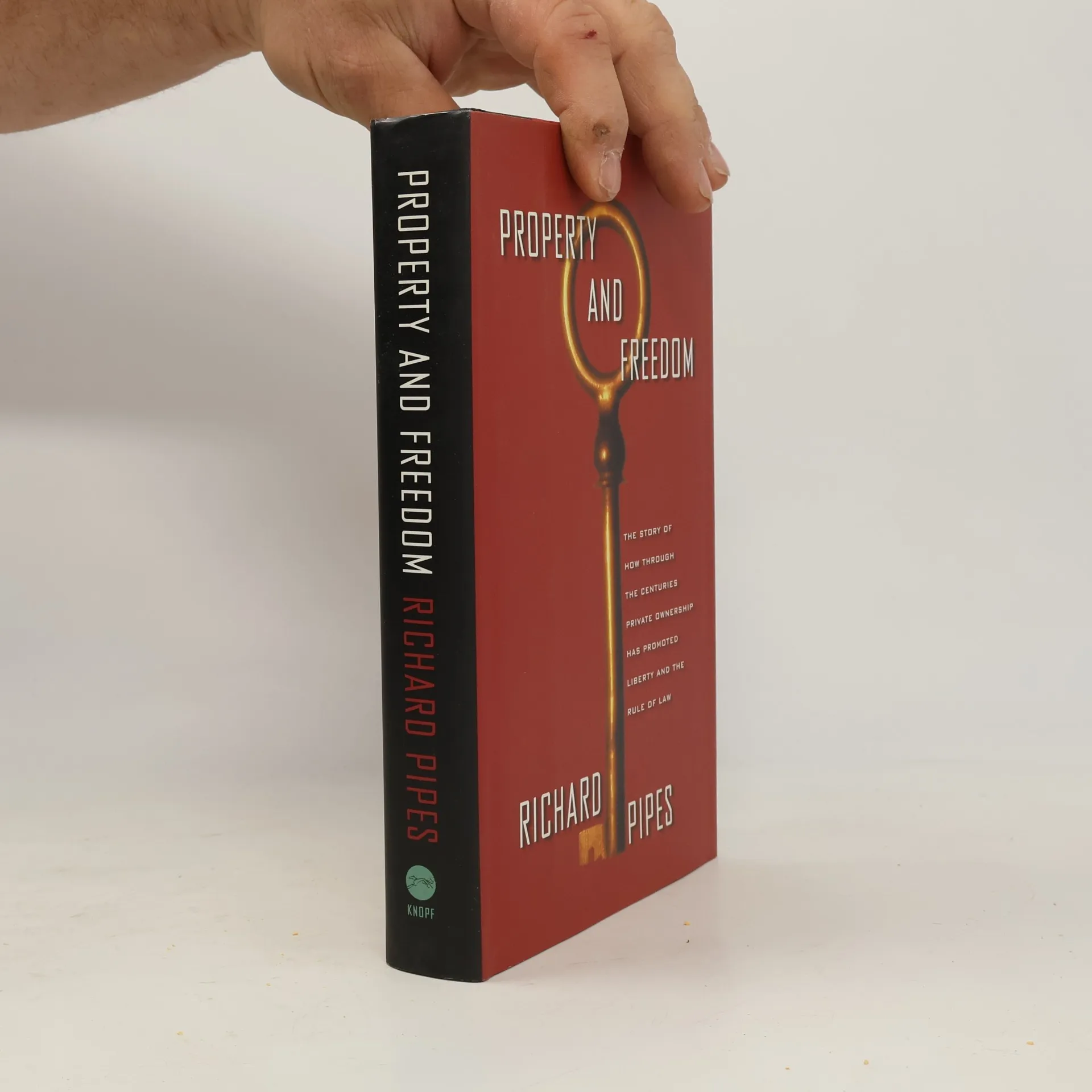
Property is essential for economic progress, liberty, and the rule of law, argues Richard Pipes. He illustrates how private ownership has historically acted as a barrier to state power, facilitating the development of democratic institutions in the Western world. Pipes traces the evolution of private property from ancient Greece and Rome, where modern property rights first emerged, to the late medieval period when commerce and urban growth expanded ownership concepts. He highlights England's pioneering role in treating land as a commodity and establishing strong property rights, which laid the groundwork for parliamentary government that could check royal authority. In contrast, pre-nineteenth-century Russia's lack of private land ownership left citizens unable to limit tsarist power. The author examines the attitudes toward property in twentieth-century totalitarian regimes and emphasizes that in the United States, the Founding Fathers' commitment to protecting private property has significantly benefited society. However, he cautions that current trends in property treatment threaten citizen rights and warns that government interference, even when aimed at promoting the common good, could diminish individual freedoms.


Compra de libros
Property and Freedom, Richard Pipes
- Idioma

- Publicado en
- 1999
- Encuadernación
- (Tapa dura),
- Estado del libro
- Bueno
- Precio
- 11,99 €
Métodos de pago
Nos falta tu reseña aquí
- Título
- Property and Freedom
- Idioma
- Inglés
- Autores
- Richard Pipes
- Editorial
- Knopf
- Publicado en
- 1999
- Formato
- Tapa dura
- Páginas
- 328
- ISBN10
- 0375404988
- ISBN13
- 9780375404986
- Serie
- Categorías
- Etiquetas
- Tema histórico, Comercio, Temática filosófica, Política, Historia Económica, Política económica, Propiedad, posesión, Filosofía del derecho, Libertad Civil
- Primera publicación
- 1999
- Título original
- Property and Freedom
- Calificación
- 3,75 de 5
- Descripción
- Property is essential for economic progress, liberty, and the rule of law, argues Richard Pipes. He illustrates how private ownership has historically acted as a barrier to state power, facilitating the development of democratic institutions in the Western world. Pipes traces the evolution of private property from ancient Greece and Rome, where modern property rights first emerged, to the late medieval period when commerce and urban growth expanded ownership concepts. He highlights England's pioneering role in treating land as a commodity and establishing strong property rights, which laid the groundwork for parliamentary government that could check royal authority. In contrast, pre-nineteenth-century Russia's lack of private land ownership left citizens unable to limit tsarist power. The author examines the attitudes toward property in twentieth-century totalitarian regimes and emphasizes that in the United States, the Founding Fathers' commitment to protecting private property has significantly benefited society. However, he cautions that current trends in property treatment threaten citizen rights and warns that government interference, even when aimed at promoting the common good, could diminish individual freedoms.