

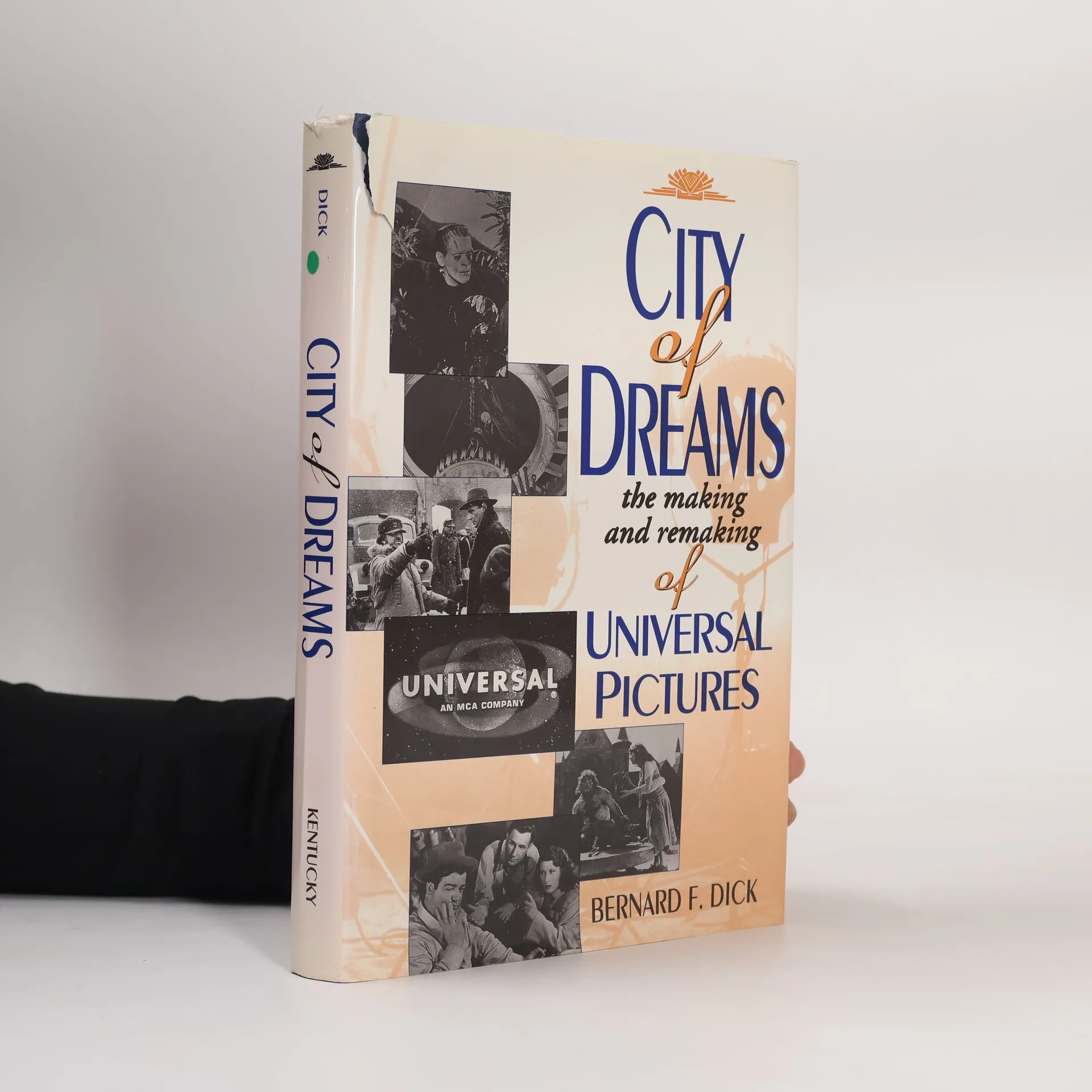
City of Dreams
The Making and Remaking of Universal Pictures
Autores
Valoración del libro
Más información sobre el libro
Horror films, Deanna Durbin musicals, Francis the talking mule, and iconic theme parks are just a glimpse into the legacy of Universal Pictures. In February 1906, Carl Laemmle, a German immigrant, opened his first nickelodeon in Chicago, transitioning from exhibition to distribution and film production. A savvy promoter, he relocated to Southern California within a decade, establishing Universal Pictures as a major Hollywood studio and founding a city in the process. Universal carved its niche with horror films featuring Karloff and Lugosi, comedies with Abbott and Costello, and low-budget musicals. However, Carl Laemmle Jr. struggled with empire building, leading to his ousting amid financial troubles. This set the stage for a series of studio heads who came and went, marking the early arrival of corporate Hollywood at Universal. The 1946 Universal-International merger, Decca's stock takeover in the early 1950s, and MCA's buyout in 1962 signaled a shift where business often overshadowed filmmaking. Despite the constant changes in stars and executives that reshaped its image, Universal's iconic globe logo has remained a fixture on screens worldwide. Unlike many of its contemporaries, Universal continues to produce films today.
Publicación

Compra de libros
City of Dreams, Bernard F. Dick
- Idioma

- Publicado en
- 1997
- Encuadernación
- (Tapa dura)
Métodos de pago
Nos falta tu reseña aquí
- Título
- City of Dreams
- Subtítulo
- The Making and Remaking of Universal Pictures
- Idioma
- Inglés
- Autores
- Bernard F. Dick
- Editorial
- The University Press of Kentucky
- Publicado en
- 1997
- Formato
- Tapa dura
- Páginas
- 249
- ISBN10
- 0813120160
- ISBN13
- 9780813120164
- Serie
- Categorías
- Etiquetas
- Temática cinematográfica
- Calificación
- 3,3 de 5
- Descripción
- Horror films, Deanna Durbin musicals, Francis the talking mule, and iconic theme parks are just a glimpse into the legacy of Universal Pictures. In February 1906, Carl Laemmle, a German immigrant, opened his first nickelodeon in Chicago, transitioning from exhibition to distribution and film production. A savvy promoter, he relocated to Southern California within a decade, establishing Universal Pictures as a major Hollywood studio and founding a city in the process. Universal carved its niche with horror films featuring Karloff and Lugosi, comedies with Abbott and Costello, and low-budget musicals. However, Carl Laemmle Jr. struggled with empire building, leading to his ousting amid financial troubles. This set the stage for a series of studio heads who came and went, marking the early arrival of corporate Hollywood at Universal. The 1946 Universal-International merger, Decca's stock takeover in the early 1950s, and MCA's buyout in 1962 signaled a shift where business often overshadowed filmmaking. Despite the constant changes in stars and executives that reshaped its image, Universal's iconic globe logo has remained a fixture on screens worldwide. Unlike many of its contemporaries, Universal continues to produce films today.