

Más información sobre el libro
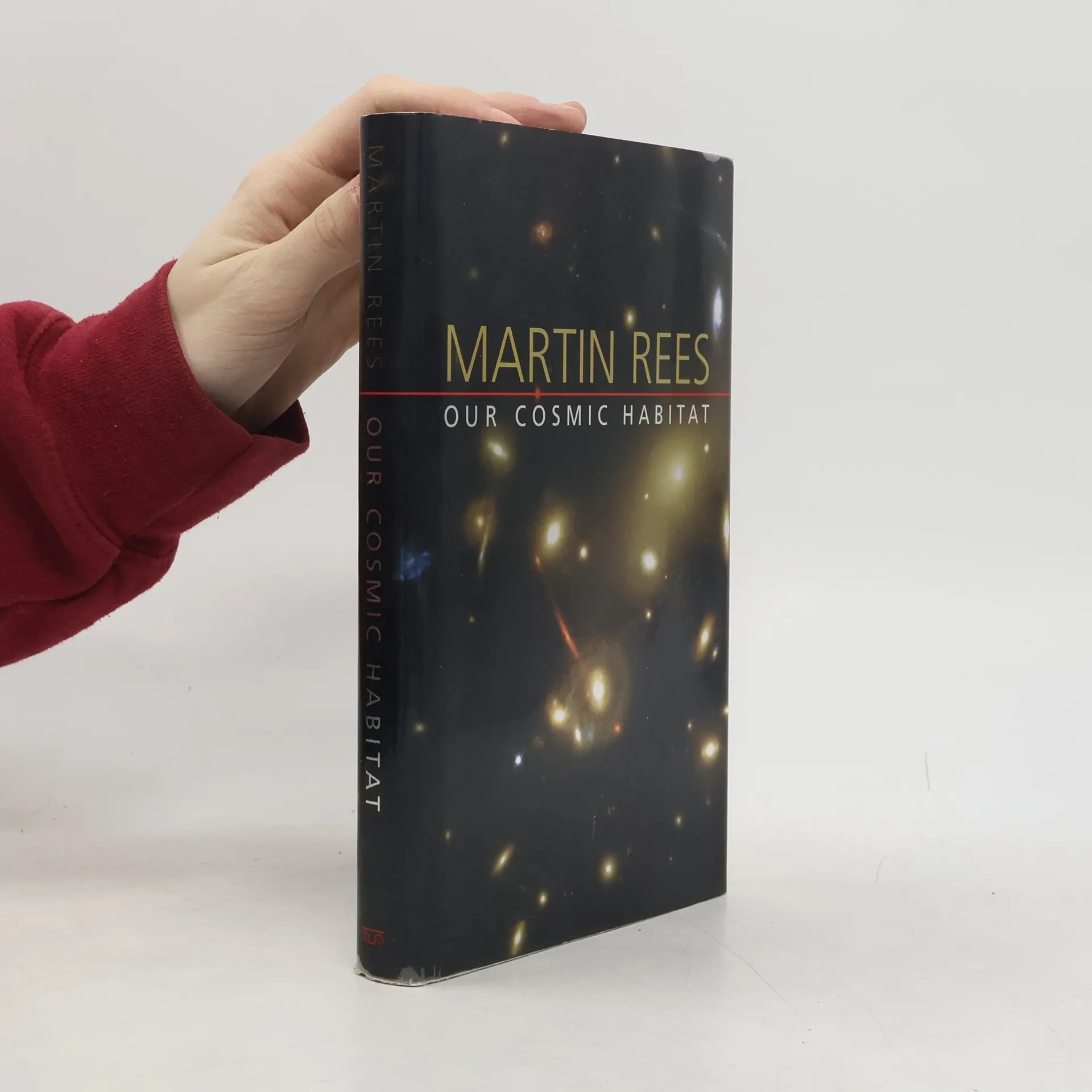
Our universe appears remarkably "biophilic," raising questions about whether this is mere chance, divine design, or coincidence. Cosmologist Martin Rees delves into this inquiry, reflecting on Einstein's question of whether God could have created the world differently. The book investigates the implications of a "yes" answer, proposing that our universe may be part of a vast "multiverse" where most other universes are devoid of life. In this view, the laws of nature are merely local regulations established post-Big Bang, suggesting our universe is a unique haven for life. Rees examines our solar system and addresses related topics, including the likelihood of life and the credibility of the Big Bang theory. He contemplates the long-term future of the cosmos and traces its origins back to a singularity. He grapples with the paradox of a universe that spans 10 billion light-years emerging from an infinitesimal point. Rees posits that we might already sense the existence of other universes, yet the multiverse concept's viability hinges on understanding the fundamental nature of space and time at scales far smaller than atoms, governed by quantum gravity. This exploration of the cosmos will captivate both scientists and general readers intrigued by the universe we inhabit.




Compra de libros
Our Cosmic Habitat, Martin J. Rees
- Idioma

- Publicado en
- 2001
- Encuadernación
- (Tapa dura)
Métodos de pago
Nos falta tu reseña aquí
- Título
- Our Cosmic Habitat
- Idioma
- Inglés
- Autores
- Martin J. Rees
- Editorial
- Princeton University Press
- Publicado en
- 2001
- Formato
- Tapa dura
- Páginas
- 240
- ISBN10
- 0691089264
- ISBN13
- 9780691089263
- Serie
- Etiquetas
- Ciencias naturales, Ciencia, Espacio, Cosmología, Teorías e Hipótesis
- Primera publicación
- 1998
- Título original
- Our Cosmic Habitat
- Calificación
- 4,35 de 5
- Descripción
- Our universe appears remarkably "biophilic," raising questions about whether this is mere chance, divine design, or coincidence. Cosmologist Martin Rees delves into this inquiry, reflecting on Einstein's question of whether God could have created the world differently. The book investigates the implications of a "yes" answer, proposing that our universe may be part of a vast "multiverse" where most other universes are devoid of life. In this view, the laws of nature are merely local regulations established post-Big Bang, suggesting our universe is a unique haven for life. Rees examines our solar system and addresses related topics, including the likelihood of life and the credibility of the Big Bang theory. He contemplates the long-term future of the cosmos and traces its origins back to a singularity. He grapples with the paradox of a universe that spans 10 billion light-years emerging from an infinitesimal point. Rees posits that we might already sense the existence of other universes, yet the multiverse concept's viability hinges on understanding the fundamental nature of space and time at scales far smaller than atoms, governed by quantum gravity. This exploration of the cosmos will captivate both scientists and general readers intrigued by the universe we inhabit.