

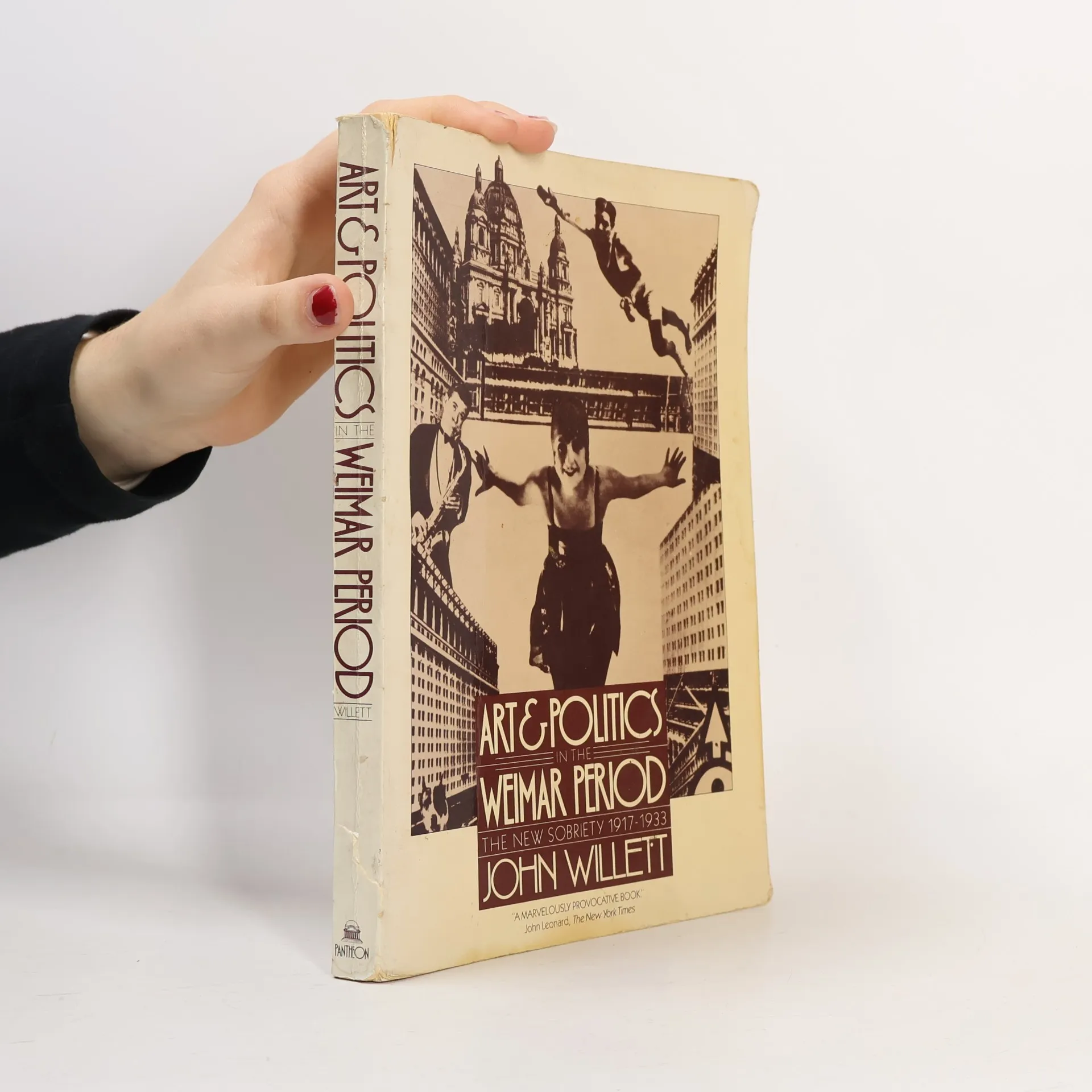
ART & POLITICS WEIMAR
The New Sobriety, 1917-1933
Autores
Valoración del libro
Más información sobre el libro
The period between the end of World War I and Hitler's ascension to power witnessed an unprecedented cultural explosion that embraced the whole of Europe but was, above all, centered in Germany. Germany housed architect Walter Gropius and the Bauhaus movement; playwrights Bertolt Brecht and Erwin Piscator; artists Hans Richter, George Grosz, John Heartfield, and Hannah Hoch; composers Paul Hindemith, Arnold Schonberg, and Kurt Weill; and dozens of others. In Art and Politics in the Weimar Period , John Willett provides a brilliant explanation of the aesthetic and political currents which made Germany the focal point of a new, down-to-earth, socially committed cultural movement that drew a significant measure of inspiration from revolutionary Russia, left-wing social thought, American technology, and the devastating experience of war.
Publicación

Compra de libros
ART & POLITICS WEIMAR, John Willett
- Idioma

- Publicado en
- 1978
- Encuadernación
- (Tapa blanda)
Métodos de pago
Nos falta tu reseña aquí
- Título
- ART & POLITICS WEIMAR
- Subtítulo
- The New Sobriety, 1917-1933
- Idioma
- Inglés
- Autores
- John Willett
- Editorial
- Pantheon
- Publicado en
- 1978
- Formato
- Tapa blanda
- Páginas
- 272
- ISBN10
- 0394739914
- ISBN13
- 9780394739915
- Serie
- Categorías
- Etiquetas
- Arte, Política, República de Weimar
- Calificación
- 3,8 de 5
- Descripción
- The period between the end of World War I and Hitler's ascension to power witnessed an unprecedented cultural explosion that embraced the whole of Europe but was, above all, centered in Germany. Germany housed architect Walter Gropius and the Bauhaus movement; playwrights Bertolt Brecht and Erwin Piscator; artists Hans Richter, George Grosz, John Heartfield, and Hannah Hoch; composers Paul Hindemith, Arnold Schonberg, and Kurt Weill; and dozens of others. In Art and Politics in the Weimar Period , John Willett provides a brilliant explanation of the aesthetic and political currents which made Germany the focal point of a new, down-to-earth, socially committed cultural movement that drew a significant measure of inspiration from revolutionary Russia, left-wing social thought, American technology, and the devastating experience of war.