

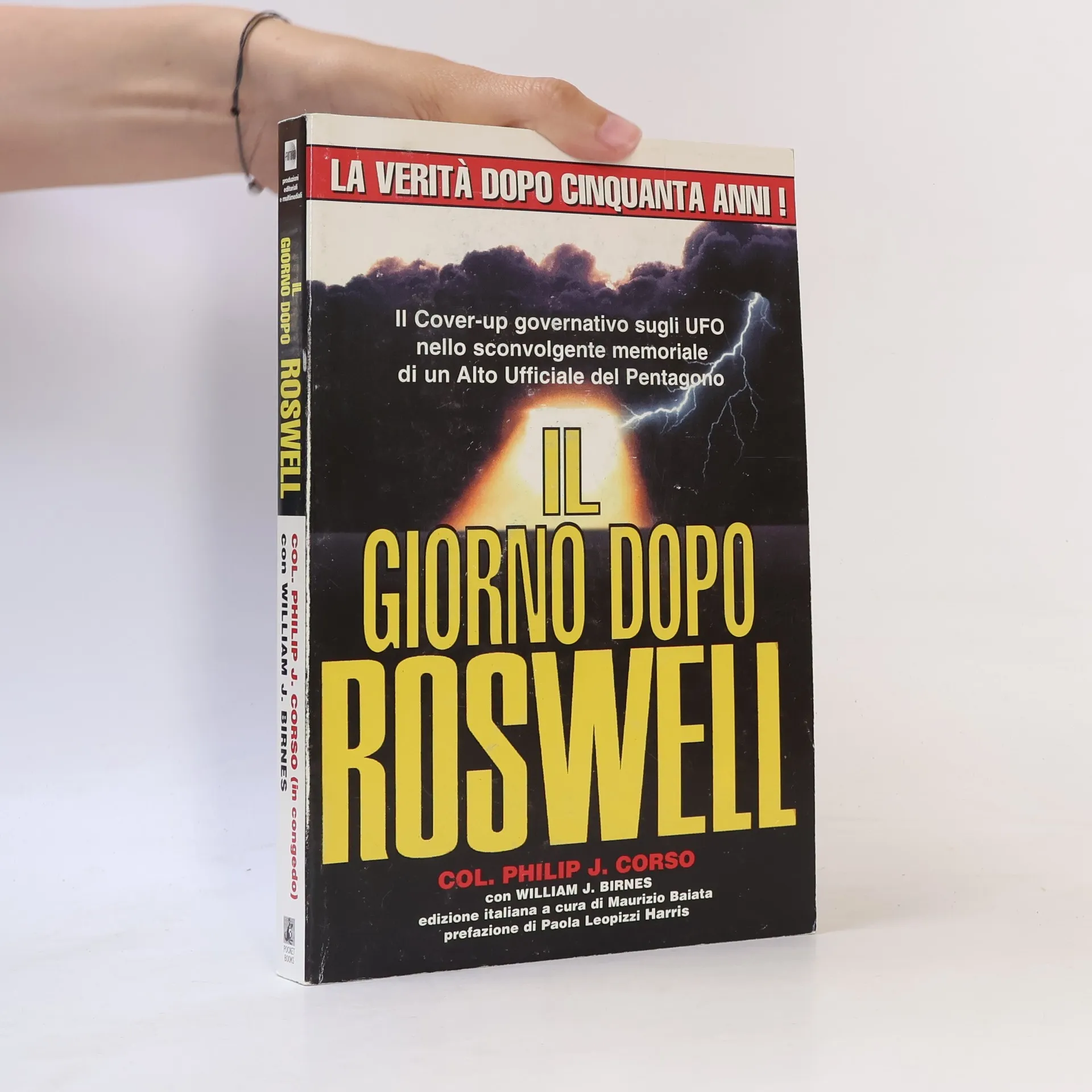
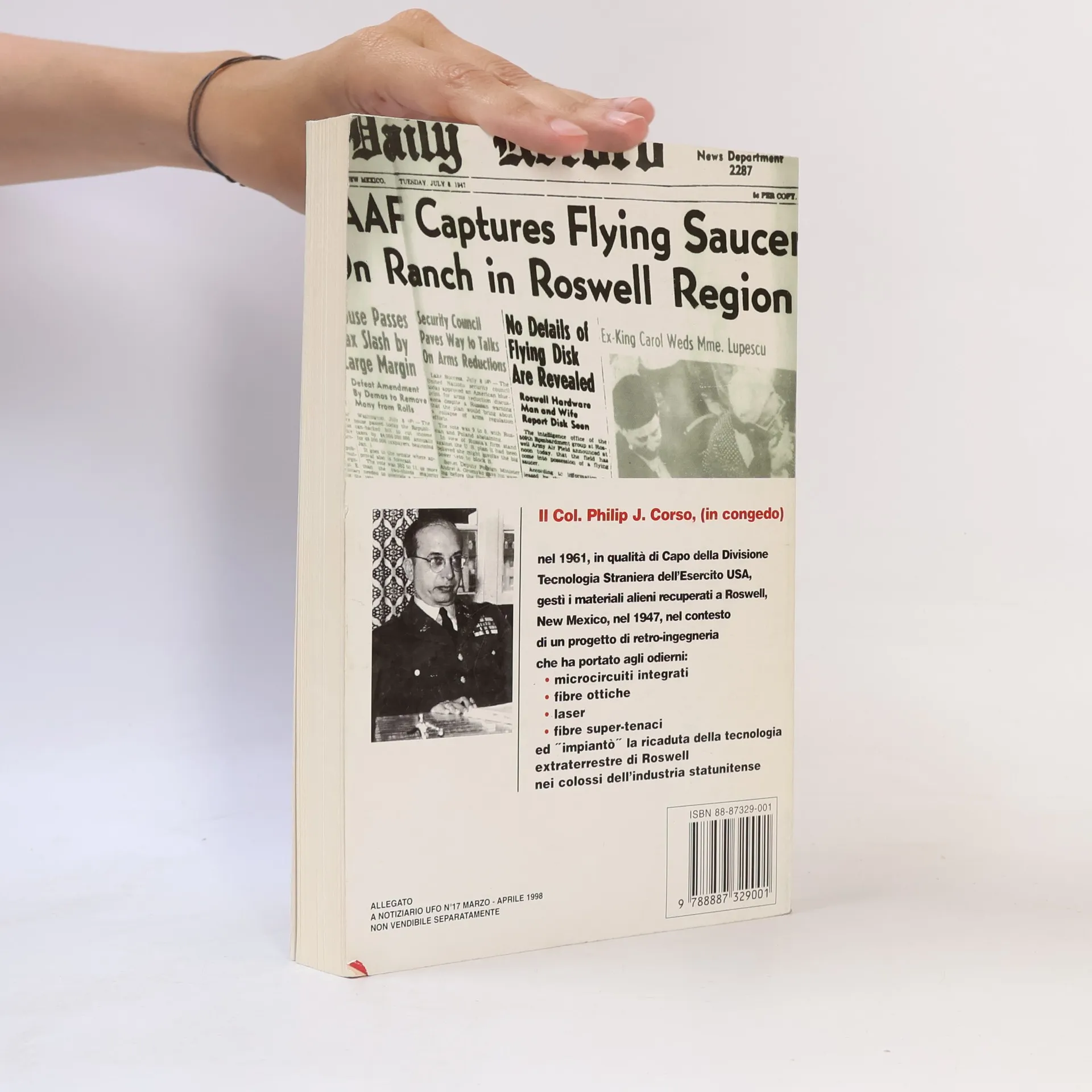

Il giorno dopo Roswell
Valoración del libro
Parámetros
- 341 páginas
- 12 horas de lectura
Más información sobre el libro
If you've ever wondered what crashed into the desert near Roswell, New Mexico, in 1947, this book will give you some startling answers. While the first version was published in hardcover in 1997, Corso provides new evidence for the presence of alien intruders in this pocket paperback edition. Whether or not you believe his contention, the sheer weight of governmental sources and documentation presented by the former Army intelligence officer is not easily dismissed. Once you understand the historical context (in the midst of the Cold War soon after World War II, with Orson Welles having recently inspired panic in citizens with his fictional War of the Worlds radio broadcast), the military deciding to cover up a real-life alien ship becomes more credible. Corso also gives a convincing explanation of why reports were so multi-various and conflicting. Even if you believe the book is utter fiction, it's still a compelling read. --Randall Cohan


Compra de libros
Il giorno dopo Roswell, Philip J. Corso, William J. Birnes, Maurizio Baiata, Paola Leoppizzi Harris
- Idioma

- Publicado en
- 1998
- Encuadernación
- (Tapa blanda)
Métodos de pago
Nos falta tu reseña aquí
- Título
- Il giorno dopo Roswell
- Idioma
- Italiano
- Editorial
- Futuro
- Publicado en
- 1998
- Formato
- Tapa blanda
- Páginas
- 341
- ISBN10
- 8887329001
- ISBN13
- 9788887329001
- Serie
- Etiquetas
- Tema histórico, Ciencia, Prosa bélica, Fenómenos sobrenaturales, Extraterrestres, Conspiraciones
- Título original
- The day after Roswell
- Calificación
- 3,75 de 5
- Descripción
- If you've ever wondered what crashed into the desert near Roswell, New Mexico, in 1947, this book will give you some startling answers. While the first version was published in hardcover in 1997, Corso provides new evidence for the presence of alien intruders in this pocket paperback edition. Whether or not you believe his contention, the sheer weight of governmental sources and documentation presented by the former Army intelligence officer is not easily dismissed. Once you understand the historical context (in the midst of the Cold War soon after World War II, with Orson Welles having recently inspired panic in citizens with his fictional War of the Worlds radio broadcast), the military deciding to cover up a real-life alien ship becomes more credible. Corso also gives a convincing explanation of why reports were so multi-various and conflicting. Even if you believe the book is utter fiction, it's still a compelling read. --Randall Cohan