Más información sobre el libro
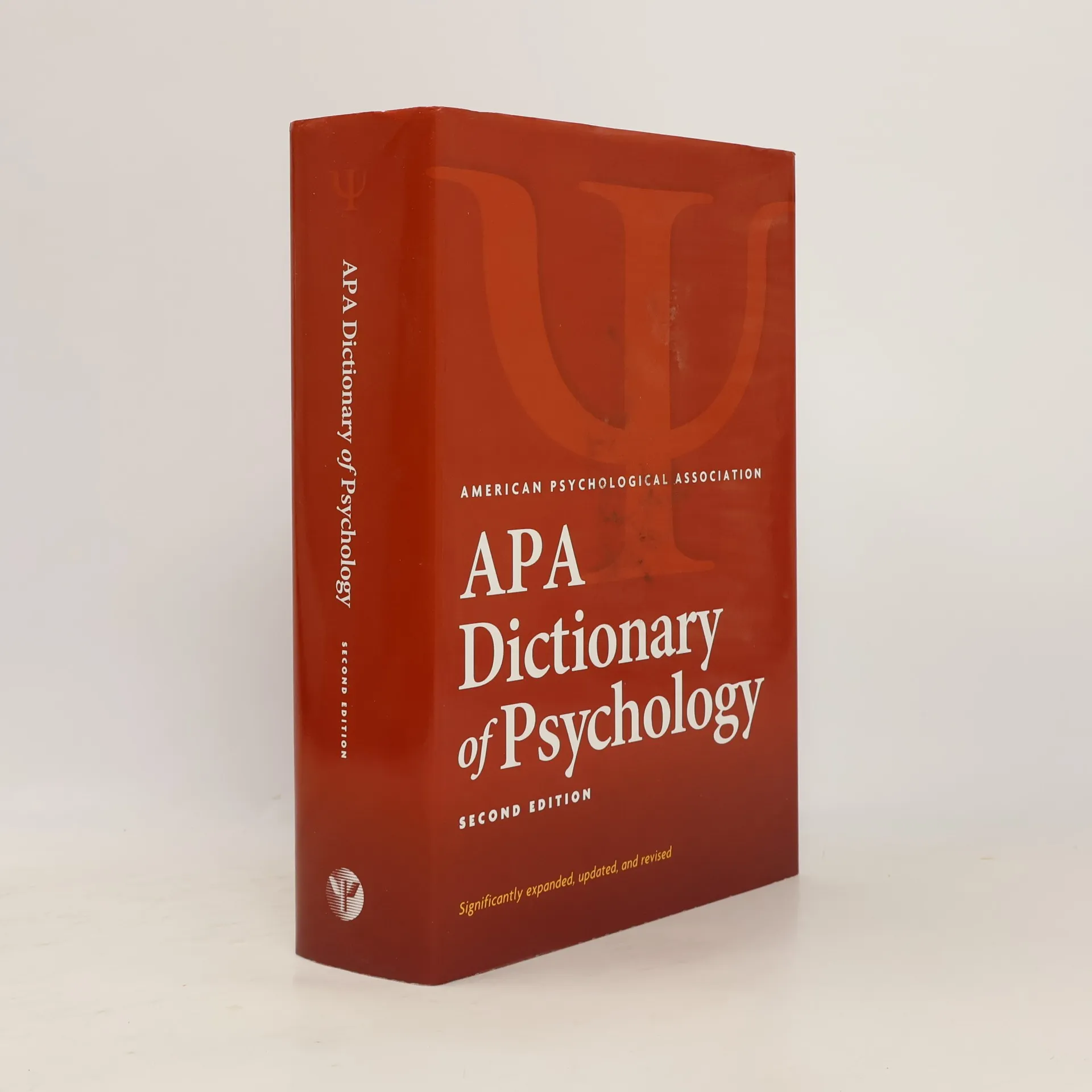
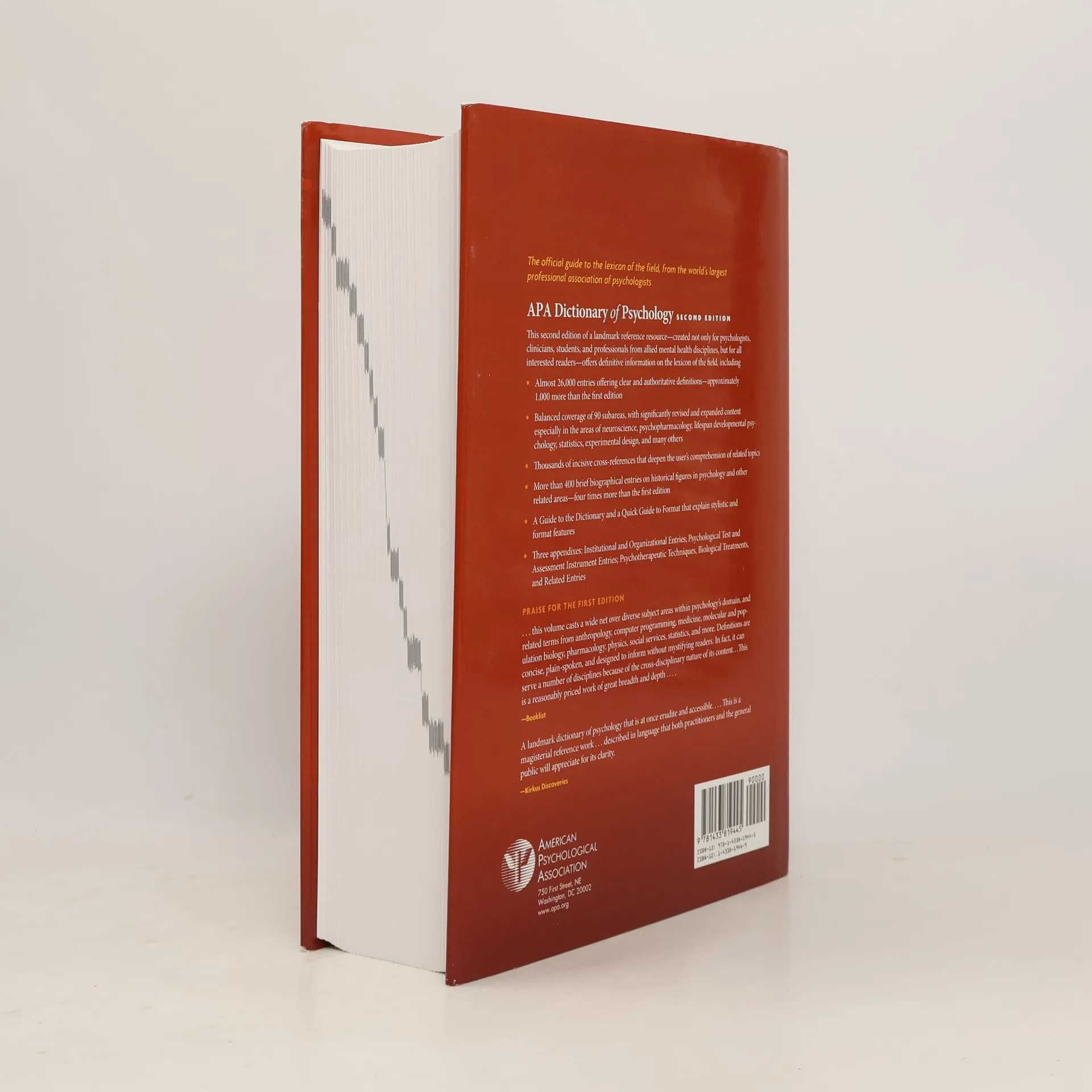
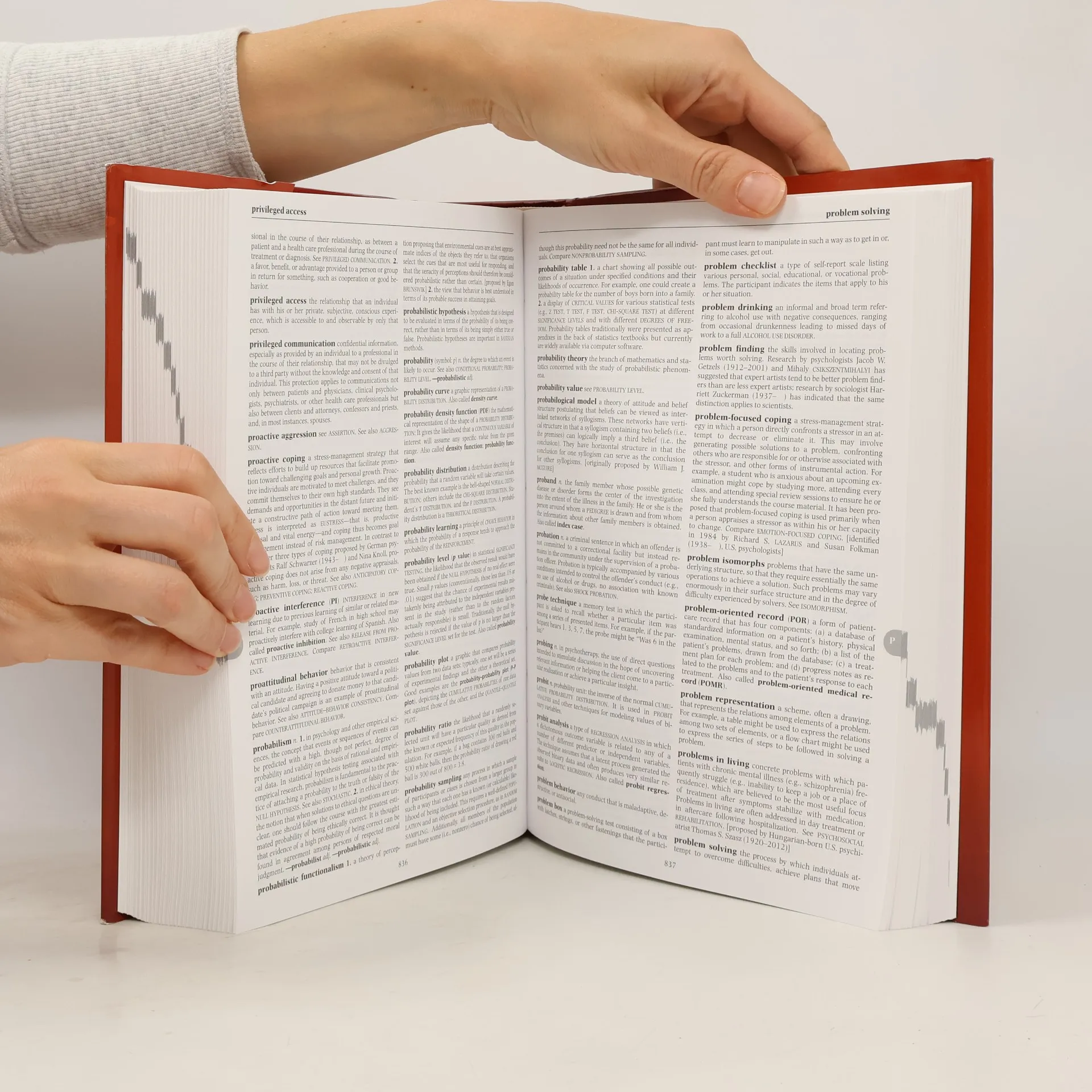
The largest association of psychologists in the world - the American Psychological Association - presents the definitive information on the language of the field, 25,000 entries offering clear and authoritative definitions; balanced coverage of over 90 subareas across the field of psychology - including clinical, experimental, neuropsychology, cognitive, personality and social, developmental, health, psychopharmacology, methodology and statistics, and many others; thousands of cross-references that deepen the user's understanding of related topics; close to 200 concise entries on major figures in the history of psychology and central organizations, institutions, and associations; a Guide to the Dictionary and Quick Guide to Format that explain stylistic and format features; and 4 appendixes on entries from these biographies; institutions, organizations, and associations; psychological tests and assessment instruments; and psychotherapies and psychotherapeutic approaches.
Compra de libros
The APA Dictionary of Psychology, Gary R. VandenBos, American Psychological Association
- Idioma

- Publicado en
- 2006
- product-detail.submit-box.info.binding
- (Tapa dura)
Métodos de pago
Nadie lo ha calificado todavía.
- Título
- The APA Dictionary of Psychology
- Idioma
- Inglés
- Editorial
- American Psychological Association
- Publicado en
- 2006
- Formato
- Tapa dura
- Páginas
- 1024
- ISBN10
- 1591473802
- ISBN13
- 9781591473800
- Serie
- Etiquetas
- No ficción, Guías y Manuales, Psicología
- Descripción
- The largest association of psychologists in the world - the American Psychological Association - presents the definitive information on the language of the field, 25,000 entries offering clear and authoritative definitions; balanced coverage of over 90 subareas across the field of psychology - including clinical, experimental, neuropsychology, cognitive, personality and social, developmental, health, psychopharmacology, methodology and statistics, and many others; thousands of cross-references that deepen the user's understanding of related topics; close to 200 concise entries on major figures in the history of psychology and central organizations, institutions, and associations; a Guide to the Dictionary and Quick Guide to Format that explain stylistic and format features; and 4 appendixes on entries from these biographies; institutions, organizations, and associations; psychological tests and assessment instruments; and psychotherapies and psychotherapeutic approaches.