

Parámetros
- 132 páginas
- 5 horas de lectura
Más información sobre el libro
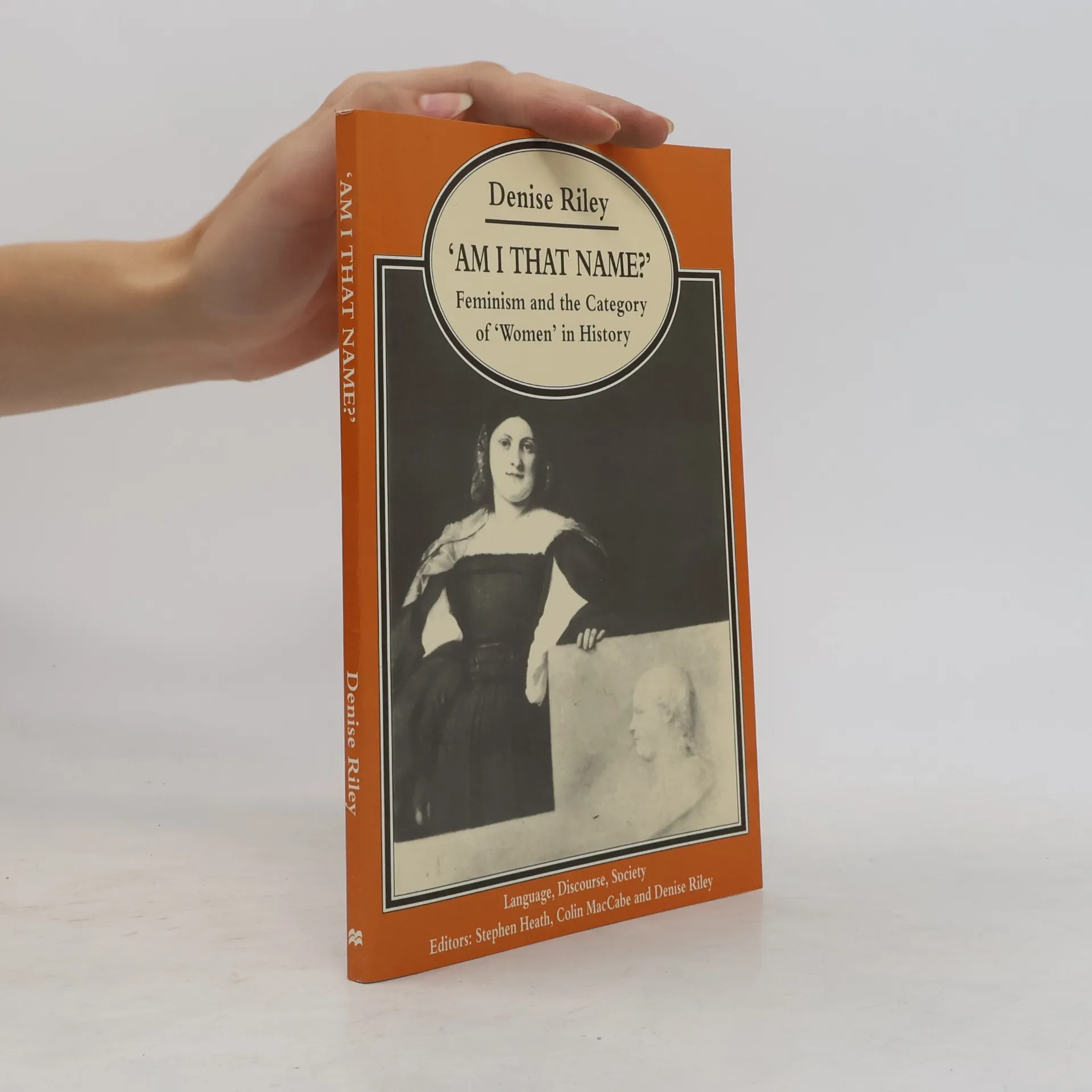
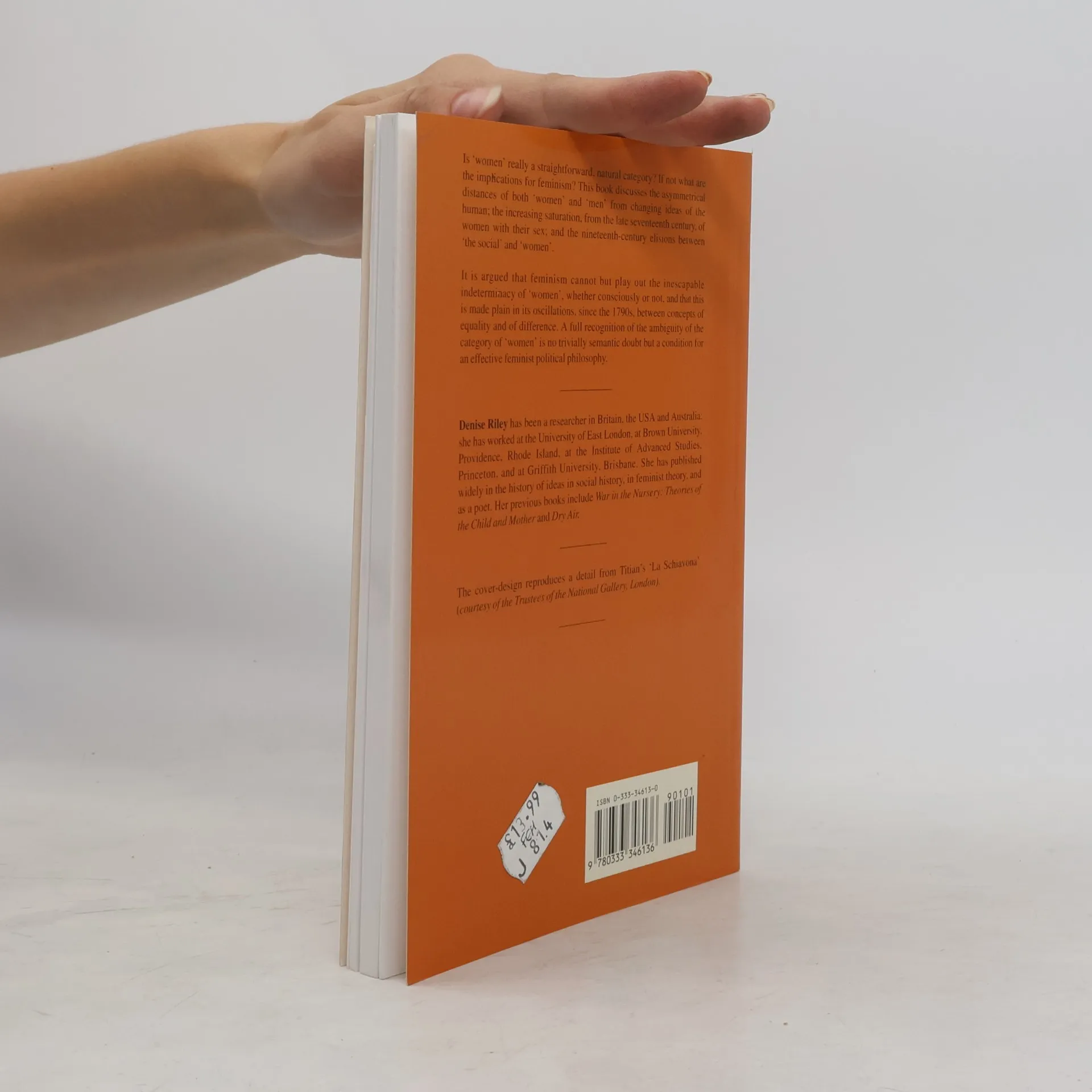
Writing about changes in the notion of womanhood, Denise Riley examines, in the manner of Foucault, shifting historical constructions of the category of "women" in relation to other categories central to concepts of personhood: the soul, the mind, the body, nature, the social. Feminist movements, Riley argues, have had no choice but to play out this indeterminacy of women. This is made plain in their oscillations, since the 1790s, between concepts of equality and of difference. To fully recognize the ambiguity of the category of "women" is, she contends, a necessary condition for an effective feminist political philosophy.
Compra de libros
Language, Discourse, Society: Am I That Name?, Denise Riley, Stephen Heath, Colin MacCabe
- Idioma

- Publicado en
- 1988
- Encuadernación
- (Tapa blanda),
- Estado del libro
- Bueno
- Precio
- 18,99 €
Métodos de pago
Nadie lo ha calificado todavía.
- Título
- Language, Discourse, Society: Am I That Name?
- Subtítulo
- Feminism and the Category of 'Women' in History
- Idioma
- Inglés
- Autores
- Denise Riley, Stephen Heath, Colin MacCabe
- Editorial
- Palgrave Macmillan
- Publicado en
- 1988
- Formato
- Tapa blanda
- Páginas
- 132
- ISBN10
- 0333346130
- ISBN13
- 9780333346136
- Serie
- Categorías
- Etiquetas
- Tema histórico, Naturaleza, Temática filosófica, Mujeres, Política, Ciencia, Cultura y Sociedad, Feminismo, Historia local, Crítica literaria, Teorías Políticas, Escritura, Historia Cultural, Teorías científicas, Género, Lectura obligatoria, Derecho Civil, Historia social, Teoría literaria, Mente humana, Filosofía política, Política social, Estado Social
- Descripción
- Writing about changes in the notion of womanhood, Denise Riley examines, in the manner of Foucault, shifting historical constructions of the category of "women" in relation to other categories central to concepts of personhood: the soul, the mind, the body, nature, the social. Feminist movements, Riley argues, have had no choice but to play out this indeterminacy of women. This is made plain in their oscillations, since the 1790s, between concepts of equality and of difference. To fully recognize the ambiguity of the category of "women" is, she contends, a necessary condition for an effective feminist political philosophy.