

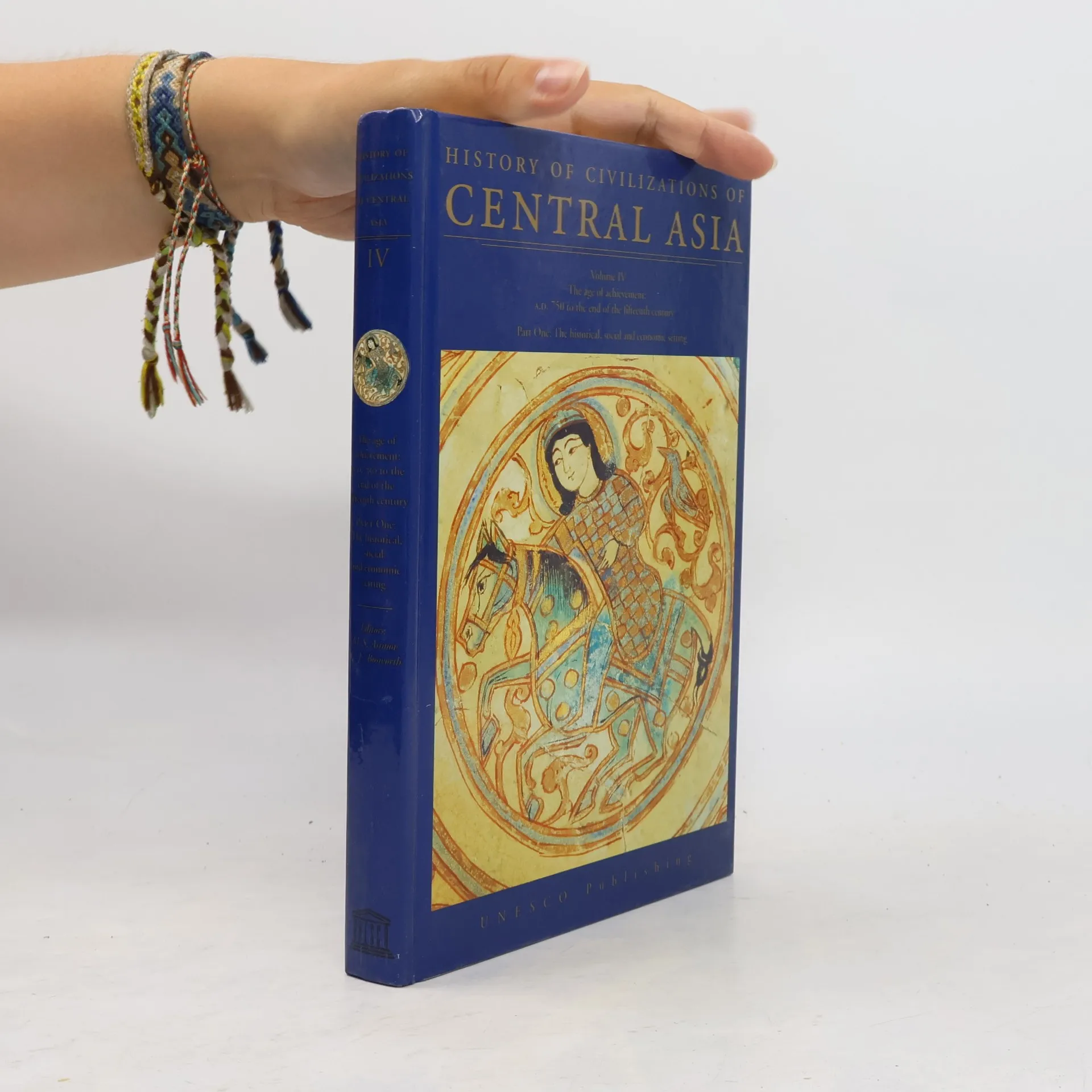



Más información sobre el libro
Part One: The Historical, Social and Economic SettingDuring the eight centuries covered in this volume, the new faith of Islam arose in Arabia and gradually spread eastwards and northwards, eventually affecting much of Central Asia, the southern fringes of Siberia and the eastern regions of China. These were also the centuries in which nomadic and military empires arose in the heart of Asia, impinging on the history of adjacent, well-established civilizations and cultures (China, India, Islamic Western Asia and Christian eastern and central Europe) to an unparalleled extent. Lamaist Buddhism established itself inthe Mongolian region and in Tibet and Islam among the Turkish people of Transoxania, southern Siberia and Xinjiang. It was in Eastern Europe, above all in Russia, that the Turco-Mongol Golden Horde was to have a major, enduring influence on the course of the region's history.
Compra de libros
History of Civilizations of Central Asia, C. E. Bosworth, Muhammad Seyfeydinovich Asimov, Unesco
- Idioma

- Publicado en
- 1992
Métodos de pago
Nadie lo ha calificado todavía.
- Título
- History of Civilizations of Central Asia
- Subtítulo
- The Age of Achievement: A.D. 750 to the End of the Fifteenth Century Part One: The Historical, Social and Economic Setting
- Idioma
- Inglés
- Editorial
- UNESCO
- Publicado en
- 1992
- Páginas
- 485
- ISBN10
- 9231034677
- ISBN13
- 9789231034671
- Serie
- Etiquetas
- Tema histórico, Asia, Historia social, Civilización, UNESCO, Asia Central
- Descripción
- Part One: The Historical, Social and Economic SettingDuring the eight centuries covered in this volume, the new faith of Islam arose in Arabia and gradually spread eastwards and northwards, eventually affecting much of Central Asia, the southern fringes of Siberia and the eastern regions of China. These were also the centuries in which nomadic and military empires arose in the heart of Asia, impinging on the history of adjacent, well-established civilizations and cultures (China, India, Islamic Western Asia and Christian eastern and central Europe) to an unparalleled extent. Lamaist Buddhism established itself inthe Mongolian region and in Tibet and Islam among the Turkish people of Transoxania, southern Siberia and Xinjiang. It was in Eastern Europe, above all in Russia, that the Turco-Mongol Golden Horde was to have a major, enduring influence on the course of the region's history.