

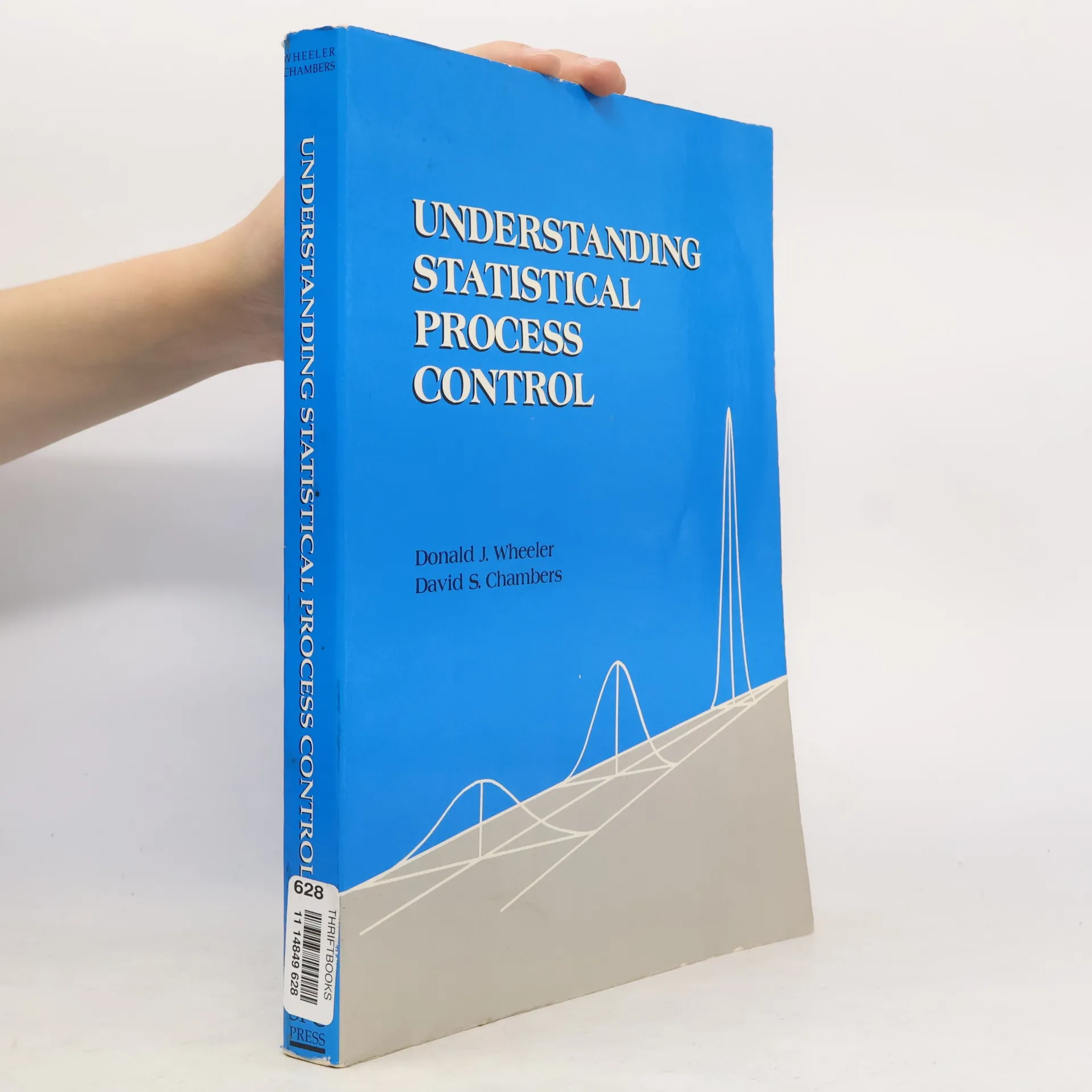


Understanding Statistical Process Control
Más información sobre el libro
This internationally acclaimed textbook is widely used for teaching basic SPC, Data Analysis, and Continual Improvement Techniques to those who work in manufacturing and process industries. Over 75 years of practical experience were distilled in this book which combines instruction with real-world case studies. Written in ordinary language, the book is easy to read and appropriate for self study. W. Edwards Deming wrote in his foreword, It is fitting to add my deep appreciation for the mathematical achievements of Dr. Wheeler. His understanding of theory, and its application, is guided by mathematical knowledge. Some of he unique material in this landmark text how charts signal inadequate measurement discrimination; how to use count data effectively; what happens if the measurements are not normally distributed; the right and wrong ways to assess capability; how to use process behavior charts with chemical batches; the right ways to compute limits for process behavior charts; principles of subgrouping; World-Class Quality and the Taguchi Loss Function.
Publicación

Compra de libros
Understanding Statistical Process Control, Donald J. Wheeler, David S. Chambers
- Idioma

- Publicado en
- 1986
- Encuadernación
- (Tapa blanda)
Métodos de pago
Nadie lo ha calificado todavía.
- Título
- Understanding Statistical Process Control
- Idioma
- Inglés
- Autores
- Donald J. Wheeler, David S. Chambers
- Editorial
- Statistical Process Controls, Inc.
- Publicado en
- 1986
- Formato
- Tapa blanda
- Páginas
- 340
- ISBN10
- 0945320019
- ISBN13
- 9780945320012
- Serie
- Categorías
- Etiquetas
- Comercio, Ciencias naturales, Ciencia
- Descripción
- This internationally acclaimed textbook is widely used for teaching basic SPC, Data Analysis, and Continual Improvement Techniques to those who work in manufacturing and process industries. Over 75 years of practical experience were distilled in this book which combines instruction with real-world case studies. Written in ordinary language, the book is easy to read and appropriate for self study. W. Edwards Deming wrote in his foreword, It is fitting to add my deep appreciation for the mathematical achievements of Dr. Wheeler. His understanding of theory, and its application, is guided by mathematical knowledge. Some of he unique material in this landmark text how charts signal inadequate measurement discrimination; how to use count data effectively; what happens if the measurements are not normally distributed; the right and wrong ways to assess capability; how to use process behavior charts with chemical batches; the right ways to compute limits for process behavior charts; principles of subgrouping; World-Class Quality and the Taguchi Loss Function.