



Más información sobre el libro
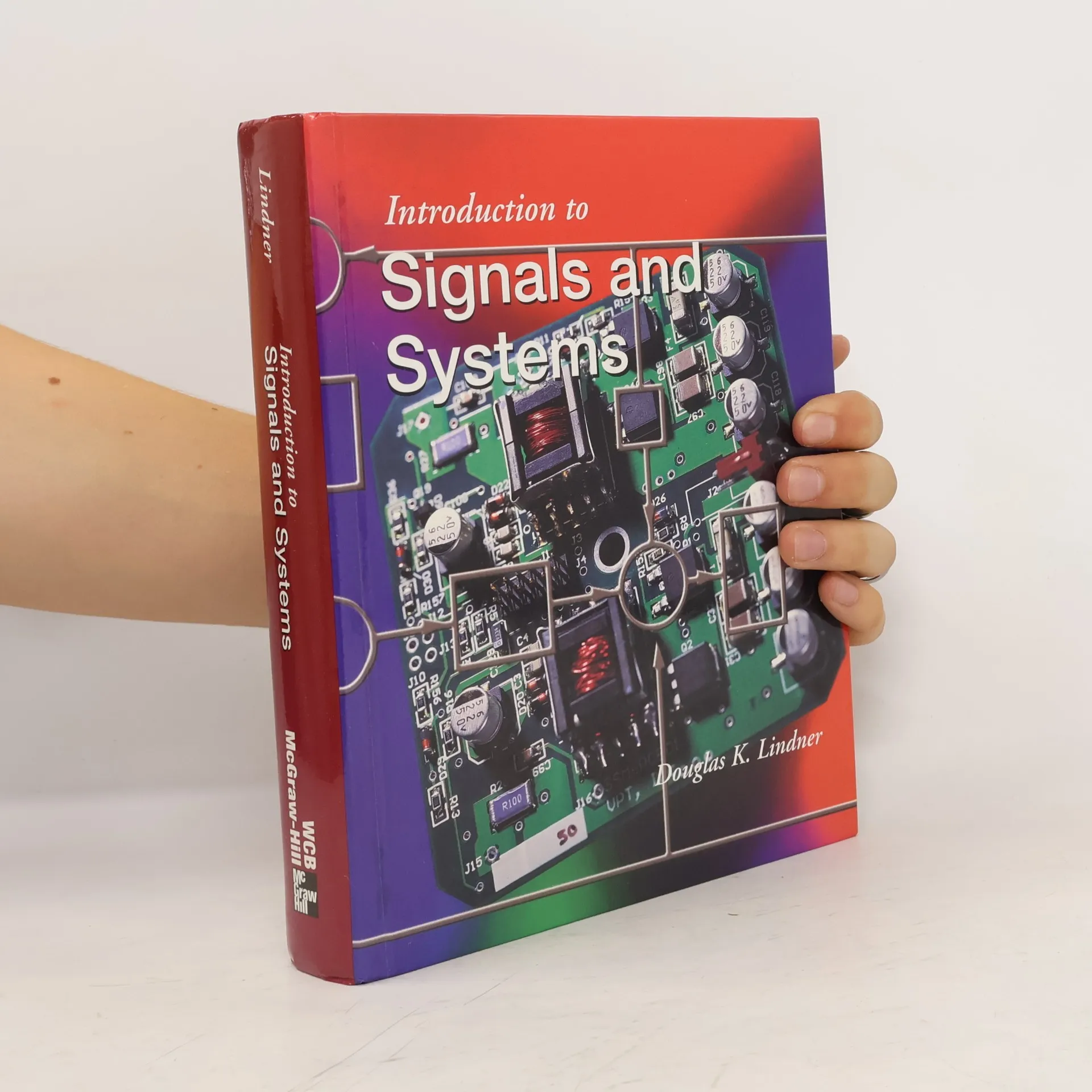
This text organizes signals and systems topics in a unique way for undergraduate students. It is intended to bridge the gap between network courses and senior-level DSP, communication, and control courses. The Lindner text presents the material in a "systems and signals" framework, which reflects the engineering content of the material. This is in contrast to the more mathematical "transform " organization (Laplace, Fourier, and z transform). This organizational philosophy is most evident in the arrangement of the systems material and how the transform material is integrated with the engineering material. Using this approach, signals and systems are broken into their discrete units and their interrelationships are discussed in a matrix fashion within the frequency domain.
Compra de libros
Introduction to Signals and Systems, Douglas K. Lindner
- Idioma

- Publicado en
- 1999
- Encuadernación
- (Tapa dura)
Métodos de pago
Nadie lo ha calificado todavía.
- Título
- Introduction to Signals and Systems
- Idioma
- Inglés
- Autores
- Douglas K. Lindner
- Editorial
- McGraw-Hill College
- Publicado en
- 1999
- Formato
- Tapa dura
- Páginas
- 969
- ISBN10
- 0256252599
- ISBN13
- 9780256252590
- Serie
- Etiquetas
- Tecnología, Ingeniería de Sistemas
- Descripción
- This text organizes signals and systems topics in a unique way for undergraduate students. It is intended to bridge the gap between network courses and senior-level DSP, communication, and control courses. The Lindner text presents the material in a "systems and signals" framework, which reflects the engineering content of the material. This is in contrast to the more mathematical "transform " organization (Laplace, Fourier, and z transform). This organizational philosophy is most evident in the arrangement of the systems material and how the transform material is integrated with the engineering material. Using this approach, signals and systems are broken into their discrete units and their interrelationships are discussed in a matrix fashion within the frequency domain.