

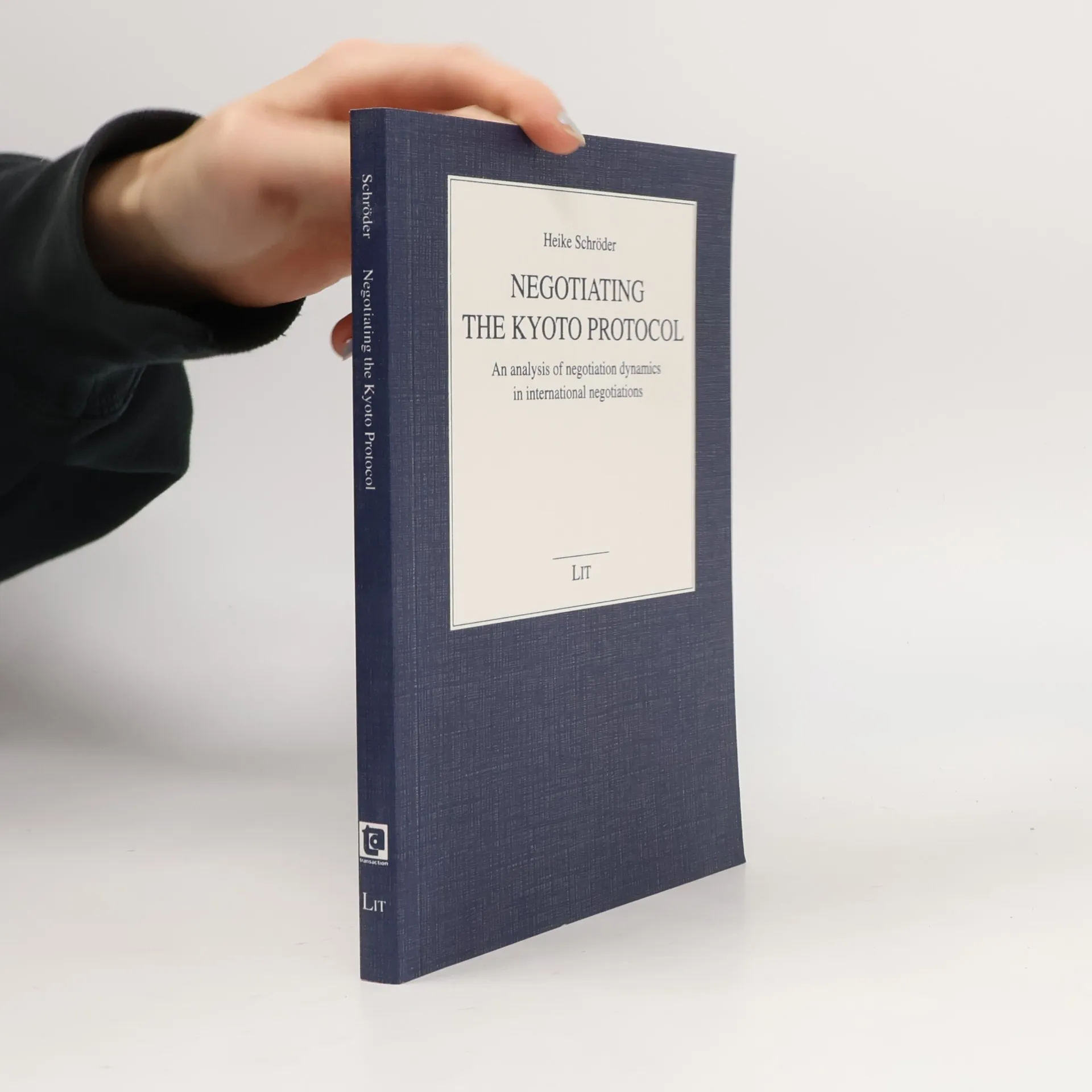


Negotiating the Kyoto Protocol
An Analysis of Negotiation Dynamics in International Negotiations
Autores
Más información sobre el libro
Climate change has become an important policy area, one which has been gaining momentum since the adoption of the Kyoto Protocol in December 1997. The Kyoto Protocol was adopted by 159 nations after a tenacious final marathon of negotiations, during which all unresolved issues were hammered out one by one. The commitments that were finally agreed upon exceeded the original expectations. Despite its shortcomings, the Kyoto Protocol is a constructive compromise worthy of commendation, and is therefore a remarkable diplomatic achievement. The aim of this book is not only to present an introduction to the historical, legal and political foundations of the Kyoto Protocol, but also to offer a thorough analysis of the negotiation process at the Kyoto Conference. It investigates the positions, interests and strategies of three crucial players, the EU, US and Japan, on the issue of climate change and examines how these influenced the outcome of the negotiations. Furthermore, it examines the imp
Compra de libros
Negotiating the Kyoto Protocol, Heike Schröder
- Idioma

- Publicado en
- 2001
- Encuadernación
- (Tapa blanda),
- Estado del libro
- Muy Bueno
- Precio
- 18,89 €
Métodos de pago
Nadie lo ha calificado todavía.
- Título
- Negotiating the Kyoto Protocol
- Subtítulo
- An Analysis of Negotiation Dynamics in International Negotiations
- Idioma
- Inglés
- Autores
- Heike Schröder
- Editorial
- LIT Verlag
- Publicado en
- 2001
- Formato
- Tapa blanda
- Páginas
- 336
- ISBN10
- 3825854469
- ISBN13
- 9783825854461
- Serie
- Etiquetas
- Política, Teorías Políticas, Relaciones Internacionales
- Descripción
- Climate change has become an important policy area, one which has been gaining momentum since the adoption of the Kyoto Protocol in December 1997. The Kyoto Protocol was adopted by 159 nations after a tenacious final marathon of negotiations, during which all unresolved issues were hammered out one by one. The commitments that were finally agreed upon exceeded the original expectations. Despite its shortcomings, the Kyoto Protocol is a constructive compromise worthy of commendation, and is therefore a remarkable diplomatic achievement. The aim of this book is not only to present an introduction to the historical, legal and political foundations of the Kyoto Protocol, but also to offer a thorough analysis of the negotiation process at the Kyoto Conference. It investigates the positions, interests and strategies of three crucial players, the EU, US and Japan, on the issue of climate change and examines how these influenced the outcome of the negotiations. Furthermore, it examines the imp