

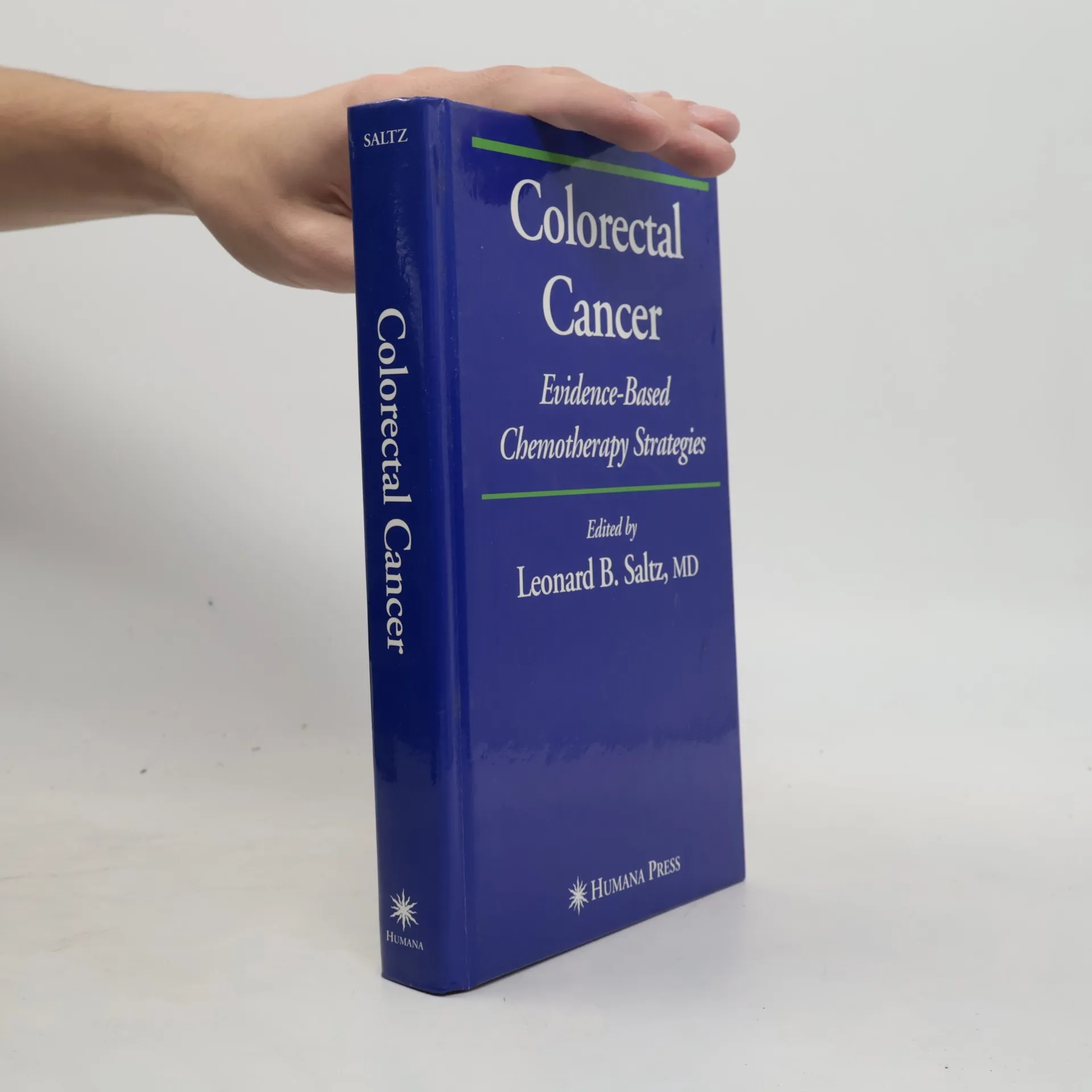
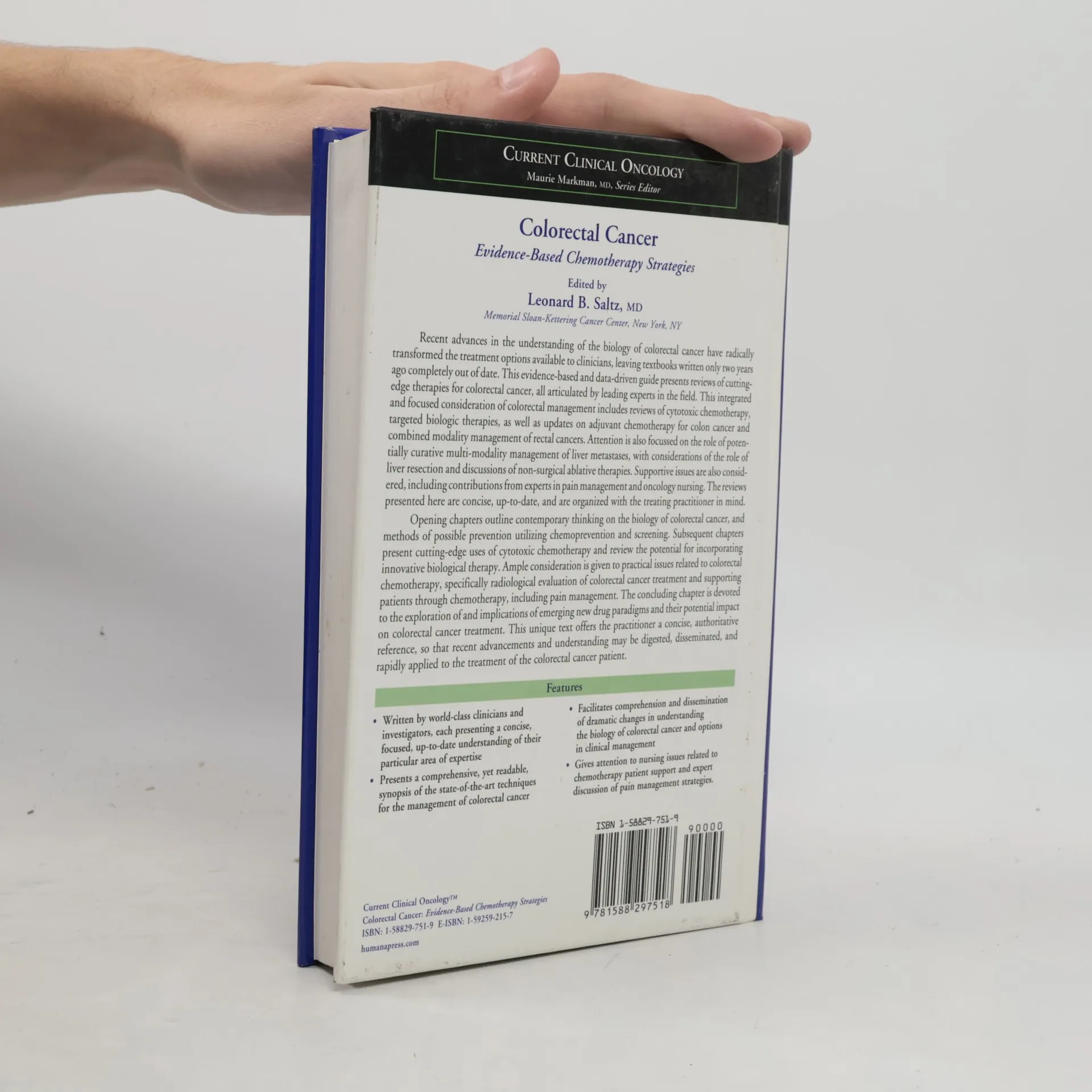

Colorectal Cancer
Evidence-Based Chemotherapy Strategies
Autores
Más información sobre el libro
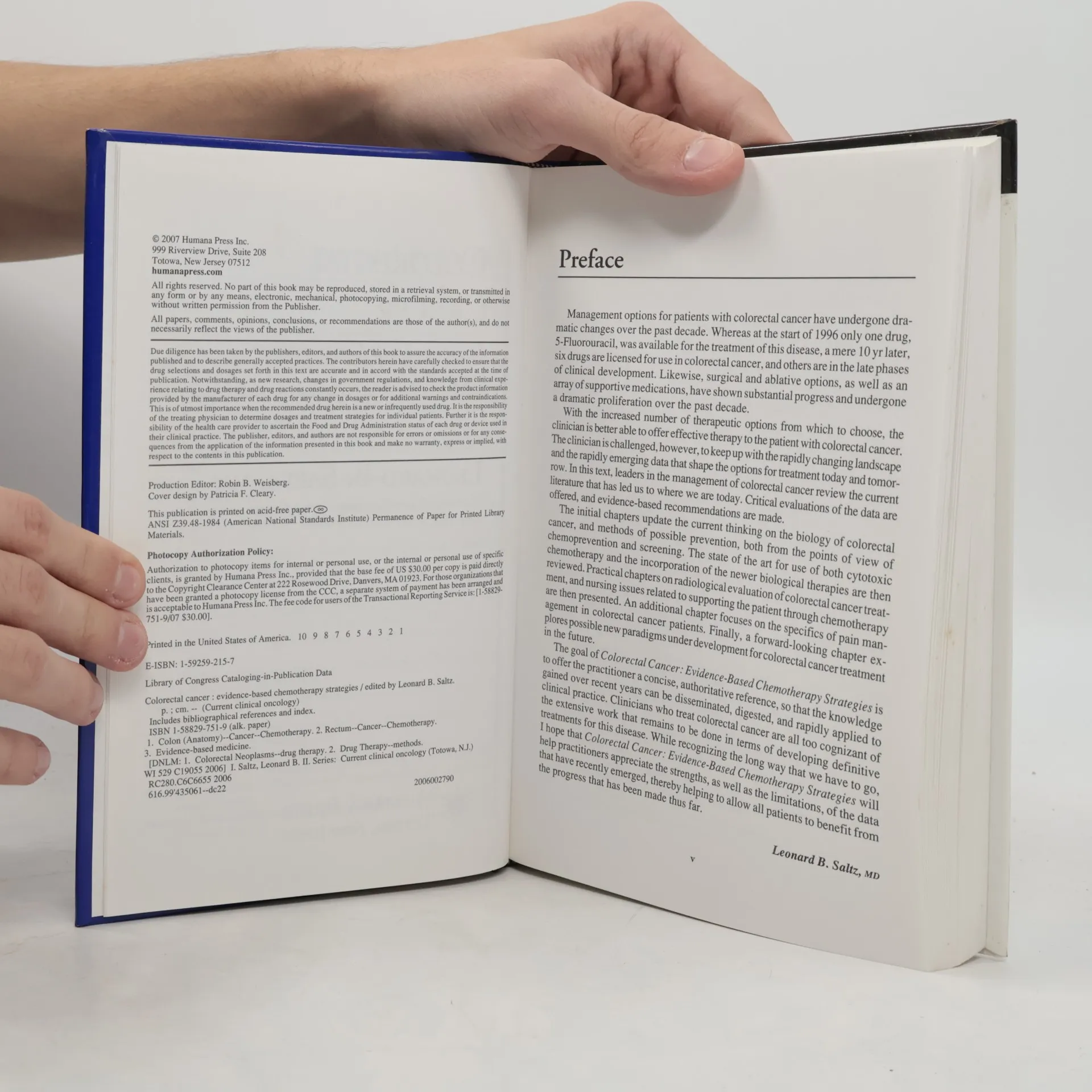
Management options for patients with colorectal cancer have undergone d- matic changes over the past decade. Whereas at the start of 1996 only one drug, 5-Fluorouracil, was available for the treatment of this disease, a mere 10 yr later, six drugs are licensed for use in colorectal cancer, and others are in the late phases of clinical development. Likewise, surgical and ablative options, as well as an array of supportive medications, have shown substantial progress and undergone a dramatic proliferation over the past decade. With the increased number of therapeutic options from which to choose, the clinician is better able to offer effective therapy to the patient with colorectal cancer. The clinician is challenged, however, to keep up with the rapidly changing landscape and the rapidly emerging data that shape the options for treatment today and tom- row. In this text, leaders in the management of colorectal cancer review the current literature that has led us to where we are today. Critical evaluations of the data are offered, and evidence-based recommendations are made.
Compra de libros
Colorectal Cancer, Leonard B. Saltz
- Idioma

- Publicado en
- 2007
- Encuadernación
- (Tapa dura),
- Estado del libro
- Bueno
- Precio
- 8,19 €
Métodos de pago
Nadie lo ha calificado todavía.
- Título
- Colorectal Cancer
- Subtítulo
- Evidence-Based Chemotherapy Strategies
- Idioma
- Inglés
- Autores
- Leonard B. Saltz
- Editorial
- Humana Press
- Publicado en
- 2007
- Formato
- Tapa dura
- Páginas
- 292
- ISBN10
- 1588297519
- ISBN13
- 9781588297518
- Serie
- Etiquetas
- EE.UU., Medicina, Dolor, Prevención, Oncología, Quimioterapia
- Descripción
- Management options for patients with colorectal cancer have undergone d- matic changes over the past decade. Whereas at the start of 1996 only one drug, 5-Fluorouracil, was available for the treatment of this disease, a mere 10 yr later, six drugs are licensed for use in colorectal cancer, and others are in the late phases of clinical development. Likewise, surgical and ablative options, as well as an array of supportive medications, have shown substantial progress and undergone a dramatic proliferation over the past decade. With the increased number of therapeutic options from which to choose, the clinician is better able to offer effective therapy to the patient with colorectal cancer. The clinician is challenged, however, to keep up with the rapidly changing landscape and the rapidly emerging data that shape the options for treatment today and tom- row. In this text, leaders in the management of colorectal cancer review the current literature that has led us to where we are today. Critical evaluations of the data are offered, and evidence-based recommendations are made.