

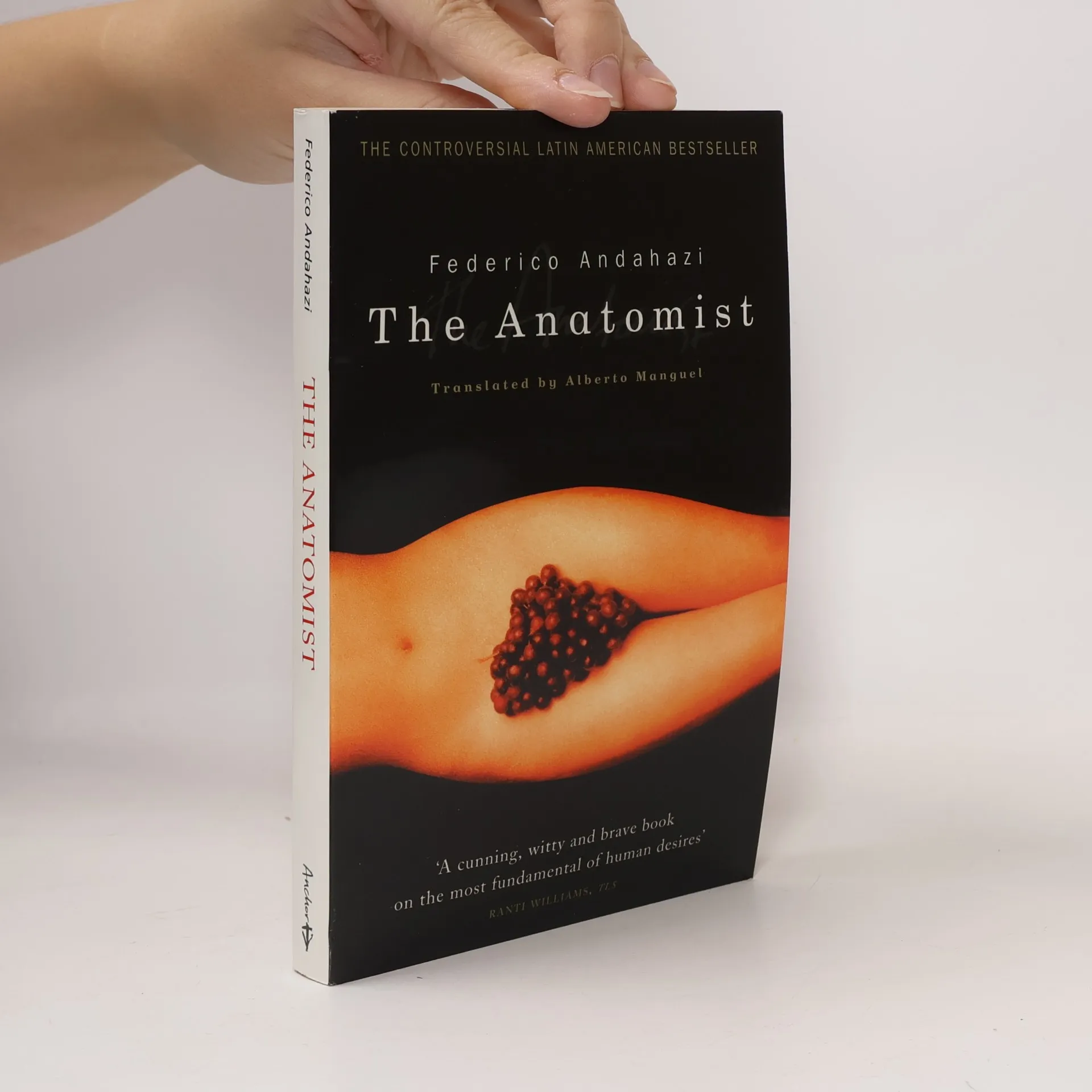


The Anatomist
Más información sobre el libro
Mateo Renaldo Colombo, an anatomist, parallels Christopher Columbus in Federico Andahazi's first novel, where both figures make significant discoveries. While Columbus is known for his exploration of new lands, Mateo's discovery is much smaller yet equally impactful: the clitoris, referred to as the Amor Veneris. Andahazi emphasizes that Mateo, like Christopher, is a fierce and heartless figure, claiming ownership over the female body in a manner reminiscent of colonialism. This irony resonates with women readers, much like the sentiments of Native Americans towards Columbus's so-called discovery. The narrative is grounded in historical fact, focusing on Mateo's passion for the courtesan Mona Sofia, who sees him merely as a client. After suffering heartbreak, he returns to Padua and is later summoned to Florence to treat the beautiful Inés de Torremolinos, whose unusual ailment leads to Mateo's shocking anatomical discovery. While the erotic elements are prominent, the novel's depth lies in the Church's response to Mateo's work, *De re anatomica*. Set against the backdrop of the Renaissance's artistic and philosophical advancements, the era's Inquisition looms large, resulting in Mateo's arrest for heresy. The ensuing trial and its implications elevate the story beyond mere eroticism, inviting philosophical discussions that challenge societal norms.
Compra de libros
The Anatomist, Alberto Manguel, Federico Andahazi
- Idioma

- Publicado en
- 1999
- Encuadernación
- (Tapa blanda),
- Estado del libro
- Bueno
- Precio
- 6,09 €
Métodos de pago
Nadie lo ha calificado todavía.
- Título
- The Anatomist
- Idioma
- Inglés
- Autores
- Alberto Manguel, Federico Andahazi
- Editorial
- Anchor
- Publicado en
- 1999
- Formato
- Tapa blanda
- Páginas
- 254
- ISBN10
- 1862300321
- ISBN13
- 9781862300323
- Serie
- Categorías
- Etiquetas
- Tema histórico, Ficción contemporánea, Italia
- Descripción
- Mateo Renaldo Colombo, an anatomist, parallels Christopher Columbus in Federico Andahazi's first novel, where both figures make significant discoveries. While Columbus is known for his exploration of new lands, Mateo's discovery is much smaller yet equally impactful: the clitoris, referred to as the Amor Veneris. Andahazi emphasizes that Mateo, like Christopher, is a fierce and heartless figure, claiming ownership over the female body in a manner reminiscent of colonialism. This irony resonates with women readers, much like the sentiments of Native Americans towards Columbus's so-called discovery. The narrative is grounded in historical fact, focusing on Mateo's passion for the courtesan Mona Sofia, who sees him merely as a client. After suffering heartbreak, he returns to Padua and is later summoned to Florence to treat the beautiful Inés de Torremolinos, whose unusual ailment leads to Mateo's shocking anatomical discovery. While the erotic elements are prominent, the novel's depth lies in the Church's response to Mateo's work, *De re anatomica*. Set against the backdrop of the Renaissance's artistic and philosophical advancements, the era's Inquisition looms large, resulting in Mateo's arrest for heresy. The ensuing trial and its implications elevate the story beyond mere eroticism, inviting philosophical discussions that challenge societal norms.