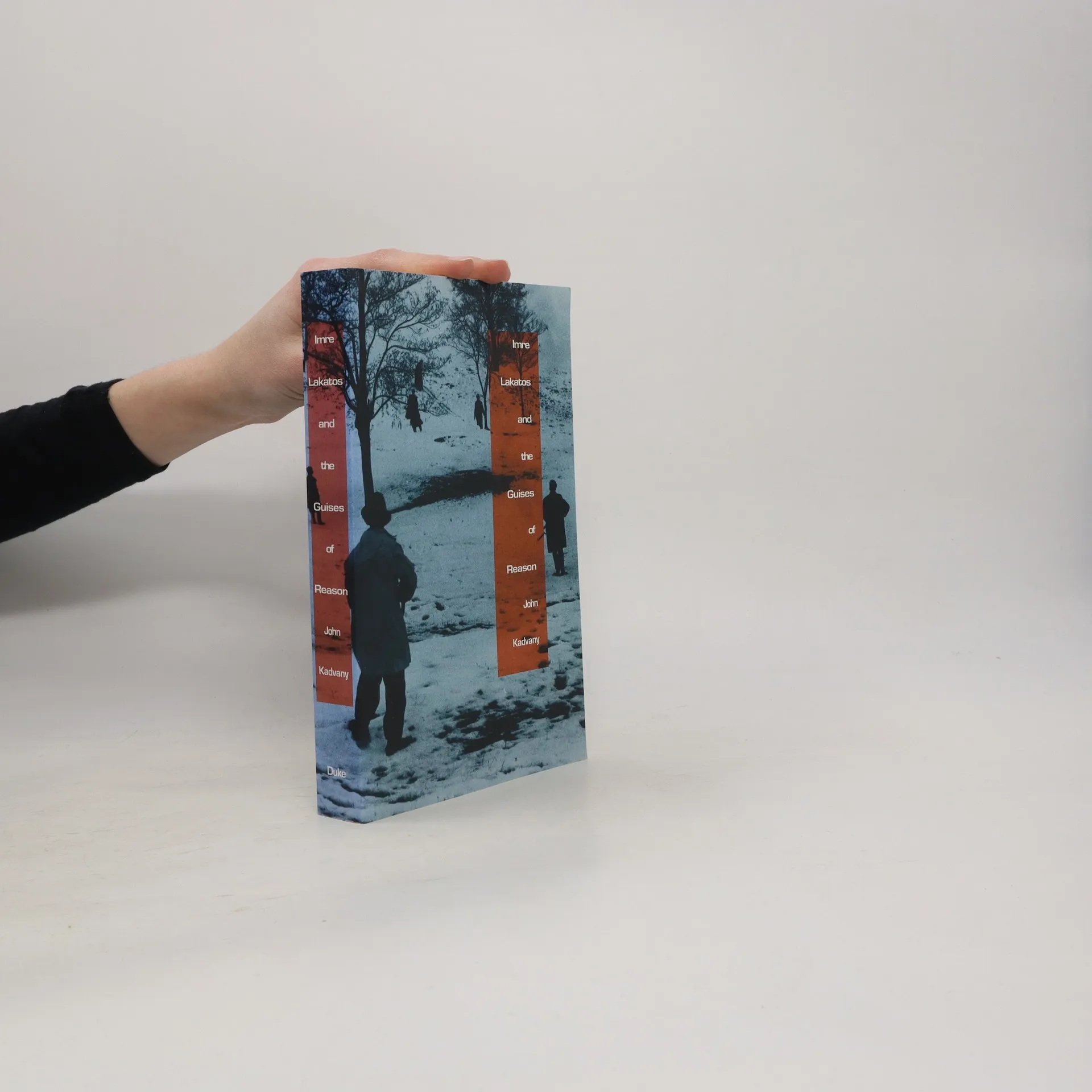
Imre Lakatos and the Guises of Reason
- 378 páginas
- 14 horas de lectura
DIVAn exploration of the philosophy of science and mathematics of Hungarian emigre, Imre Lakatos, demonstrating its contemporary relevance./div


Esta serie se adentra en la fascinante intersección de la ciencia y la cultura, explorando cómo los descubrimientos científicos dan forma a nuestras normas sociales y viceversa. Cada volumen ofrece profundas perspectivas sobre la intrincada interacción entre la investigación racional y la comprensión humana del mundo. Los lectores descubrirán ensayos provocadores que desafían la sabiduría convencional y abren nuevas perspectivas sobre nuestro lugar en el cosmos y la sociedad. Es una lectura esencial para cualquiera que sienta curiosidad por cómo la ciencia y la cultura moldean nuestra realidad.

DIVAn exploration of the philosophy of science and mathematics of Hungarian emigre, Imre Lakatos, demonstrating its contemporary relevance./div
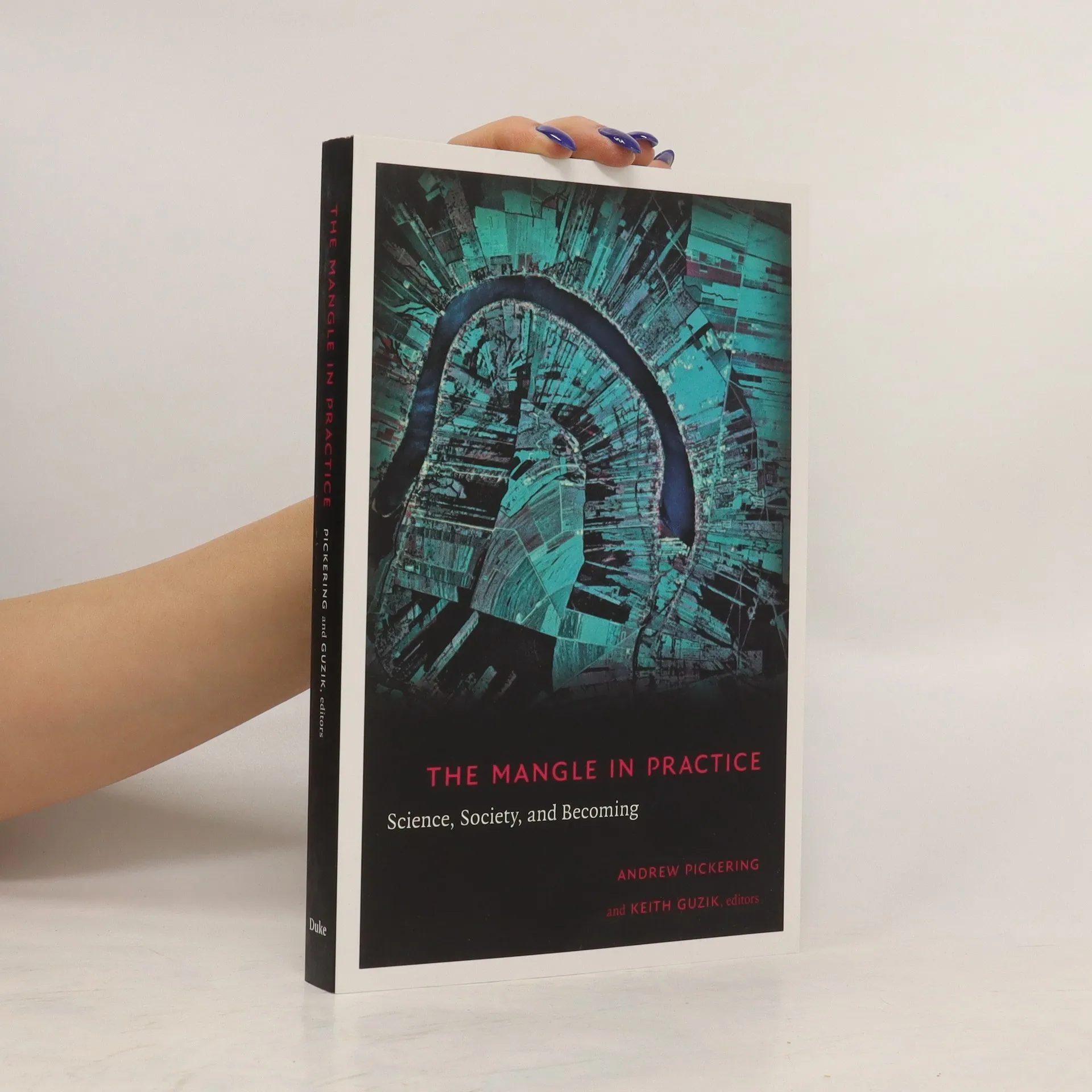
In "The Mangle of Practice," the renowned sociologist of science Andrew Pickering argued for a reconceptualization of research practice as a "mangle," an open-ended, evolutionary, and performative interplay of human and non-human agency. This collection aims to extend the mangle's reach by exploring its application across a wide range of fields including history, philosophy, sociology, geography, environmental studies, literary theory, biophysics, and software engineering. The mangle points to a shift in interpretive sensibilities that makes visible a world of de-centered becoming. This volume demonstrates the viability, coherence, and promise of such a shift, not only in science and technology studies, but in the social sciences and humanities more generally.
Drawing on fieldwork in a Dutch university hospital, this title looks at the day-to-day diagnosis and treatment of atherosclerosis. It focuses on medical anthropology, sociology, feminist theory, philosophy, and science and technology studies to reframe such issues as the disease-illness distinction, subject-object relations, and boundaries. schovat popis
Building on his earlier book We Have Never Been Modern, Bruno Latour develops his argument about the Modern fetishization of facts, or the creation of factishes.
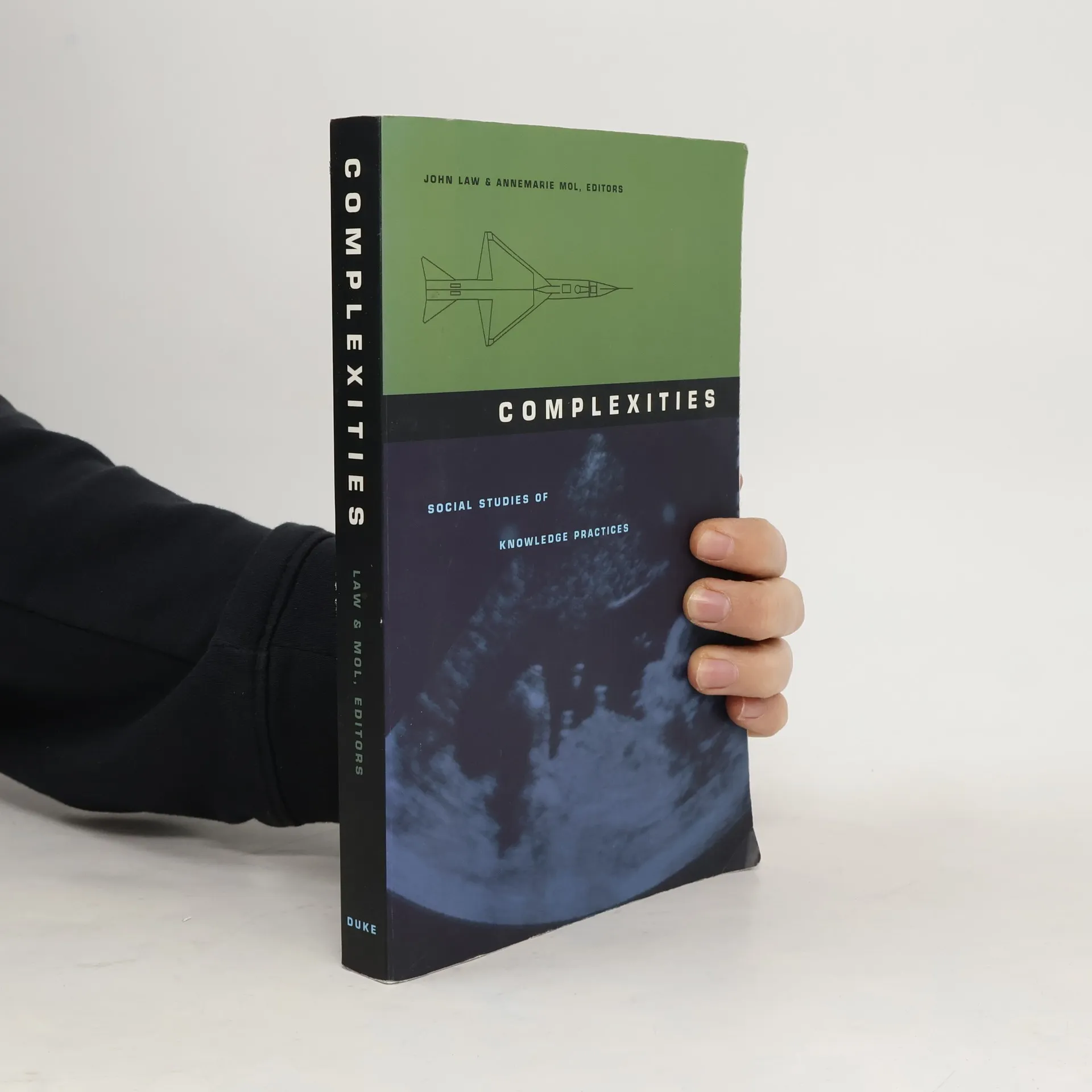
Asks what is meant by complexity and how it might be handled within knowledge practices without generating a chaos of further complexities.
In "Evolution's Eye," Susan Oyama critiques the dominant gene-centered perspective in evolutionary biology, using humor to expose its rhetorical tactics. She advocates for a multifocal approach rooted in developmental systems theory, which emphasizes the interplay of various factors in evolution rather than a simplistic nature-nurture dichotomy. This work builds on her previous insights, offering a comprehensive framework for understanding the complexities of development and evolution.
In this work, noted sociologist of technoscience John Law narrates the British endeavor to develop the TSR2 military aircraft, revealing how such technological projects are embedded in complex contexts. Law challenges the binary distinction between modernist and postmodernist views of knowledge, subjects, and objects, arguing instead for a perspective where these elements are “fractionally coherent.” This concept suggests that they can coalesce without being centered. By examining the design, construction, and eventual cancellation of the TSR2, Law employs various metaphors to illustrate its fractional nature and the interactions among its components. He provides insights into system dynamics, exploring the interplay between singularity and multiplicity, and offering new interpretations of concepts like oscillation, interference, fractionality, and rhizomatic networks. The methodologies and insights presented will be crucial for students in science and technology studies, while also appealing to those interested in how contemporary paradigms restrict our understanding of objects in their full complexity.
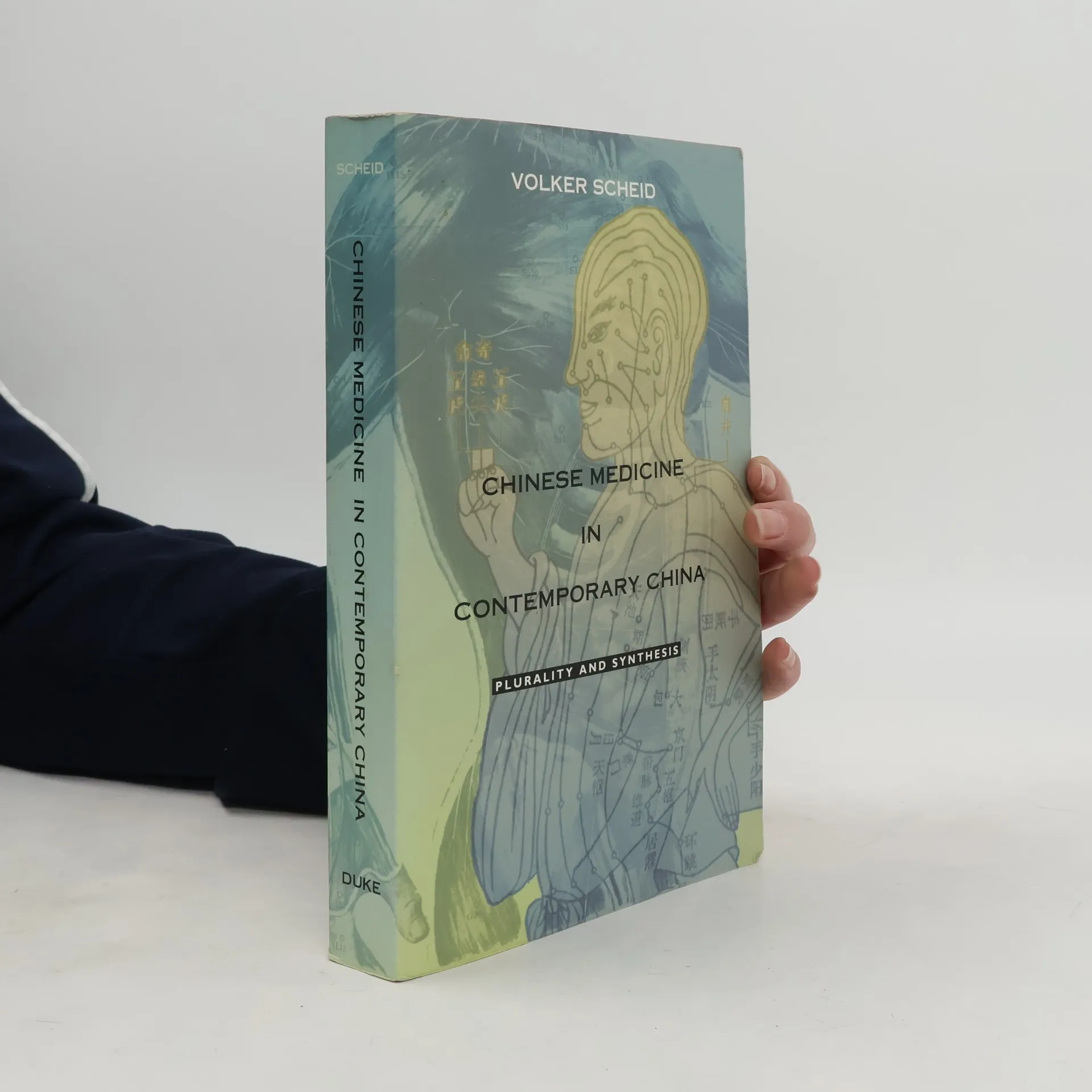
As a traditional healing art with a significant global presence, Chinese medicine raises intriguing questions about its classification and longevity. Why has it thrived alongside modern society? If it is deemed a science, what does that mean for our understanding of science itself? In his ethnography, Volker Scheid explores these queries while highlighting the adaptability that has allowed Chinese medicine to endure for over 2,000 years. Scheid, a medical anthropologist and practitioner since 1983, embraces the inherent plurality of medical practices. Notably, a patient might receive different treatments for the same issue from various practitioners, yet many of these approaches can be effective. To illuminate this diversity, Scheid redefines traditional anthropological concepts like tradition and culture, incorporating insights from science and technology studies, social psychology, and Chinese philosophy. His work not only enhances our understanding of Chinese medicine but also critiques the Western academic frameworks used to study it. Drawing on two decades of research, including interviews and case studies, this ethnography appeals to a diverse audience, including Western academics and practitioners of Chinese medicine, as well as those in the field of Western biomedicine.