Focusing on the complex dynamics between Britain and its American colonies, this volume delves into the social movements that united the thirteen colonies despite internal conflicts. Elster highlights the role of emotional forces and the concept of "divide and rule" in shaping political beliefs and actions on both sides of the Atlantic. He examines how the decline of British imperial influence affected transatlantic relations and the critical institutional decisions made by American states that influenced the Constitution's creation. This work uniquely combines historical analysis with modern social science perspectives.
Jon Elster Libros
22 de febrero de 1940
Jon Elster es un teórico social y político noruego cuyas obras profundizan en la filosofía de las ciencias sociales y la teoría de la elección racional. También es un destacado defensor del marxismo analítico y un crítico de la economía neoclásica y la teoría de la elección pública, en gran medida por razones conductuales y psicológicas. Su trabajo se centra en el análisis de la toma de decisiones humanas y los fenómenos sociales. Elster examina rigurosamente cómo la racionalidad limitada y los factores psicológicos moldean el comportamiento tanto individual como colectivo.



Sour Grapes aims to subvert orthodox theories of rational choice through the study of forms of irrationality. Dr Elster begins with an analysis of the notation of rationality, to provide the background and terms for the subsequent discussions, which cover irrational behaviour, irrational desires and irrational belief. These essays continue and complement the arguments of Jon Elster's earlier book, Ulysses and the Sirens. That was published to wide acclaim, and Dr Elster shows the same versatility here in drawing on philosophy, political and social theory, decision-theory, economics and psychology, as well as history and literature.
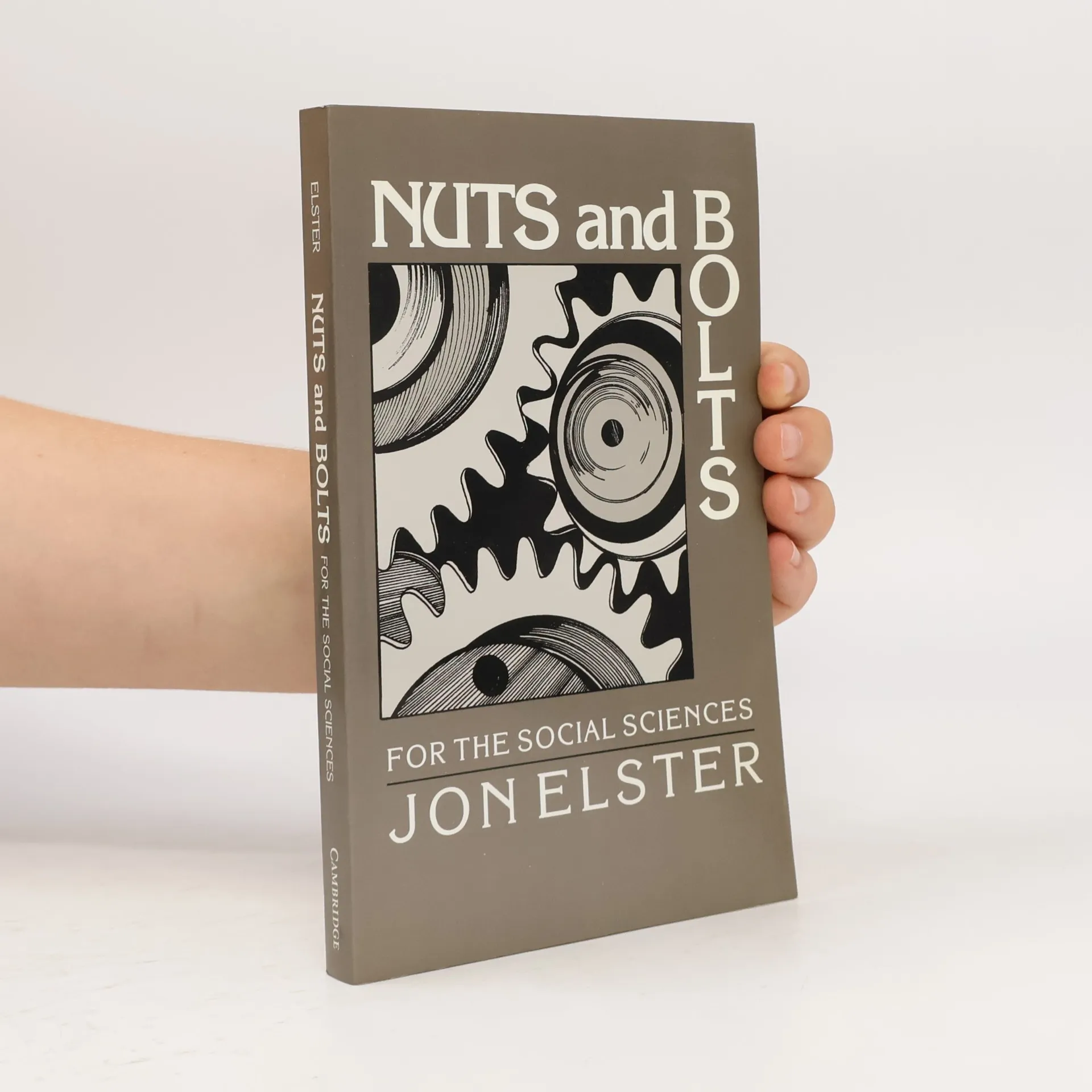
This book is an expanded and revised edition of the author's critically acclaimed volume Nuts and Bolts for the Social Sciences. In twenty-six succinct chapters, Jon Elster provides an account of the nature of explanation in the social sciences. He offers an overview of key explanatory mechanisms in the social sciences, relying on hundreds of examples and drawing on a large variety of sources-psychology, behavioral economics, biology, political science, historical writings, philosophy and fiction. Written in accessible and jargon-free language, Elster aims at accuracy and clarity while eschewing formal models.
Focusing on the epistemological aspects of technical change, Jon Elster explores how knowledge and understanding shape innovations and advancements. He delves into the processes that underpin technical development, examining the interplay between theory and practice. This volume offers a unique lens through which to analyze the impact of knowledge on technological progress, making it a thought-provoking read for those interested in the philosophy of science and technology.
This book is intended as an introductory survey of the philosophy of the social sciences. It is essentially a work of exposition that offers a tool box of mechanisms--nuts and bolts, cogs and wheels--that can be used to explain complex social phenomena. Within a brief compass, Jon Elster covers a vast range of topics. His point of departure is the conflict we all face between our desires and our opportunities. How can rational choice theory help us understand our motivation and behavior? More significantly, what happens when the theory breaks down but we still cleave to a belief in the power of the rational? Elster describes the fascinating range of forms of irrationality--wishful thinking, the phenomenon of sour grapes, discounting the future in non-cooperative behavior. He shows how these issues bear directly on our lives in such concrete situations as wage bargaining, economic cartels, political strikes, voting in elections, and court decisions involving child custody.
Exploring the full spectrum of emotions, this comprehensive work delves into various theoretical frameworks that explain emotional experiences. It integrates perspectives from psychology, neuroscience, and philosophy, offering a thorough analysis of how emotions influence behavior and cognition. By examining both classic theories and contemporary research, the book provides readers with a deep understanding of the complexities of emotional life, making it a valuable resource for scholars and anyone interested in the science of emotions.
Otázka, kterou si klade Jon Elster v této pozoruhodné knize, zní, co drží společnosti pohromadě a zabraňuje jim, aby se rozpadly v chaosu a válce. Elster analyzuje dva pojmy sociálního řádu: stálé, předpověditelné vzorce chování a kooperativní chování. Kniha zkoumá rozmanité aspekty kolektivního jednání a vyjednávání z hledisek teorie racionální volny a teorie sociálních norem. Vychází ze základního předpokladu, že sociální normy jsou důležitou motivací iracionálního (neracionálního) jednání. Kniha představuje významný milník v Elsterově práci a má dodnes značný ohlas mezi politology, politickými filosofy, sociology a ekonomy. Poprvé byla vydána roku 1989, ale i po více než dvou desetiletích vychází dále v nových vydáních a dotiscích.
Die Akten schließen
- 327 páginas
- 12 horas de lectura
Oxford Amnesty Lectures: I diritti umani
Oxford Amnesty Lectures 1993 (memorie documenti biografie)
- 280 páginas
- 10 horas de lectura