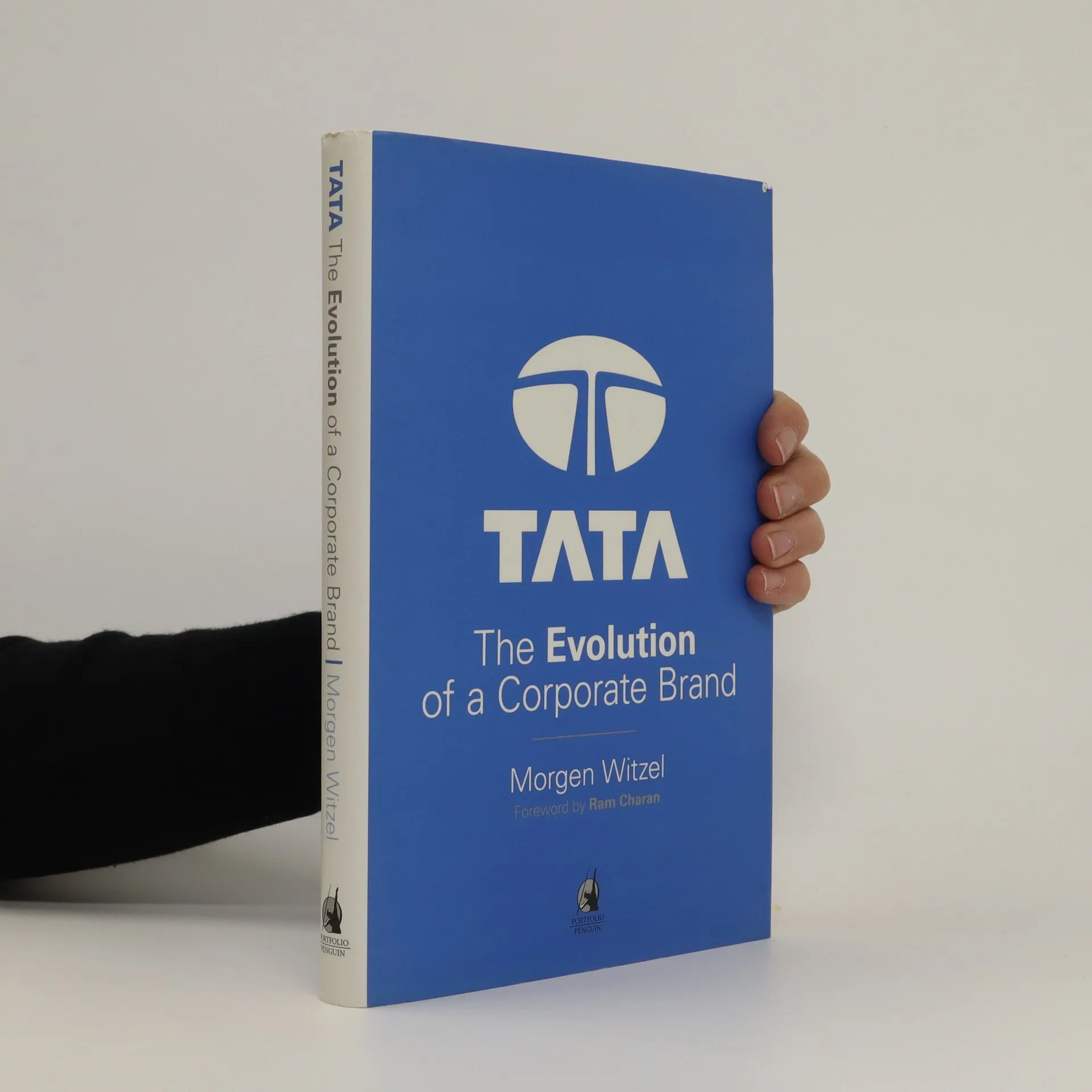
"With a major international presence, in a variety of areas including steel, tea, chemicals, communications and software, Tata now stands 65th in the world brand valuation league. But what is the Tata brand all about? What are its values? How do people perceive it, in India and around the world? In this absorbing and informed book Morgen Witzel digs into the heart of the Tata enterprise, describes its origins, how Tata's reputation and image evolved, and how the group has worked to transform that image into a powerful and valuable brand ..."--Publisher description
The new edition of this highly successful textbook offers Western and non-Chinese business people a theoretical framework for the understanding of business practices, markets, negotiations, organizations, networks and the Chinese business context. Building on the strengths of the previous editions, it provides a guide to market entry, managing operations and marketing in this unique social and cultural environment. It offers a fresh look at the evolving marketplaces and their interactions with government and the army, and will continue to be the preferred text for international students of Chinese business and management studies and for practitioners with an eye on China.
'Far too many management programs are ahistorical; history appears only in passing. Students may know that a firm described as post-Fordist has something to do with Henry or even that it was Charles Babbage who has something to do with their p.c. The Biographical Dictionary of Management helps make clear why someone would refer to a firm as being "Morganized" or "Taylorized", why one would refer to a theory as "Friedmanesque" or "Galbraithian", why one would refer to "the pioneering work of Ivy Lee", or why any of approximately 600 other individuals are important to the study of management science.'--Louis CainThe Biographical Dictionary of Management is a major new reference work covering the growth and development of management as a discipline over the last four thousand years, from the merchant princes of Assyria and Tyre to the online entrepreneurs of the late twentieth century. Over 600 entries provide coverage not only of important figures -- Henry Ford, Adam Smith, Frederick Winslow Taylor, Henri Fayol, Jack Welch, Lyndall Fownes Urwick, Alfred P. Sloan and others -- but also many who contributed on a smaller scale, like Mitsui Takatoshi, the founder of Mitsui; Ida Minerva Telfer, a pioneering writer on the role of women in business; Decius Alpinus, the Roman businessman who developed an M-form business nearly two millennia before Alfred Chandler first conceptualized it; or Arie de Geus, whose early work on knowledge as a corporate asset is now at the heart of most thinking on knowledge management. European, American, Japanese, Chinese, Indian, Latin American and African thinkers, writers and practitioners will be included.This ambitious and unique work attempts to capture the growth and development of management as a discipline since the dawn of commerce. Unlike other biographical dictionaries of business, this is not simply an enumeration of the great and the good. To qualify for inclusion, subjects must have either made an important contribution to the discipline of management, or be outstanding exemplars of important trends. Thus we include many businesspeople and business academics, but also many from outside the strict bounds of the discipline whose ideas and actions have nonetheless had an impact on how business is done today. Economists, inventors, strategists, futurists, ethicists, psychologists and many others will appear, men and women whose thinking has helped shaped our thinking about management.Far more than just another exercise in business history, the Biographical Dictionary of Management is in part an attempt to describe a philosophy of management. To that end, the authors of this work include not only business academics but also professional business people and business journalists, historians and futurists, economists and specialists in many fields. By giving the topic the broadest possible scope, we hope to capture all the richness and diversity of management thinking, past and present.Key features of the work --its inclusive nature, covering all the major business cultures and the development of management thinking and practice since the beginning of history--analysis of the contributions of many prominent figures such as Thomas Watson, Matushita Konosuke, Iwasaki Yataro, Peter Drucker, Lillian and Frank Gilbreth, W. Edwards Deming, Toyoda Kichiro, Pierre Du Pont, Bill Gates an
Lusitania, jeden z nejluxusnějších transatlantických parníků na světě, odplouvá 1. května 1915 z New Yorku k Evropě, kde před nedávnem vypukla první světová válka. U stolu č. 22 v první třídě se sešla různorodá společnost movitých pasažérů mezi nimiž nechybí bohatý průmyslník, bývalý britský vicekonzul či manželka kanadského důstojníka. Jednoho dne je v zamčené kajutě s klíčem uvnitř nalezena mrtvola a smrtící zbraň se nenajde. Na výzvu kapitána se vyšetřování vraždy ujímá Patrick Gallagher, státní úředník vlády Jejího Veličenstva.
Den po dni se blíží rozuzlení záhady zamčeného pokoje, ale také katastrofa potopení Lusitanie, co do počtu obětí srovnatelná s potopením Titaniku o tři roky dříve.