

Este es el que agregas al carrito


Parámetros
- 160 páginas
- 6 horas de lectura
Más información sobre el libro
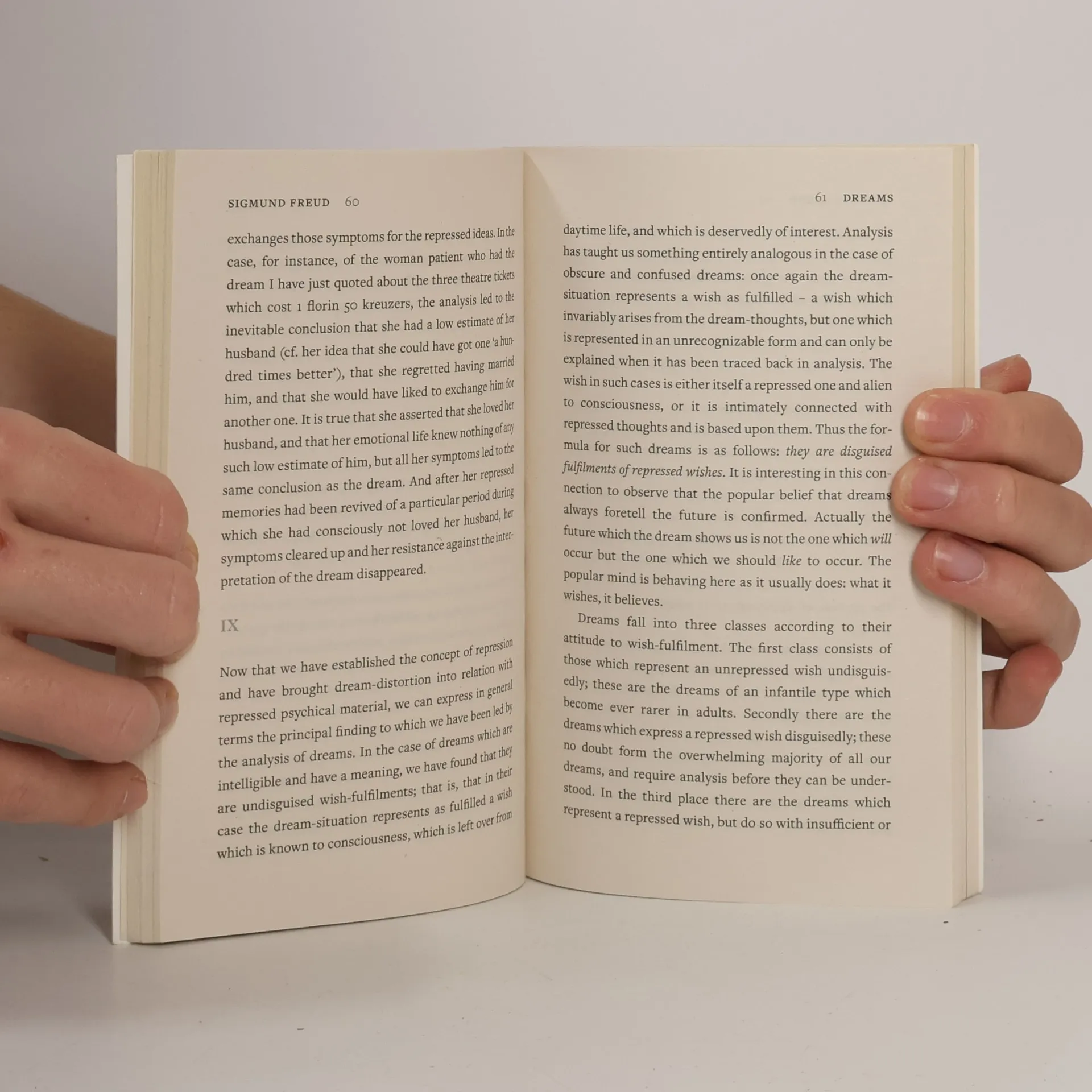
VINTAGE MINIS: GREAT MINDS. BIG IDEAS. LITTLE BOOKS. Have you ever dreamt you were naked on stage, or woken having failed an exam? In these fascinating, pioneering essays, Sigmund Freud plunges into the recesses of our minds, and awakens the hidden meanings behind our most typical and surprising night-time fantasies. From dreams of violence and death, to the more prosaic moments in our dream-life, Freud shines a light on the darkness we are often happy left consigned to night. Selected from the books The Essentials of Psycho-Analysis and The Standard Edition of the Complete Psychological Works of the Sigmund Freud, Volume IV: The Interpretation of Dreams (First Part) by Sigmund Freud




Compra de libros
Dreams, Sigmund Freud
- Idioma

- Publicado en
- 2018
- Encuadernación
- (Tapa blanda),
- Estado del libro
- Bueno
- Precio
- 4,89 €
Métodos de pago
Nos falta tu reseña aquí
- Título
- Dreams
- Idioma
- Inglés
- Autores
- Sigmund Freud
- Editorial
- Vintage
- Publicado en
- 2018
- Formato
- Tapa blanda
- Páginas
- 160
- ISBN10
- 1784874094
- ISBN13
- 9781784874094
- Serie
- Etiquetas
- Temas psicológicos, Temática filosófica, Ciencia, Escuela, Literatura especializada, Teorías científicas, Sueños, Psicoanálisis, Viena, Autoconocimiento, Tratamiento, Terapia, Sigmund Freud
- Primera publicación
- 1899
- Título original
- Die Traumdeutung
- Calificación
- 3,6 de 5
- Descripción
- VINTAGE MINIS: GREAT MINDS. BIG IDEAS. LITTLE BOOKS. Have you ever dreamt you were naked on stage, or woken having failed an exam? In these fascinating, pioneering essays, Sigmund Freud plunges into the recesses of our minds, and awakens the hidden meanings behind our most typical and surprising night-time fantasies. From dreams of violence and death, to the more prosaic moments in our dream-life, Freud shines a light on the darkness we are often happy left consigned to night. Selected from the books The Essentials of Psycho-Analysis and The Standard Edition of the Complete Psychological Works of the Sigmund Freud, Volume IV: The Interpretation of Dreams (First Part) by Sigmund Freud