

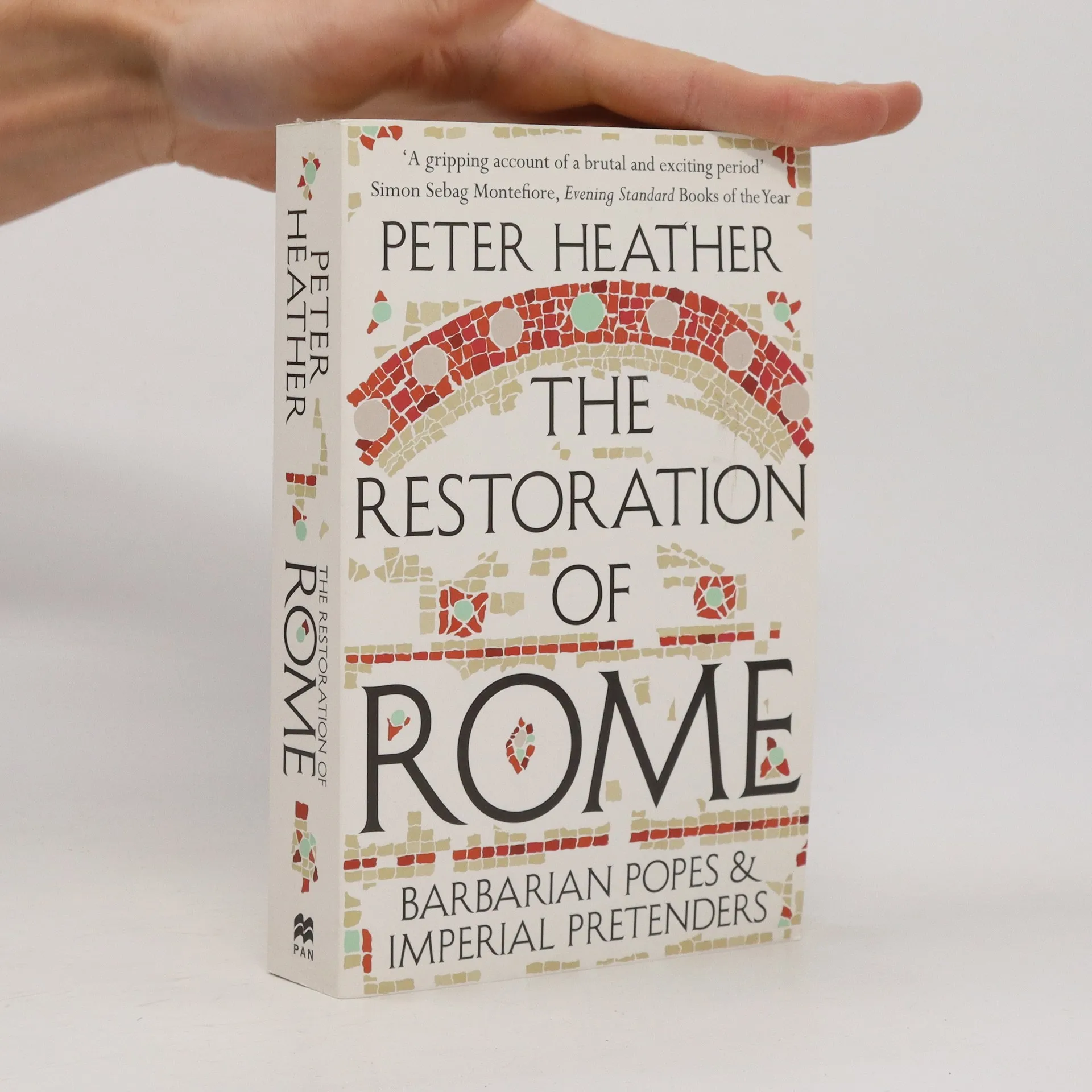


Más información sobre el libro
In 476 AD the last of Rome's emperors was deposed by a barbarian general, the son of one of Attila the Hun's henchmen, and the imperial vestments were despatched to Constantinople. The curtain fell on the Roman Empire in Western Europe, its territories divided between successor kingdoms constructed around barbarian military manpower. But if the Roman Empire was dead, the dream of restoring it refused to die. In many parts of the old Empire, real Romans still lived, holding on to their lands, the values of their civilisation, its institutions; the barbarians were ready to reignite the imperial flame and to enjoy the benefits of Roman civilization, the three greatest contenders being Theoderic, Justinian and Charlemagne. But, ultimately, they would fail and it was not until the reinvention of the papacy in the eleventh century that Europe's barbarians found the means to generate a new Roman Empire, an empire which has lasted a thousand years.

Publicación

Compra de libros
The Restoration of Rome, Peter Heather
- Idioma

- Publicado en
- 2014
- Encuadernación
- (Tapa blanda)
Métodos de pago
Nos falta tu reseña aquí
- Título
- The Restoration of Rome
- Idioma
- Inglés
- Autores
- Peter Heather
- Editorial
- Pan
- Publicado en
- 2014
- Formato
- Tapa blanda
- Páginas
- 470
- ISBN10
- 144724107X
- ISBN13
- 9781447241072
- Serie
- Etiquetas
- Tema histórico, Medieval, Antigüedad, Historia de Europa
- Título original
- The restoration of Rome
- Calificación
- 3,6 de 5
- Descripción
- In 476 AD the last of Rome's emperors was deposed by a barbarian general, the son of one of Attila the Hun's henchmen, and the imperial vestments were despatched to Constantinople. The curtain fell on the Roman Empire in Western Europe, its territories divided between successor kingdoms constructed around barbarian military manpower. But if the Roman Empire was dead, the dream of restoring it refused to die. In many parts of the old Empire, real Romans still lived, holding on to their lands, the values of their civilisation, its institutions; the barbarians were ready to reignite the imperial flame and to enjoy the benefits of Roman civilization, the three greatest contenders being Theoderic, Justinian and Charlemagne. But, ultimately, they would fail and it was not until the reinvention of the papacy in the eleventh century that Europe's barbarians found the means to generate a new Roman Empire, an empire which has lasted a thousand years.