




Más información sobre el libro
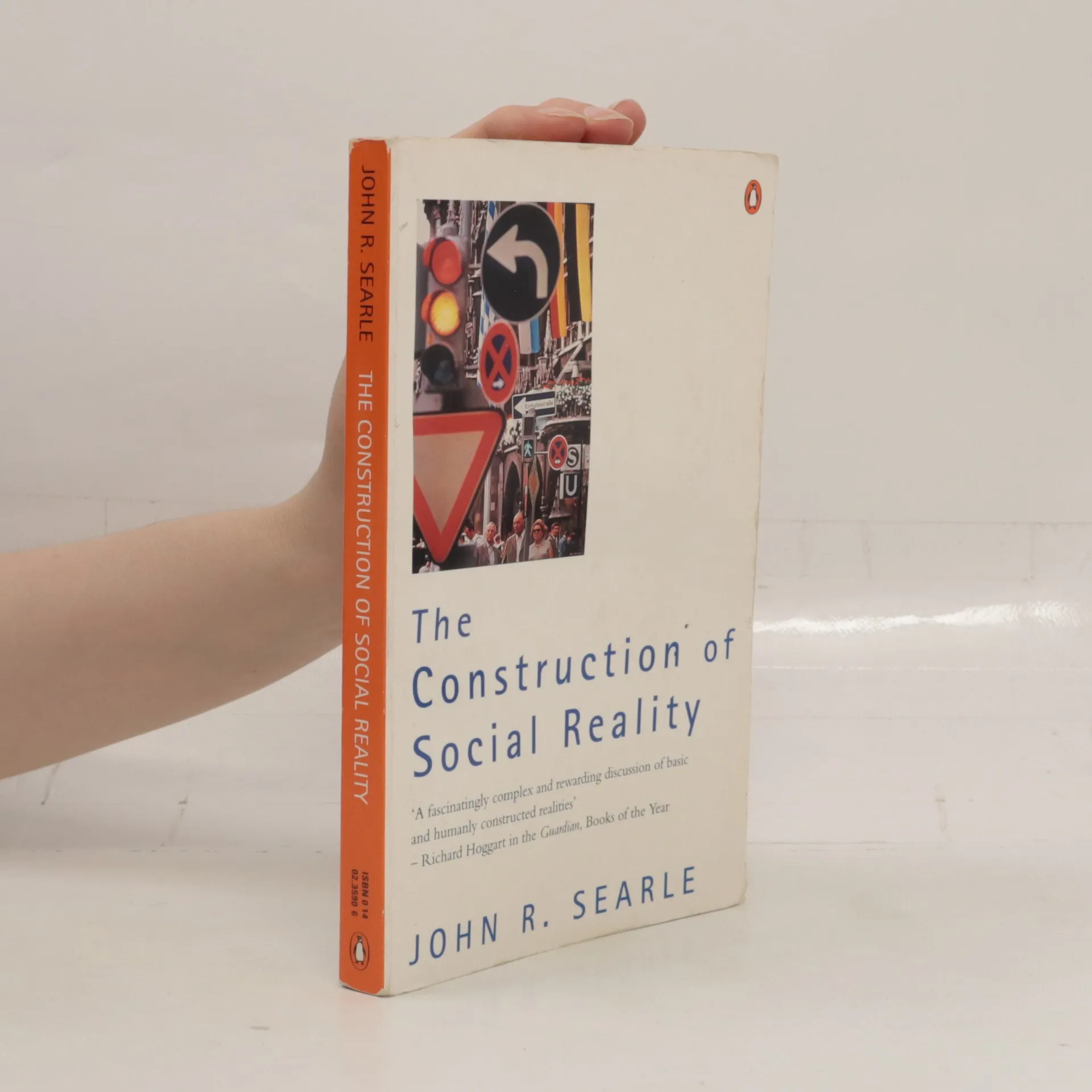
In this fascinating, provocative account, eminent philosopher John Searle shows how our everyday actions and cultural knowledge are of a metaphysical complexity that is truely staggering. He explores the charecter of the structures of our daily work that exist by human agreement and from this, the nature of objective reality. For example, how can it be completely objective fact that coins are money, if something is money only because we belive it is money? And what is the role of language constitutiing such facts? In examining the difference between what can and what cannot be socially constructed, he also shows how biology, which offers facts that are independant of human opinion and is often seen in opposition to the social sciences, forms the basis of these cultural and consititutional forms.



Compra de libros
The construction of social reality, John R. Searle
- Idioma

- Publicado en
- 1996
- Encuadernación
- (Tapa blanda)
Métodos de pago
Nos falta tu reseña aquí
- Título
- The construction of social reality
- Idioma
- Inglés
- Autores
- John R. Searle
- Editorial
- Penguin Books
- Publicado en
- 1996
- Formato
- Tapa blanda
- ISBN10
- 0140235906
- ISBN13
- 9780140235906
- Serie
- Recogida
- Penguin Philosophy
- Categorías
- Etiquetas
- Ciencia, Sociedad, Lingüística, Antropología Social
- Título original
- The construction of social reality
- Calificación
- 3,75 de 5
- Descripción
- In this fascinating, provocative account, eminent philosopher John Searle shows how our everyday actions and cultural knowledge are of a metaphysical complexity that is truely staggering. He explores the charecter of the structures of our daily work that exist by human agreement and from this, the nature of objective reality. For example, how can it be completely objective fact that coins are money, if something is money only because we belive it is money? And what is the role of language constitutiing such facts? In examining the difference between what can and what cannot be socially constructed, he also shows how biology, which offers facts that are independant of human opinion and is often seen in opposition to the social sciences, forms the basis of these cultural and consititutional forms.