

¡Agotado, pero muy deseado!


¿Lo tienes en tu biblioteca?Gana entre 2,04 € y 3,27 € vendiendo este libro.
Vende librosTime and free will : an essay on the immediate data of consciousness
Autores
Valoración del libro
Parámetros
Más información sobre el libro
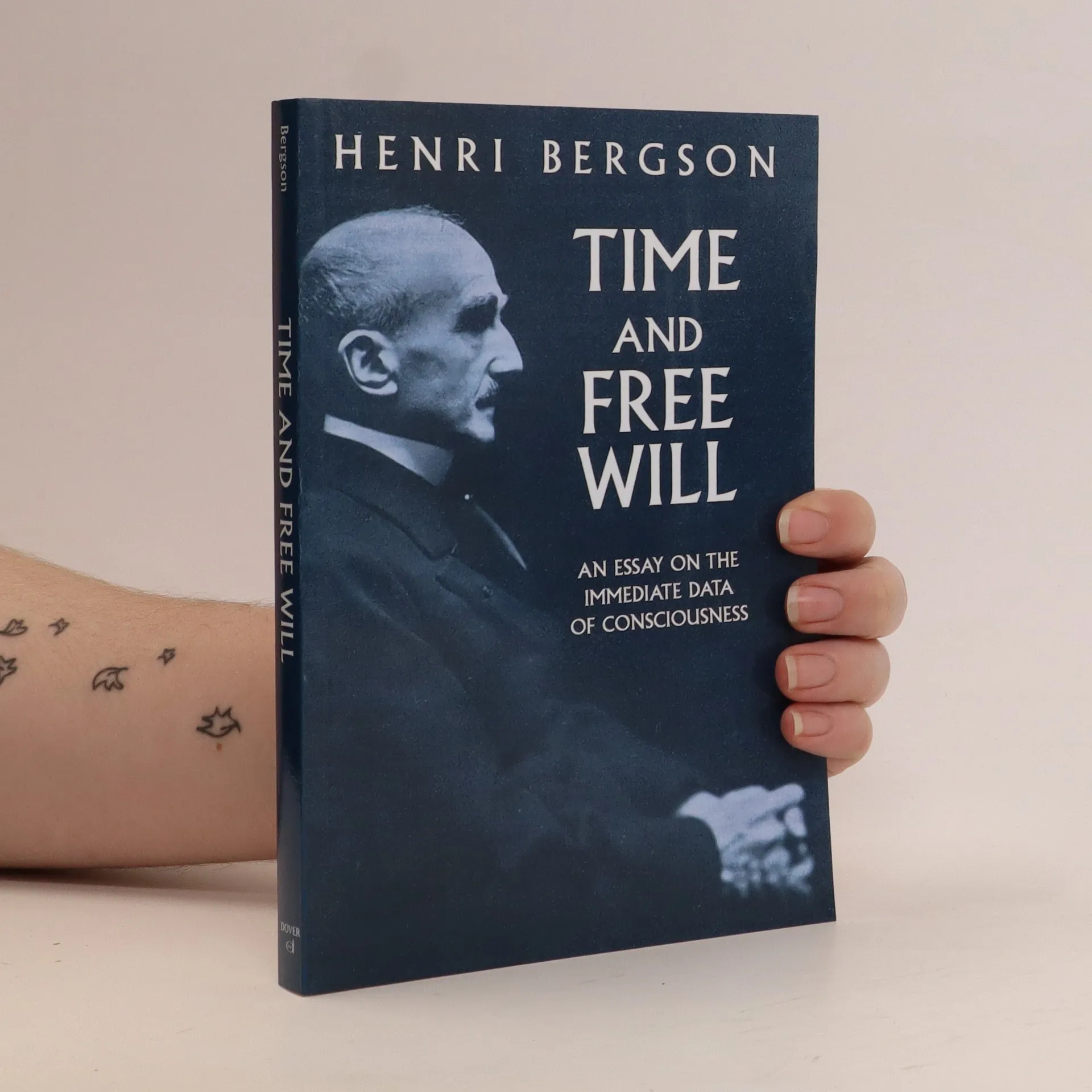
Bergson argues for free will by showing that the arguments against it come from a confusion of different conceptions of time. As opposed to physicists' idea of measurable time, in human experience life is perceived as a continuous and unmeasurable flow rather than as a succession of marked-off states of consciousness-something that can be measured not quantitatively, but only qualitatively. His conclusion is that free will is an observable fact.


Compra de libros
Time and free will : an essay on the immediate data of consciousness, Henri Bergson
- Idioma

- Publicado en
- 2001
- Encuadernación
- (Tapa blanda)
Te avisaremos por correo electrónico en cuanto lo localicemos.
Métodos de pago
4,0
Muy bueno
99+ Valoraciones
Nos falta tu reseña aquí
- Título
- Time and free will : an essay on the immediate data of consciousness
- Idioma
- Inglés
- Autores
- Henri Bergson
- Editorial
- Dover Publications Inc.
- Publicado en
- 2001
- Formato
- Tapa blanda
- ISBN10
- 0486417670
- ISBN13
- 9780486417677
- Serie
- Categorías
- Etiquetas
- Temas psicológicos, Temática filosófica, Ciencia, Francia, Siglo XIX, Emociones, Autoconocimiento, Libertad, Conocimientos y Sabiduría, Consciencia, Tiempo, Pensamiento, Fenomenología, Intuición, Razón, Encajes, Gnoseología, Epistemología, Libertad de Pensamiento
- Primera publicación
- 1889
- Título original
- Essai sur les données immédiates de la conscience
- Calificación
- 4 de 5
- Descripción
- Bergson argues for free will by showing that the arguments against it come from a confusion of different conceptions of time. As opposed to physicists' idea of measurable time, in human experience life is perceived as a continuous and unmeasurable flow rather than as a succession of marked-off states of consciousness-something that can be measured not quantitatively, but only qualitatively. His conclusion is that free will is an observable fact.