

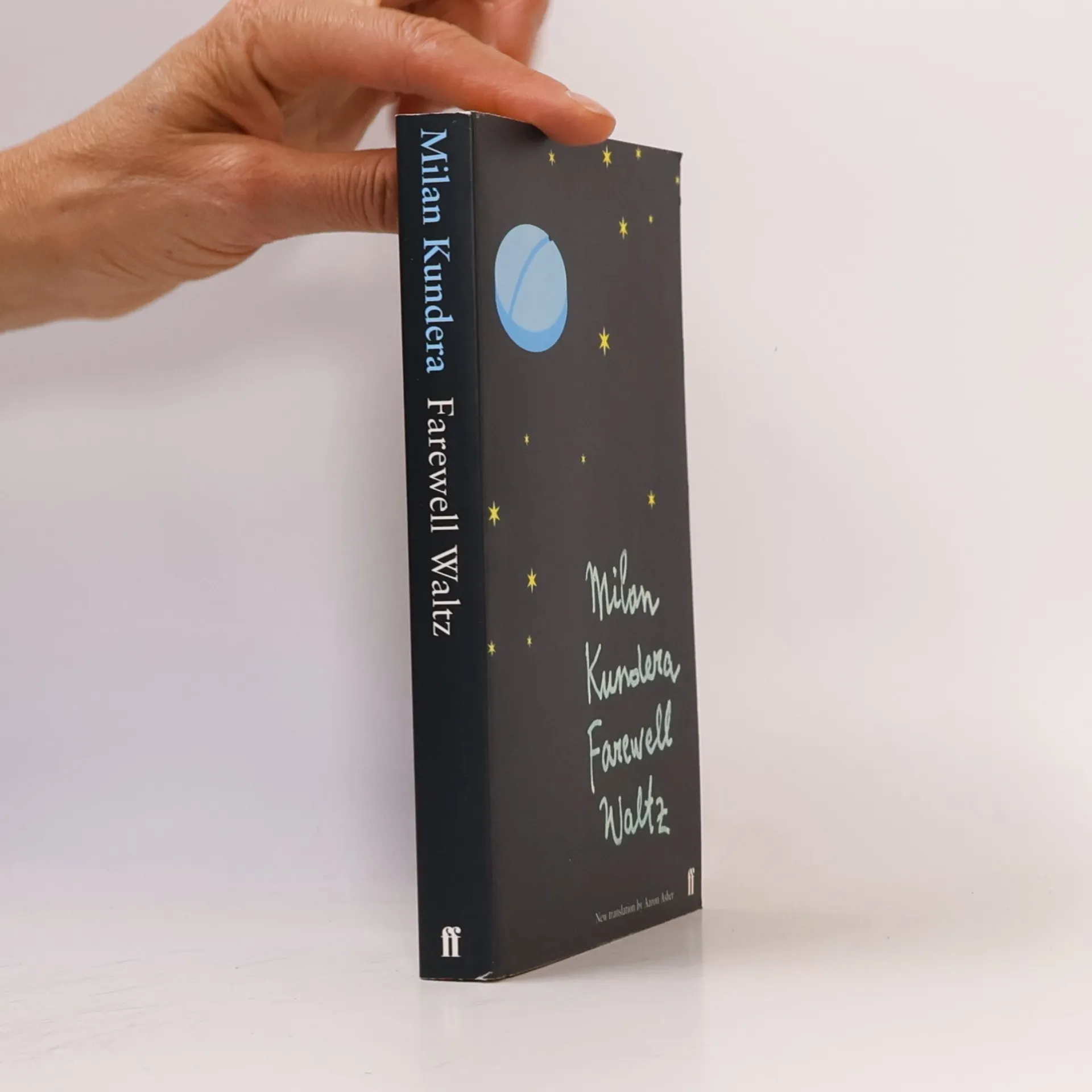
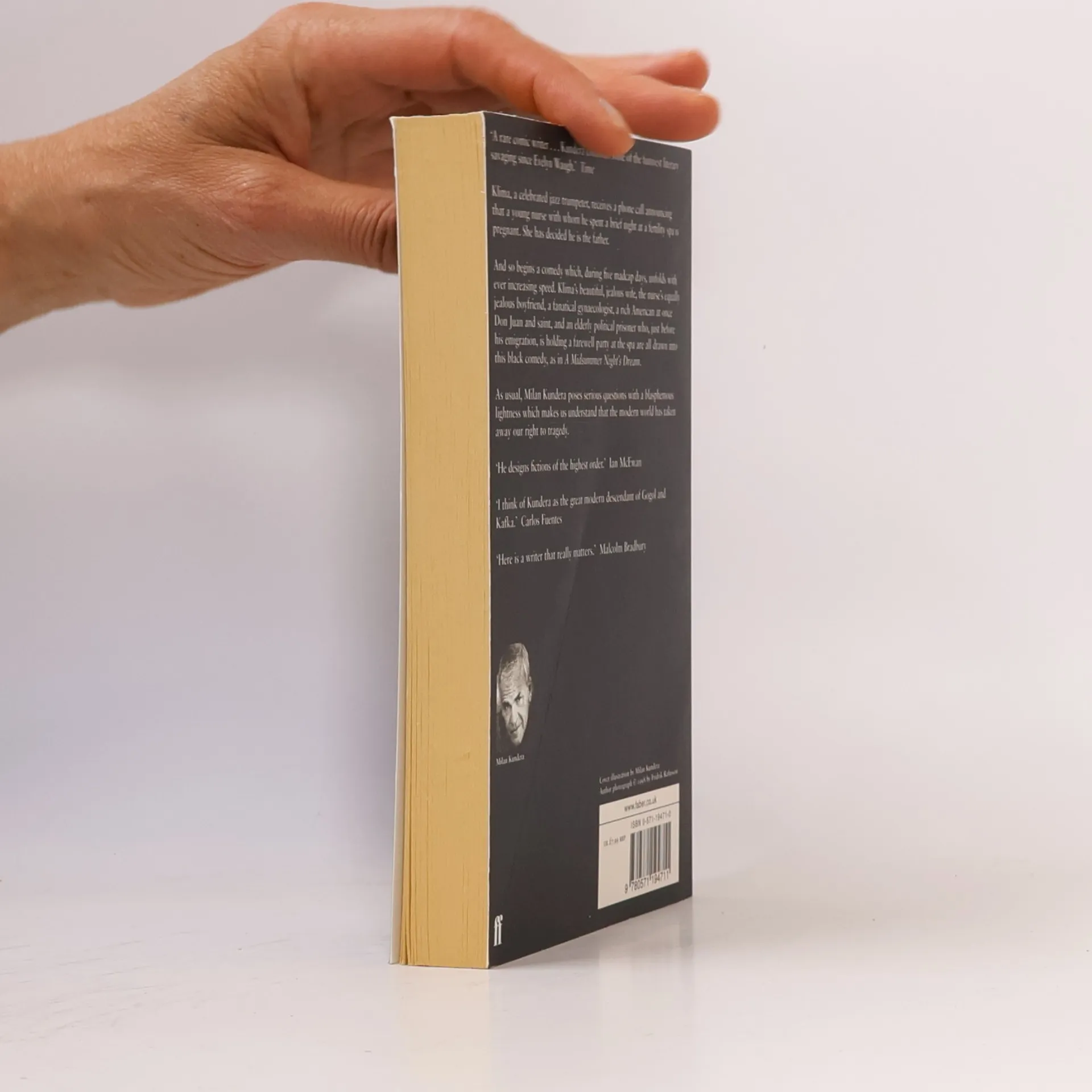
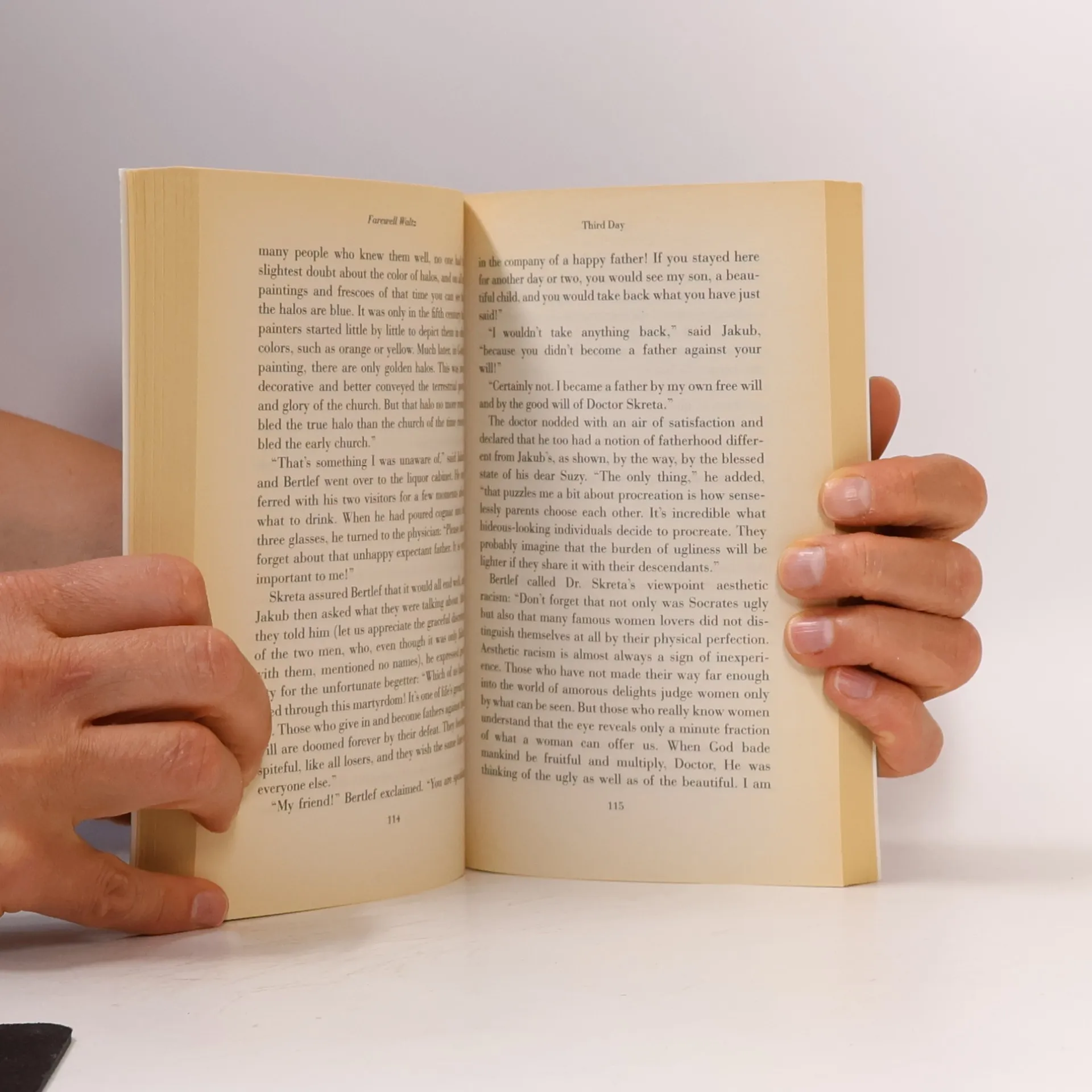
Más información sobre el libro
Klima, a celebrated jazz trumpeter, receives a phone call announcing that a young nurse with whom he spent a brief night at a fertility spa is pregnant. She has decided he is the father. And so begins a comedy which, during five madcap days, unfolds with ever-increasing speed. Klima's beautiful, jealous wife, the nurse's equally jealous boyfriend, a fanatical gynaecologist, a rich American, at once Don Juan and saint, and an elderly political prisoner who, just before his emigration, is holding a farewell party at the spa are all drawn into this black comedy, as in A Midsummer Night's Dream. As usual, Milan Kundera poses serious questions with a blasphemous lightness which makes us understand that the modern world has taken away our right to tragedy.




Actualmente hay del libro Farewell Waltz (1998) en stock.
Compra de libros
Farewell Waltz, Milan Kundera
- Idioma

- Publicado en
- 1998
- Encuadernación
- (Tapa blanda),
- Estado del libro
- Bueno
- Precio
- 5,99 €
Métodos de pago
Nos falta tu reseña aquí
- Título
- Farewell Waltz
- Idioma
- Inglés
- Autores
- Milan Kundera
- Editorial
- HarperCollins
- Publicado en
- 1998
- Formato
- Tapa blanda
- Páginas
- 288
- ISBN10
- 0571194710
- ISBN13
- 9780571194711
- Serie
- Categorías
- Etiquetas
- Temática filosófica, Vida, Crítica social, Naturaleza Humana
- Título original
- Valčik na roloučenou
- Calificación
- 3,9 de 5
- Descripción
- Klima, a celebrated jazz trumpeter, receives a phone call announcing that a young nurse with whom he spent a brief night at a fertility spa is pregnant. She has decided he is the father. And so begins a comedy which, during five madcap days, unfolds with ever-increasing speed. Klima's beautiful, jealous wife, the nurse's equally jealous boyfriend, a fanatical gynaecologist, a rich American, at once Don Juan and saint, and an elderly political prisoner who, just before his emigration, is holding a farewell party at the spa are all drawn into this black comedy, as in A Midsummer Night's Dream. As usual, Milan Kundera poses serious questions with a blasphemous lightness which makes us understand that the modern world has taken away our right to tragedy.